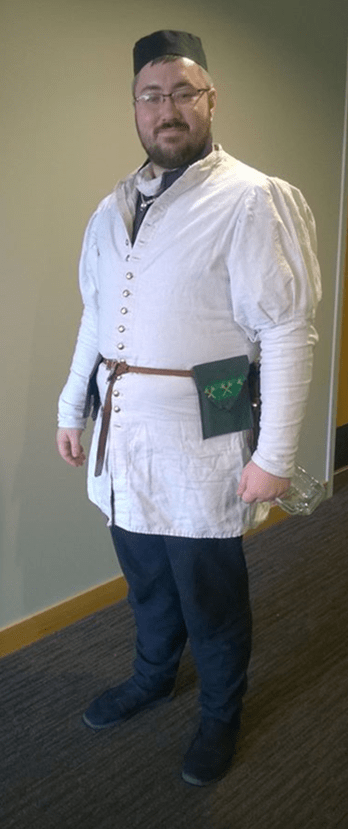
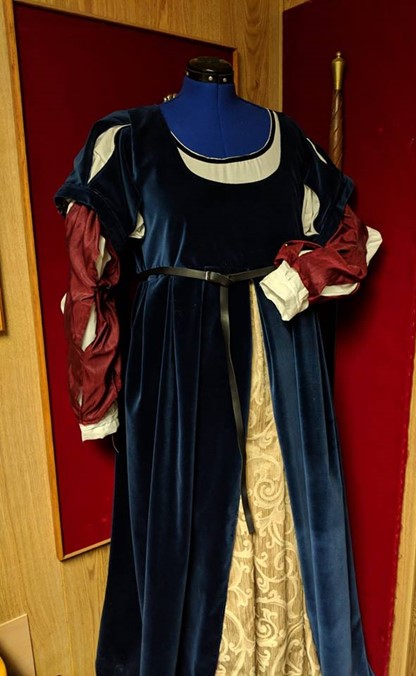
A middle later to the Italian male clothing, a doublet like layer worn over undershirts and below outer layers.
Description:
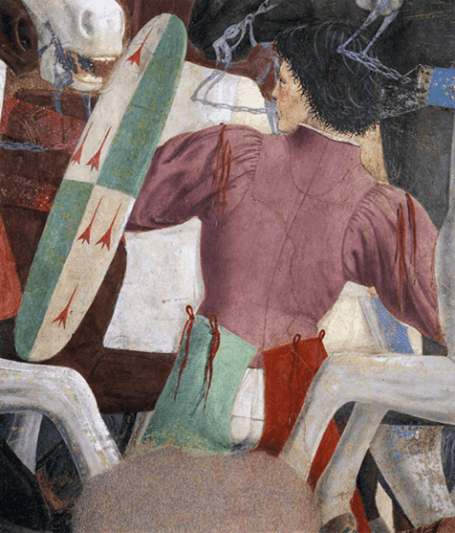
The middle layer of the male dress worn by most levels of society. The 1400’s see the transition from the longer doublet to the very short doublet. The major distinctions of the Italian variant can be seen on the arms, tight below the elbow and billowed at the upper arm, and the collar, at the back of the neck, where the collar dips lower down the spine.
Inspiration Images
Common Materials
Fabrics:
Linen
Brocades
Silk
Ornamentation:
Effective Substitutions
Fabrics:
Linen
Linen Blends
Cottons
Brocades
Wool Blends
Silks
Silk Blends
Ornamentation:
Ensemble Components
Farsetto
Undershirt
Split hose and pants
Accessories
Source/Links
Version: 2
date: 3/6/2021
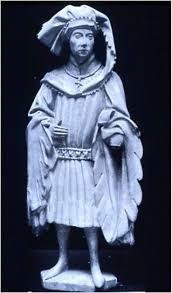
Source of Period Pic: Piero della Francesca The battle between Heraclius and Chosroes, 1452-1466
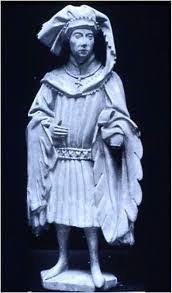
The houppelande is an outermost layer of dress, which was worn by middle-to-upper classes, both men and women. It was worn over a more fitted undergarment. It is identified by volumes of fabric neatly pleated into a belt, and visually balanced by a large hat.
Description:
Men wore varying lengths, depending on the fashion of the time and possibly the age of the wearer. Women wore them long, often breaking on the floor. Sleeve style varied by region and time as well, from a straight construction to wide and open, or wide and closed again at the wrist.
Necklines and sleeves started similar to cotehardies, and varied to high buttoned collars and folded down collars. Fabrics were colorful, sometimes brocaded, and often lined to contrast. Later, the female houppelande was tightened at the sleeve, a deep V left in the neck, and became the ‘Burgundian’ gown.
Layers under the Houppelande include base layers of shifts/under dresses, a kirtle or supportive layer, a cote, dress, gown or cotehardie layer and the outer houppelande
First seen in documentation in 1359 CE, the garments seem to have evolved from other outer wear such as garde-corps or herigauts, warm, billowy outer layers pulled over the head.
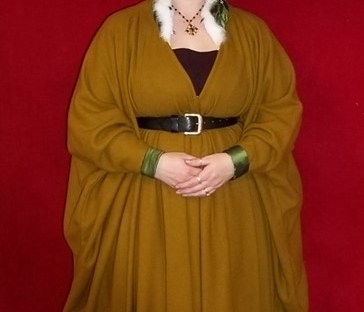
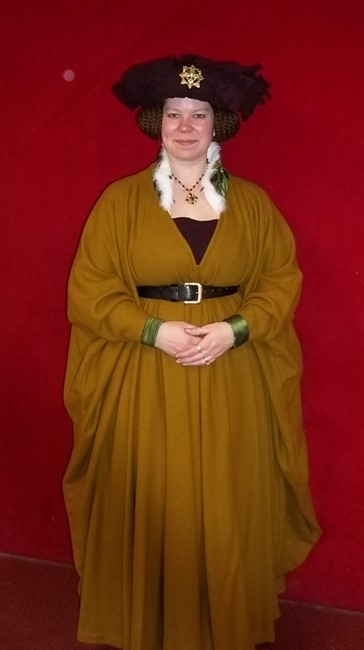
Houppelande in pic is made from wool with a fur collar. This is a transitional garment with many similarities to the Burgundian gown evident
Inspiration Images
Common Materials
Fabrics:
wool
linen
silk
tabby and brocade patterning
Ornamentation:
embroidery
lined with contrasting fur
Effective Substitutions
Fabrics:
wool blends
linen
linen blends
cotton damasks
Ornamentation:
costume or fake fur
contrasting fabric
Ensemble Components
undershirt
doublet
“Middle Layer” such as a cote/cotehardie gowns
Supportive Kirtle
braies/undergarments
Accessories
shoes with a point,
hose & garters
plaited hair
belt
hat – rolls, henins, and dual horns are fashionable
The houppelande is an outermost layer of dress, which was worn by middle-to-upper classes, both men and women. It was worn over a more fitted undergarment. It is identified by volumes of fabric neatly pleated into a belt, and visually balanced by a large hat.
Additional Images of the garment:
Description:
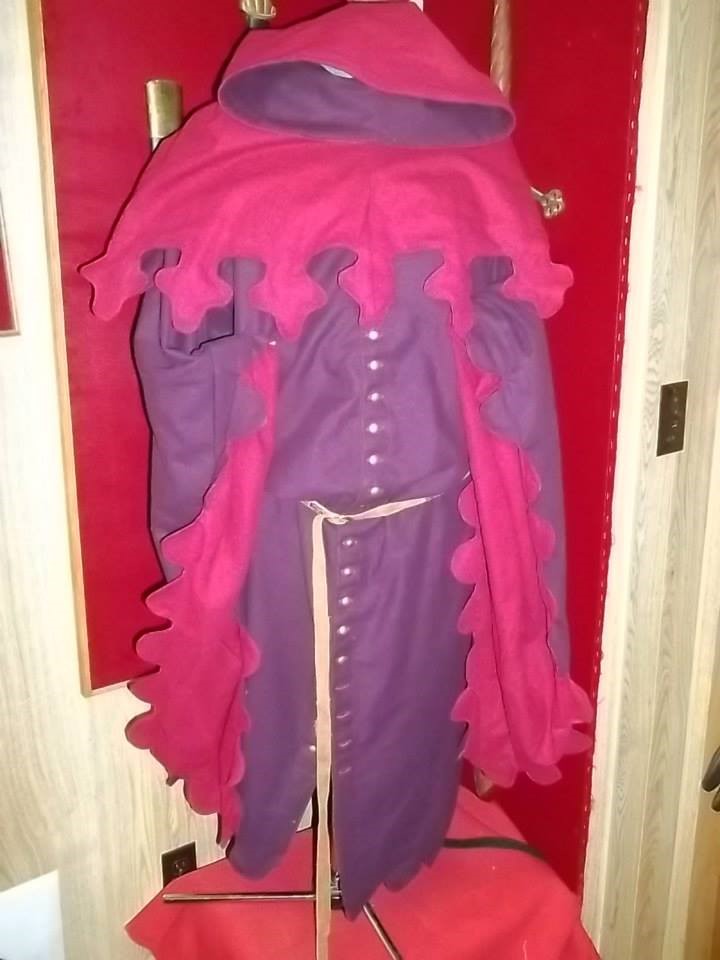
Men wore houppelandes of varying lengths, depending on the fashion of the time and possibly the age of the wearer. This shorter version of the garments makes it a Houppelande à mi-jambe, more popular in the years following 1400 CE.
Sleeve style varied by region and time as well, from a straight construction to wide and open, or wide and closed again at the wrist.
Necklines and sleeves started similar to cotehardies, and varied to high buttoned collars and folded down collars. Fabrics were colorful, sometimes brocaded, and often lined to contrast. Later, the female houppelande was tightened at the sleeve, a deep V left in the neck, and became the ‘Burgundian’ gown.
Layers under the Houppelande include base layers of undershirt, braies/hosen, doublet, cotehardie and the outer houppelande
First seen in documentation in 1359 CE, the garments seem to have evolved from other outer wear such as garde-corps or herigauts, warm, billowy outer layers pulled over the head.
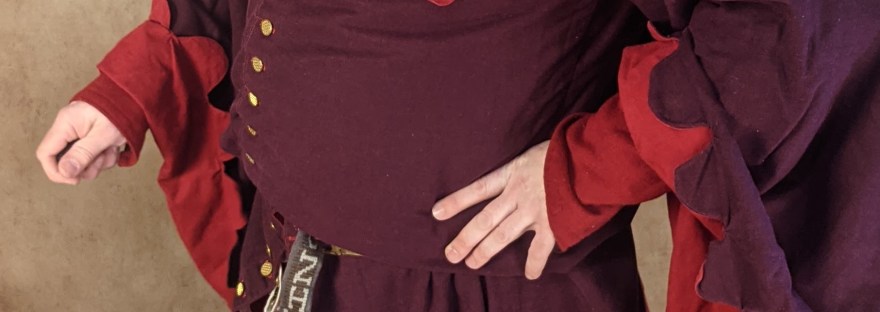
This Houppelande à mi-jambe is made from budget friendly linen/rayon blend and is reversible.
The houppelande is an outermost layer of dress, which was worn by middle-to-upper classes, both men and women. It was worn over a more fitted undergarment. It is identified by volumes of fabric neatly pleated into a belt, and visually balanced by a large hat.
Description:
Men wore varying lengths, depending on the fashion of the time and possibly the age of the wearer. Women wore them long, often breaking on the floor. Sleeve style varied by region and time as well, from a straight construction to wide and open, or wide and closed again at the wrist.
Necklines and sleeves started similar to cotehardies, and varied to high buttoned collars and folded down collars. Fabrics were colorful, sometimes brocaded, and often lined to contrast. Later, the female houppelande was tightened at the sleeve, a deep V left in the neck, and became the ‘Burgundian’ gown.
Layers under the Houppelande include base layers of shifts/under dresses, a kirtle or supportive layer, a cote, dress, gown or cotehardie layer and the outer houppelande
First seen in documentation in 1359 CE, the garments seem to have evolved from other outer wear such as garde-corps or herigauts, warm, billowy outer layers pulled over the head.
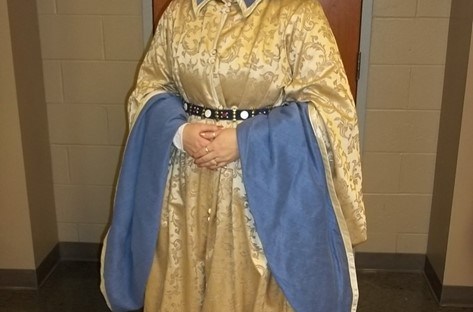
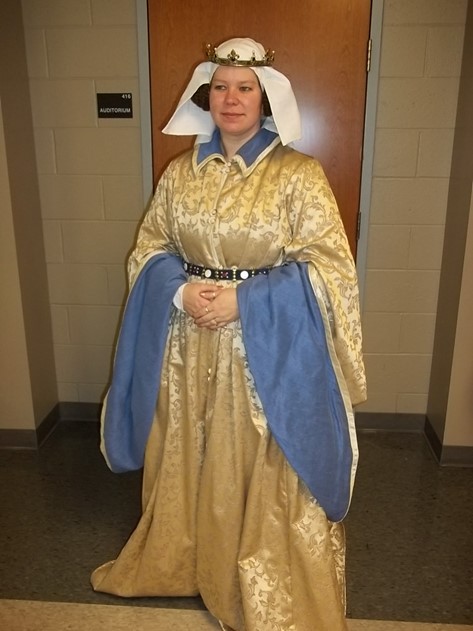
Houppelande in pic is made from a rich brocade worn over a blue cotehardie
Inspiration Images
Common Materials
Fabrics:
wool
linen
silk
tabby and brocade patterning
Ornamentation:
embroidery
lined with contrasting fur
Effective Substitutions
Fabrics:
wool blends
linen
linen blends
cotton damasks
Ornamentation:
costume or fake fur
contrasting fabric
Ensemble Components
undershirt
doublet
“Middle Layer” such as a cote/cotehardie gowns
Supportive Kirtle
braies/undergarments
Accessories
shoes with a point,
hose & garters
plaited hair
belt
hat – rolls, henins, and dual horns are fashionable
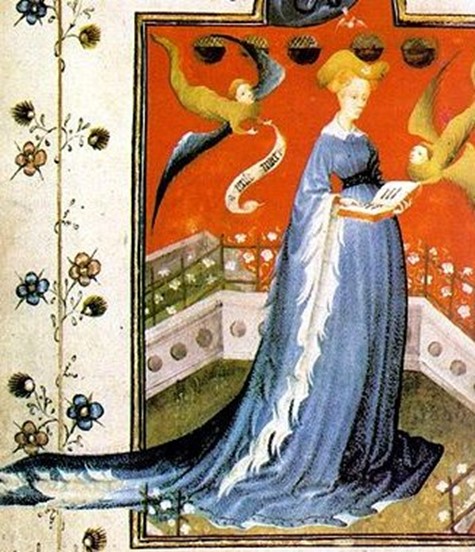
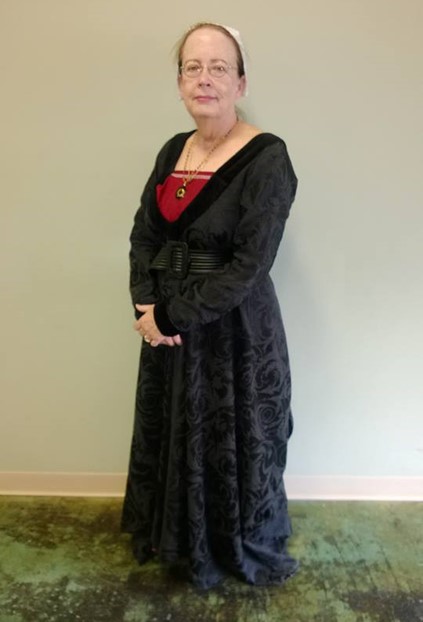
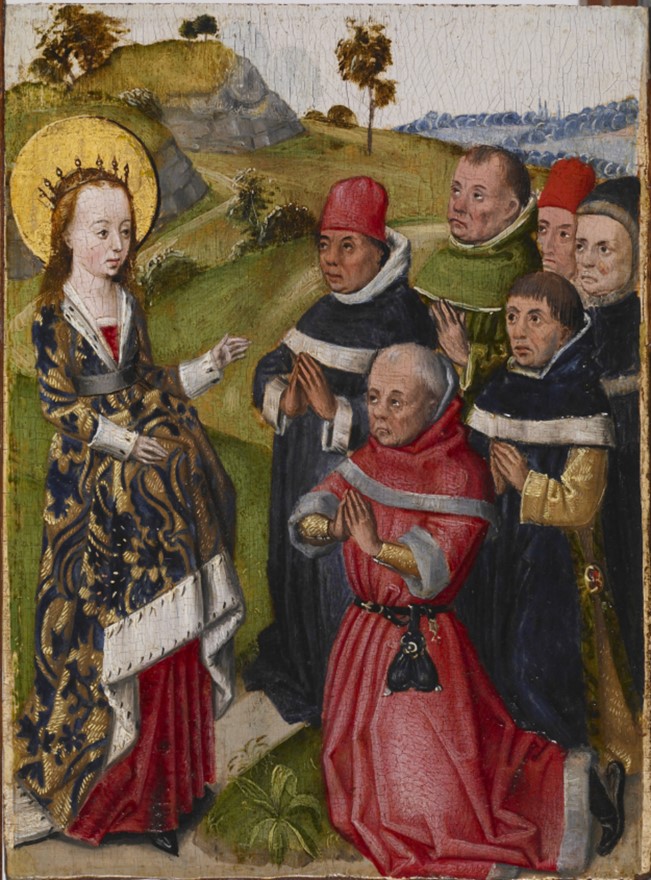
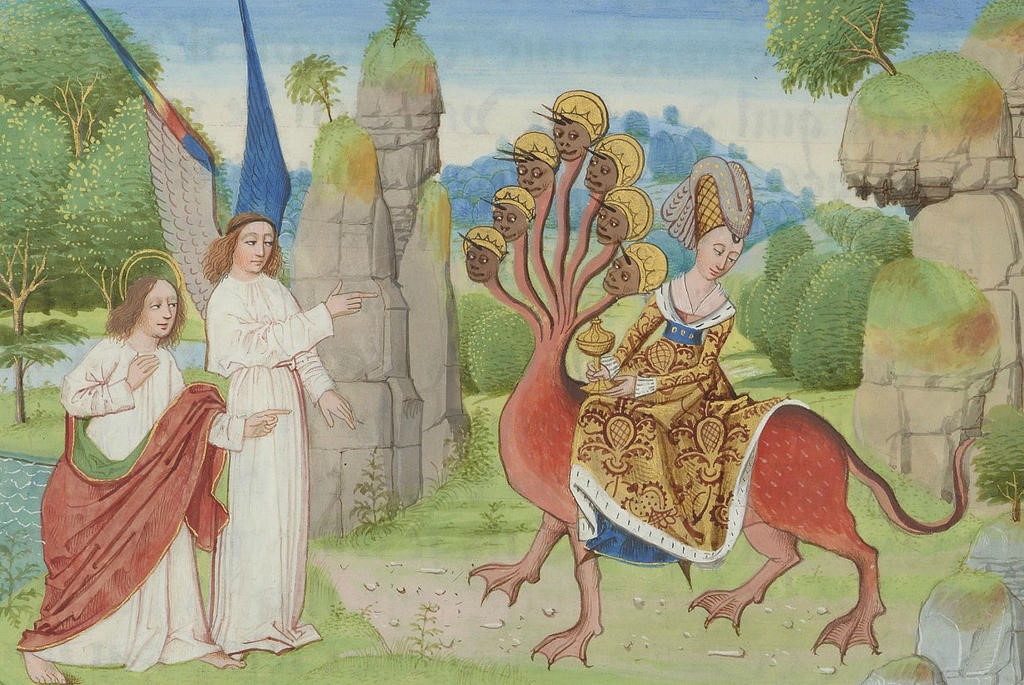
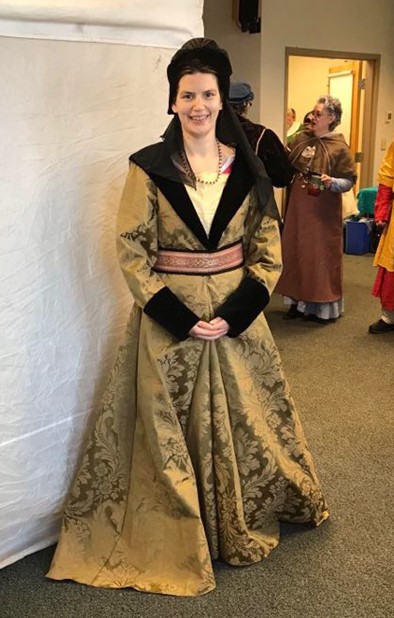
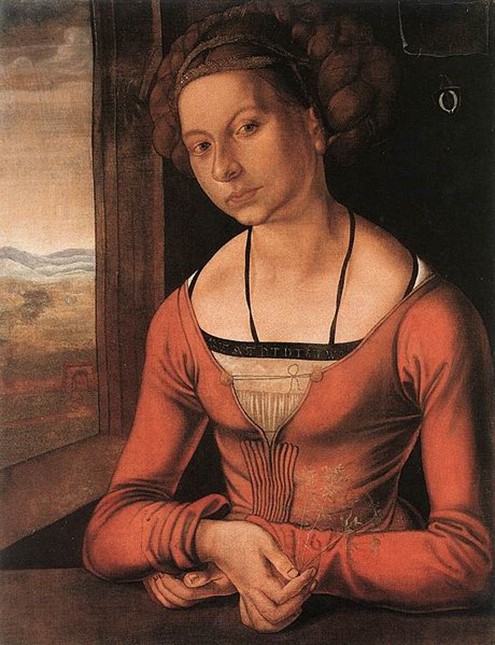
“A” shaped dress with “V” shaped neckline, fitted in the torso and spreading widely, often with train from the waist. Wide belt at waist. Worn over fitted kirtle.
Description:
One of the garments that there are many image examples for as this is a time of many surviving artworks. A style of dress seen in many Flemish paintings that show a common set of features including fitted torso with deeply plunging neckline and collar with contrasting fabric or fur lining. The deep neckline displayed an under placket or partlet or kirtle, some displayed without. Sleeves often shown with lined cuffs that are rolled back on the sleeve. Most show no seam at waist or a wide belt covering any such seam. More examples of images showing the waist seam appear closer to 1500CE. Many are displayed as being lined
Under layers would commonly include a shift, slip or some form of underdress, covered by a fitted kirtle and then covered by the gown.
Key accessories include the wide belt often made from fabrics as well as many examples of different styles of hats, many becoming elaborate.
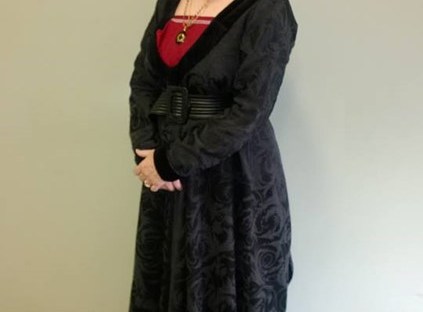
This is a more simple form of the dress and worn on a warmer day. The under layers are simplified and the dress is not as full. Made out of brocaded cotton fabric with a black velvet collar and the red placket exposed by the neckline.
Inspiration Images
Common Materials
Fabrics:
Gown –
wools,
finely woven wools,
brocaded or patterned cloths. Rich textiles,
collars featuring velvets and furs.
Fur trim
Kirtle –
wool
linen
Underclothes
linen
Ornamentation:
Effective Substitutions
Fabrics:
Gown
Some cottons
linens
Linen blends wool blends
brocades
some poly/cotton upholstery fabrics to achieve the woven in patterns.
Kirtle
Linen and linen blends
some cottons to lighten the under layers
Underclothes
Linen
Linen blends
cottons
Ornamentation:
Ensemble Components
Under layers – shift/slip or some form of underdress
gown.
fitted kirtle
Accessories
Key accessories include the wide belt often made from fabrics as well as many examples of different styles of hats, many becoming elaborate.
This is the time of the Henin hat that becomes the stereotypical ‘princess’ hat, various low shoes or slippers, pouches or purses.
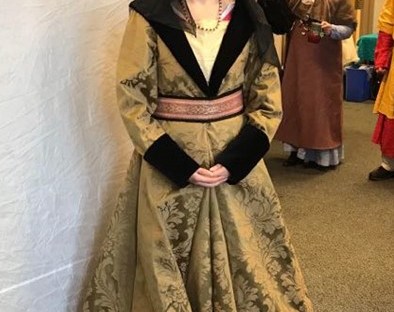
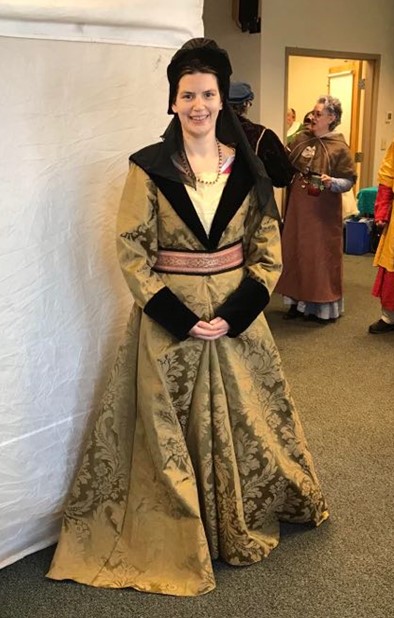
“A” shaped dress with “V” shaped neckline, fitted in the torso and spreading widely, often with train from the waist. Wide belt at waist. Worn over fitted kirtle.
Additional Images of the completed garment:
Description:
One of the garments that there are many image examples for as this is a time of many surviving artworks. A style of dress seen in many Flemish paintings that show a common set of features including fitted torso with deeply plunging neckline and collar with contrasting fabric or fur lining. The deep neckline displayed an under placket or partlet or kirtle, some displayed without. Sleeves often shown with lined cuffs that are rolled back on the sleeve. Most show no seam at waist or a wide belt covering any such seam. More examples of images showing the waist seam appear closer to 1500CE. Many are displayed as being lined
Under layers would commonly include a shift, slip or some form of underdress, covered by a fitted kirtle and then covered by the gown.
Key accessories include the wide belt often made from fabrics as well as many examples of different styles of hats, many becoming elaborate.
This dress is poly cotton blend brocade with cotton velvet collar and cuffs, red linen kirtle, white linen shift. A yellow silk placket covers most of the red kirtle at the plunging neckline
Inspiration Images
Common Materials
Fabrics:
Gown –
wools,
finely woven wools,
brocaded or patterned cloths. Rich textiles,
collars featuring velvets and furs.
Fur trim
Kirtle –
wool
linen
Underclothes
linen
Ornamentation:
Effective Substitutions
Fabrics:
Gown
Some cottons
linens
Linen blends wool blends
brocades
some poly/cotton upholstery fabrics to achieve the woven in patterns.
Kirtle
Linen and linen blends
some cottons to lighten the under layers
Underclothes
Linen
Linen blends
cottons
Ornamentation:
Ensemble Components
Under layers – shift/slip or some form of underdress
gown.
fitted kirtle
Accessories
Key accessories include the wide belt often made from fabrics as well as many examples of different styles of hats, many becoming elaborate.
This is the time of the Henin hat that becomes the stereotypical ‘princess’ hat, various low shoes or slippers, pouches or purses.
Dress with front and back pleated section. Most often portrayed in the a book of engravings by the Master of the Housebook.
Description:
This dress is commonly known as a housebook dress because it was frequently portrayed in a book of engravings called the Housebook. It is a dress with pleated inset in both front and back with fall into the fullness of the skirt. The haub is a pleated rectangle of fabric (I use linen) which is wound about the head to produce is shape. The tail of the haub can be tucked back into it, wound around your neck and simply left to hang.
Inspiration Images
Common Materials
Fabrics:
Gown – wools, finely woven wools, brocaded or patterned cloths. Rich textiles, collars featuring velvets and furs. Fur trim
Kirtle – wools lined in linen
Underclothes – Linen
Ornamentation:
Effective Substitutions
Fabrics:
Gown – Some cottons, linens, Linen blends wool blends, brocades, some poly/cotton upholstery fabrics to achieve the woven in patterns.
Kirtle – Linen and linen blends, some cottons to lighten the under layers
These entries are taken from the participants in the Calontir Clothing Challenge (C3) which ran from 10/1/2020-1/31/2021. The C3 challenged artisans to make a 4-layer outfit over a four month period, three of which were clothing layers and the fourth an “accessory” (widely defined to include anything that displayed a non-sewing skill), while documenting their work. Entrants ranged from beginners making their first outfits to experienced members.
Because of how these were received, they will be in a different format to other entries.
About Kristine: I joined the SCA in middle school when my mother started taking us to meetings. I wasn’t always as excited about it in the beginning, but when I found tablet-weaving, I was hooked. I met my fiance, Vincent, as well as all my closest friends in the society.
Vincent and I came to a deal a long time ago that he would make our garb, since he enjoys it and it just puts me in a foul mood…. but since I’m spearheading this challenge, I feel like I have to put my money where my mouth is and participate. Wish our household luck!
Description:
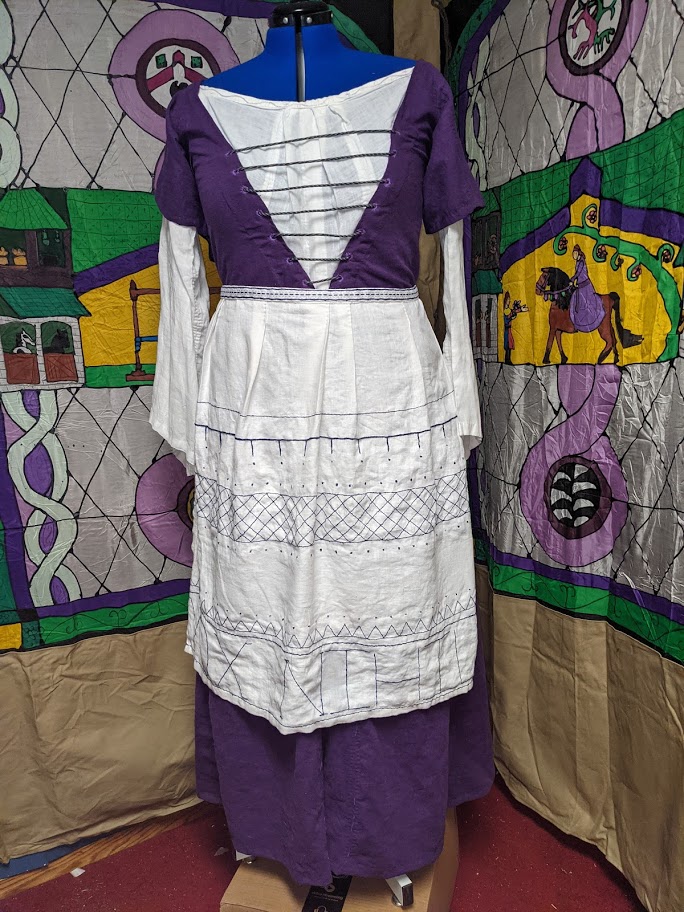
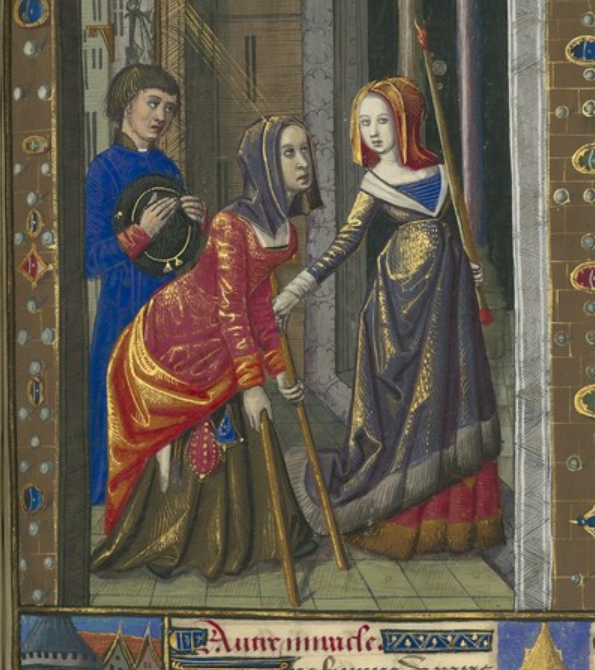
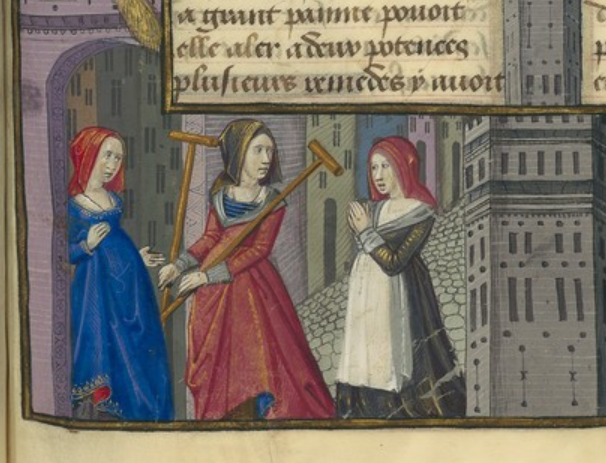
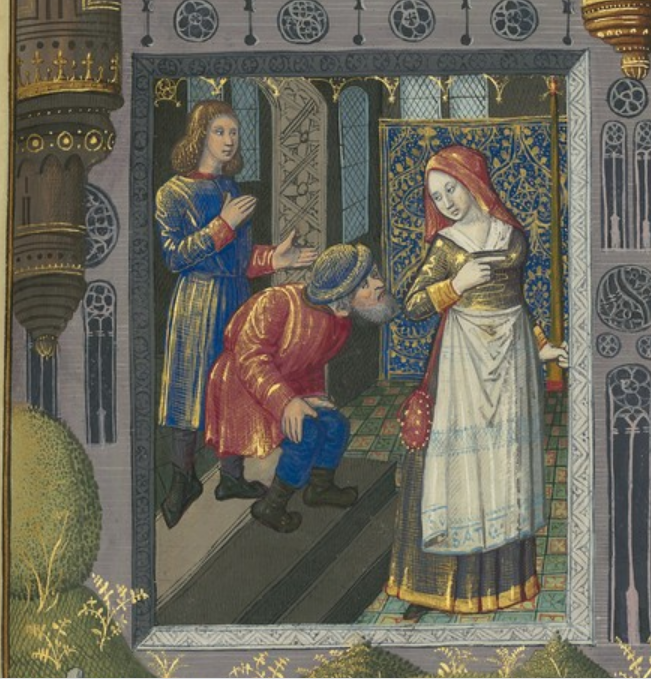
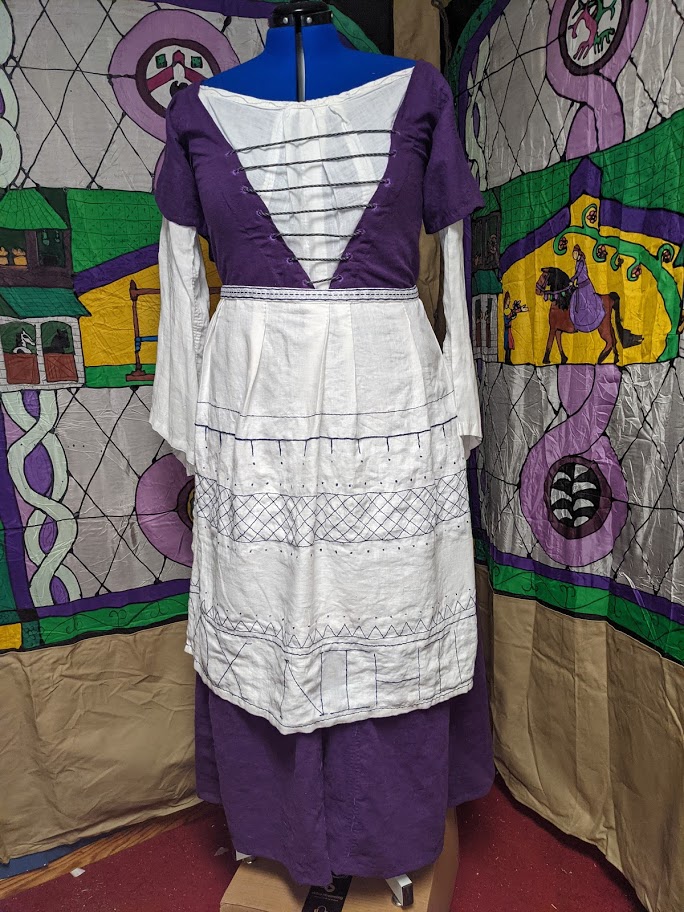
Years ago, I came upon one of the images below and felt like I fully understood the woman wearing it – and I love her apron. I can’t just make the apron, right? I have to make the whole outfit to go with it. These images are all from the same illumination and are a little later than my usual time period (I’m usually mid-to-late 14thc Scot) being earlyish 15c inspired by images from The Book of Faiz Monseigneur Saint Loys. So, My plan is to make all the layers shown, a chemise, a supportive kirtle (stretch project of additional pin-on sleeves), a silk cotte with embroidery, and a wool over cotte with embroidered embellishments. My accessory will be a tablet woven belt, though I’ll also be making the aforementioned apron. I have other wacky ideas on extra accessory layers, but we’ll see how it goes!
Her final thoughts on her C3 Experience: Well, I knew that running the challenge and getting my own outfit done at the same time would be a challenge. I didn’t get to the final overcoat layer like I’d hoped (which would have been blue wool with a red lining) but I’m pretty happy with the four I did get finished.
My favorite completed pieces are the belt (layer 4) and the apron, which was the inspiration for the whole thing.
Overall, I have reaffirmed that Vincent will do all the construction sewing from now on, but I’ll happily help out with hand-finishing. Good to know since we have wedding garb to finish next!
C3 Level:
Modern Recreationist/Intermediate
Complete Outfit Images:
Inspiration Images
Layer 1
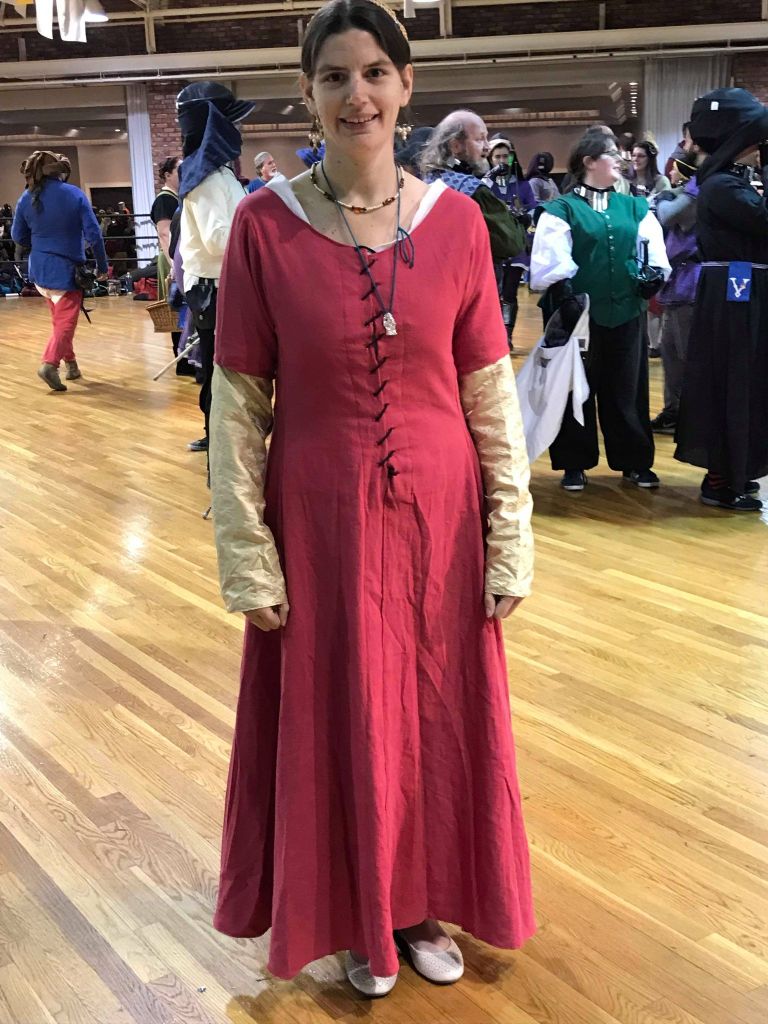
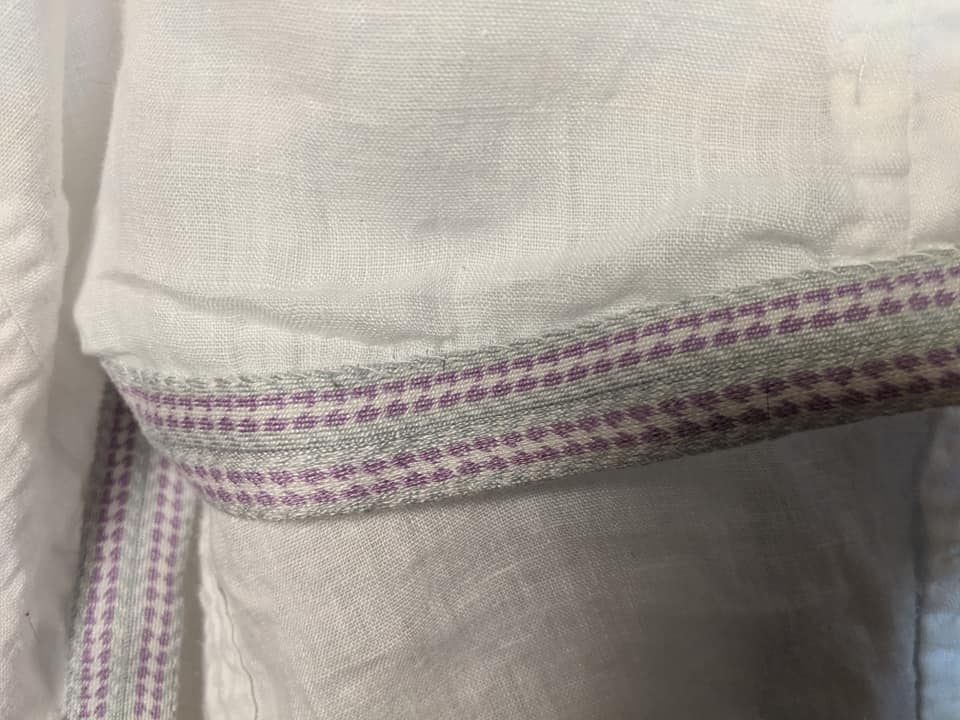
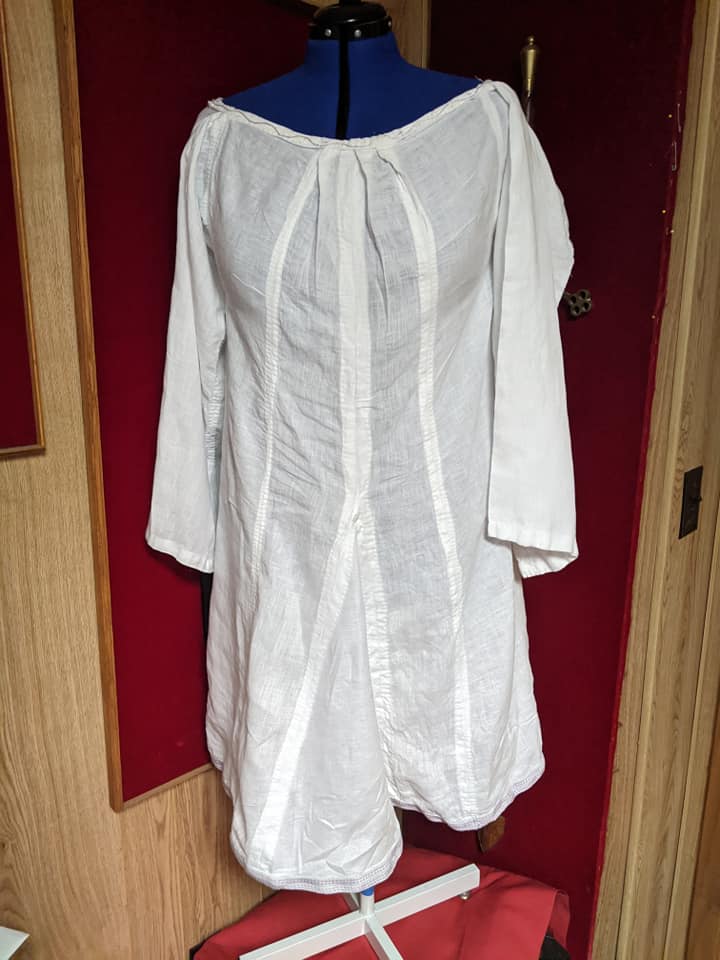
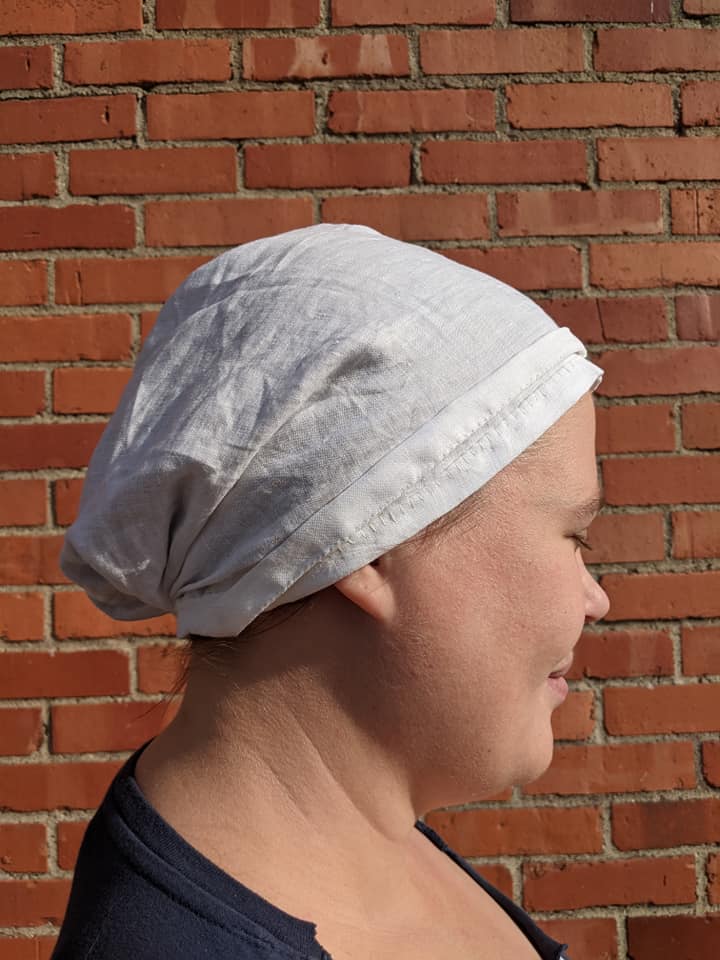
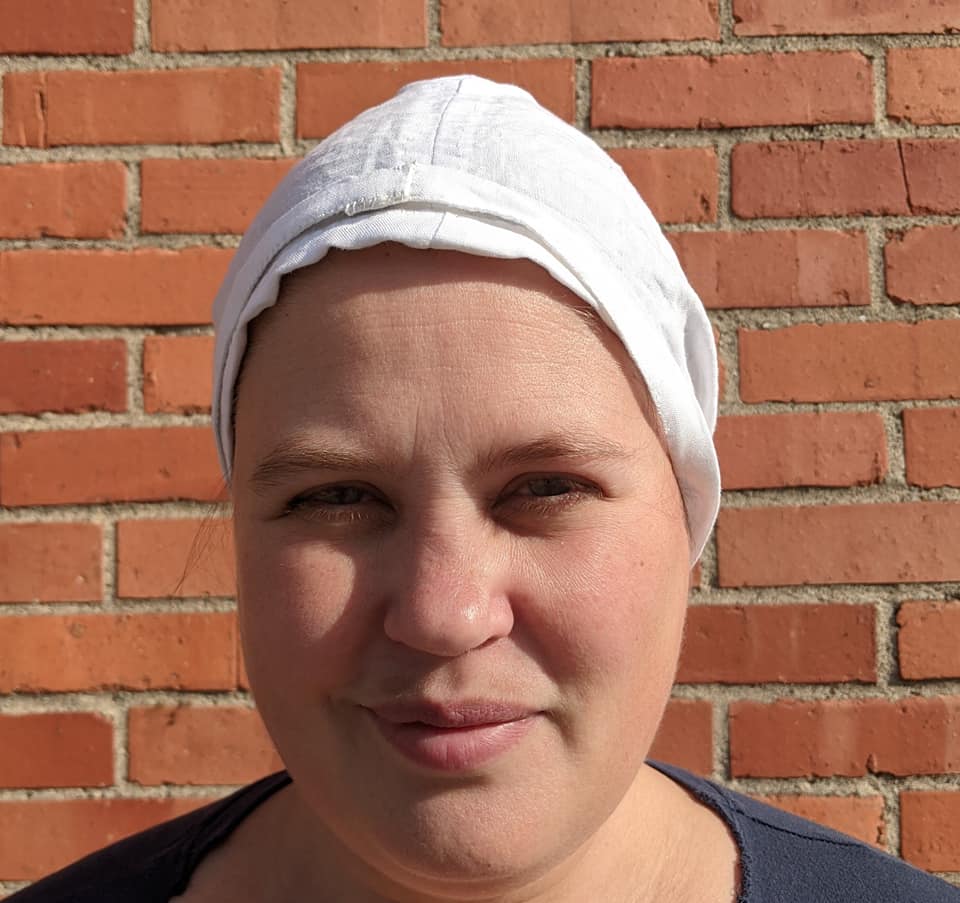
My layer 1 consists of a chemise and a St Birgitta’s Cap. Both are made of white linen and are of machine base construction and hand finished with linen thread.
The chemise is based off the general late period pattern which has been theorized was used in the early 15th century. As I’m in the modern recreationist category, I took a step from what I could document and added a simple embroidered pattern around the neckline and tablet woven trim around the base. The trim is of cotton, as it’s what I had on hand, and was woven by me – the first of many tablet woven projects which will be incorporated into this outfit.
The cap is of basic construction and went MUCH better than my first cap I attempted years ago. It went so well that I’m considering making a second one with some decorative elements.
Layer 2
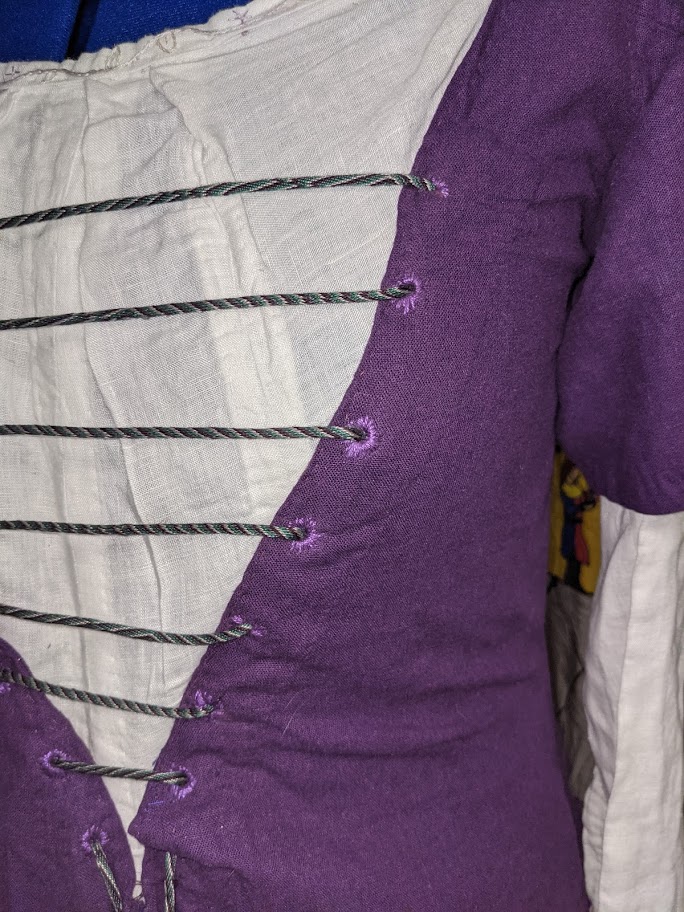
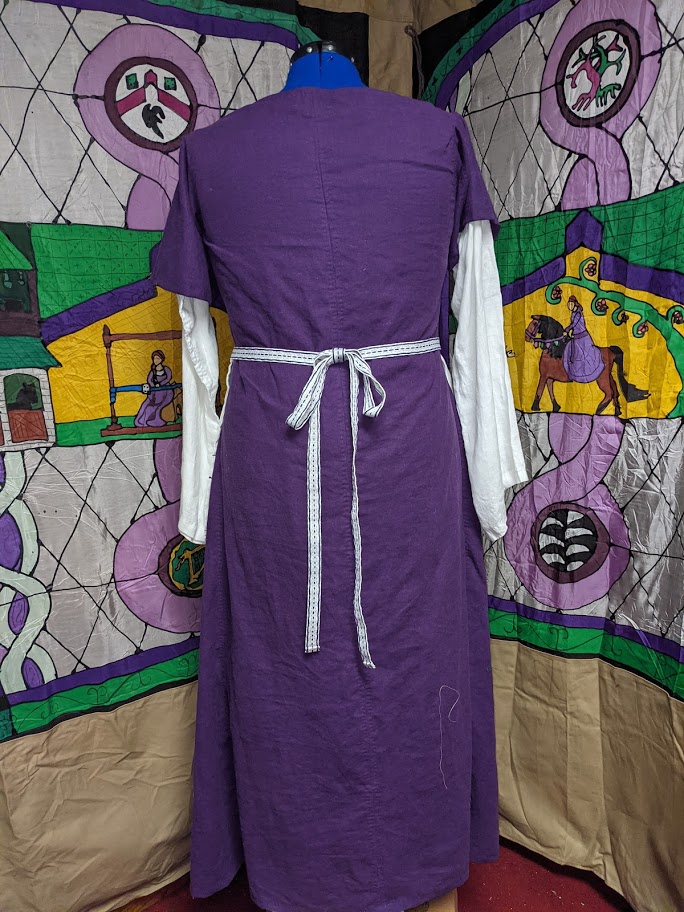
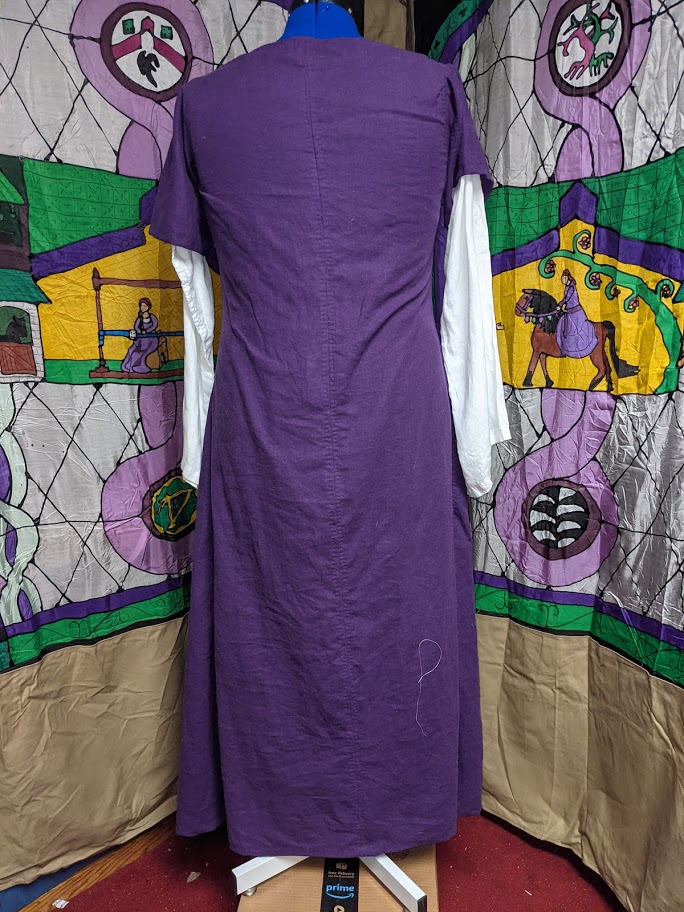
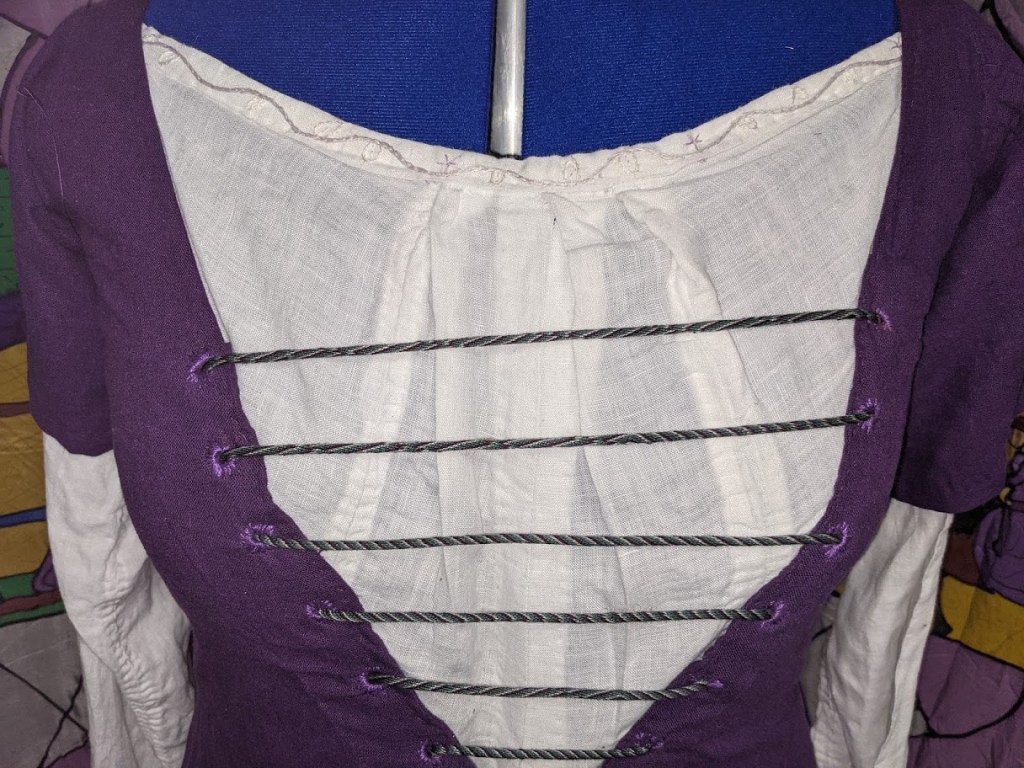
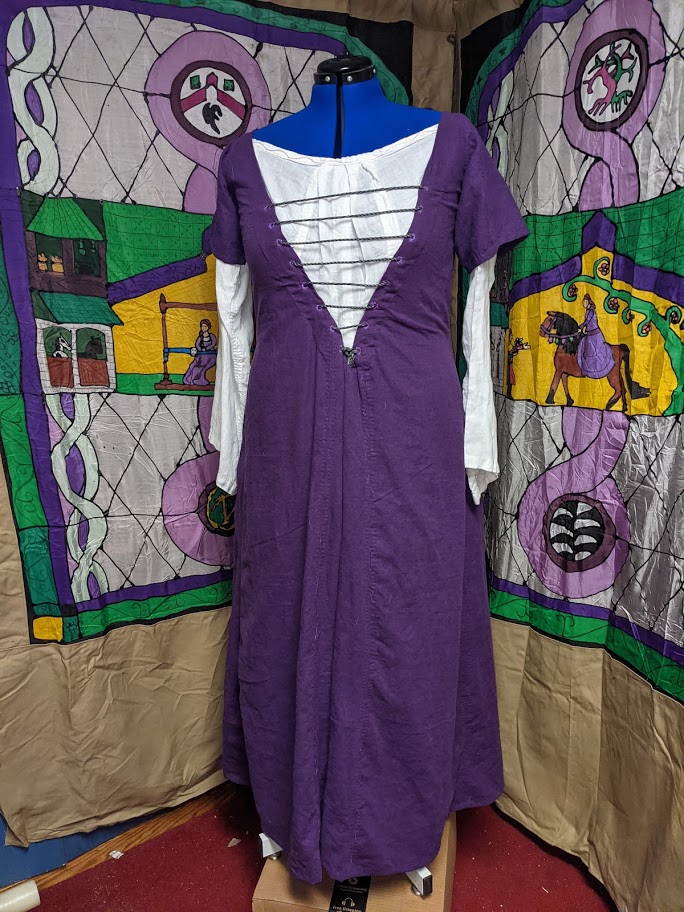
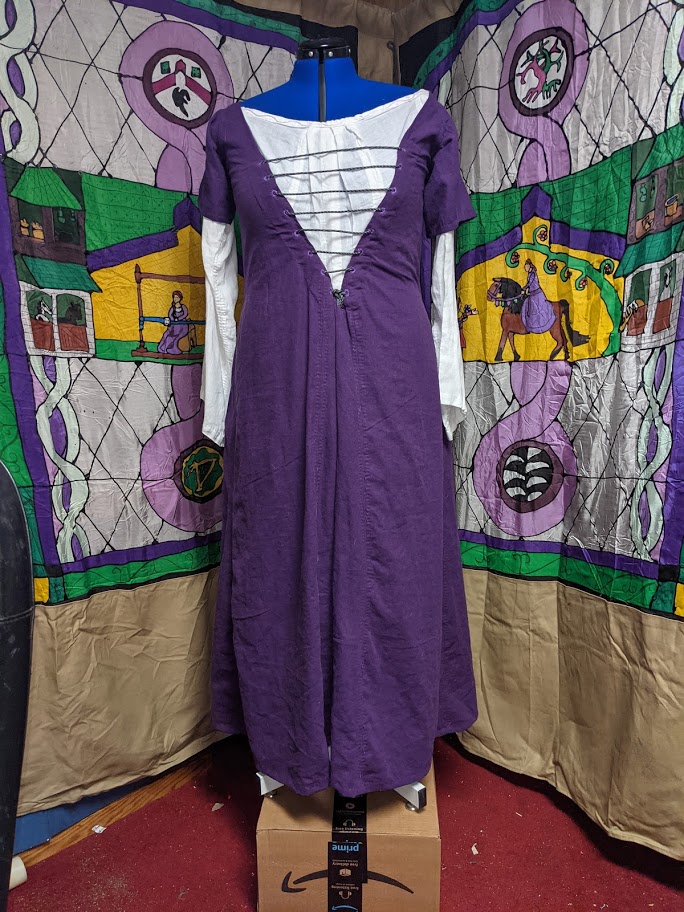
This short sleeved kirtle is made of linen, with a wide V-front design to allow for changing sizes. The lacing here is tubular tablet weaving I made during the project time. Machine construction, hand finishing
Including the eyelets! This was my first time hand-sewing eyelets and I think they turned out alright.
Layer 3
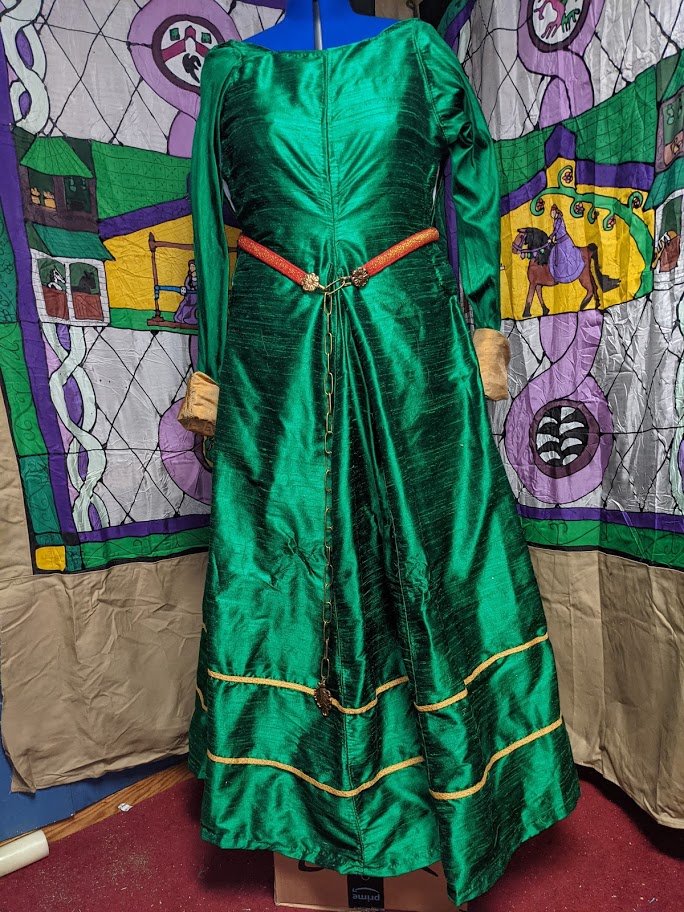
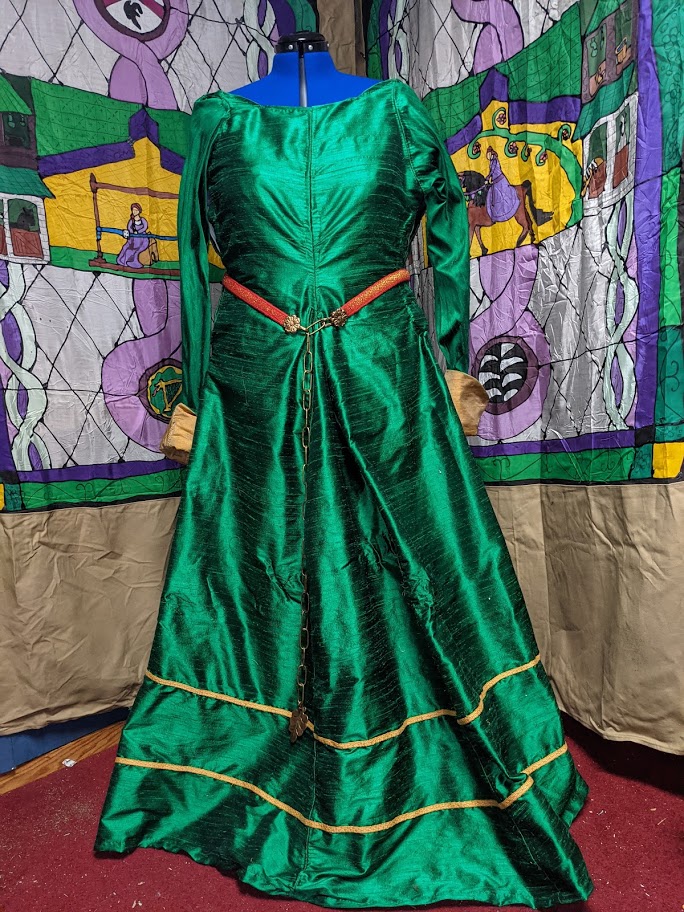
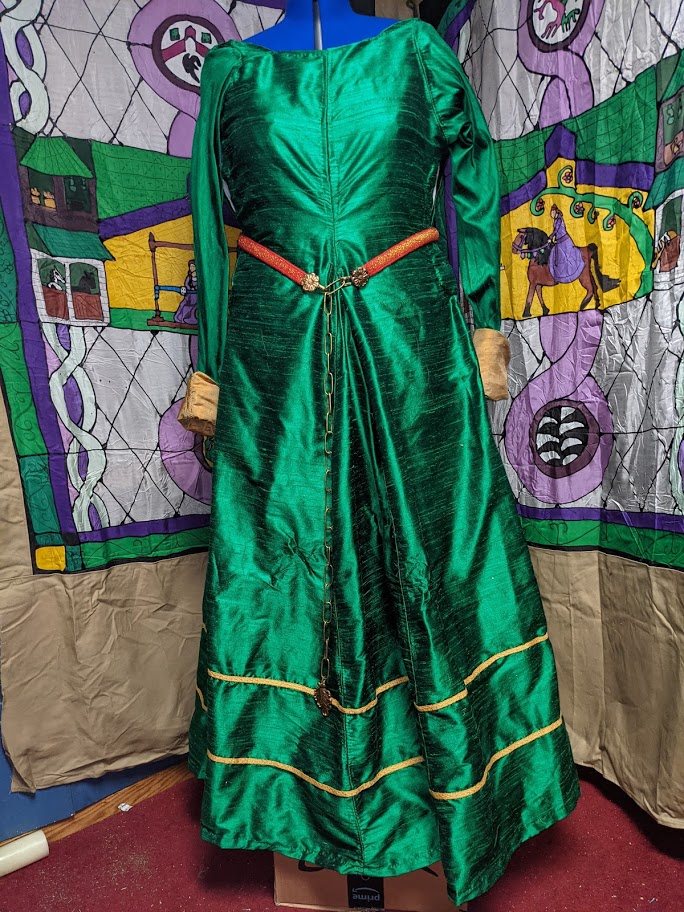
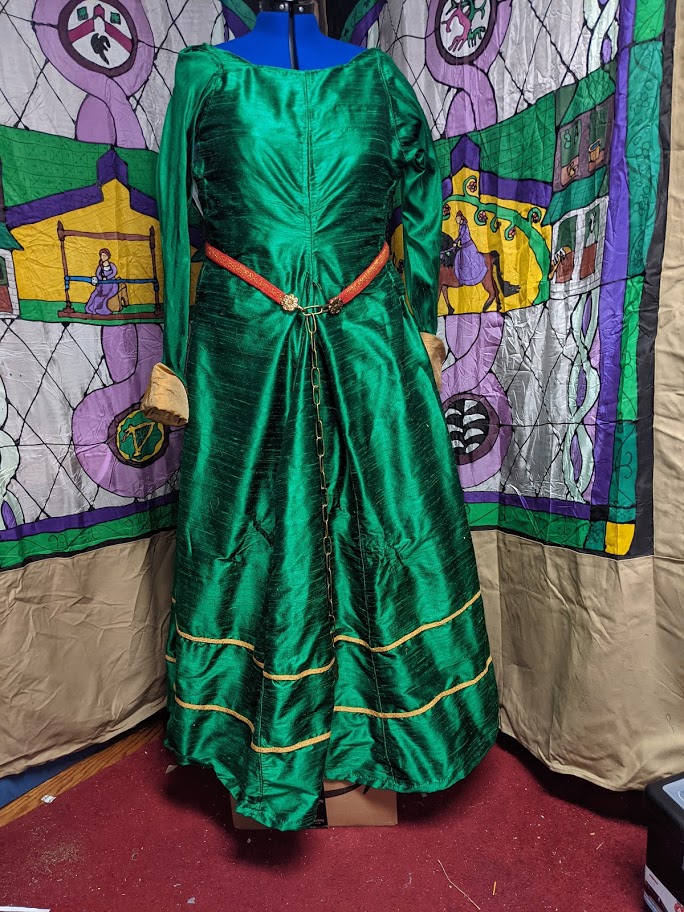
This layer really tested my patience, let me tell you. We have a rule in my house, as mentioned above, that my fiance (Vincent de Vere) does all the sewing in the house and this dress proved once again that that’s a great policy for us. I tried on this dress and it fit great but there was a little too much on the back, so I took it out. Then I tried it on again…. and it was too small by exactly that same amount, so I had to piece it back in. There’s no reason it should happen, but it did.
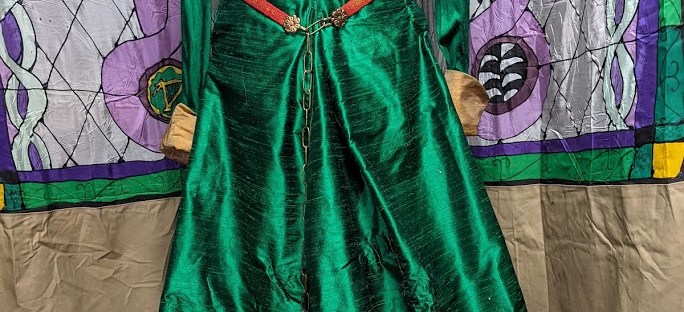
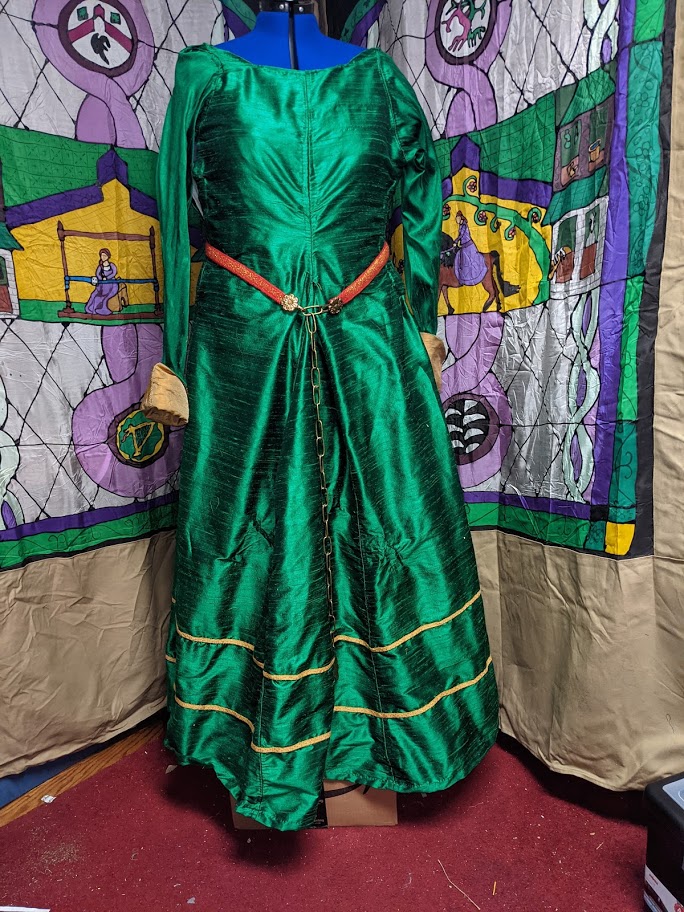
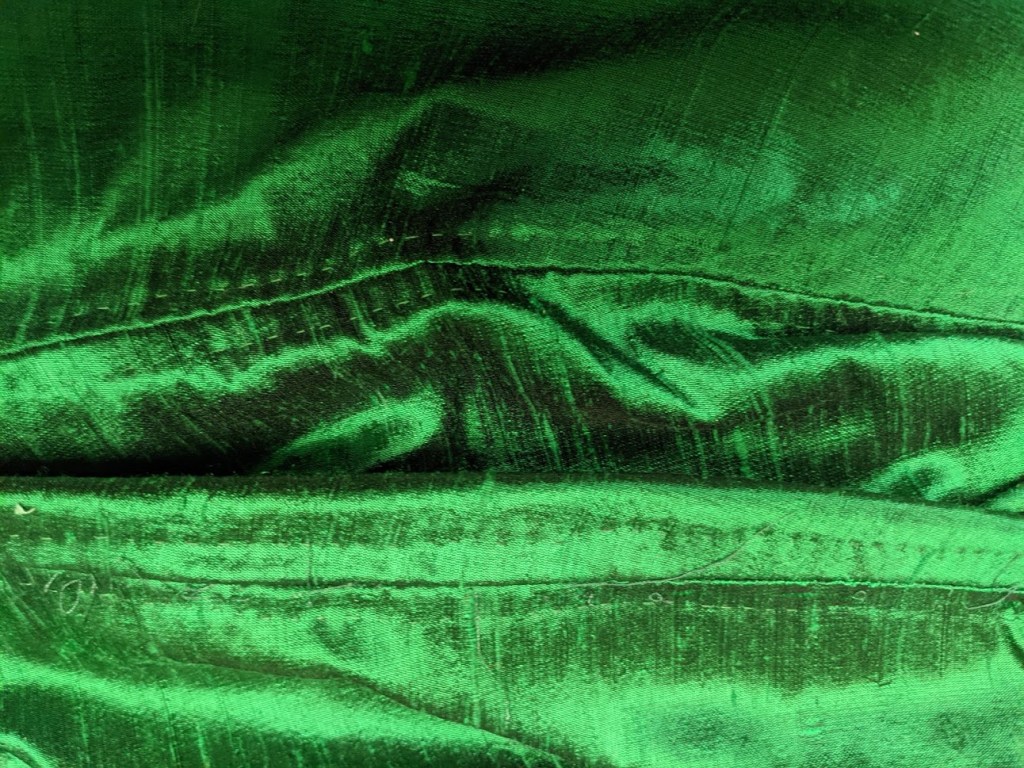
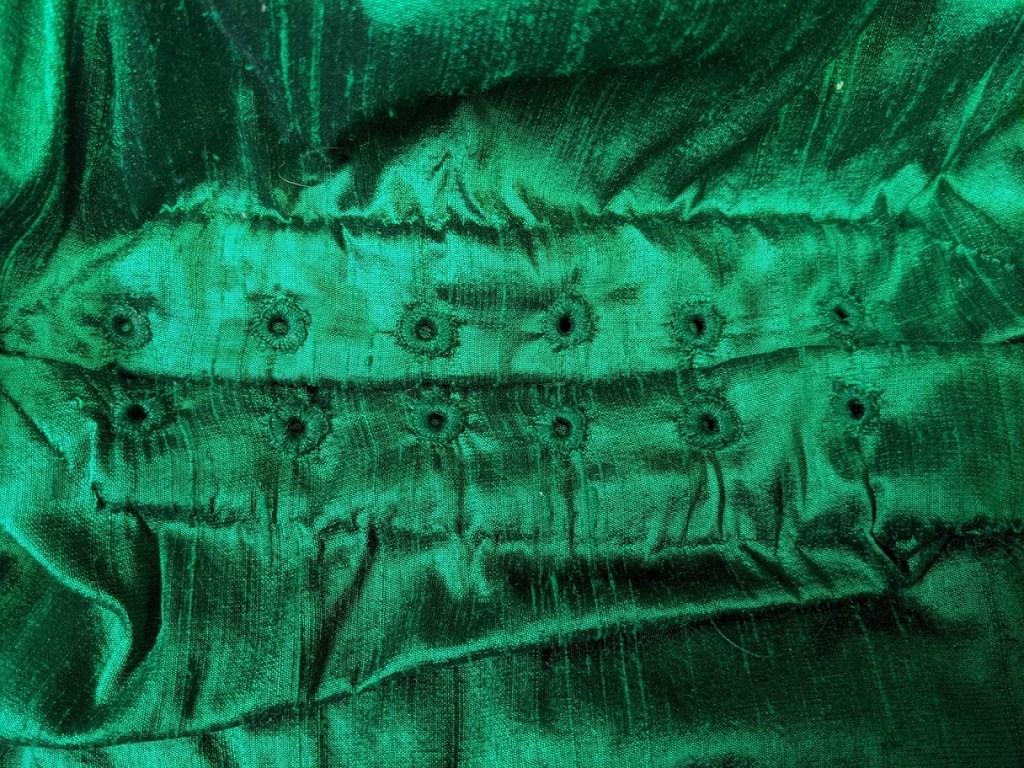
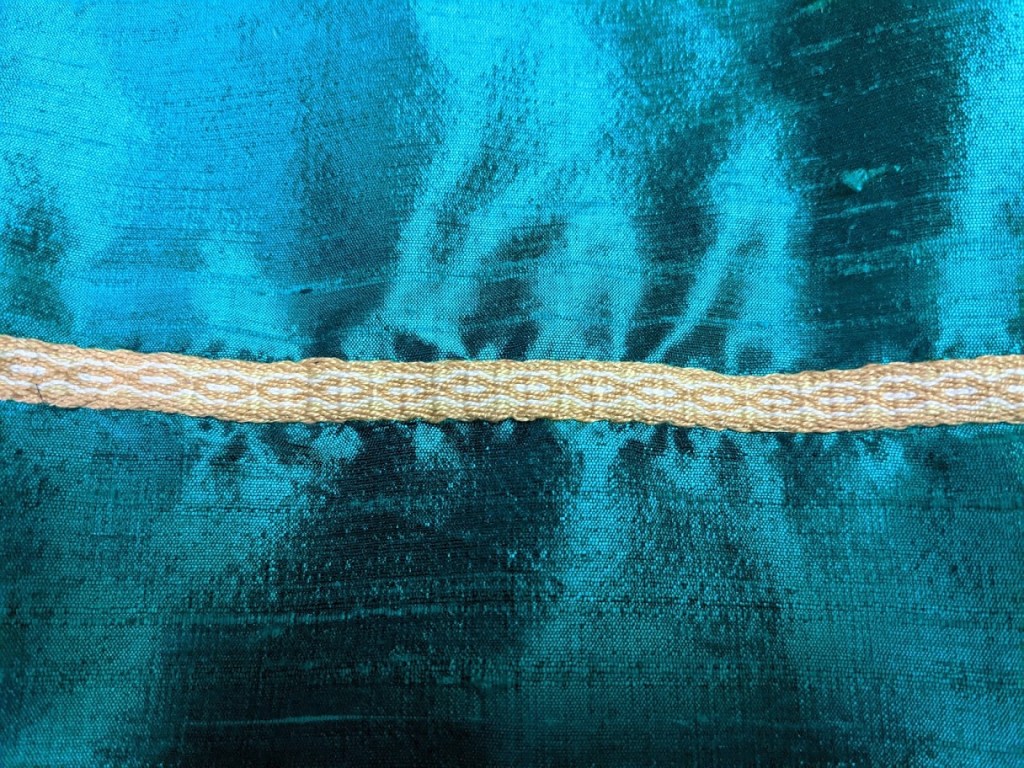
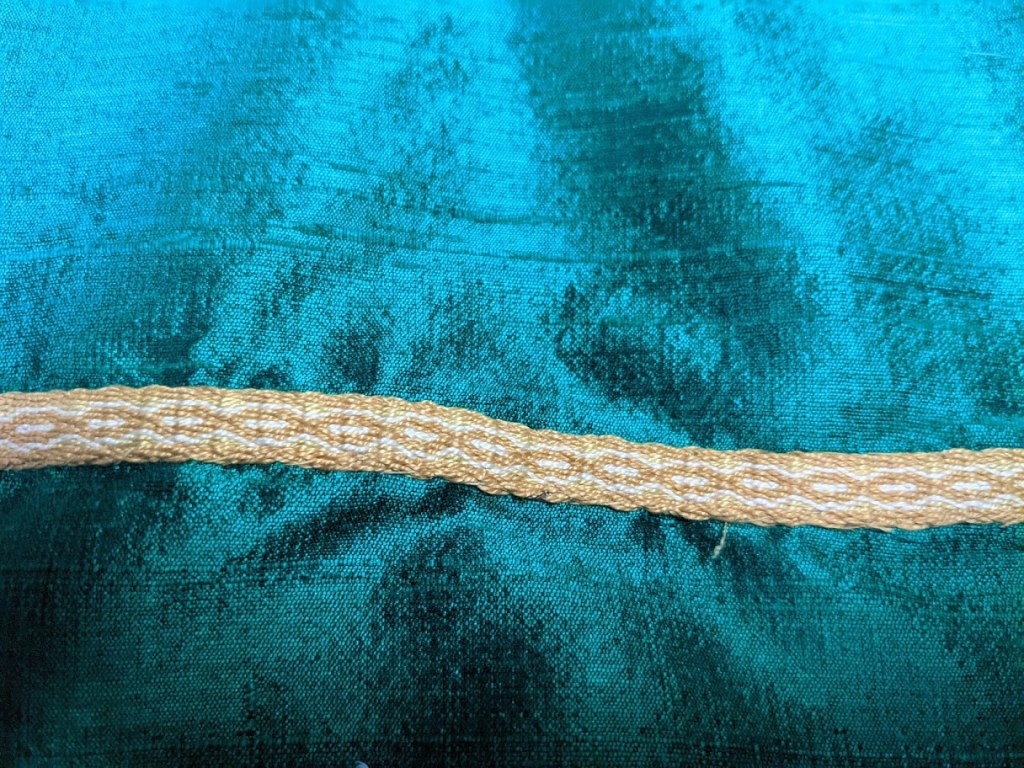
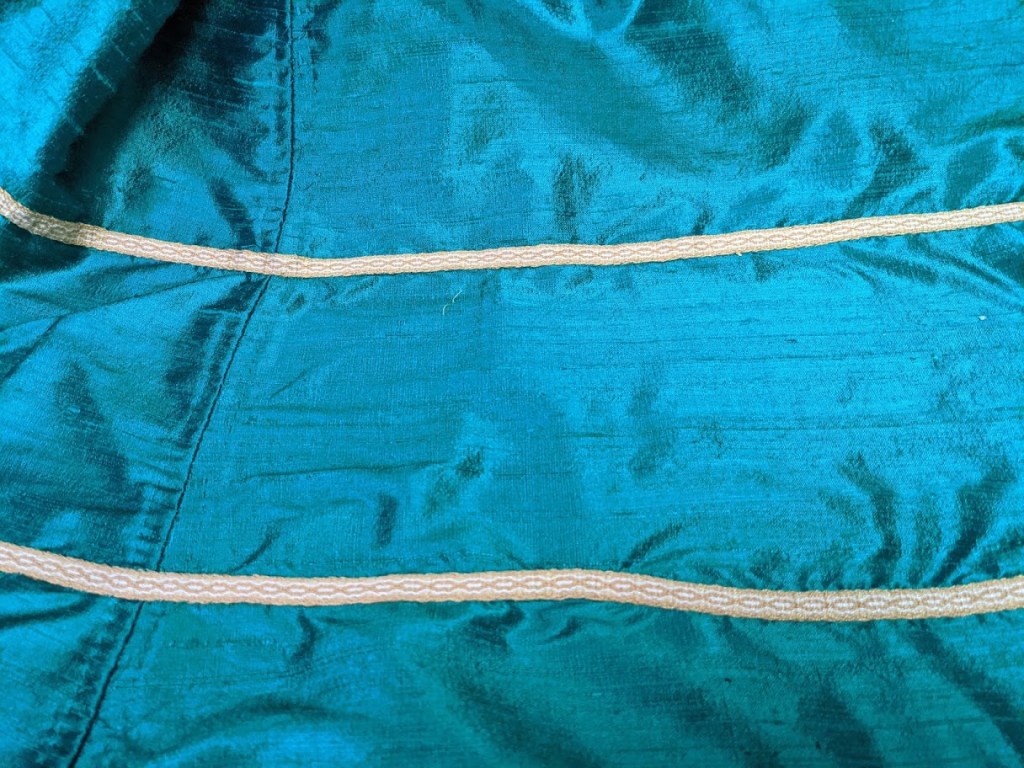
Anyway, this is a green/black dupioni silk and I just love the color. Based on information from the Medieval Tailor’s assistant, I chose to make this layer side lacing to alternate with the underlayers. Rather than embroidering, I wove bands for the bottom as I’m a tablet-weaver and that seemed a lot less onerous for me while I was running this challenge. I will eventually go back and embroider in words as is seen in my inspiration images.
This, too, is machine sewn and hand finished, including all the eyelets for the side closures.
Layer 4
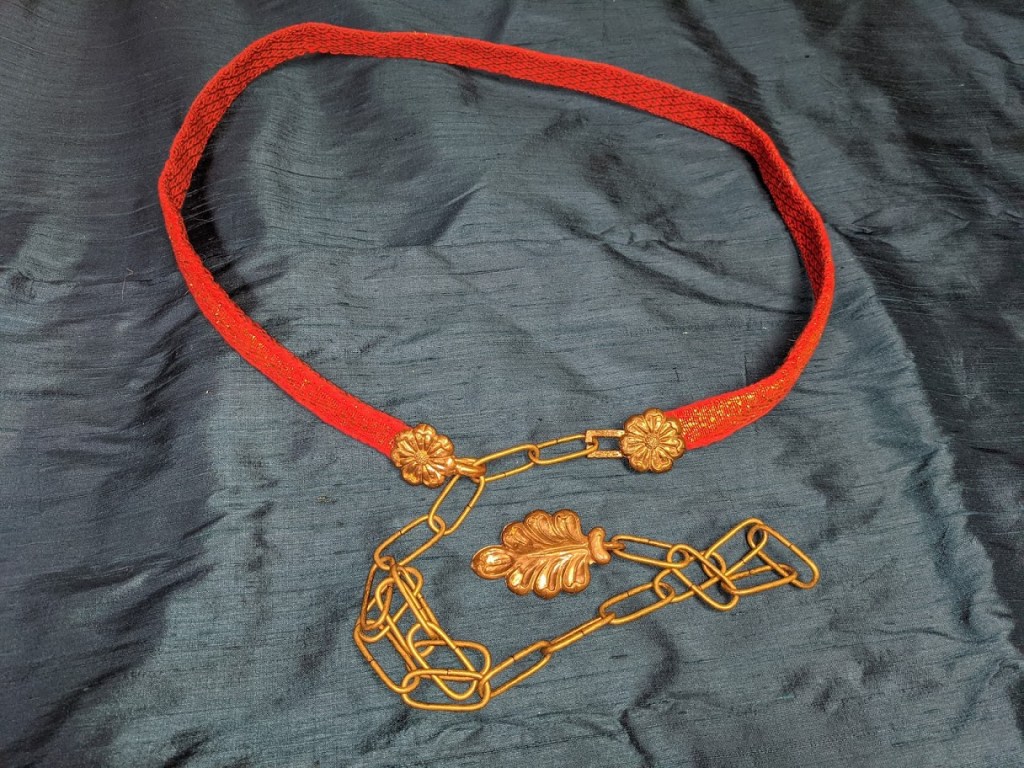
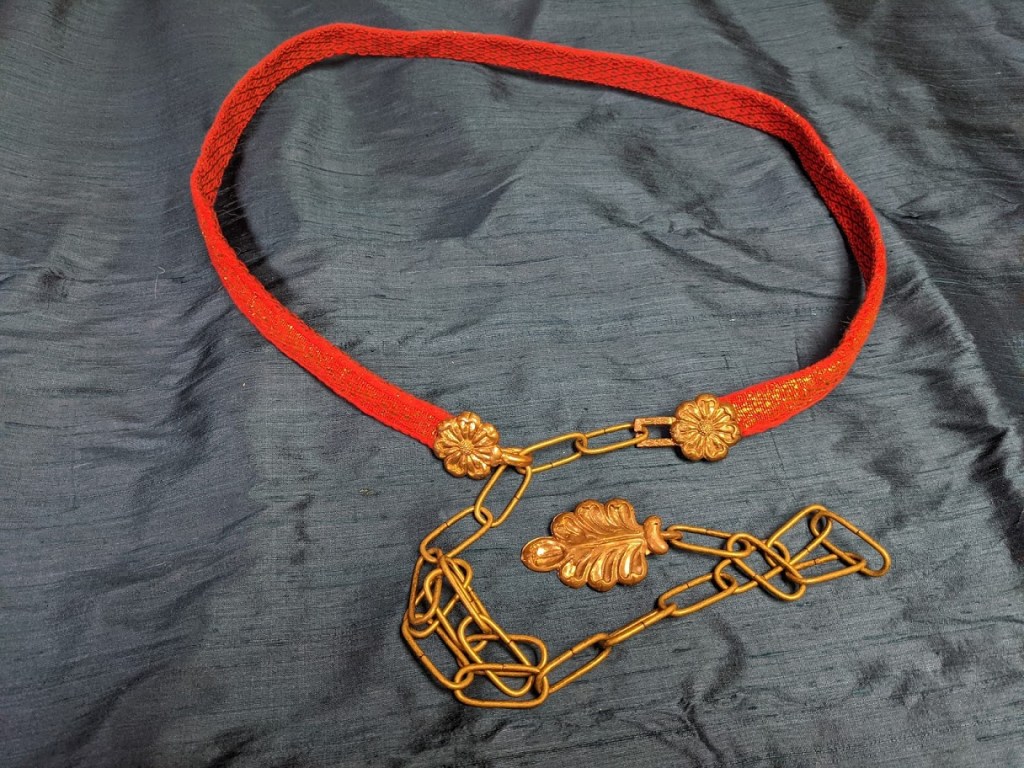
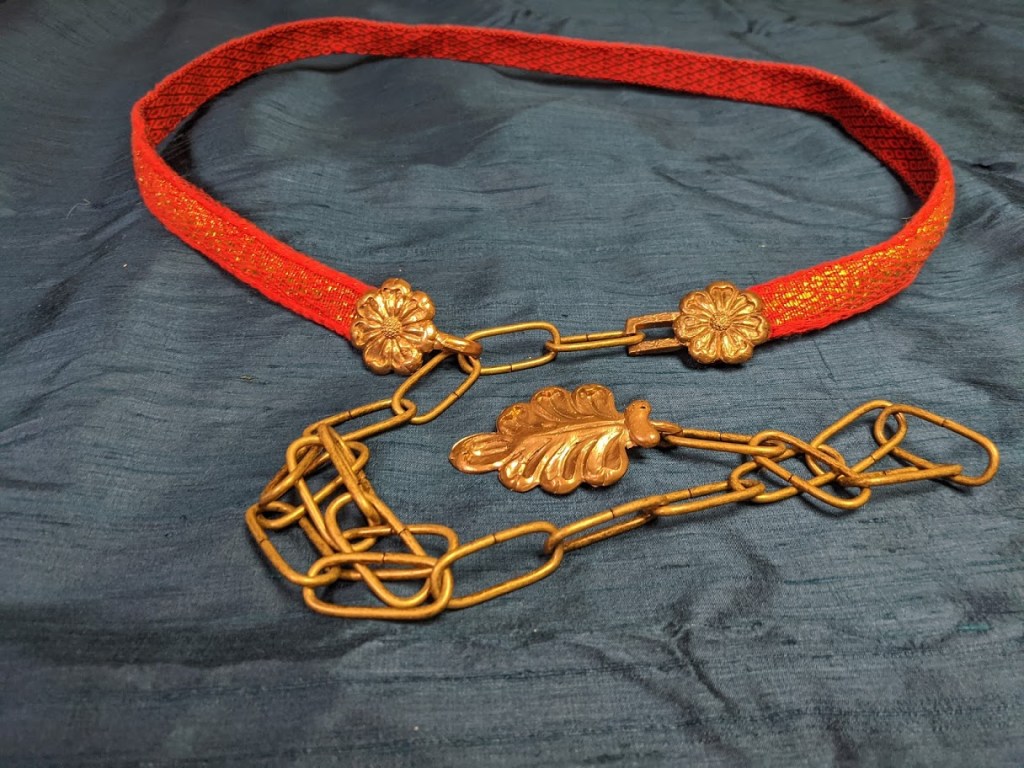
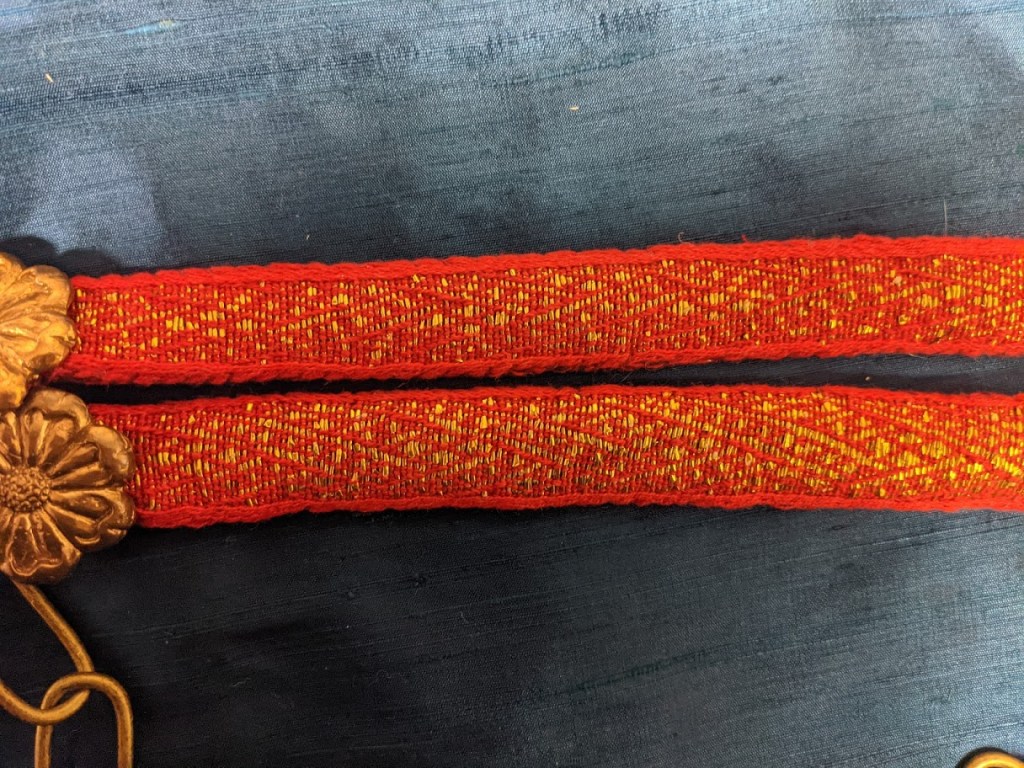
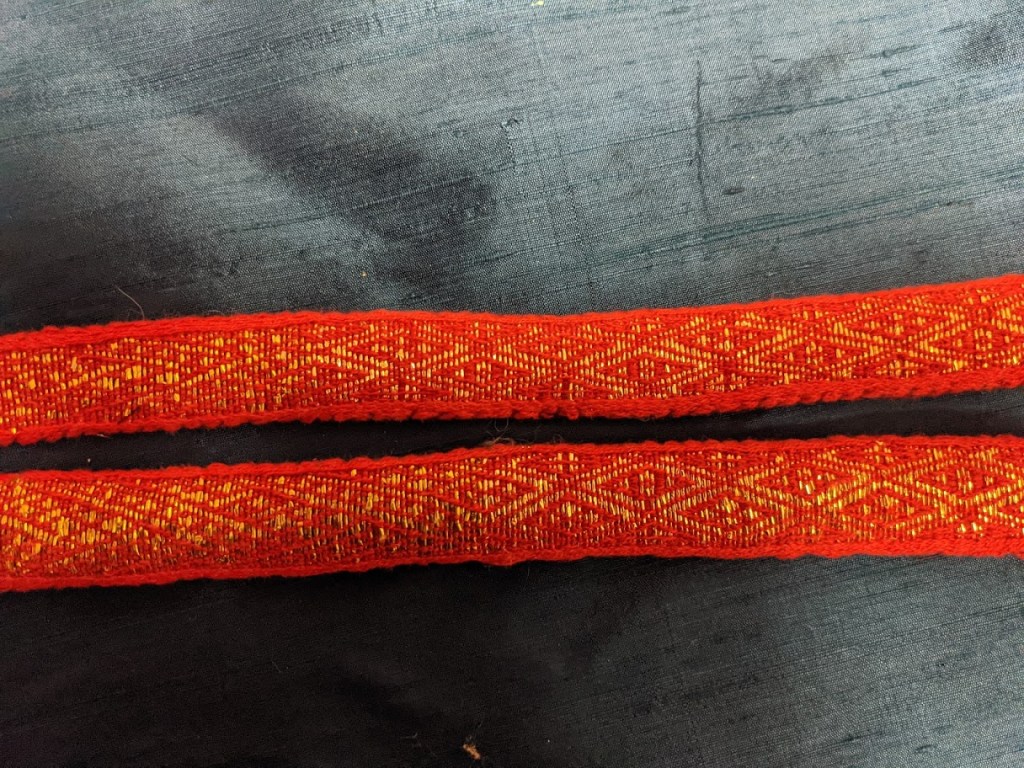
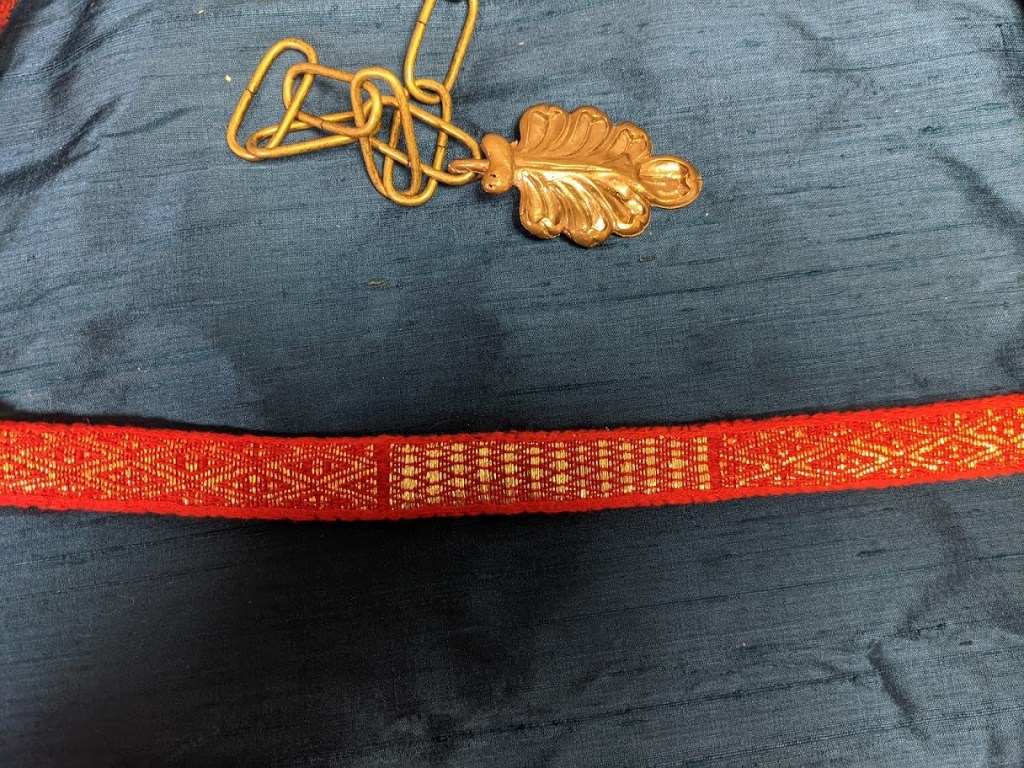
I’m a tablet weaver (if you couldn’t tell from all the tablet weaving I snuck into my other layers) so my layer four is a tablet woven, brocaded belt. The main layer is a red 30/2 silk with a mylar metallic weft (because who can afford real gold for these things?) Patterns are self-designed and generically geometric.
I like to have a supportive backing layer on my belts because I’m not very easy on them. It offers a little extra support. The backing band here is a linen in a simple pattern which was woven separately and sewn to the decorative band.
Belt ends are purchased.
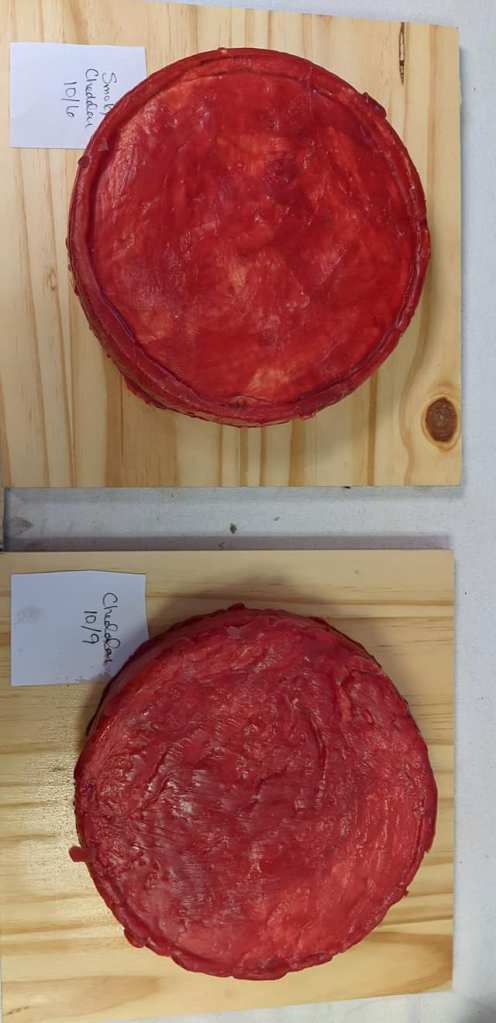
Farmhouse Cheddar – Cheesemaking techniques haven’t changed much since medieval times. I’ve made two cheddar rounds, one smoked (ok, burned. I scorched the milk. But I already had the yeast and rennet in it by then, so I went ahead and finished it. Who knows?) and one regular. They’ll age until January when it’s time to take pictures
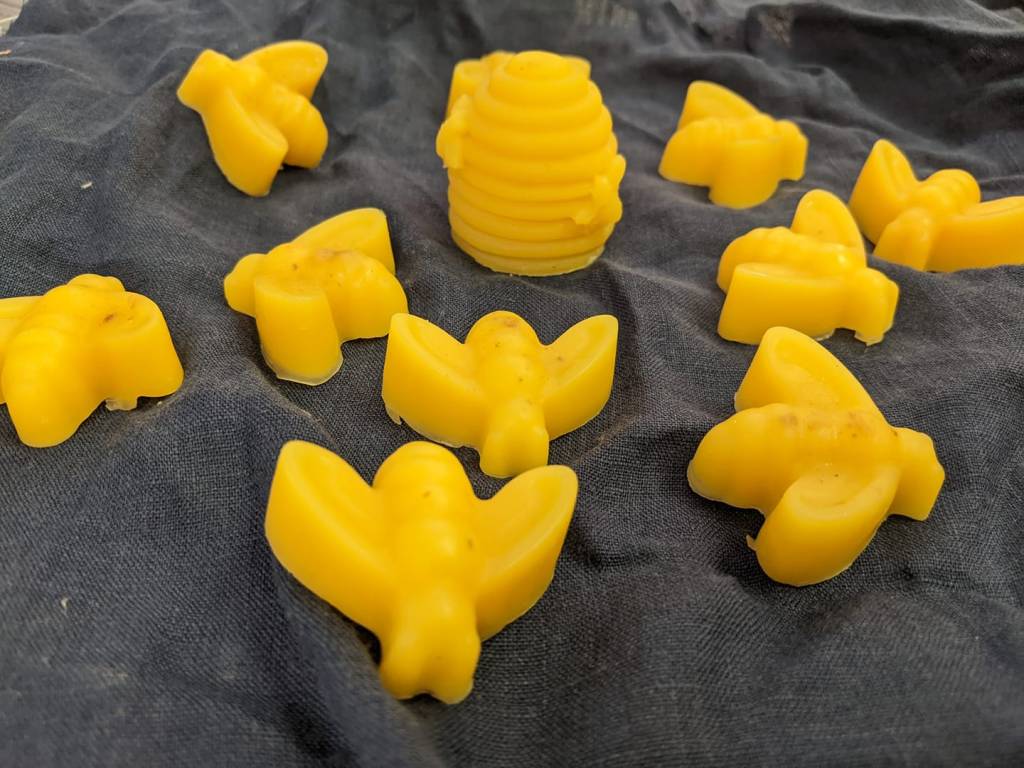
Beeswax – The beeswax was processed from the yearly rent paid by the bees who live in my yard. The hive shaped piece is mine for the challenge and the bees went out to people from my local group who have taken up the challenge as well.
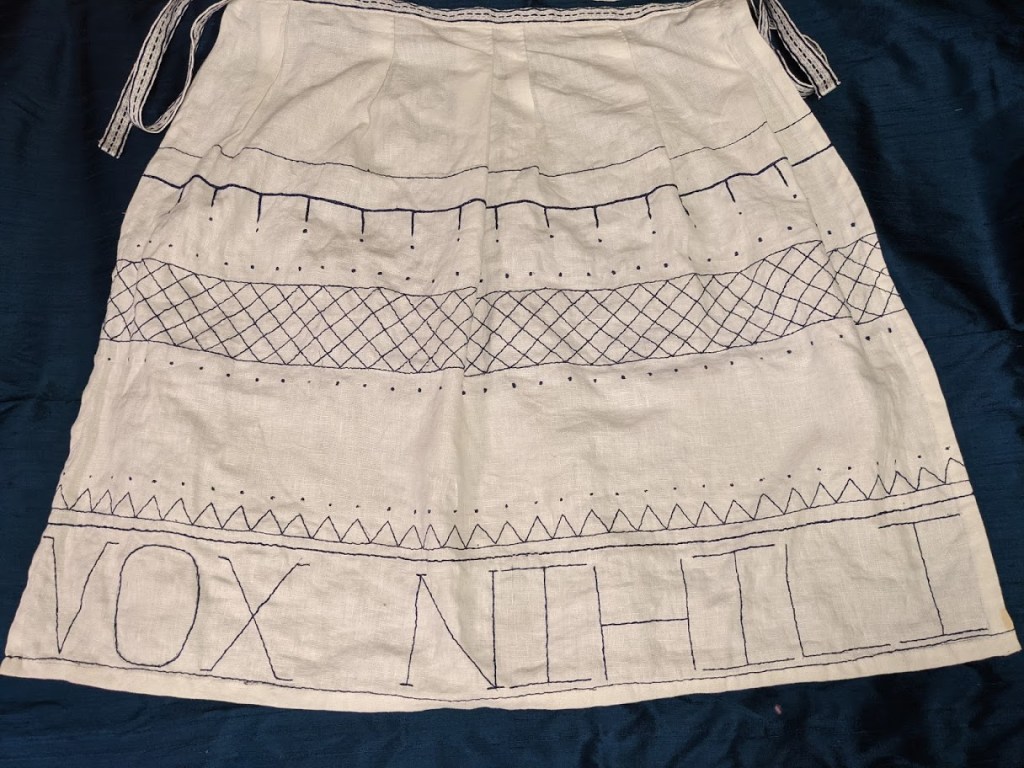
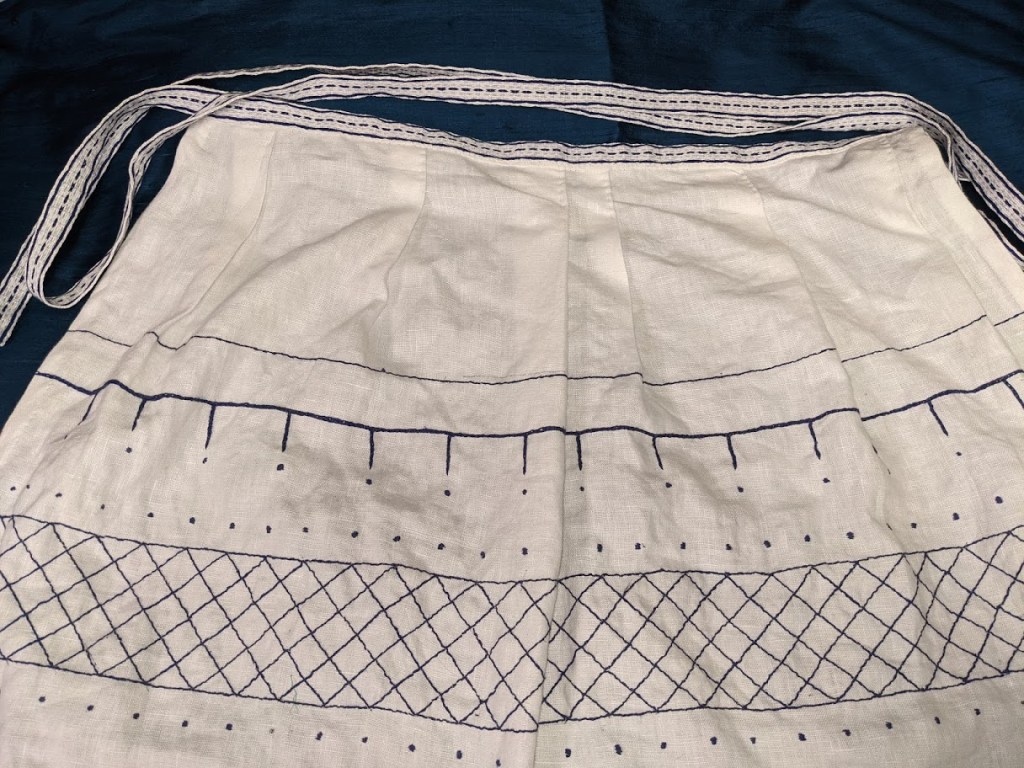
Embroidered Apron – the whole reason this was my to-do outfit! The originals had religious sayings but, not being religious I wanted to switch it out for something else. “Vox Nihili” – roughly meaning “saying Nothing” seemed amusing and appropriate. Linen embroidery on lined fabric, with a linen tablet woven band at the top for tying.
“A” shaped dress with “V” shaped neckline, fitted in the torso and spreading widely, often with train from the waist. Wide belt at waist. Worn over fitted kirtle.
Description:
One of the garments that there are many image examples for as this is a time of many surviving artworks. A style of dress seen in many Flemish paintings that show a common set of features including fitted torso with deeply plunging neckline and collar with contrasting fabric or fur lining. The deep neckline displayed an under placket or partlet or kirtle, some displayed without. Sleeves often shown with lined cuffs that are rolled back on the sleeve. Most show no seam at waist or a wide belt covering any such seam. More examples of images showing the waist seam appear closer to 1500CE. Many are displayed as being lined
Under layers would commonly include a shift, slip or some form of underdress, covered by a fitted kirtle and then covered by the gown.
Key accessories include the wide belt often made from fabrics as well as many examples of different styles of hats, many becoming elaborate.
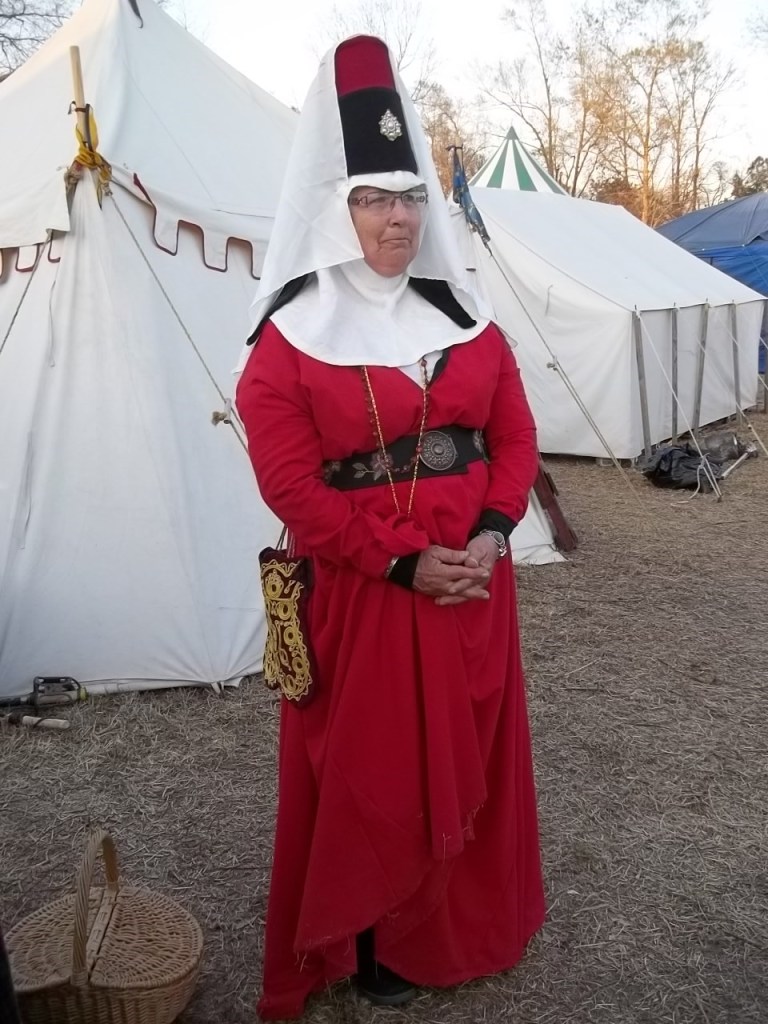
This dress is poly cotton blend brocade with cotton velvet collar and cuffs, red linen kirtle, white linen shift. A yellow silk placket covers most of the red kirtle at the plunging neckline
Inspiration Images
Common Materials
Fabrics:
Gown –
wools,
finely woven wools,
brocaded or patterned cloths. Rich textiles,
collars featuring velvets and furs.
Fur trim
Kirtle –
wool
linen
Underclothes
linen
Ornamentation:
Effective Substitutions
Fabrics:
Gown
Some cottons
linens
Linen blends wool blends
brocades
some poly/cotton upholstery fabrics to achieve the woven in patterns.
Kirtle
Linen and linen blends
some cottons to lighten the under layers
Underclothes
Linen
Linen blends
cottons
Ornamentation:
Ensemble Components
Under layers – shift/slip or some form of underdress
gown.
fitted kirtle
Accessories
Key accessories include the wide belt often made from fabrics as well as many examples of different styles of hats, many becoming elaborate.
This is the time of the Henin hat that becomes the stereotypical ‘princess’ hat, various low shoes or slippers, pouches or purses.














 SCA Iowa Garb Guide


