Component Entry, Female, Male, Unisex

Hose Linen 1

TitleHose Linen 1
Entry #GGC2021.008
Alternate Namesseparate hose, split hose, hose, hosen, stocking, chausses 
Year1000-1500 CE
Time range1000-1500 CE
Eraearly medieval, high Medieval, Late Medieval
Genderunisex
regionEuropean
Countries/culturesWestern European, Central European
MakerVincent De Vere,
Difficulty2
ConfidenceImage Example

Intro:

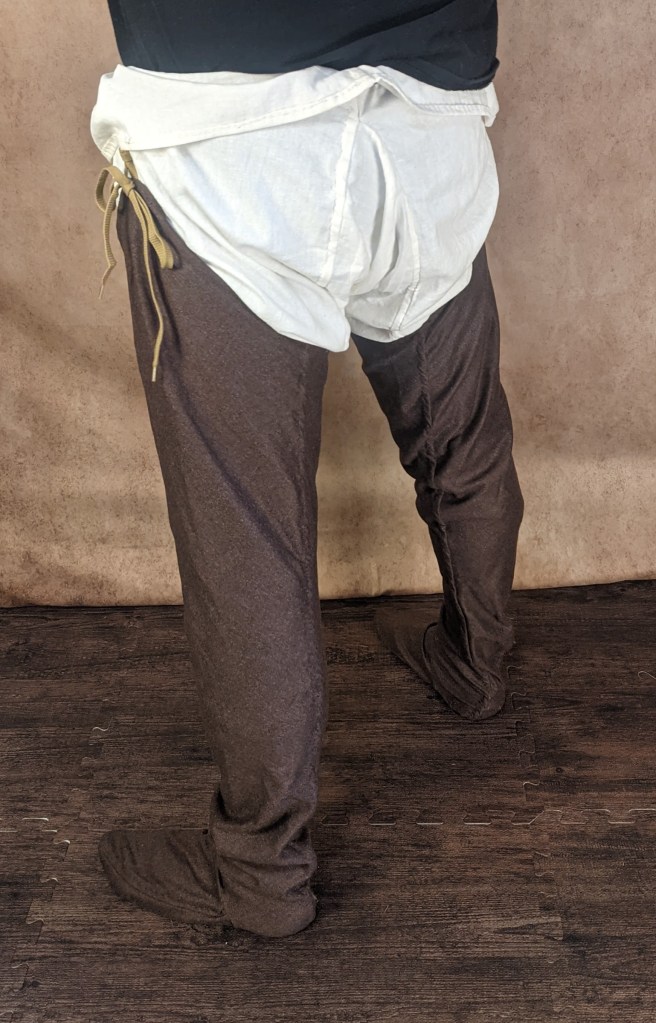
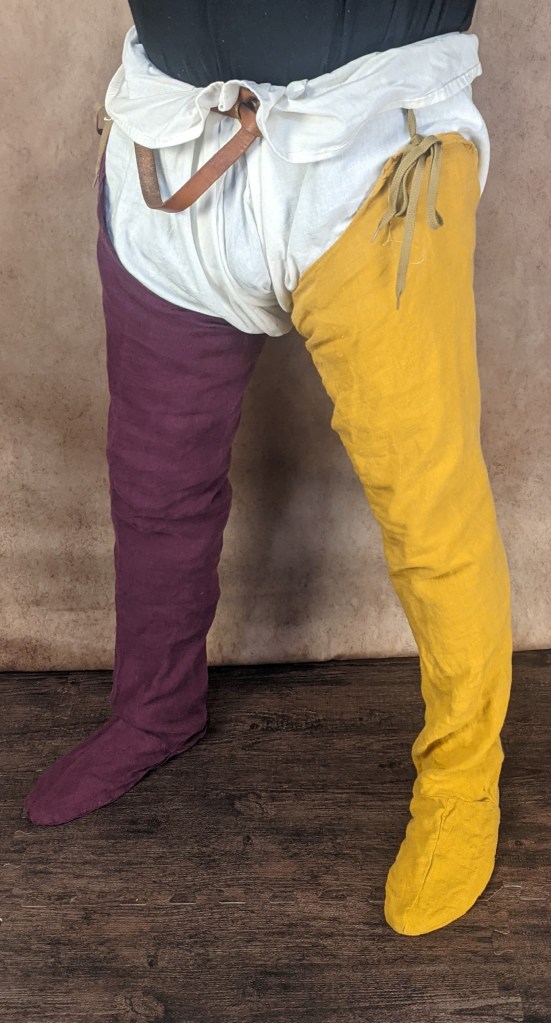
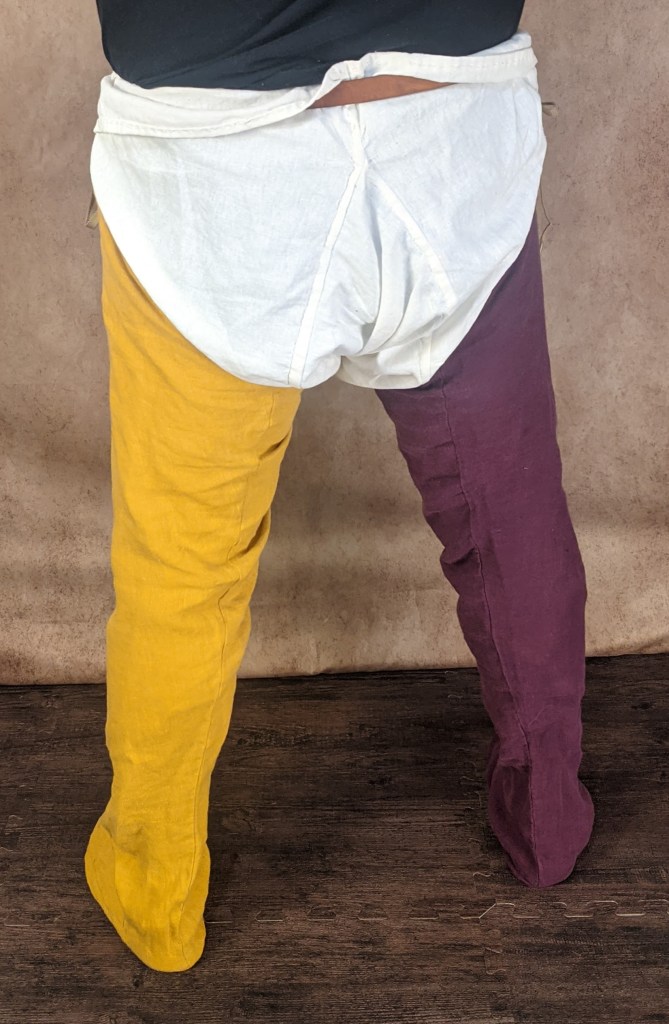
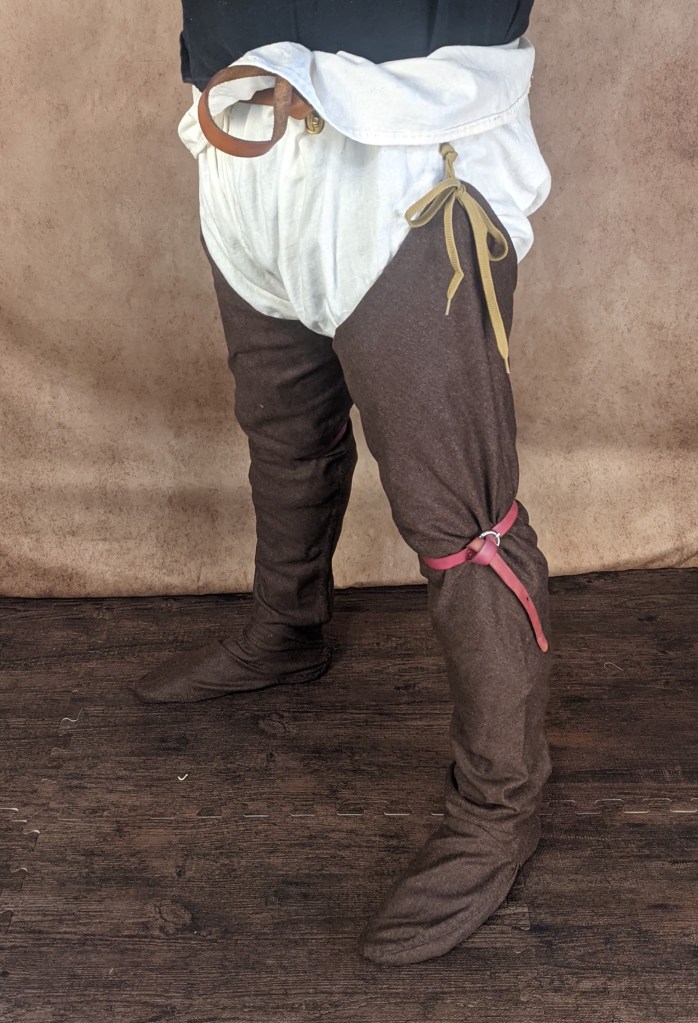
Examples of split hose sewn from linen and tied to the breech garter at the waist.                          

Description:

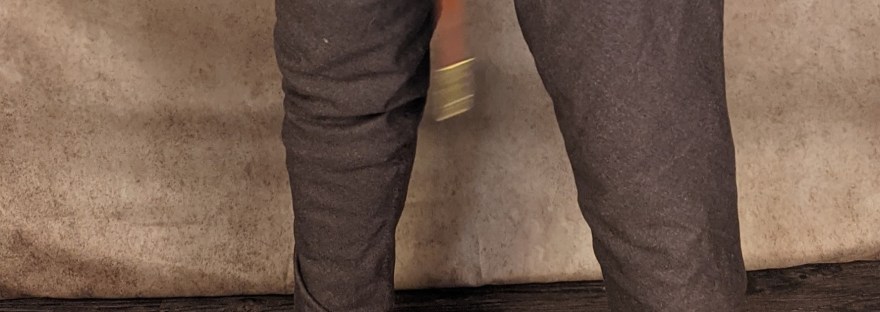
This is an example of split hose made out of linen and parti-colored.  They have enclosed feet and a hole at the side to tie to a belt or girdle.  They may commonly be seen with a garter tied just below the knee to assist in keeping the hose from slipping.  The garter may be a tied woven band or a band with a buckle.

There is evidence supporting the use of some form of split hose stretching to early medieval times with their height in high medieval times.  By the 1300’s the split hose were beginning to be less fashionable and were replaced by joined hose, however split hose continued to be used until the end of period. 

The longer forms of the split hose may be associated with male fashion and the short hose with women and children, but people likely wore what they preferred as well as what matched their needs.

The best hose is made out of light wool fabric that has some spring to the weave and cut on the bias (diagonally.) although very wasteful of the fabric, the bias cut means that the resulting hose are slightly more elastic and fit better. 

The historical use of various kinds of hose by women is assumed by us and use by members does occur.

Inspiration Images

Common Materials

  • Fabrics:
    • Wool  

Effective Substitutions

  • Fabrics:
    • linen blends
    • Linen
    • wool
    • cotton
    • cotton blends
    • Wool blends

Ensemble Components

  • Hosen were worn by many different cultures and time periods and by many levels of society.  Closely associated with the hosen are the Braies worn under the hosen and the girdle or belt used to hold them up as well as the garters to keep them from slipping worn just below the knee. 

Accessories

  • Garters or woven material tied or a belt style garter.  Girdle belt or belt worn at the waist and tied to the hosen to keep them up

Source/Links

http://www.medievaltymes.com/courtyard/maciejowski_images_18.htm

Version1
date12/25/2021
Source of Period Picmaciejowski bible
Model Vincent de Vere
PhotographerVincent De Vere
  
Component Entry, Female, Male, Unisex

Hose wool 1

TitleHose wool 1
Entry #GGC2021.009
Alternate Namesseparate hose, split hose, hose, hosen, stocking, chausses 
Year1000-1500 CE
Time range1000-1500 CE
Eraearly medieval, high Medieval, Late Medieval
Genderunisex
regionEuropean
Countries/culturesWestern European, Central European
MakerVincent De Vere,
Difficulty2
ConfidenceImage Example

Intro:

Examples of split hose sewn from linen and tied to the breech garter at the waist.                          

Description:

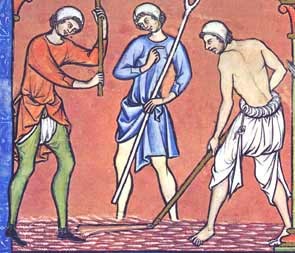
This is an example of split hose made out of wool.  They have enclosed feet and a hole at the side to tie to a belt or girdle.  They may commonly be seen with a garter tied just below the knee to assist in keeping the hose from slipping.  The garter may be a tied woven band or a band with a buckle.

There is evidence supporting the use of some form of split hose stretching to early medieval times with their height in high medieval times.  By the 1300’s the split hose were beginning to be less fashionable and were replaced by joined hose, however split hose continued to be used until the end of period. 

The longer forms of the split hose may be associated with male fashion and the short hose with women and children, but people likely wore what they preferred as well as what matched their needs.

The best hose is made out of light wool fabric that has some spring to the weave and cut on the bias (diagonally.) although very wasteful of the fabric, the bias cut means that the resulting hose are slightly more elastic and fit better. 

Inspiration Images
Common Materials

  • Fabrics:
    • Wool  

Effective Substitutions

  • Fabrics:
    • linen blends
    • Linen
    • wool
    • cotton
    • cotton blends
    • Wool blends

Ensemble Components

  • Hosen were worn by many different cultures and time periods and by many levels of society.  Closely associated with the hosen are the Braies worn under the hosen and the girdle or belt used to hold them up as well as the garters to keep them from slipping worn just below the knee. 

Accessories

  • Garters or woven material tied or a belt style garter.  Girdle belt or belt worn at the waist and tied to the hosen to keep them up

Source/Links

http://www.medievaltymes.com/courtyard/maciejowski_images_18.htm

Version1
date12/30/2021
Source of Period Picmaciejowski bible
Model Vincent de Vere
PhotographerVincent De Vere
  
Component Entry, Female, Male, Unisex

Apron, gathered

TitleApron, gathered
Entry #GGC2021.016
Alternate NamesApron
Year1000-1600 CE
Time range1000-1600 CE
Eraearly medieval, high Medieval, Late Medieval
Genderunisex
regionEuropean
Countries/culturesWestern European, Central European
MakerVincent De Vere,
Difficulty1
ConfidenceImage Example

Intro:

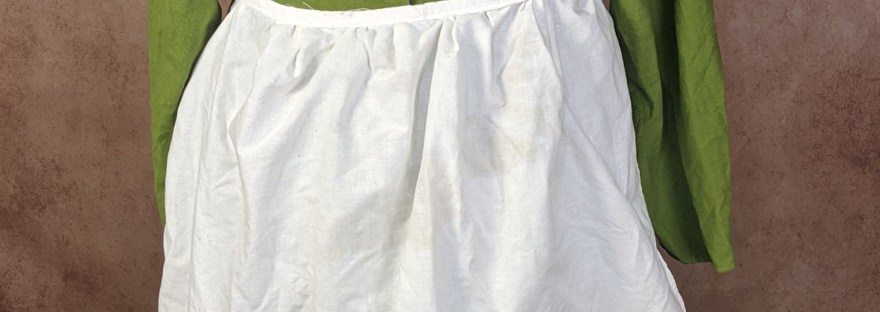
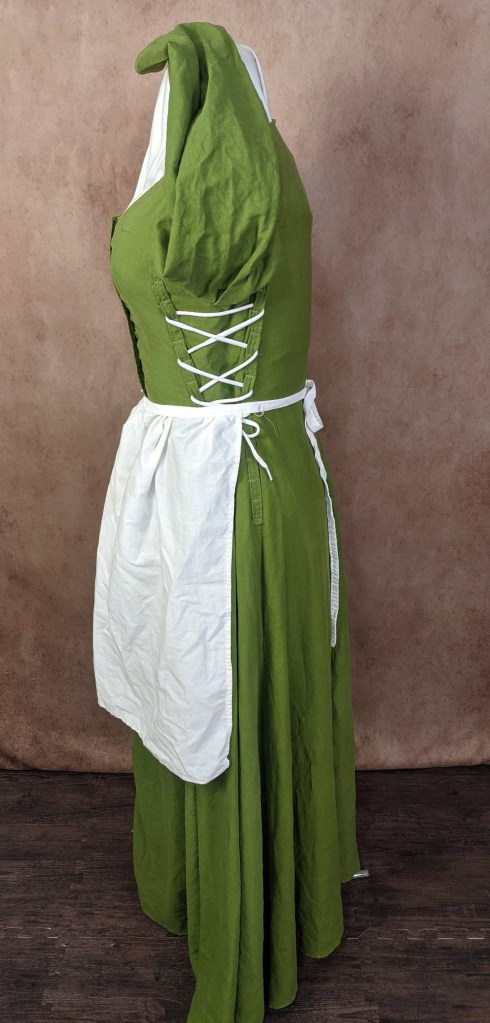
Basic gathered apron made from one yard of linen fabric                               

Description:

This apron is made from three pieces with two long narrow strips sewn into the waistband and one large rectangle gathered along the waistband to form the main portion of the apron.

Aprons are easily constructed accessories that are also functional accessories to use with your SCA clothing.  They can easily be made in a few minutes by machine or just a couple hours by hand.  They add to the completeness of an ensemble by adding another layer to the look.  They are also very functional in protecting the clothing beneath it.

Inspiration Images

Common Materials

  • Fabrics:
    • Linen  

Effective Substitutions

  • Fabrics:
    • linen blends
    • Linen
    • cotton
    • cotton blends

Ensemble Components

  •  

Accessories

Source/Links

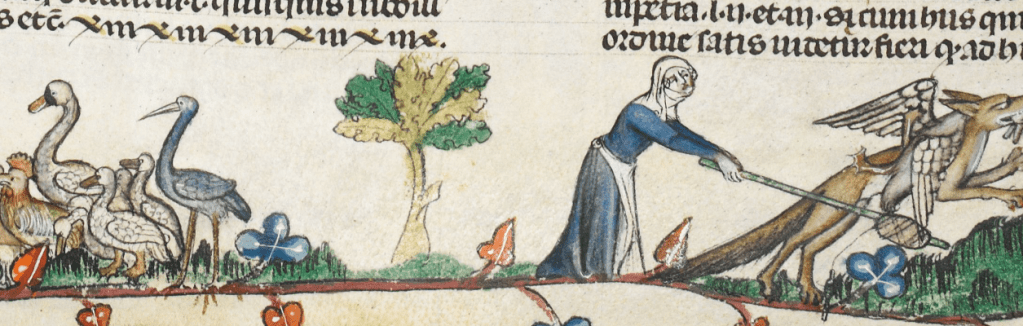
c 1300-c 1340, The Decretals of Gregory IX, edited by Raymund of Penyafort (or Peñafort); with the glossa ordinaria of Bernard of Parma in the margin. 

Version1
date12/30/2021
Source of Period PicBritish Library
Model Vincent de Vere
PhotographerVincent De Vere
  
Component Entry, Female, Male, Unisex

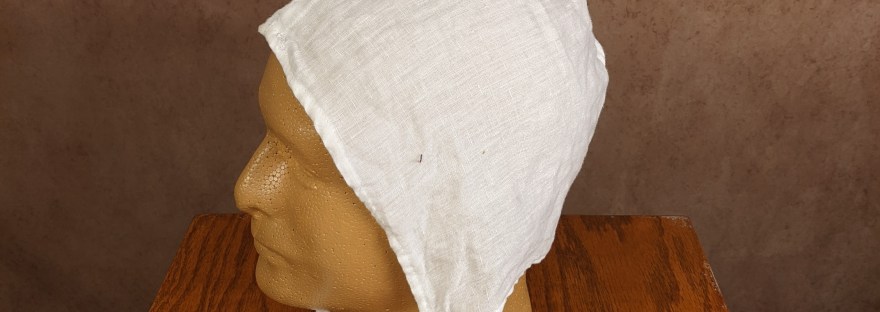
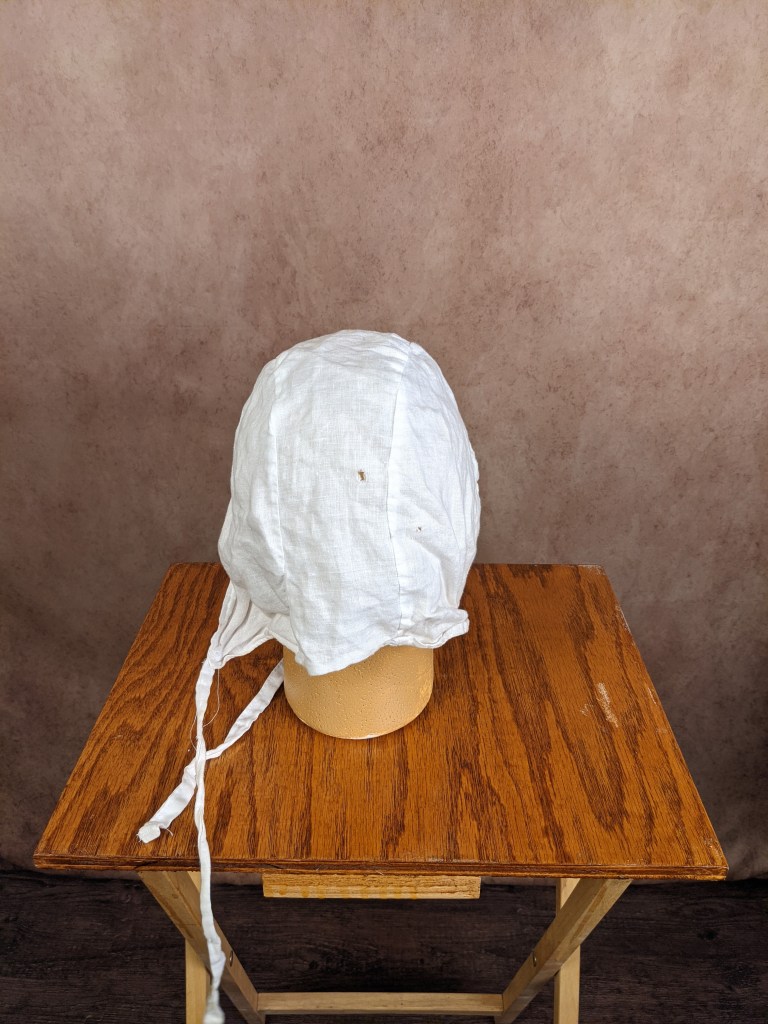
Coif, 2 piece

TitleCoif, 2 piece
Entry #GGC2021.003
Alternate NamesCoif  
Year1000-1600 CE
Time range1000-1600 CE
EraHigh Medieval, Late Medieval
Genderunisex
regionEuropean
Countries/culturesGermany, Western European, Central European
MakerVincent De Vere,
Difficulty1
ConfidenceExtant Example

Intro:

Head covering made from small scraps of linen fabric.                  

Description:

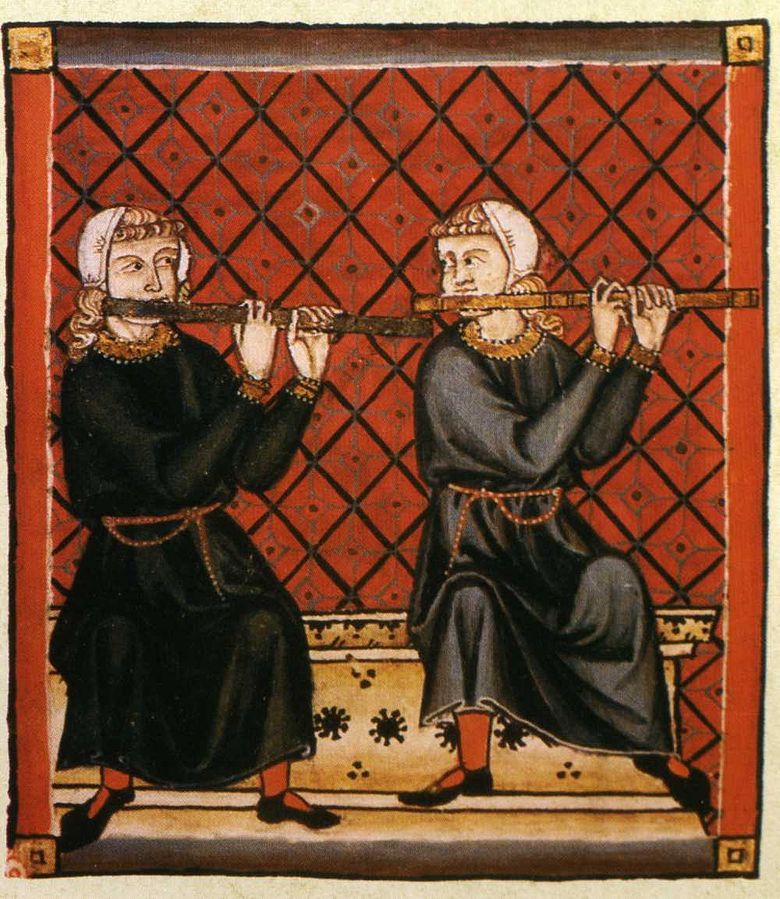
It’s underwear for your head.  Many images of the middle ages feature people wearing coifs to cover and protect their hair, oils from their head from their hats and for something to connect hats to.  They also are an easy accessory to add to your

These are very simple to construct either by machine or by hand and take very little fabric.  They are easily made from cotton fabric or linen and there are surviving examples and images that show a number of variations through time or cultures.

Inspiration Images

Common Materials

  • Fabrics:
    • linen  

Effective Substitutions

  • Fabrics:
    • linen blends
    • Linen
    • wool
    • cotton
    • cotton blends

Ensemble Components

Accessories

Source/Links

Illustration from Cantigas de Santa Maria manuscript. The Cantigas de Santa Maria (Songs to the Virgin Mary) are manuscripts written in Galician-Portuguese, with music notation, during the reign of Alfonso X El Sabio (1221-1284).

Version1
date12/30/2021
Source of Period PicBritish Library
Model Vincent de Vere
PhotographerVincent De Vere
  
Component Entry, Female, Male, Unisex

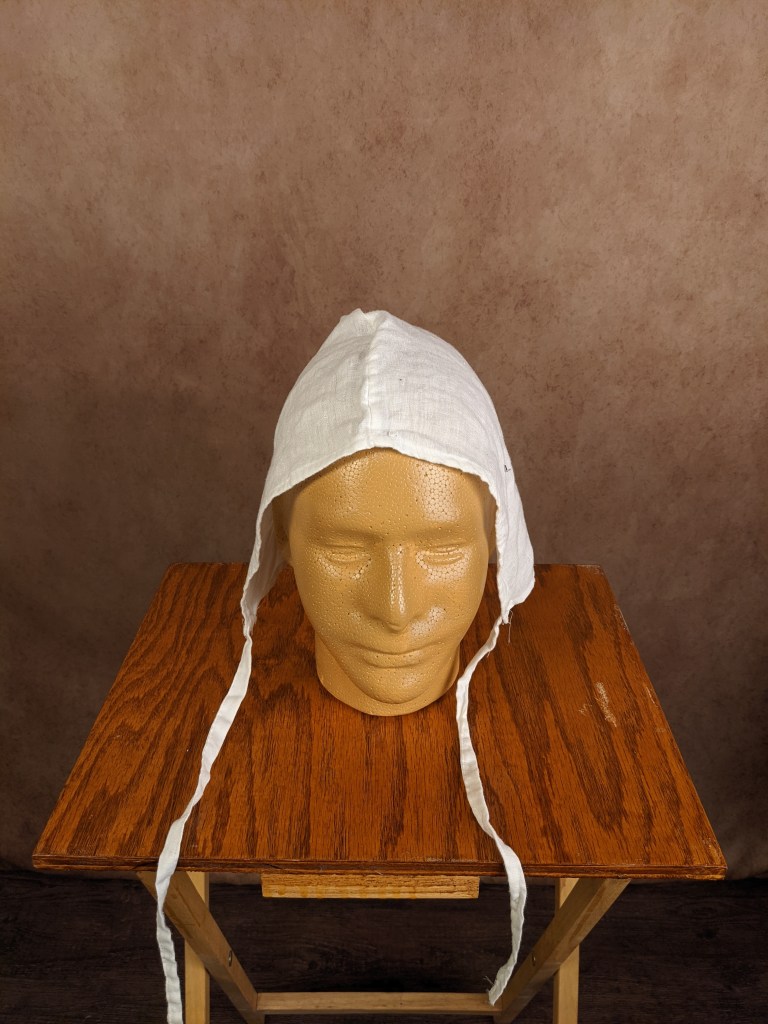
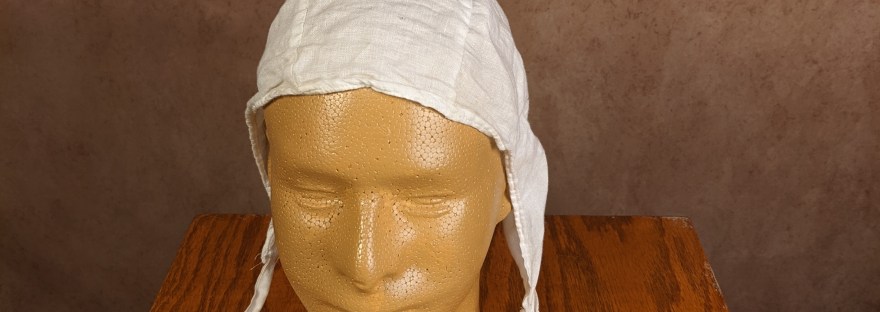
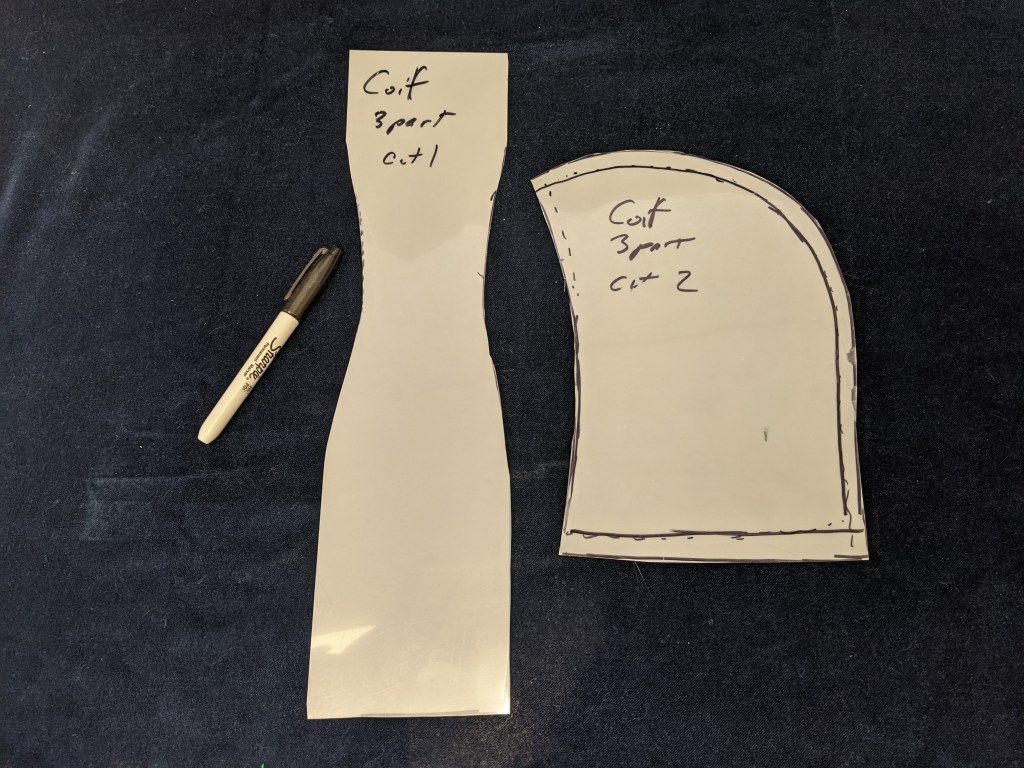
Coif, 3 piece

TitleCoif, 3 piece
Entry #GGC2021.004
Alternate NamesCoif  
Year1000-1600 CE
Time range1000-1600 CE
EraHigh Medieval, Late Medieval
Genderunisex
regionEuropean
Countries/culturesGermany, Western European, Central European
MakerVincent De Vere,
Difficulty1
ConfidenceExtant Example

Intro:

Head covering made from small scraps of linen fabric.                  

Description:

It’s underwear for your head.  Many images of the middle ages feature people wearing coifs to cover and protect their hair, oils from their head from their hats and for something to connect hats to.  They also are an easy accessory to add to your

These are very simple to construct either by machine or by hand and take very little fabric.  They are easily made from cotton fabric or linen and there are surviving examples and images that show a number of variations through time or cultures.

Inspiration Images

Common Materials

  • Fabrics:
    • linen  

Effective Substitutions

  • Fabrics:
    • linen blends
    • Linen
    • wool
    • cotton
    • cotton blends

Ensemble Components

Accessories

Source/Links

Illustration from Cantigas de Santa Maria manuscript. The Cantigas de Santa Maria (Songs to the Virgin Mary) are manuscripts written in Galician-Portuguese, with music notation, during the reign of Alfonso X El Sabio (1221-1284).

Version1
date12/30/2021
Source of Period PicBritish Library
Model Vincent de Vere
PhotographerVincent De Vere
  
Full Entry, Male

1000 CE Norman Riding Tunic 2

Title: 1000 CE Norman Riding Tunic 2
Entry #: GGB2021.028
Alternate Names: tunic, t tunic 
Year: 1000
Time range: 900-1200 CE
Era: Early Medieval
Gender: Male
region: Western Europe
Countries/cultures: England France
Maker: Vincent De Vere, Kristine Nic Tallier
Difficulty: 2
Confidence: Image example

Intro:

A version of the basic tunic used in many European cultures from antiquity through to the high middle ages by some.  This tunic is split to allow wearer to ride a horse and have freedom of movement.

Description:

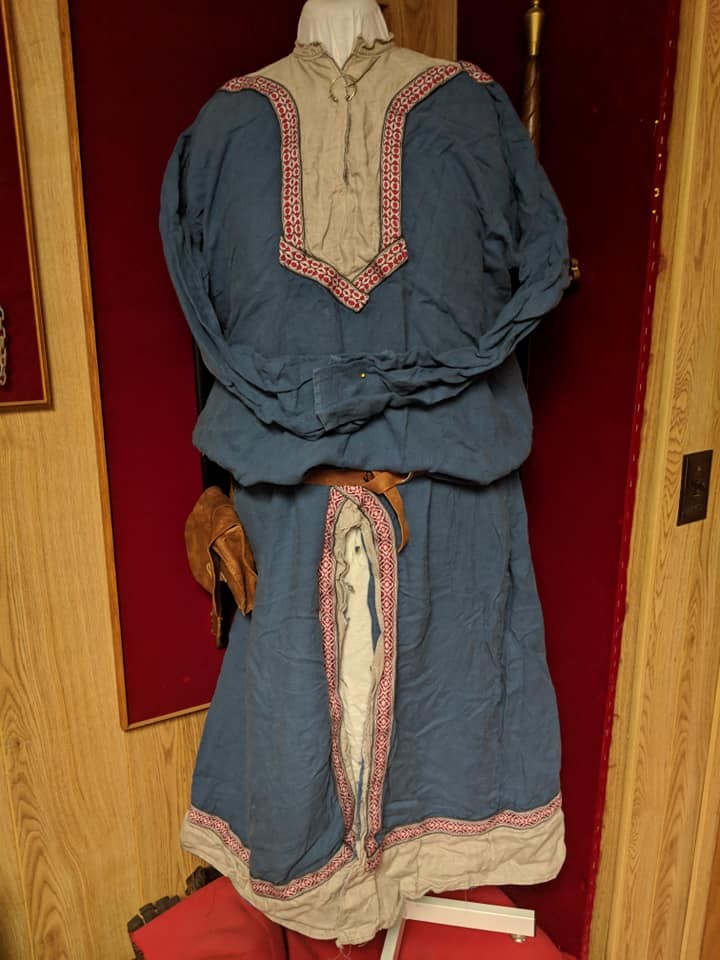
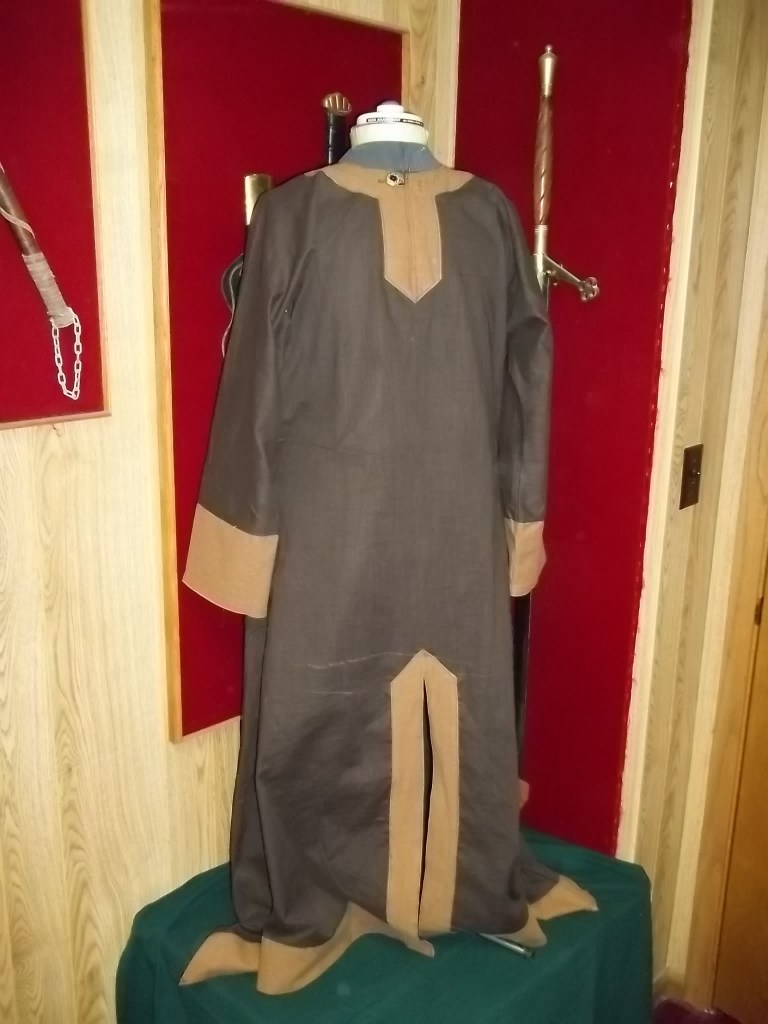
One of the many variations of the tunics made out of linen or wool. This example has a keyhole neck opening and featuring a split in front and back bottom to allow the wearer to ride a horse. 

This variation was cut T tunic style out of a wide piece of fabric to minimize seams. A more period cut would include seams connecting the sleeve to the body.  Trim is an applique of linen.  Keyhole neck is held closed with a brooch pin.  Tunics are about the easiest garments to construct.

Tunics are often the starting point for new members when just beginning in the SCA.  This tunic could be made for less than $20 in 2021.

Inspiration Images

Common Materials

  • Fabrics:
    • wool
    • linen (including non-flax linen)
  • Ornamentation:

Effective Substitutions

  • Fabrics:
    • Wool blends,
    • Linen, linen/rayon
    • linen/cotton
    • some cottons could be used but cotton broad cloth is not advised as it is not a strong material and doesn’t drape well
  • Ornamentation:

Ensemble Components

  • Under shirt (likely of a similar cut)
  • Belt
  • Pouch

New members often start with just a tunic and belt.

  • pants/trews/braccae
  • leg wraps
  • turn shoes/boots

Accessories

  • under tunic as bottom layer
  • belt
  • pants
  • over tunic or super tunic over the tunic
  • shoes
  • cloak or coat

Source/Links

http://www.virtue.to/articles/tunic_worksheet.html

http://alianorderavenglas.wordpress.com/as-50-challenge/13th-century-riding-tunic/

Version: 2
date: 3/1/2021
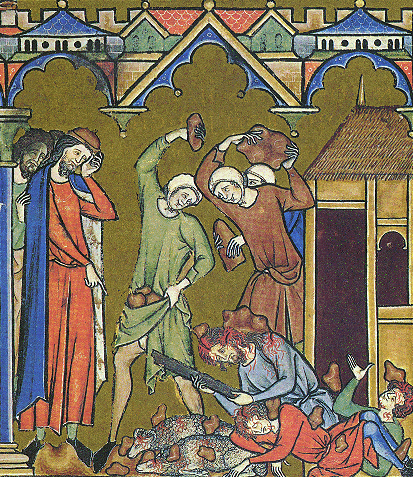
Source of Period Pic: Maciejowski Bible.
Model: Vincent De Vere
Photographer: Vincent De Vere
  

Full Entry, Male

1000 CE Norman Riding Tunic 1

Title: 1000 CE Norman Riding Tunic 1
Entry #: GGB2021.027
Alternate Names: tunic, t tunic 
Year: 1000
Time range: 900-1200 CE
Era: Early Medieval
Gender: Male
region: Western Europe
Countries/cultures: England France
Maker: Vincent De Vere
Difficulty: 1
Confidence: Image example

Intro:

A version of the basic tunic used in many European cultures from antiquity through to the high middle ages by some.  This tunic is split to allow wearer to ride a horse and have freedom of movement.

Description:

One of the many variations of the tunics made out of linen or wool. This example has a keyhole neck opening and featuring a split in front and back bottom to allow the wearer to ride a horse. 

This variation was cut T tunic style out of a wide piece of fabric to minimize seams. A more period cut would include seams connecting the sleeve to the body.  Trim is an applique of linen.  Keyhole neck is held closed with a brooch pin.  Tunics are about the easiest garments to construct.

Tunics are often the starting point for new members when just beginning in the SCA.  This tunic could be made for less than $20 in 2021.

Inspiration Images

Common Materials

  • Fabrics:
    • wool
    • linen (including non-flax linen)
  • Ornamentation:

Effective Substitutions

  • Fabrics:
    • Wool blends,
    • Linen, linen/rayon
    • linen/cotton
    • some cottons could be used but cotton broad cloth is not advised as it is not a strong material and doesn’t drape well
  • Ornamentation:

Ensemble Components

  • Under shirt (likely of a similar cut)
  • Belt
  • Pouch

New members often start with just a tunic and belt.

  • pants/trews/braccae
  • leg wraps
  • turn shoes/boots

Accessories

  • under tunic as bottom layer
  • belt
  • pants
  • over tunic or super tunic over the tunic
  • shoes
  • cloak or coat

Source/Links

http://www.virtue.to/articles/tunic_worksheet.html

http://alianorderavenglas.wordpress.com/as-50-challenge/13th-century-riding-tunic/

Version: 2
date: 3/1/2021
Source of Period Pic: Maciejowski Bible.
Model: Vincent De Vere
Photographer: Vincent De Vere
  

Female, Full Entry

1000 CE Female Byzantine Borderlands Dress

Title: 1000 CE Female Byzantine Borderlands Dress
Entry # : GGB2021.016
Alternate Names:  
Year: 1000 CE
Time range: 900-1100 CE
Era: Early Medieval
Gender: Female
region: Eastern Europe, middle east
Countries/cultures: Byzantine
Maker: Liesel Gelucken
Difficulty: 2
Confidence: Image Examples

Intro:

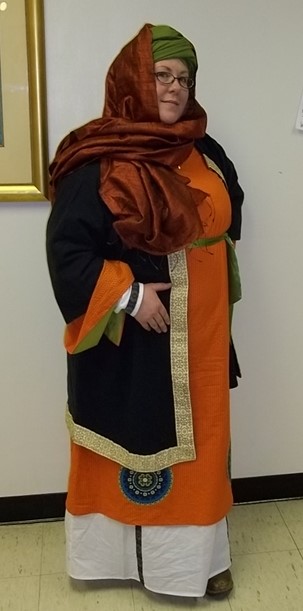
Clothing from the outskirts of the Byzantine Empire, multi layered and richly decorated tunic-like garments consisting of layers of dresses and robes

Description:

Essentially wide sleeved tunics and robes, made from rich fabrics and decorated with embroidered embellishments.

Multiple layers of rich garments would show the wealth of the individual.  Fabrics were lighter and finer in weave, assuming to be linens and silks.  

No additional information provided

Inspiration Images

OLYMPUS DIGITAL CAMERA

Common Materials

  • Fabrics:
    • Fine Fabrics
    • Linens
    • Silks
    • Solid colors embellished with embroidered decoration or appliqued shames rather than designs that were woven in
  • Ornamentation:
    • embroidery
    • beading

Effective Substitutions

  • Fabrics:
    • cottons
    • linen blends
    • some fine polyesters for silk effects (may have other drawbacks)
  • Ornamentation:

Ensemble Components

  • outer wide-sleeved robe
  • under tunics of various colors

  • hats of various styles
  • shoes or slippers

Accessories

  • worn with roman inspired cloak called a chlamys
  • various hats

Source/Links

Version: 3
date: 3/6/2021
Source of Period Pic: Meister der Predigtsammlung des Heiligen Johannes Chrysostomus, Meister der Predigtsammlung des Heiligen Johannes Chrysostomus
Model: Liesel Gelucken 022313-1
Photographer: Vincent De Vere
  

Female, Full Entry

1000 CE Female Anglo Saxon Tunic Dress

Title1000 CE Female Anglo Saxon Tunic Dress
Entry #GGB2021.015
Alternate Names Tunic dress, gown,
Year1000 CE
Time range900-1066 CE
EraEarly Medieval
Genderfemale
regionWestern Europe
Countries/culturesAnglo Saxon, England
MakerBeocca the Fair of Hastings
Difficulty1
ConfidenceImage Example

Intro:

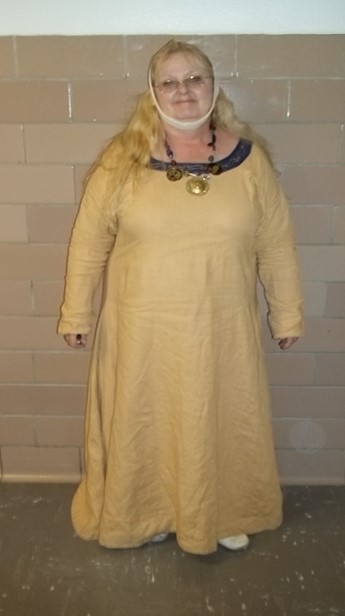
A tunic dress style outfit with accessories common to many early or pre medieval cultures. Under dress in the tunic style, and a decorated over dress.

Description:

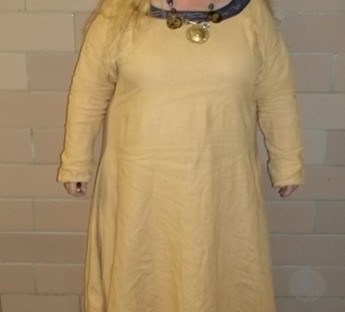
Few representations survive of early garments and many fewer extant examples, however what does survive would support much of what is shown here. 

The basic tunic style dress consisting of a linen under dress and a wool over dress featuring embroidered decoration around the neck.  Worn with a wimple minus the veil (not pictured) on the head. 

Inspiration Images

Common Materials

  • Fabrics:
    • Linen for Under Layers
    • Wool for outer Layer
    • Linen or silk for the wimple and veil
  • Ornamentation:

Effective Substitutions

  • Fabrics:
    • Some cottons
    • cotton/linen blends
    • linen/rayon blends
    • some wool blends
  • Ornamentation:

Ensemble Components

  • Under Dress
  • Over Tunic

  • Wimple and Veil

Accessories

Source/Links

Version2
date3/5/2021
Source of Period PicThe National Portrait Gallery History of the Kings and Queens of England by David Williamson, ISBN 1855142287.
ModelDiana Hastings 020213-22 091413-06
PhotographerVincent De Vere
  

Full Entry, Male

1000 CE Male Byzantine Tunic 1

Title: 1000 CE Male Byzantine Tunic 1
Entry #: GGB2021.026
Alternate Names:  
Year: 1000 CE
Time range: 700-1083 CE
Era: Early Medieval
Gender: Male
region: Eastern Europe/Middle East
Countries/cultures: Byzantine
Maker:
Difficulty: 1
Confidence: Image examples

Intro:

Clothing from the outskirts of the Byzantine empire, multi layered and richly decorated tunic garments consisting of layers of dresses and robes

Description:

Inspired by the founding Roman cultures, Byzantine garments tended to be layers of tunics made from finely woven and often rich fabrics decorated with embroidery or appliques.  Often worn with a cloak called a Chlamys

Multiple layers of rich garments would show the wealth of the individual.  Fabrics were lighter and finer in weave, assuming to be linens and silks.  

No additional information provided

Inspiration Images

Common Materials

  • Fabrics:
    • Fine Fabrics
    • Linens
    • Silks
    • Solid colors embellished with embroidered decorations or appliqued shames rather than designs that were woven in
  • Ornamentation:

Effective Substitutions

  • Fabrics:
    • cottons
    • linen blends
    • some fine polyester/blends for silk effects, but the poly blends have many drawbacks
  • Ornamentation:

Ensemble Components

  • outer wide sleeved robe
  • under tunics of various colors

  • hats of various styles
  • shoes or slippers

Accessories

  • worn with roman inspired cloak called a chlamys and various hats

Source/Links

Version: 3
date: 3/6/2021
Source of Period Pic: Meister der Kahriye-Cami-Kirche in Istanbul
 Mosaiken der Kirche Kahrié-Djami in Istanbul, Szene: Märtyrer
Model: Donald MacDonald 020213-08
Photographer: Vincent De Vere