Full Entry, Male

1150 CE Male Bliaut 1

Title: 1150 CE Male Bliaut 1
Entry #: GGB2021.037
Alternate Names:  
Year: 1150
Time range: 1150-1250’s CE
Era: High medieval
Gender: Male
region: europe
Countries/cultures: Europe, France, england
Maker:
Difficulty: 2
Confidence: Image Examples

Intro:

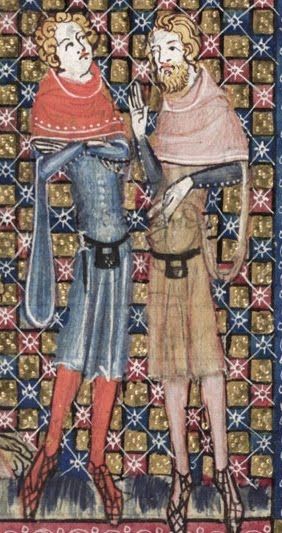
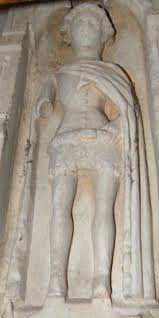
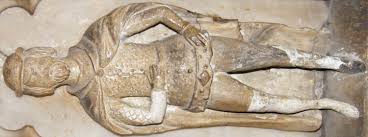
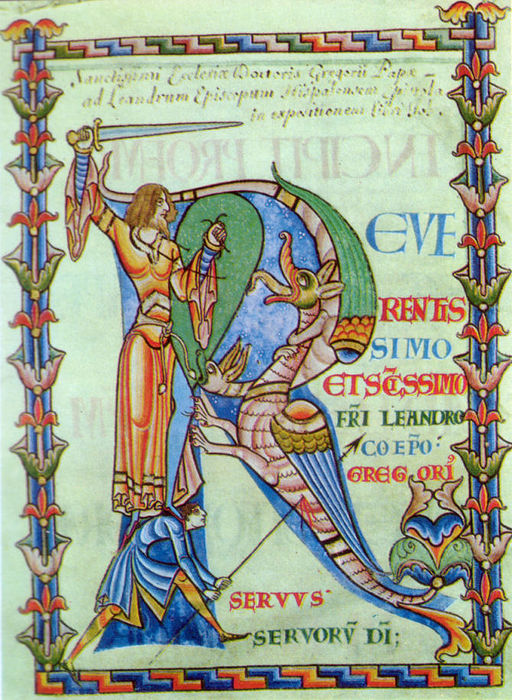
Men’s over-garment characterized by the tunic like construction with side closures resulting in a more fitted silhouette.  The attached skirts were full and shorter than floor length for men and the sleeves were commonly fitted above the elbow and trumpet shaped or widened out below the elbow.

Description:

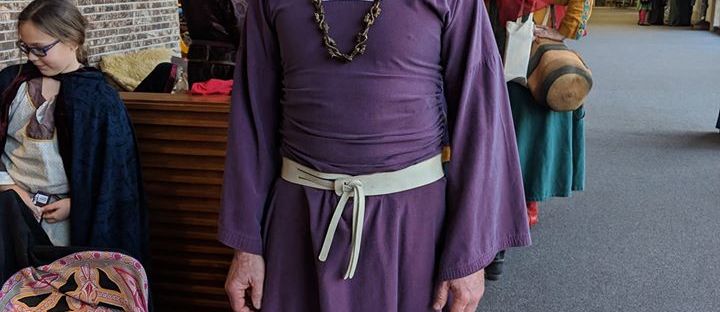
Although similar to the basic t tunic dress the differences in the sleeves and the chest area distinguish them.  The sleeves vary in style, but predominantly are characterized by the fitted upper sleeve and the widened lower sleeve.  The lower sleeve by be in the form of a trumpet sleeve or as extreme as examples that drag the floor.  A lined sleeve that could be turned back to expose an expensive inner liner would also be seen. 

The other major distinguishing feature is the puckering of the fabric in the torso.  There remains multiple ways to achieve this look, but many have had success by elongating the chest to waist length by some number of inches and by adding lacing on the side of the garment to achieve the fitted look. Most evidence of the style is found in areas of French fashion influence.

This bliaut is purple linen with embroidered applique around the keyhole neck.

Inspiration Images
Common Materials

  • Fabrics:
    • Some think images of fine pleats to represent silks
    • fine wools
    • rich fabrics perhaps linen
  • Ornamentation:

Effective Substitutions

  • Fabrics:
    • cottons
    • linen blends
    • wool blends muslin for undergarments
  • Ornamentation:

Ensemble Components

Accessories

  • a belt wrapped around the body
  • pouch or purse

Source/Links

Version: 3
date: 3/6/2021
Source of Period Pic: Historiated initial R from the frontispiece of a 12th-century manuscript of St. Gregory’s Moralia in Job, Dijon, Bibl. Municipale, MS 2
Model:
Photographer: Vincent De Vere
  

Female, Full Entry

1100 CE Female Norman Gown 4

Title: 1100 CE Female Norman Gown 4
Entry #: GGB2021.030
Alternate Names: Gown, Cotte, 
Year: 1100 CE
Time range: 1000-1200 CE
Era: High Medieval
Gender: Female
region: Western Europe
Countries/cultures: Norman, Anglo Saxon, England, france
Maker: Elspeth Stonehaven
Difficulty: 1
Confidence: Image Examples

Intro:

A common tunic dress style garment prevalent both in England as well as central Europe for the time leading up to and after the Norman invasion of 1066 CE

Description:

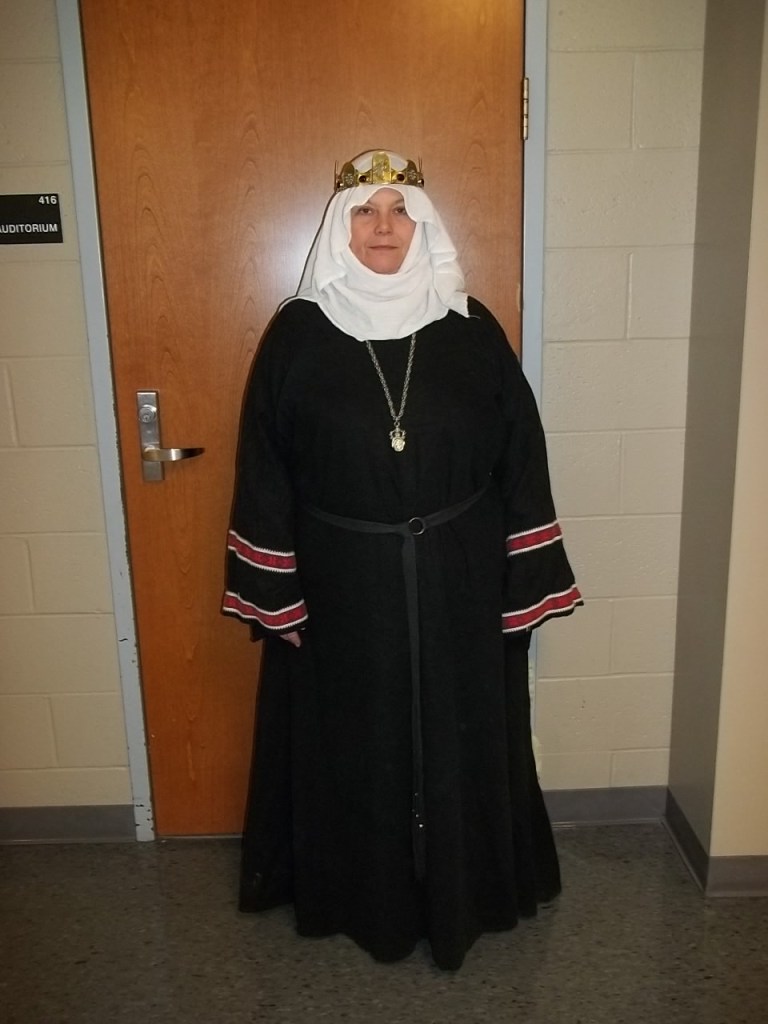
A common style worn by women in pre and post Norman invasion in England as well as France consisted of a tunic style underdress and over dress.

The underdress called a chemise, chainse or smock would commonly be made of linen. 

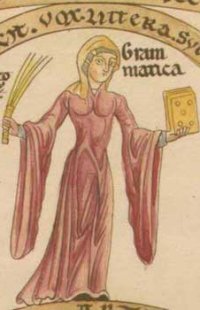
The over tunic or cotte would be longer for higher status women or shorter for working class. Sleeves are shown in some painting both tight to the wrist as well as bell or trumpet sleeves. Commonly made out of wool and perhaps decorated with embroidery or the applique of contrasting fabrics.

Commonly work with this would be simple turn or bag shoes, and a head covering such as a wimple and veil. 

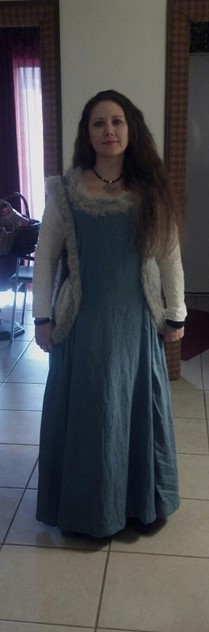
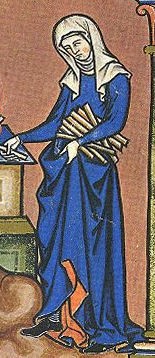
This dress is constructed as a tunic style dress,  A blue bell-sleeved over dress, or gown, worn over a green and white underdress, with a chemise under that.

Inspiration Images

Common Materials

  • Fabrics:
    • Underdress – Linen, including non-flax linens
    • Overdress – Wool
    • Wimple/veil – Linen or silk for high status women
  • Ornamentation:

Effective Substitutions

  • Fabrics:
    • Underdress – linen, linen blends, cottons
    • Overdresses – Wool blends, linens, linen blends, some heaver cottons
    • Wimple/Veil – linen, silk, poly (watch out for candles!)
  • Ornamentation:

Ensemble Components

  • Underdress – below the knee, long sleeved, white or off white light fabrics
  • Overdress

  • Headwear
  • Shoes

Accessories

  • Belt
  • Pouch
  • Bag

Source/Links

Version: 2
date: 3/5/2021
Source of Period Pic: Figure of Grammatica, from the Hortus Deliciarum – 12th century
Model: Elspeth Stonehaven
Photographer: Vincent De Vere
  

Full Entry, Male

1200 CE Male Wool Cote

Title: 1200 CE Male Wool Cote
Entry #: GGB2021.041
Alternate Names: Gown, Frock coat, Tunic, over tunic, 
Year: 1200
Time range: 1100-1400 CE
Era: High medieval
Gender: Male
region: Europe
Countries/cultures: Europe
Maker: Gwen A’Brooke
Difficulty: 2
Confidence: Image Examples

Intro:

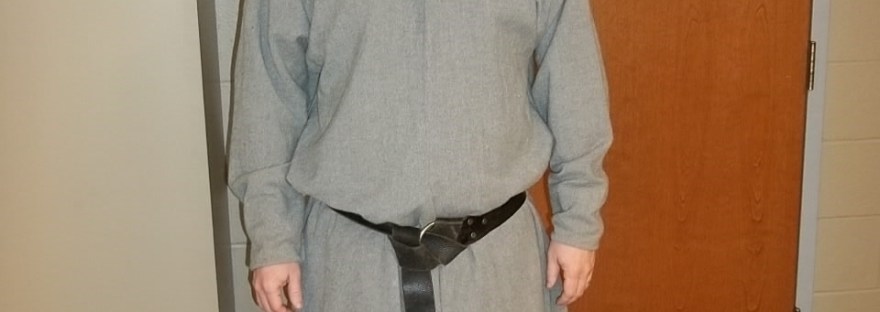
A loose tunic like garment commonly with buttons at the neck and cuffs bloused over a belt. Extending from below the waste to below the knee with long sleeves.

Description:

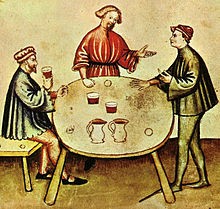
This garment, or variations of it can be seen in many paintings and illustrations that cross over several regions and time frames.  People from many stations in society use this functional garment, from laborers to merchants and higher. Varying slightly from its beginnings before 1100CE and fading in fashion for all but laborers late in period.

In general it is slightly more tailored tunic with the neck hole held closed by use of buttons rather than the earlier broaches.  Buttons may just close the neck hole, extend part way down the chest or to the bottom of the garment.  The cut is usually full producing a baggy garment belted at the waste and bloused over the belt.  Some assign the length of the garment to station, with average workmen wearing it shorter to the more wealthy merchants wearing a longer garment.

Likely worn with an undershirt and in some cases a simple doublet as well as hosen or trews.

Sometimes underrepresented in the SCA, cotes can easily produce a medieval look with an easily constructed garment.

This example has layers of cotes with a tight neck hole.  Split for ease of movement below the waist.  These are very tunic like cotes.

Inspiration Images

Common Materials

  • Fabrics:
    • Wool
    • linen
    • brocade
  • Ornamentation:

Effective Substitutions

  • Fabrics:
    • wool blends
    • linen blends
    • cottons
    • lighter weight upholstery fabrics that simulate period patterns
  • Ornamentation:

Ensemble Components

  • Cote
  • Under Tunic

  • possibly a doublet
  • pants or braes/hosen

Accessories

  • belt
  • pouch
  • hat
  • shoes

Source/Links

The Medieval Tailors Assistant, by Sarah Thursfield, has instructions on constructing such

Version:3
date: 2/27/2021
Source of Period Pic: http://en.wikipedia.org/wiki/File:48-aspetti_di_vita_quotidiana_ubriachezza_Taccuino_Sanitatis_Shoes.jpg
Model: Ulfr Thyrison
Photographer: Vincent De Vere
  

Full Entry, Male

1200 CE Male Linen Cote

Title: 1200 CE Male Linen Cote
Entry #: GGB2021.041
Alternate Names: Gown, Frock coat, Tunic, over tunic, 
Year: 1200
Time range: 1100-1400 CE
Era: High medieval
Gender: Male
region: Europe
Countries/cultures: Europe
Maker: Vincent De Vere
Difficulty: 2
Confidence: Image Examples

Intro:

A loose tunic like garment commonly with buttons at the neck and cuffs bloused over a belt. Extending from below the waste to below the knee with long sleeves.

Description:

This garment, or variations of it can be seen in many paintings and illustrations that cross over several regions and time frames.  People from many stations in society use this functional garment, from laborers to merchants and higher. Varying slightly from its beginnings before 1100CE and fading in fashion for all but laborers late in period.

In general it is slightly more tailored tunic with the neck hole held closed by use of buttons rather than the earlier broaches.  Buttons may just close the neck hole, extend part way down the chest or to the bottom of the garment.  The cut is usually full producing a baggy garment belted at the waste and bloused over the belt.  Some assign the length of the garment to station, with average workmen wearing it shorter to the more wealthy merchants wearing a longer garment.

Likely worn with an undershirt and in some cases a simple doublet as well as hosen or trews.

Sometimes underrepresented in the SCA, cotes can easily produce a medieval look with an easily constructed garment.

This example has layers of cotes with a tight neck hole.  Split for ease of movement below the waist.  These are very tunic like cotes.

Inspiration Images

Common Materials

  • Fabrics:
    • Wool
    • linen
    • brocade
  • Ornamentation:

Effective Substitutions

  • Fabrics:
    • wool blends
    • linen blends
    • cottons
    • lighter weight upholstery fabrics that simulate period patterns
  • Ornamentation:

Ensemble Components

  • Cote
  • Under Tunic

  • possibly a doublet
  • pants or braes/hosen

Accessories

  • belt
  • pouch
  • hat
  • shoes

Source/Links

The Medieval Tailors Assistant, by Sarah Thursfield, has instructions on constructing such

Version:2
date: 2/27/2021
Source of Period Pic: http://en.wikipedia.org/wiki/File:48-aspetti_di_vita_quotidiana_ubriachezza_Taccuino_Sanitatis_Shoes.jpg
Model:
Photographer: Vincent De Vere
  

Female, Full Entry

1200 CE Female Sideless Surcote 2

Title: 1200 CE Female Sideless Surcote 2
Entry #: GGB2021.040
Alternate Names: pellote 
Year: 1200 CE
Time range: 1100-1300’s CE
Era: High medieval
Gender: Female
region: European, western europe
Countries/cultures: England, france, spain
Maker: Beocca the Fair of Hastings
Difficulty: 1
Confidence: extant examples

Intro:

Outer layer garment with deeply cut arm holes worn with often form fitted undergarments that came in many variations and with examples for all sexes.

Description:

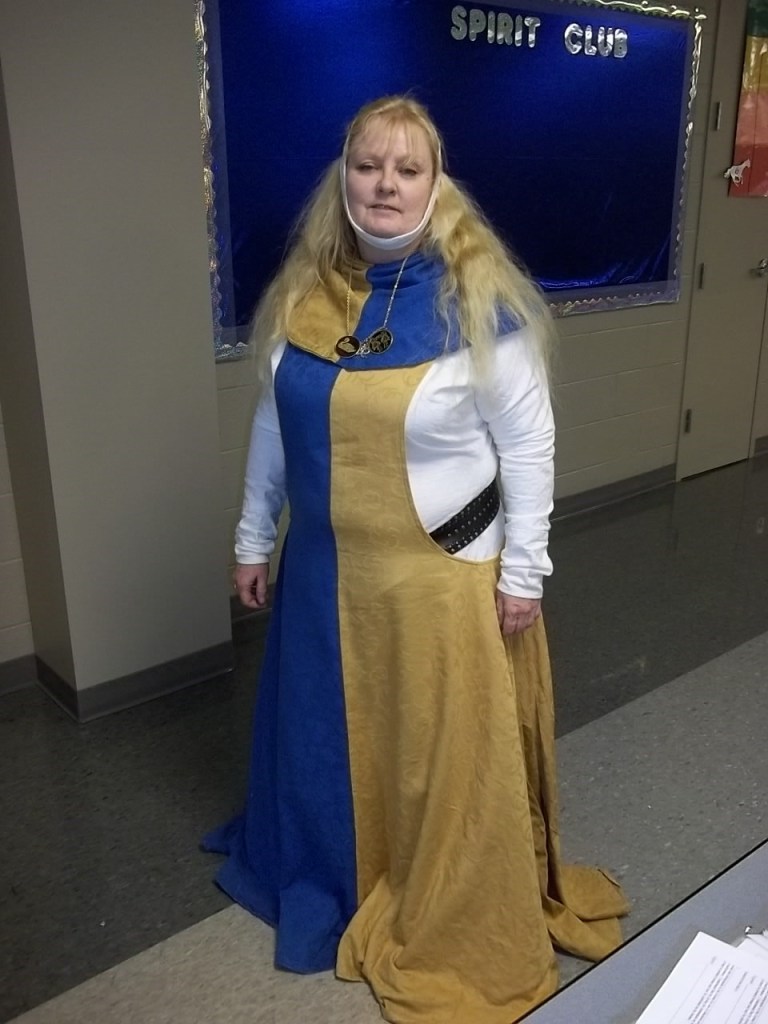
Sideless Surcotes are easily spotted by the deeply cut arm holes.  They commonly expose a more fitted garment beneath such as kirtles or fitted cotes. 

Parti-colored sideless surcote worn with a mantled hood.

These over dresses could vary from heraldic lesser modified cotes to heavily modified overdresses with narrow vertical front bands.  Easily sewn and open for many variations and modifications. Used in many parts of Europe during the first part of the high middle ages

Variations can include constructed materials, fur trim, heraldic displays, variations of depth of armhole, width of plastron (front and back bands,) width of hem, style of fitted under dress.

Inspiration Images

Medieval Combat Society

Common Materials

  • Fabrics:
    • Salk
    • celvets
    • brocades
    • fine wools
    • extant examples found constructed from silk damasks and jacquard
  • Ornamentation:

Effective Substitutions

  • Fabrics:
    • Silks
    • velvets
    • brocades
    • fine to medium coarse wools
    • wool blends
    • linen and linen blends
    • substituting poly velvets for silk velvets, or cotton velveteen – Not stretch velvets or crushed velvets.
  • Ornamentation:
    • High quality fake furs for trimming and lining. 

Ensemble Components

  • Sideless Surcote
  • Kirtle or cote
  • Underdress/undergarments

  • knee length hose
  • turn shoes or slippers
  • mantled hood

Accessories

  • belt
  • (worn under the surcote and over the fitted garment)
  • coif/hat/veil – works well with a barbette and fillet

Source/Links

http://www.wodefordhall.com/surcote.htm

http://www.bayrose.org/AandS/handouts/Sideless_Surcoat_web.pdf

Version: 2
date: 3/6/21
Source of Period Pic: http://www.insecula.com/oeuvre/O0000311.html
Model: Beocca the Fair of Hastings
Photographer: Vincent De Vere
  

Female, Full Entry

1200 CE Female Sideless Surcote 1

Title: 1200 CE Female Sideless Surcote 1
Entry #: GGB2021.039
Alternate Names: pellote 
Year: 1200 CE
Time range: 1100-1300’s CE
Era: High medieval
Gender: Female
region: European, western europe
Countries/cultures: England, france, spain
Maker: Jacqueline Storme
Difficulty: 1
Confidence: extant examples

Intro:

Outer layer garment with deeply cut arm holes worn with often form fitted undergarments that came in many variations and with examples for all sexes.

Description:

Sideless Surcotes are easily spotted by the deeply cut arm holes.  They commonly expose a more fitted garment beneath such as kirtles or fitted cotes. 

Parti-colored sideless surcote worn with a mantled hood.

These over dresses could vary from heraldic lesser modified cotes to heavily modified overdresses with narrow vertical front bands.  Easily sewn and open for many variations and modifications. Used in many parts of Europe during the first part of the high middle ages

Variations can include constructed materials, fur trim, heraldic displays, variations of depth of armhole, width of plastron (front and back bands,) width of hem, style of fitted under dress.

Inspiration Images

Common Materials

  • Fabrics:
    • Salk
    • celvets
    • brocades
    • fine wools
    • extant examples found constructed from silk damasks and jacquard
  • Ornamentation:

Effective Substitutions

  • Fabrics:
    • Silks
    • velvets
    • brocades
    • fine to medium coarse wools
    • wool blends
    • linen and linen blends
    • substituting poly velvets for silk velvets, or cotton velveteen – Not stretch velvets or crushed velvets.
  • Ornamentation:
    • High quality fake furs for trimming and lining. 

Ensemble Components

  • Sideless Surcote
  • Kirtle or cote
  • Underdress/undergarments

  • knee length hose
  • turn shoes or slippers
  • mantled hood

Accessories

  • belt
  • (worn under the surcote and over the fitted garment)
  • coif/hat/veil – works well with a barbette and fillet

Source/Links

http://www.wodefordhall.com/surcote.htm

http://www.bayrose.org/AandS/handouts/Sideless_Surcoat_web.pdf

Version: 2
date: 3/6/21
Source of Period Pic: http://www.insecula.com/oeuvre/O0000311.html
Model: Jacqueline Storme
Photographer: Jacqueline Storme
  

Full Entry, Male

1250 CE Franciscan Friar monk Habit 1

1250 CE Franciscan Friar monk Habit 1
Entry #: GGB2021.043
Alternate Names: Friar Robes, monks robes 
Year: 1250
Time range: 1250 – end of period
Era: High medieval
Gender: Male
region: Europe
Countries/cultures: Europe
Maker: Ida Lundy
Difficulty: 1
Confidence: Extant Examples

Intro:

Long belted tunic with a belt of leather, cloth or rope.  A scapula, the tabard like rectangle of cloth with a cowl or hood attached. 

Description:

Generally unadorned, color of the fabric denotes particular religious order the wearer belongs to. The belt could be leather but some references say rope was more common. 

Over time the colors of the different orders became nearly standardized.  The Benedictine Monks would dye the wool they used to make their habits leading to names such as Black Monks or Blackfriar.  The Cistercian Monks who arose in the 1100’s opted for undyed wool to show their adherence to poverty.  This led to names like White monks or Grayfriars.  There ae still many places across England with location names of Blackfriars and Grayfriars. 

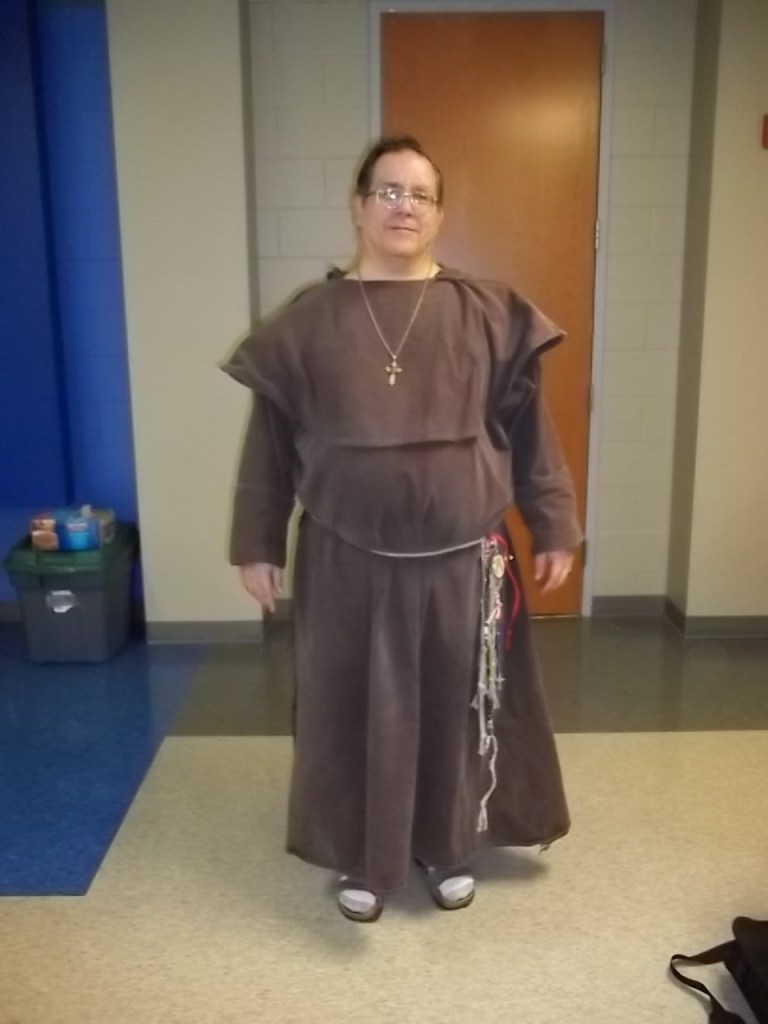
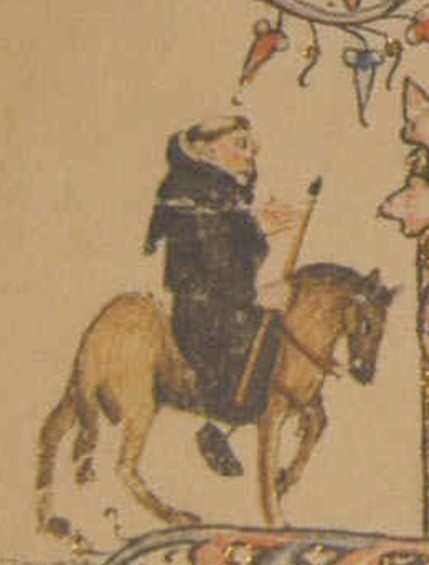
This attempt at a Franciscan habit wool blend for the long tunic and brown wool for the hooded mantle. Franciscan order arose shortly after the Cistercian order.

Any portrayal of religious personages at events should be done with respect to the beliefs of others.   

Inspiration Images

Common Materials

  • Fabrics:
    • wool
  • Ornamentation:

Effective Substitutions

  • Fabrics:
    • linen
    • cotton
    • linen blends
    • wool blends
  • Ornamentation:

Ensemble Components

  • tunic
  • scapula hood

  • belt

Accessories

  • pouch
  • rosary

Source/Links

Version: 2
date: 3/5/2021
Source of Period Pic: Life of St. Bernard of Clairvaux by Jörg Breu the Elder 1500
Model: Vincent De Vere
Photographer: Vincent De Vere
  

Full Entry, Male

1200 CE Parti colored Heraldic Surcote

Title: 1200 CE Parti colored Heraldic Surcote
Entry #: GGB2021.042
Alternate Names: Sleeveless surcote, heraldic surcote 
Year: 1200
Time range: 1200-1300 CE
Era: High medieval
Gender: Male
region: Europe
Countries/cultures: Europe
Maker:
Difficulty: 1
Confidence: Image Examples

Intro:

Parti-colored surcote over long sleeved tunic displaying heraldic colors

Description:

A style used over a long range of areas and times.  Generally starting in or before 1200’s CE and extending into the 1300’s as well as being similar to heraldic tabards and shifting into livery coats.  This over layer could take the place of some warmth layers, be used as an over layer for work clothes but we often associate it with livery colors, where members of servants in a household are dressed in matching outer garments to show their association with their household.  These could also be worn over armor for identification on the battlefield. 

This example represents a simple parti-colored heraldic surcote, split for riding, displaying the Kingdom livery colors and badge.  Layers under the surcote in this case are an undershirt, braies and hosen as well as turn shoes.

This example is made out of linen for use in hot weather.

Inspiration Images

Common Materials

  • Fabrics:
    • Wool outer layers
    • Linen for lining
  • Ornamentation:

Effective Substitutions

  • Fabrics:
    • cottons
    • cotton blends
    • linen
    • linen blends
    • wool blends
  • Ornamentation:

Ensemble Components

  • Undershirt
  • surcoat

  • pants or hosen
  • turn shoes or boots

Accessories

  • belt
  • pouch
  • dagger
  • purse
  • coif
  • hat or hood

Source/Links

Version: 2
date: 3/1/2021
Source of Period Pic:
Model: Matsunaga Kagetora
Photographer: Vincent De Vere
  

Female, Full Entry

1200 CE European Female Cote

Title: 1200 CE European Female Cote
Entry #: GGB2021.038
Alternate Names: Gown, Frock coat, Tunic, over tunic 
Year: 1200 CE
Time range: 1100-1400 CE
Era: High medieval
Gender: Female
region: Europe
Countries/cultures: Europe, French, English
Maker: Ayla Von Johanaa
Difficulty: 2
Confidence: Image Examples

Intro:

A loose tunic dress like garment with a wide neck hole pulled over the head. Used in many parts of Europe for a wide range of the high meddle ages.

Description:

This garment, or variations of it can be seen in many paintings and illustrations that cross over several regions and time frames.  People from many stations in society use this functional garment, from laborers to merchants and higher. Varying slightly from its beginnings before 1100CE and fading in fashion for all but laborers late in period.

In general it is slightly more tailored tunic with the neck hole held closed by use of buttons rather than the earlier broaches.  Buttons may just close the neck hole.  The cut is usually full producing a baggy garment belted at the waste.  Worn with an underdress and sometimes a kirtle or other dress layer and possibly with a gown outer layer. 

Sometimes underrepresented in the SCA, cotes can easily produce a medieval look with an easily constructed garment.

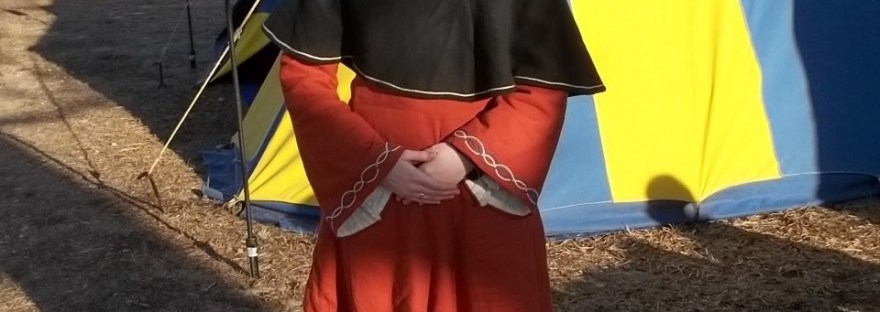
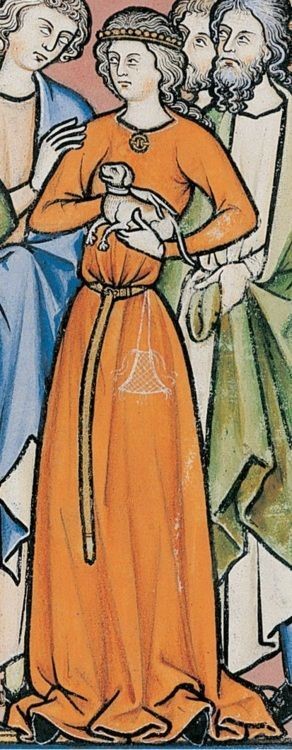
Red dress with embroidery along cuffs, neckline and hem line worn with a mantled hood.  This was a dress constructed in the tunic like style similar to examples from 1100’s to 1200’s with slight bell sleeves.  Worn over a tunic style underdress.

Inspiration Images

Common Materials

  • Fabrics:
    • wools, silks
  • Ornamentation:

Effective Substitutions

  • Fabrics:
    • wool blends
    • linen blends
    • cottons
    • lighter weight upholstery fabrics that simulate period patterns
  • Ornamentation:

Ensemble Components

  • Cote
  • underdress
  • veil

  • hood
  • coif
  • could be covered by a surcote

Accessories

  • belt
  • pouch
  • shoes

Source/Links

The Medieval Tailors Assistant, by Sarah Thursfield, has instructions on constructing such garments

Version: 2
date: 2/27/2021
Source of Period Pic: 1- the Morgan Bible, c. 1250: the wife of Manoah ,2- 1200’s, Strasbourg Cathedral and Strasbourg
Model: Ayla Von Johanaa
Photographer: Vincent de Vere
  

Full Entry, Male

1350 CE Male Cotehardie 6

Title: 1350 CE Male Cotehardie 6
Entry #: GGB2021.059
Alternate Names: Cote 
Year: 1350 CE
Time range: 1340-1400 CE
Era: High Medieval
Gender: Male
region: Western europe, central europe
Countries/cultures: France, England, germany
Maker: Vincent de Vere
Difficulty: 3
Confidence: Image Example

Intro:

Fitted male coat forming the outer layer or the middle layer of an ensemble

Description:

In some areas in Western Europe, male garments became more fitted in the 1300s. The unfitted cotes became the tailored and fitted cotehardies. Layers associated with cotehardies would be a linen undershirt, sometimes an early form of the doublet and braies and hosen.  Layers over the cotehardie could be gowns and houppelandes

In some cases the cotehardies are shorter to the point of reaching just to the crotch depth.  Others are seen longer to the point of knee length. Some have decorative dagged edges.  They often feature a large number of closely spaced buttons  

Male cotehardies could have long or shorter sleeves including short sleeves showing off the doublet below, sometimes featuring sleeve streamers. The sleeves of the cotehardie or the layer under the cotehardie are very tight.

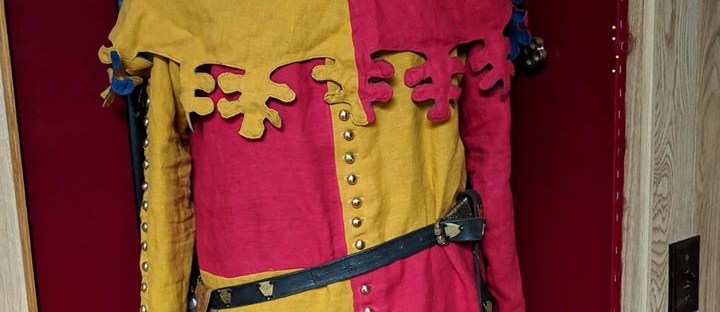
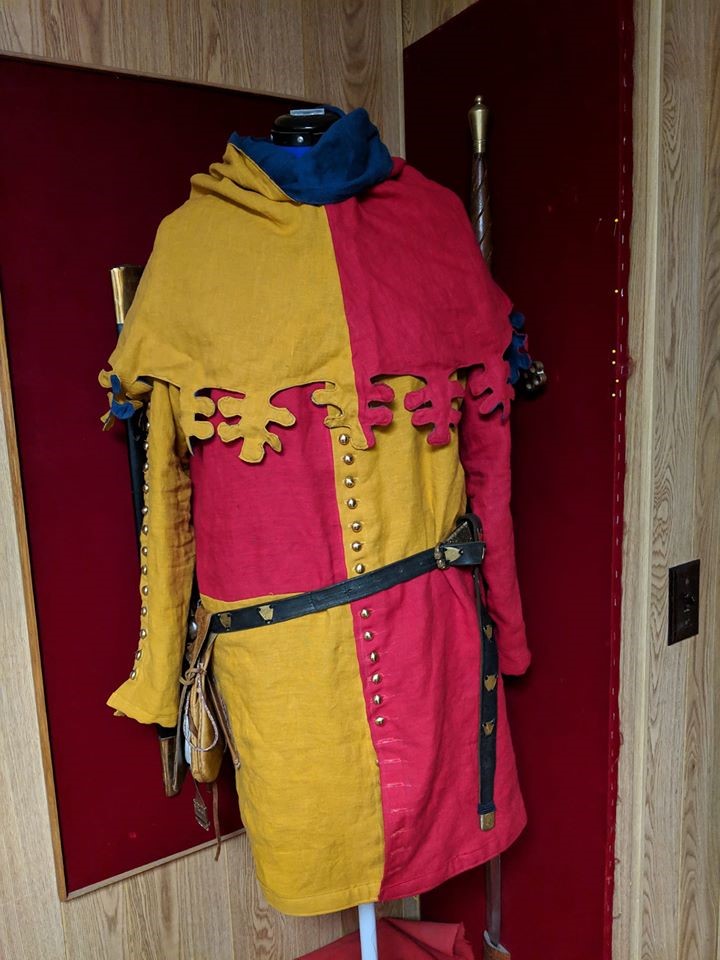
This cotehardie is a parti colored light weight linen cotehardie with a dagged liripipe hood.

Inspiration Images

Common Materials

  • Fabrics:
    • Wool
    • silks
    • brocades
    • velvets
  • Ornamentation:
    • cloth or metal buttons

Effective Substitutions

  • Fabrics:
    • cottons
    • linens
    • linen blends
    • wool blends
  • Ornamentation:

Ensemble Components

  • linen undershirt
  • likely an early form of the doublet
  • .  Turn shoes, slippers or low boots

  • braies and hosen
  • Layers over the cotehardie could be gowns and houppelandes

Accessories

  • low slung belts, around the hips
  • pouches
  • garters
  • hood

Source/Links

http://www.chesholme.com/wfiles/2-1-Cotehardie.pdf

http://starsandgarters.org/2020/10/04/patterning-fitted-garments/

Version: 2
date: 2/26/21
Source of Period Pic: http://en.wikipedia.org/wiki/File:Bologna_marriage_men.jpg
Model:
Photographer: Vincent de Vere