Component Entry, Male

Damendorf Trousers 1

TitleDamendorf Trousers 1
Entry #GGC2021.007
Alternate NamesTrews, PJ pants, hose   
Year100-300 CE
Time range100-300 CE
EraIron Age
Genderunisex
regionEuropean
Countries/culturesGermany, Western European, Central European
MakerVincent De Vere,
Difficulty2
ConfidenceExtant Example

Intro:

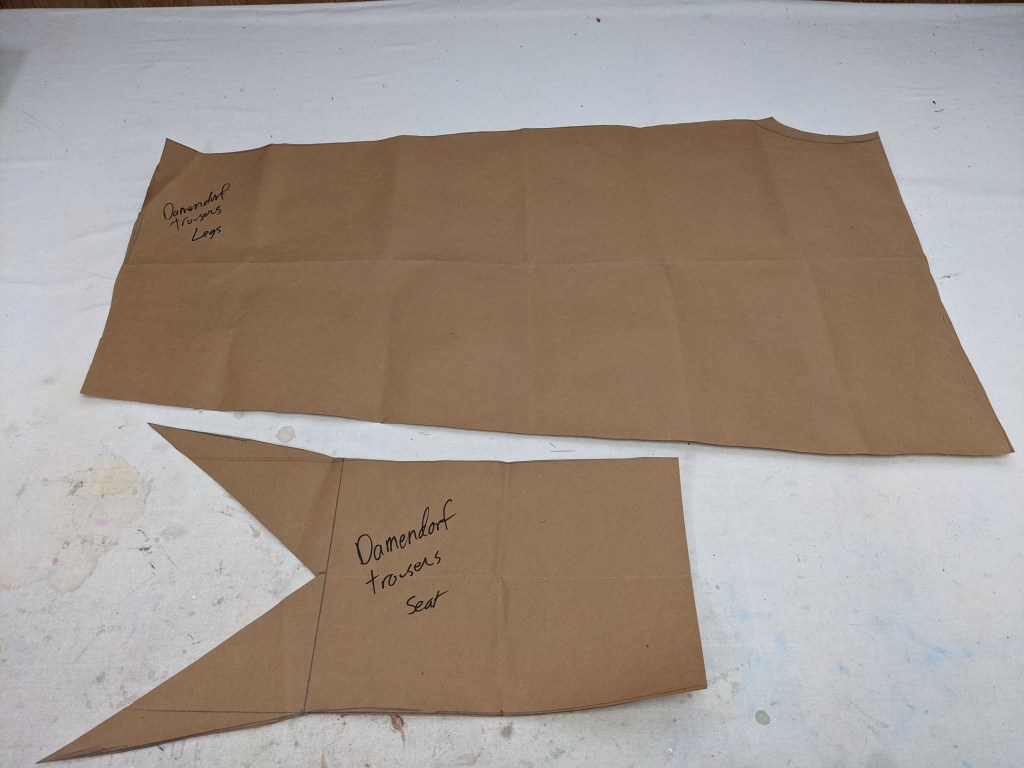
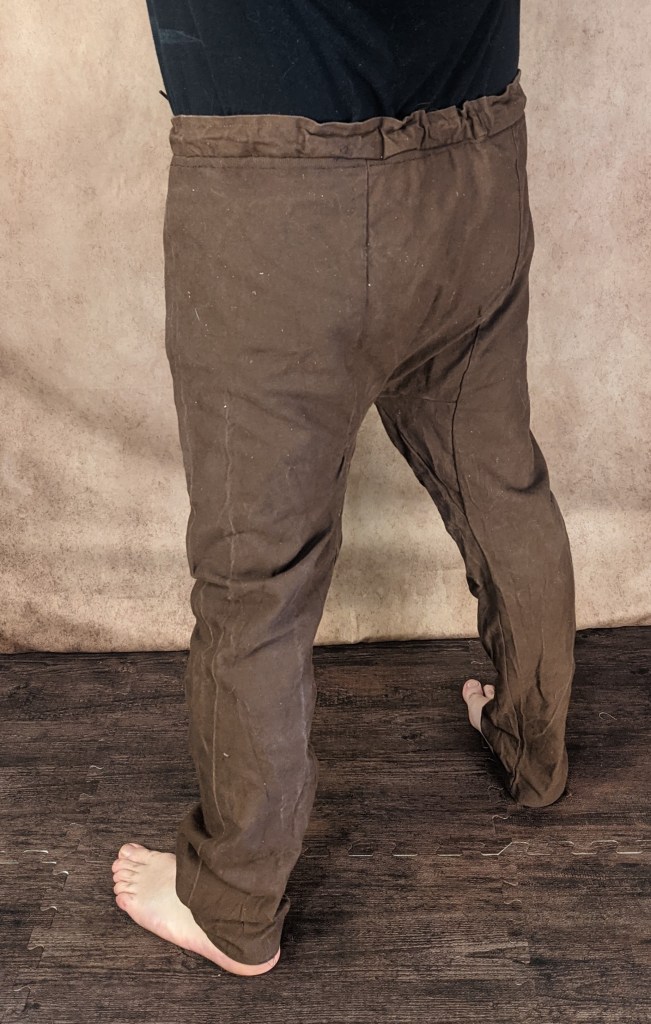
Modified example of trousers found in a bog in Germany with a tailored construction and attached feet              

Description:

An extant example of trousers found in a bog near Damendorf, Rendsburg Eckerförde, Germany dated from between 100’s and 300’s CE. 

This style of pants are more complicated than the regular SCA ‘poofy pants’ that many people start out with.  There are some places online where the patterns can be found or even purchased.  This pattern has been modified from the extant example by leaving the two triangular gussets connected to the back panel.

Inspiration Images

Common Materials

  • Fabrics:
    • Wool  

Effective Substitutions

  • Fabrics:
    • Wool blends
    • linen blends
    • Linen
    • wool
    • cotton
    • cotton blends

Ensemble Components

The Damendorf Man was found with leather shoes, leg wraps and a leather belt.  This would also likely go with one or more tunics

Accessories

  • The Damendorf Man was found with leather shoes, leg wraps and a leather belt

Source/Links

. Archäologisches Landesmuseum Schloss Gottorf in Schleswig. Photo by by Andreas Franzkowiak

Version1
date12/25/2021
Source of Period Pic. Archäologisches Landesmuseum Schloss Gottorf in Schleswig. Photo by by Andreas Franzkowiak
Model Vincent de Vere
PhotographerVincent De Vere
  
Female, Full Entry

27 CE Female Roman Chiton and Palla

Title27 CE Female Roman Chiton and Palla
Entry #GGB2021.0001
Alternate Names Chiton, Palla
Year270CE
Time range27 – 400 CE
EraRoman Empire
GenderFemale
regionEurope
Countries/culturesEurope
MakerAnna Plentyn
Difficulty1
ConfidenceImage Examples

Intro:

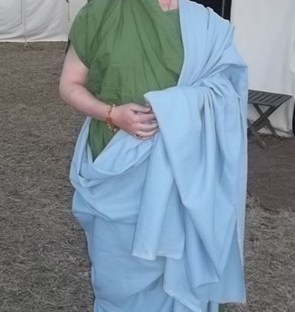
This consists of one piece or two pieces of fabric sewn at the sides and tacked at the top to form the tunic like chiton and a piece of fabric wrapped around as the palla. These are great beginner garb for hot weather

Description:

These are light and cool and fast to make.  The chiton is very much like a tunic. There are versions done with a single piece of fabric folded and tacked along to the top in a number of places or it can be done as two large rectangles of fabric that are sewn down the sides and tacked a few places along the top.  Using a rope it can be cinched in at the waist.  The palla can just be wrapped around and held.  Sandals that work to complete the outfit can be found in modern shoe stores.  Romans also had a variety of jewelry that can be made or purchased from retailers selling recreations or by modifying some modern costume jewelry.

Inspiration Images

Common Materials

  • Fabrics:
    • Most lower class garments in roman times were wool, but finding the right weights and weaves of wool now is hard. 
    • Upper classes would have some silks.
  • Ornamentation:

Effective Substitutions

  • Fabrics:
    • Avoid polyester, polyester blends. 
    • Cottons can work. 
    • Linens are good. 
    • Very light and fine wools may be very accurate, but harder to find.
  • Ornamentation:

Ensemble Components

  • Chiton
  • Palla
  • belt

  • sandals
  • jewelry

Accessories

  • “Roman” sandals are still sold today and work for starter garb. 
  • Belts can range from ropes to modern fashion chain belts. 
  • Many examples of roman jewelry are not complex and can be made easily.   There are some styles that look very similar to modern costume jewelry.

Source/Links

https://titarufiaprisca.wordpress.com/2011/03/16/on-making-roman-clothing/

http://www.fashion-era.com/ancient_costume/ancient-greek-dress-chiton.htm

https://titarufiaprisca.wordpress.com/2011/03/16/on-making-roman-clothing/

https://vestificasericata.wordpress.com/documentation/

https://www.getting-my-medieval-on.com/wp-content/uploads/2017/08/romanwomensgarb-arriamarina.pdf

https://romanasum.files.wordpress.com/2014/10/intro-to-roman-clothing4.pdf

https://www.getting-my-medieval-on.com/wp-content/uploads/2017/08/romanwomensgarb-arriamarina.pdf

Version2
date3/6/2021
Source of Period PicStatue of Livia Drusilla wearing a stola and palla
ModelAnna Plentyn 031113-13
PhotographerVincent De Vere
  
Basic Entry, Female

100 CE Female Roman Tunica and Stola

Title100 CE Female Roman Tunica and Stola
Entry #GGB2021.0003
Alternate NamesTunic or wrongly called a toga 
Year100CE
Time range27 – 400 CE
EraRoman Empire
GenderFemale
regionEurope
Countries/culturesEurope
MakerFionnghuala inghean Fhearghuis
Difficulty1
ConfidenceImage Examples

Intro:

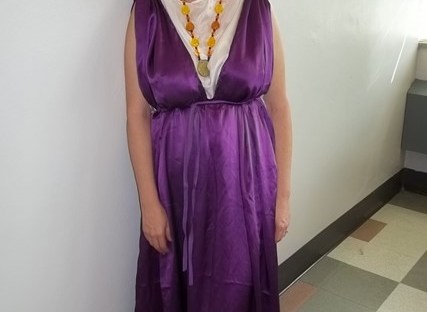
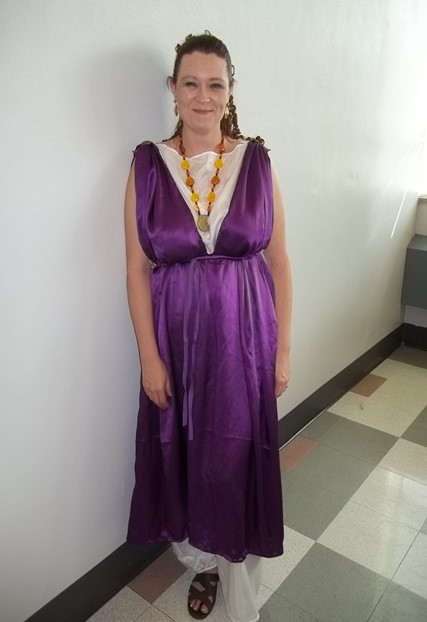
Very simple tunic like dress worn with fabric draped and pinned at the shoulders, belted at the waist

Description:

Women of all classes would have worn the basic tunic dress but women of higher classes would add an additional layer of the stola pinned over the tunic.  In the example here, the white fabric is the tunic and the purple is the stola.  This would have been in addition to a Palla or long wrap that could be draped in a number of ways.

In addition there are many options for jewelry and footwear that works for roman garb.  There are even modern costume jewelry and modern sandals that can be found that stylistically work for roman accessories.

Beware of information about making “togas” for the college toga parties. 

Inspiration Images

Common Materials

  • Fabrics:
    • Most lower class garments in roman times were wool, but finding the right weights and weaves of wool now is hard. 
    • Upper classes would have some silks.
  • Ornamentation:

Effective Substitutions

  • Fabrics:
    • Avoid polyester, polyester blends. 
    • Cottons can work. 
    • Linens are good. 
    • Very light and fine wools may be very accurate, but harder to find.
  • Ornamentation:

Ensemble Components

  • Chiton
  • Palla
  • belt

  • sandals
  • jewelry
  • Stola

Accessories

  • “Roman” sandals are still sold today and work for starter garb. 
  • Belts can range from ropes to modern fashion chain belts. 
  • Many examples of roman jewelry are not complex and can be made easily.   There are some styles that look very similar to modern costume jewelry.

Source/Links

https://titarufiaprisca.wordpress.com/2011/03/16/on-making-roman-clothing/

http://www.fashion-era.com/ancient_costume/ancient-greek-dress-chiton.htm

https://titarufiaprisca.wordpress.com/2011/03/16/on-making-roman-clothing/

https://vestificasericata.wordpress.com/documentation/

https://www.getting-my-medieval-on.com/wp-content/uploads/2017/08/romanwomensgarb-arriamarina.pdf

https://romanasum.files.wordpress.com/2014/10/intro-to-roman-clothing4.pdf

https://www.getting-my-medieval-on.com/wp-content/uploads/2017/08/romanwomensgarb-arriamarina.pdf

Version2
date3/6/2021
Source of Period PicStatue of Livia Drusilla wearing a stola and palla
ModelFionnghuala inghean Fhearghuis 091413-11
PhotographerVincent De Vere
  
Component Entry, Unisex

Shoe, bag shoe

TitleShoe, bag shoe
Entry #GGC2022.017
Alternate Names
Year1000 CE
Time range3000 BCE – 1200 CE
Eraall
Genderunisex
regionEurope
Countries/cultures
MakerVincent De Vere,
Difficulty1
ConfidenceExtant Examples

Intro:

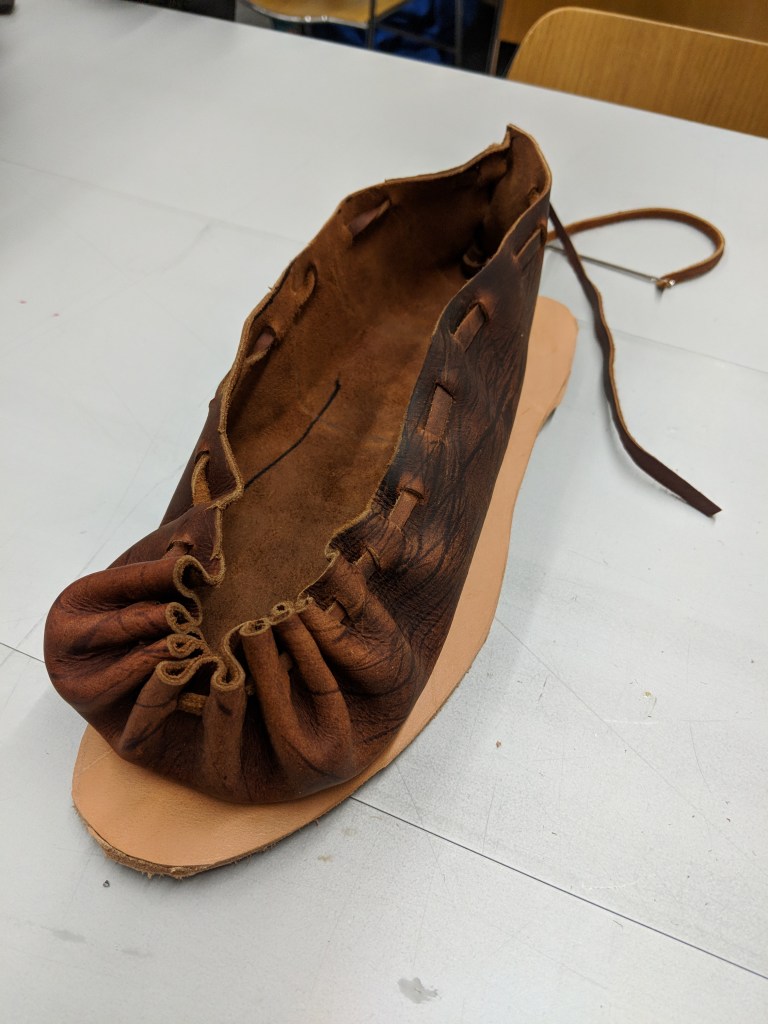
Simple slip on shoes.

Description:

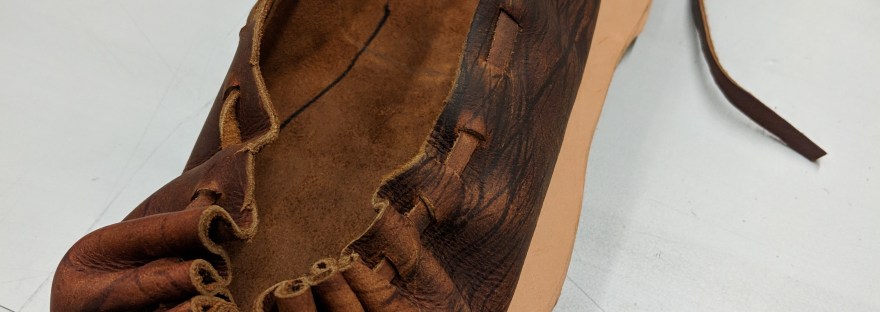
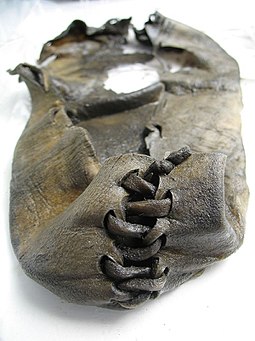
Low slip on shoes that are constructed from a single piece of leather and a leather thong.  Evidence of shoes much like this have been found to our knowledge, from sites ranging from 3000 BCE to 1200 CE or later.  Basic shoes of this style have also been found in the archeological record across Europe. 

This recreation shoe later had a stiffing sole and tread glued to the bottom to prevent the wearer from slipping at events.  Although this modification is not historically correct, modifications done for personal safety and comfort are common in the SCA.

Inspiration Images

Common Materials

  • Fabrics:
    • Leather
  • Ornamentation:

Effective Substitutions

  • Fabrics:
    • chrome tanned leather, but oak tan/veg tan leather will work far better

Ensemble Components

Accessories

Source/Links

The Jotunheimen shoe. Vegard Vike/Kulturhistorisk museum, CC BY-SA 4.0 <https://creativecommons.org/licenses/by-sa/4.0&gt;, via Wikimedia Commons

Stepping Through Time: Archaeological Footwear from Prehistoric Times until 1800, By Olaf Goubitz.  ISBN  9089320040 ISBN-13 ‏ : ‎ 978-9089320049

Version1
date1/9/2022
Source of Period PicThe Jotunheimen shoe. Vegard Vike/Kulturhistorisk museum, CC BY-SA 4.0 <https://creativecommons.org/licenses/by-sa/4.0&gt;, via Wikimedia Commons
Model 
PhotographerVincent De Vere
  

Component Entry, Female, Male, Unisex

Simple Narrow Belt with Reproduction Buckle

TitleSimple Narrow Belt with Reproduction Buckle
Entry #GGC2021.031
Alternate NamesBelt
Year1350
Time rangeAntiquity to end of period
EraAntiquity to end of period
GenderUnisex
regionEurope
Countries/culturesEurope
MakerVincent De Vere,
Difficulty1
ConfidenceExtant Example

Intro:

 Various belts.      

Description:

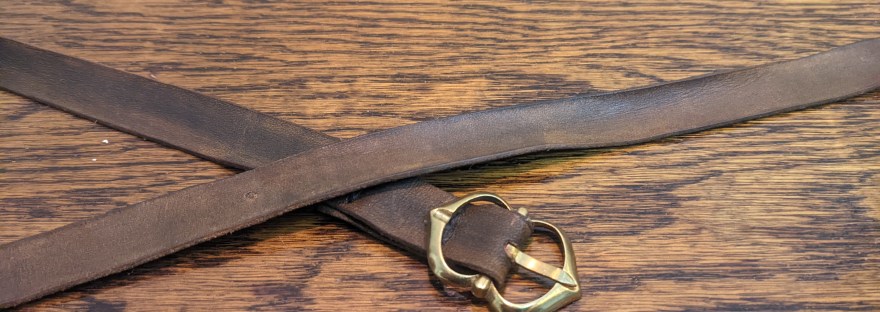
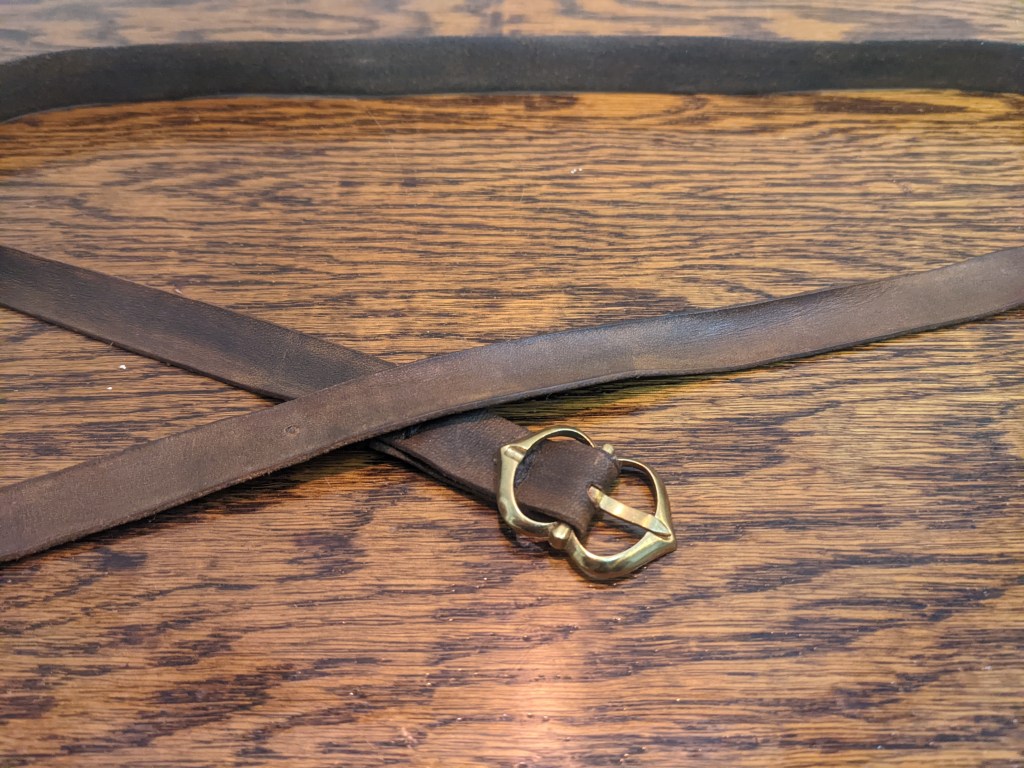
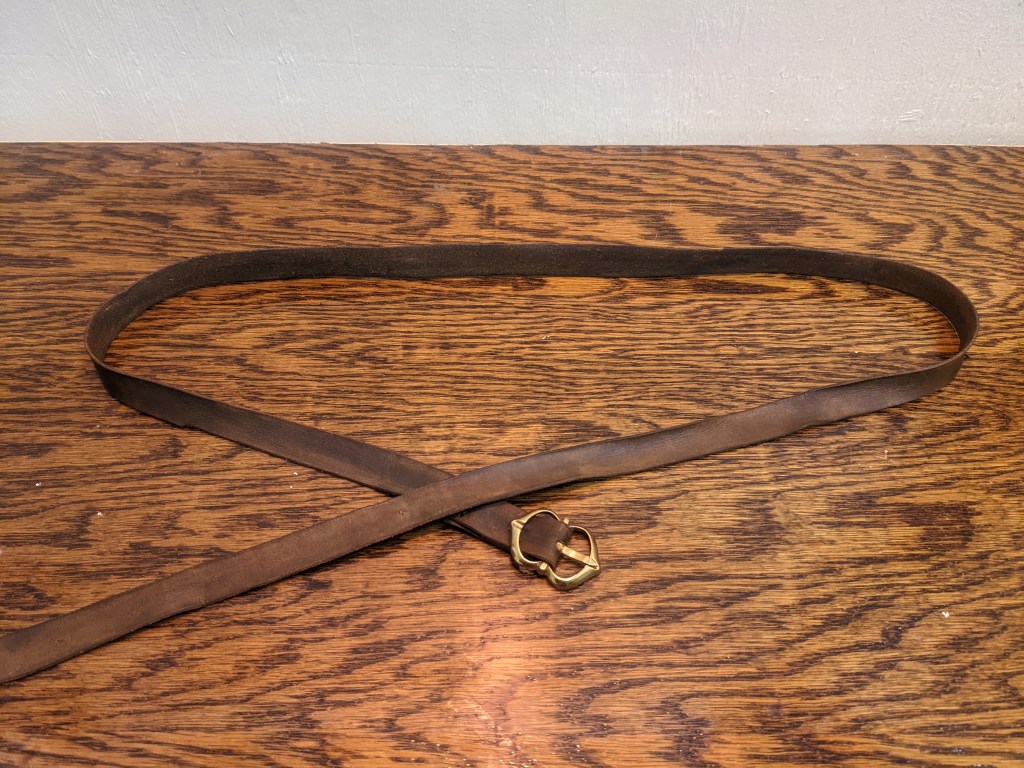
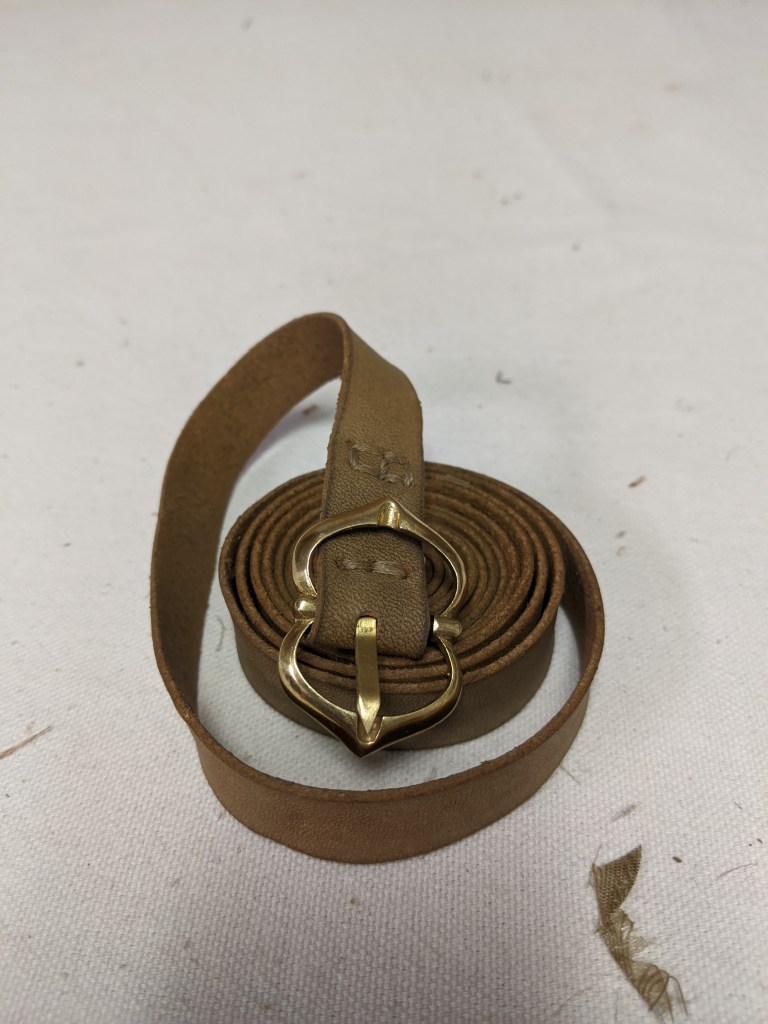
This is a modern buckle taken from a worn out belt and attached to a strip of leather to form a belt. This easily made belt works very well for people new to the SCA.

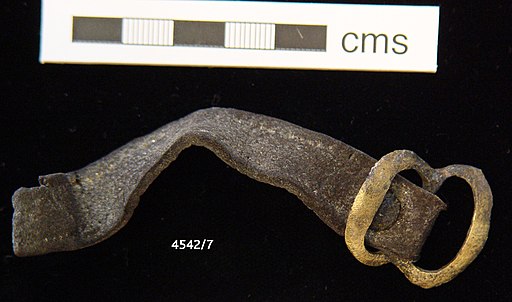
This reproduction buckle is based an extant example dated to arround 1350 CE, but is very similar to many others from different time periods. It is available through several reputable vendors. It would be an example of a very inexpensive reproduction piece.

Inspiration Images

Common Materials

  • Fabrics:
    • Leather
  • Ornamentation:

Effective Substitutions

  • Fabrics:
    • Leather
  • Ornamentation:

Ensemble Components

Accessories

Source/Links

The Portable Antiquities Scheme/ The Trustees of the British Museum, CC BY-SA 4.0 <https://creativecommons.org/licenses/by-sa/4.0&gt;, via Wikimedia Commons

Version1
date1/2/2022
Source of Period PicBritish Museum
Model 
PhotographerVincent De Vere