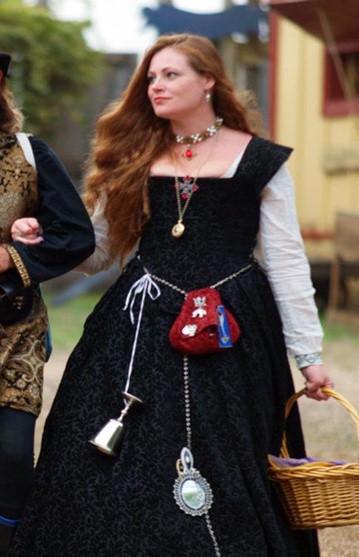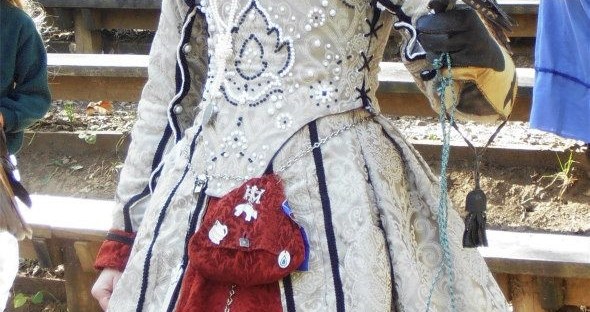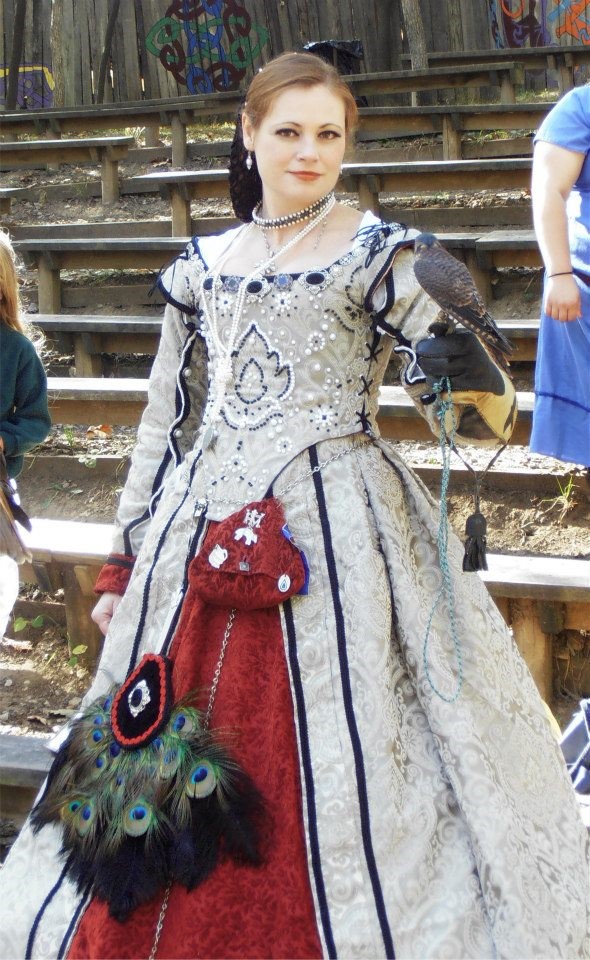
Female, Full Entry

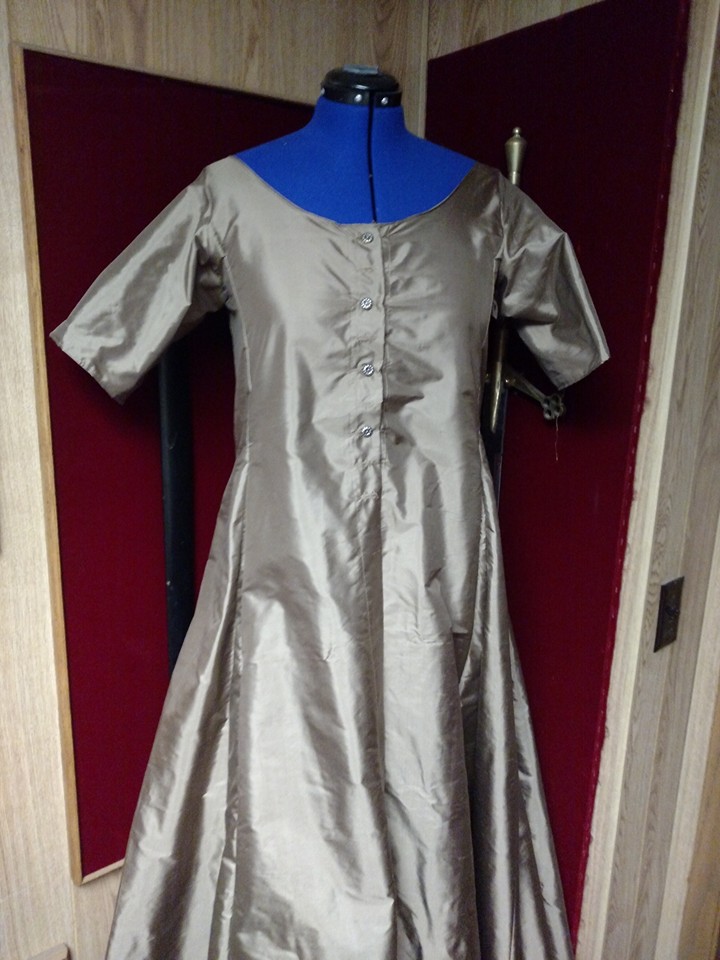
1370 CE Female, Cotehardie 7

Title: 1370 CE Female, Cotehardie 7
Entry #: GGB2021.053
Alternate Names: Gothic Fitted Dress 
Year: 1370
Time range: 1350-1400 CE
Era: High Medieval
Gender: Female
region: Western europe, central europe
Countries/cultures: France, England,
Maker: Vincent de Vere
Difficulty: 3
Confidence: Image Examples

Intro:

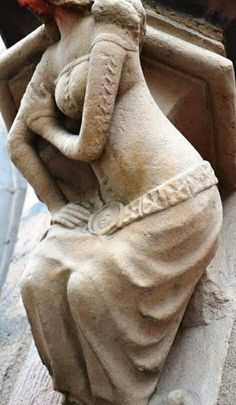
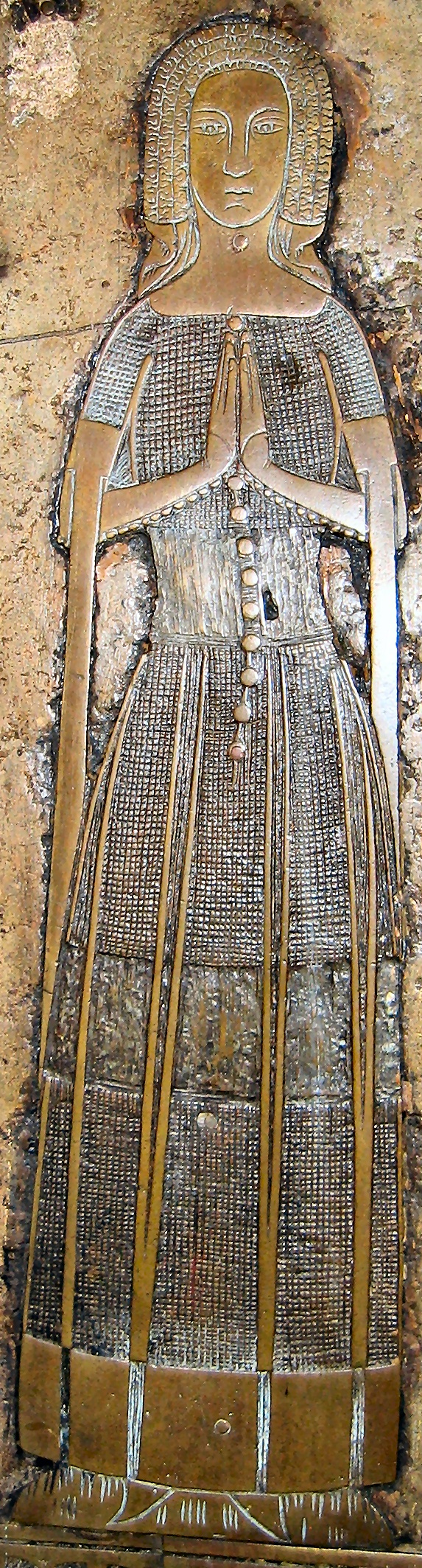
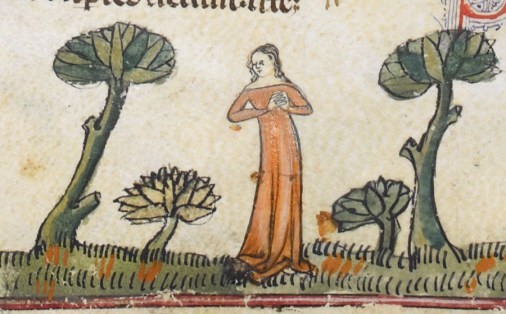
Fitted female garment forming an outer or middle layer.  

Description:

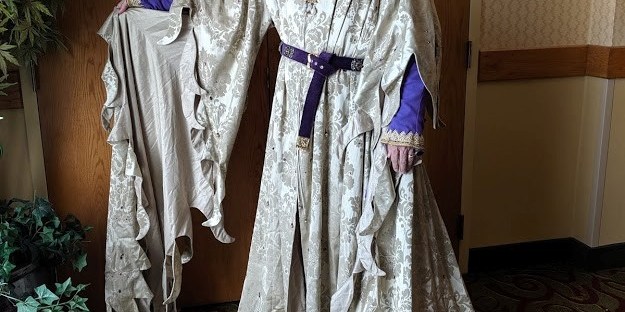
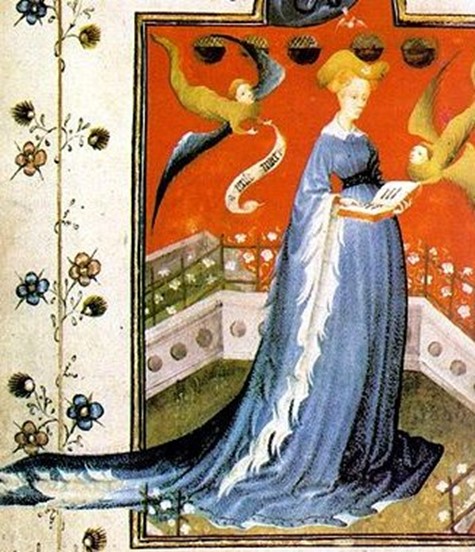
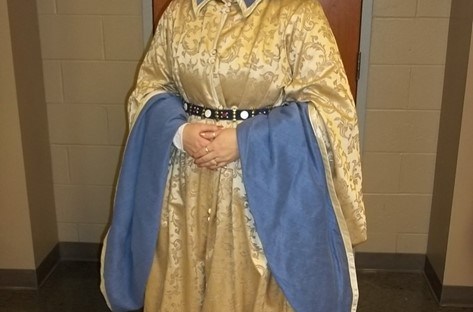
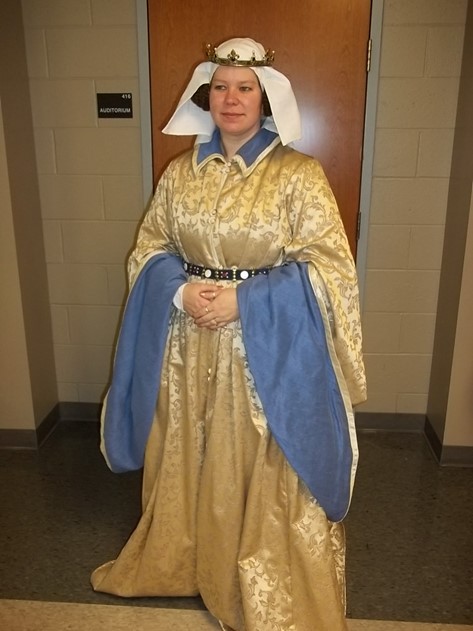
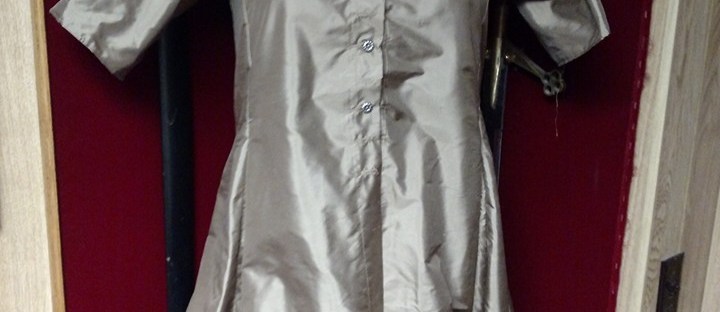
Gold silk cotehardie shown here without a kirtle
 As female garments became more fitted in the 1300s the unfitted tunic like dresses became more tailored and fitted. 
 A loose shift or slip like garment could be worn as a base layer.  There is limited evidence for underwear.  The bust could be supported with just the fitted layers.
 A kirtle layer worn between the shift and the cotehardie could be laced up the front and the sleeves could be buttoned or laced.  The kirtle layer is often fitted as to be supportive in the bust and not as long as the cotehardie layer. 
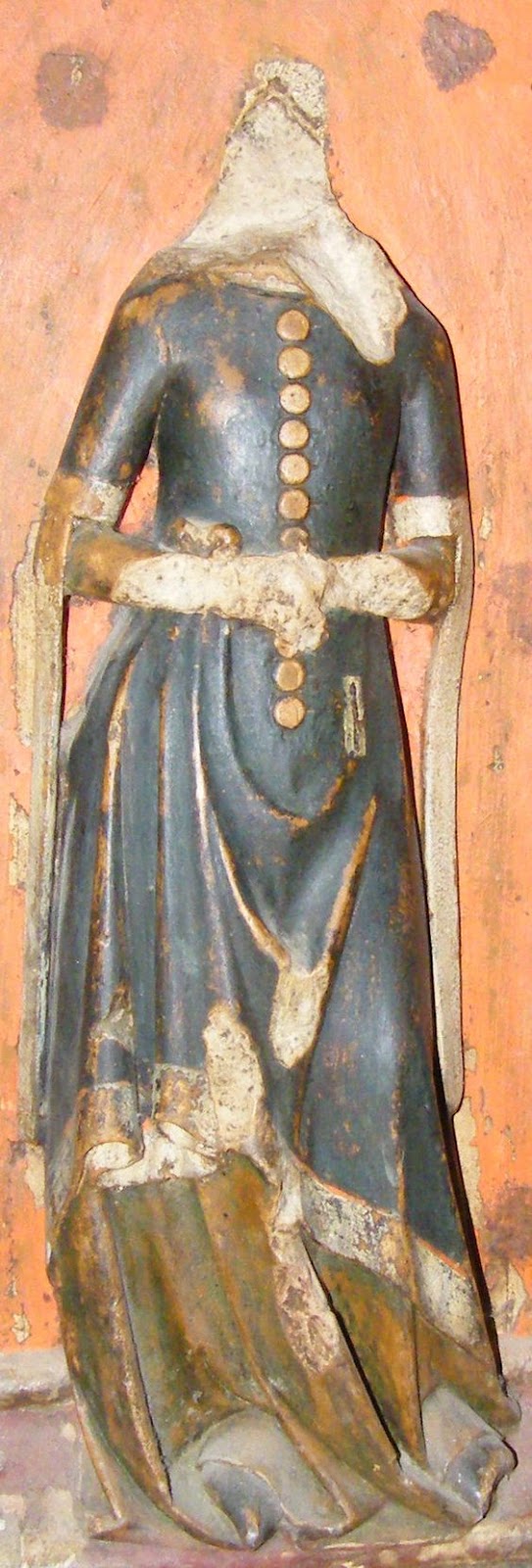
 The cotehardie layer over the kirtle later adds to the support of the bust line.  The neck line could be plunging or more modest.  The dress is often shown with a large number of closely spaced buttons on a front closure. The sleeves could be short, short with sleeve streamers (a very stereotypical cotehardie look) or longer.  Some examples extend over the hand almost to the fingers.  The cotehardie layer would be floor length.  The belt is often shown slung low on the hips.

Inspiration Images
Common Materials

  • Fabrics:
    • fine cloths
    • silks
    • brocades
    • fine wools
  • Ornamentation:

Effective Substitutions

  • Fabrics:
    • Silks
    • linens
    • linen blends with rayon or cotton
    • brocades.
    • Some cotton poly brocades can work to mimic the look of rich brocades, but the higher the poly content the more unpleasant the garment is to wear.
  • Ornamentation:

Ensemble Components

  • Slip/shift
  • Kirtle Cotehardie
  • purse

  • coifs/undercaps/hoods
  • belt
  • turnshoes

Accessories

Source/Links

http://www.chesholme.com/wfiles/2-1-Cotehardie.pdf

http://starsandgarters.org/2020/10/04/patterning-fitted-garments/

Version: 2
date: 2/26/2021
Source of Period Pic:
Model:
Photographer: Vincent De Vere
  

Full Entry, Male

1380 CE Male Houppelande 1

Title1380 CE Male Houppelande 1
Entry #GGB2021.062
Alternate Names Gown, houpelande, poun, pellanda
Year1380
Time range1360-1430
EraLate Medieval
GenderMale
regionWestern Europe
Countries/culturesEngland, France
MakerRobert Rubow
Difficulty5
ConfidenceImage Examples

Intro:

The houppelande is an outermost layer of dress, which was worn by middle-to-upper classes, both men and women. It was worn over a more fitted undergarment. It is identified by volumes of fabric neatly pleated into a belt, and visually balanced by a large hat.

Description:

Men wore varying lengths, depending on the fashion of the time and possibly the age of the wearer. Women wore them long, often breaking on the floor. Sleeve style varied by region and time as well, from a straight construction to wide and open, or wide and closed again at the wrist.

Necklines and sleeves started similar to cotehardies, and varied to high buttoned collars and folded down collars. Fabrics were colorful, sometimes brocaded, and often lined to contrast. Later, the female houppelande was tightened at the sleeve, a deep V left in the neck, and became the ‘Burgundian’ gown.

Layers under the Houppelande include base layers of shifts/under dresses, a kirtle or supportive layer, a cote, dress, gown or cotehardie layer and the outer houppelande

First seen in documentation in 1359 CE, the garments seem to have evolved from other outer wear such as garde-corps or herigauts, warm, billowy outer layers pulled over the head. 

Houppelande in pic is made from a rich brocade worn over a blue cotehardie

Inspiration Images

Common Materials

  • Fabrics:
    • wool
    • linen
    • silk
    • tabby and brocade patterning
  • Ornamentation:
    • embroidery
    • lined with contrasting fur

Effective Substitutions

  • Fabrics:
    • wool blends
    • linen
    • linen blends
    • cotton damasks
  • Ornamentation:
    • costume or fake fur
    • contrasting fabric

Ensemble Components

  • undershirt
  • doublet

  • cotehardie/cote/gown
  • braies/undergarments

Accessories

  • shoes with a point,
  • hose & garters
  • belt
  • hat

Source/Links

http://www.virtue.to/articles/circle_houp.html

http://medievalweddingdresses.ideasforweddings.net/wp-content/uploads/2009/05/houppelande3.jpg, http://www.flickr.com/photos/medievalarchive/2482968742/in/photostream/, http://www.flickr.com/photos/medievalarchive/2711997808/in/photostream/, http://www.flickr.com/photos/17024607@N08/2143873264, http://wp.bymymeasure.com/526/houppelande-belts-of-the-early-15th-century

Version2
date3/3/2021
Source of Period Pichttps://en.wikipedia.org/wiki/Houppelande#/media/File:Prayer_book_of_Maria_d’Harcourt_-_Staatsbibliothek_zu_Berlin_MsGermQuart42_-_f19v.jpg
ModelRobert Rubow
PhotographerVincent De Vere
  

Female, Full Entry

1400 CE Female Houppelande 2

Title1420 CE Female Houppelande 2
Entry #GGB2021.065
Alternate Names Gown, houpelande, poun, pellanda
Year1420
Time range1360-1430
EraLate Medieval
GenderFemale
regionWestern Europe
Countries/culturesEngland, France
MakerMIrabel Wynne
Difficulty5
ConfidenceImage Examples

Intro:

The houppelande is an outermost layer of dress, which was worn by middle-to-upper classes, both men and women. It was worn over a more fitted undergarment. It is identified by volumes of fabric neatly pleated into a belt, and visually balanced by a large hat.

Description:

Men wore varying lengths, depending on the fashion of the time and possibly the age of the wearer. Women wore them long, often breaking on the floor. Sleeve style varied by region and time as well, from a straight construction to wide and open, or wide and closed again at the wrist.

Necklines and sleeves started similar to cotehardies, and varied to high buttoned collars and folded down collars. Fabrics were colorful, sometimes brocaded, and often lined to contrast. Later, the female houppelande was tightened at the sleeve, a deep V left in the neck, and became the ‘Burgundian’ gown.

Layers under the Houppelande include base layers of shifts/under dresses, a kirtle or supportive layer, a cote, dress, gown or cotehardie layer and the outer houppelande

First seen in documentation in 1359 CE, the garments seem to have evolved from other outer wear such as garde-corps or herigauts, warm, billowy outer layers pulled over the head. 

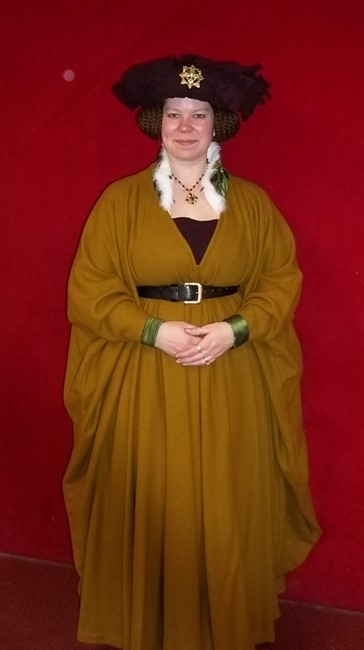
Houppelande in pic is made from wool with a fur collar. This is a transitional garment with many similarities to the Burgundian gown evident

Inspiration Images

Common Materials

  • Fabrics:
    • wool
    • linen
    • silk
    • tabby and brocade patterning
  • Ornamentation:
    • embroidery
    • lined with contrasting fur

Effective Substitutions

  • Fabrics:
    • wool blends
    • linen
    • linen blends
    • cotton damasks
  • Ornamentation:
    • costume or fake fur
    • contrasting fabric

Ensemble Components

  • undershirt
  • doublet
  • “Middle Layer” such as a cote/cotehardie gowns

  • Supportive Kirtle
  • braies/undergarments

Accessories

  • shoes with a point,
  • hose & garters
  • plaited hair
  • belt
  • hat – rolls, henins, and dual horns are fashionable

Source/Links

http://www.virtue.to/articles/circle_houp.html

http://medievalweddingdresses.ideasforweddings.net/wp-content/uploads/2009/05/houppelande3.jpg, http://www.flickr.com/photos/medievalarchive/2482968742/in/photostream/, http://www.flickr.com/photos/medievalarchive/2711997808/in/photostream/, http://www.flickr.com/photos/17024607@N08/2143873264, http://wp.bymymeasure.com/526/houppelande-belts-of-the-early-15th-century

Version2
date3/3/2021
Source of Period Pichttps://en.wikipedia.org/wiki/Houppelande#/media/File:Prayer_book_of_Maria_d’Harcourt_-_Staatsbibliothek_zu_Berlin_MsGermQuart42_-_f19v.jpg
ModelMirabel Wynne/
PhotographerVincent De Vere
  

Full Entry, Male

1410 CE Male Houppelande à mi-jambe

Title1410 CE Male Houppelande à mi-jambe
Entry #GGB2021.064
Alternate Names Gown, houpelande, poun, pellanda
Year1410
Time range1400-1430
EraLate Medieval
GenderMale
regionWestern Europe
Countries/culturesEngland, France
MakerVincent de Vere
Difficulty3
ConfidenceImage Examples

Intro:

The houppelande is an outermost layer of dress, which was worn by middle-to-upper classes, both men and women. It was worn over a more fitted undergarment. It is identified by volumes of fabric neatly pleated into a belt, and visually balanced by a large hat.

Additional Images of the garment:

Description:

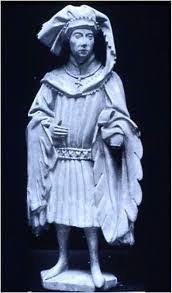
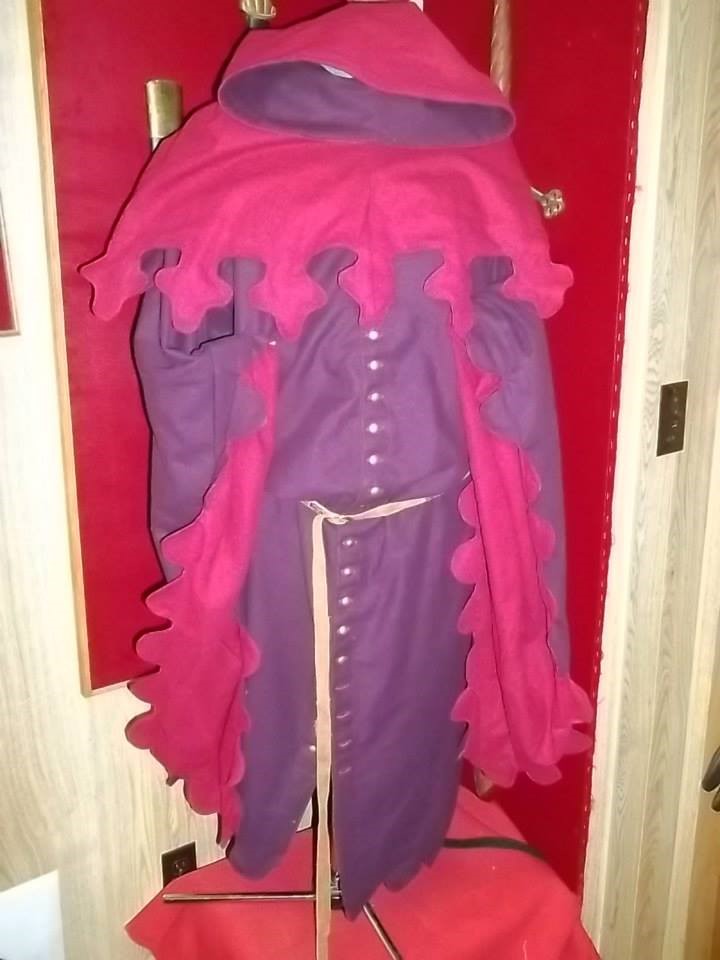
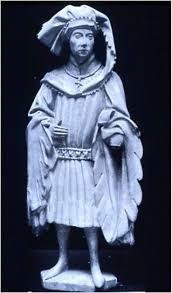
Men wore houppelandes of varying lengths, depending on the fashion of the time and possibly the age of the wearer. This shorter version of the garments makes it a Houppelande à mi-jambe, more popular in the years following 1400 CE. 

 Sleeve style varied by region and time as well, from a straight construction to wide and open, or wide and closed again at the wrist.

Necklines and sleeves started similar to cotehardies, and varied to high buttoned collars and folded down collars. Fabrics were colorful, sometimes brocaded, and often lined to contrast. Later, the female houppelande was tightened at the sleeve, a deep V left in the neck, and became the ‘Burgundian’ gown.

Layers under the Houppelande include base layers of undershirt, braies/hosen, doublet, cotehardie and the outer houppelande

First seen in documentation in 1359 CE, the garments seem to have evolved from other outer wear such as garde-corps or herigauts, warm, billowy outer layers pulled over the head. 

This Houppelande à mi-jambe is made from budget friendly linen/rayon blend and is reversible.

Inspiration Images

Common Materials

  • Fabrics:
    • wool
    • linen
    • silk
    • tabby and brocade patterning
  • Ornamentation:
    • embroidery
    • lined with contrasting fur

Effective Substitutions

  • Fabrics:
    • wool blends
    • linen
    • linen blends
    • cotton damasks
  • Ornamentation:
    • costume or fake fur
    • contrasting fabric

Ensemble Components

  • undershirt
  • doublet

  • cotehardie/cote/gown
  • braies/undergarments

Accessories

  • shoes with a point,
  • hose & garters
  • belt
  • hat

Source/Links

http://www.virtue.to/articles/circle_houp.html

http://medievalweddingdresses.ideasforweddings.net/wp-content/uploads/2009/05/houppelande3.jpg, http://www.flickr.com/photos/medievalarchive/2482968742/in/photostream/, http://www.flickr.com/photos/medievalarchive/2711997808/in/photostream/, http://www.flickr.com/photos/17024607@N08/2143873264, http://wp.bymymeasure.com/526/houppelande-belts-of-the-early-15th-century

Version2
date3/3/2021
Source of Period PicThames and Hudson pg 206 Statuette from the Dam chimney-piece, Amsterdam
ModelVincent De Vere
PhotographerVincent De Vere
  

Female, Full Entry

1400 CE Female Houppelande 1

Title1400 CE Female Houppelande 1
Entry #GGB2021.063
Alternate Names Gown, houpelande, poun, pellanda
Year1380
Time range1360-1430
EraLate Medieval
GenderFemale
regionWestern Europe
Countries/culturesEngland, France
MakerJosefine del Torre
Difficulty5
ConfidenceImage Examples

Intro:

The houppelande is an outermost layer of dress, which was worn by middle-to-upper classes, both men and women. It was worn over a more fitted undergarment. It is identified by volumes of fabric neatly pleated into a belt, and visually balanced by a large hat.

Description:

Men wore varying lengths, depending on the fashion of the time and possibly the age of the wearer. Women wore them long, often breaking on the floor. Sleeve style varied by region and time as well, from a straight construction to wide and open, or wide and closed again at the wrist.

Necklines and sleeves started similar to cotehardies, and varied to high buttoned collars and folded down collars. Fabrics were colorful, sometimes brocaded, and often lined to contrast. Later, the female houppelande was tightened at the sleeve, a deep V left in the neck, and became the ‘Burgundian’ gown.

Layers under the Houppelande include base layers of shifts/under dresses, a kirtle or supportive layer, a cote, dress, gown or cotehardie layer and the outer houppelande

First seen in documentation in 1359 CE, the garments seem to have evolved from other outer wear such as garde-corps or herigauts, warm, billowy outer layers pulled over the head. 

Houppelande in pic is made from a rich brocade worn over a blue cotehardie

Inspiration Images

Common Materials

  • Fabrics:
    • wool
    • linen
    • silk
    • tabby and brocade patterning
  • Ornamentation:
    • embroidery
    • lined with contrasting fur

Effective Substitutions

  • Fabrics:
    • wool blends
    • linen
    • linen blends
    • cotton damasks
  • Ornamentation:
    • costume or fake fur
    • contrasting fabric

Ensemble Components

  • undershirt
  • doublet
  • “Middle Layer” such as a cote/cotehardie gowns

  • Supportive Kirtle
  • braies/undergarments

Accessories

  • shoes with a point,
  • hose & garters
  • plaited hair
  • belt
  • hat – rolls, henins, and dual horns are fashionable

Source/Links

http://www.virtue.to/articles/circle_houp.html

http://medievalweddingdresses.ideasforweddings.net/wp-content/uploads/2009/05/houppelande3.jpg, http://www.flickr.com/photos/medievalarchive/2482968742/in/photostream/, http://www.flickr.com/photos/medievalarchive/2711997808/in/photostream/, http://www.flickr.com/photos/17024607@N08/2143873264, http://wp.bymymeasure.com/526/houppelande-belts-of-the-early-15th-century

Version2
date3/3/2021
Source of Period Pichttps://en.wikipedia.org/wiki/Houppelande#/media/File:Prayer_book_of_Maria_d’Harcourt_-_Staatsbibliothek_zu_Berlin_MsGermQuart42_-_f19v.jpg
ModelMirabel Wynne/
PhotographerVincent De Vere
  

Basic Entry, Female

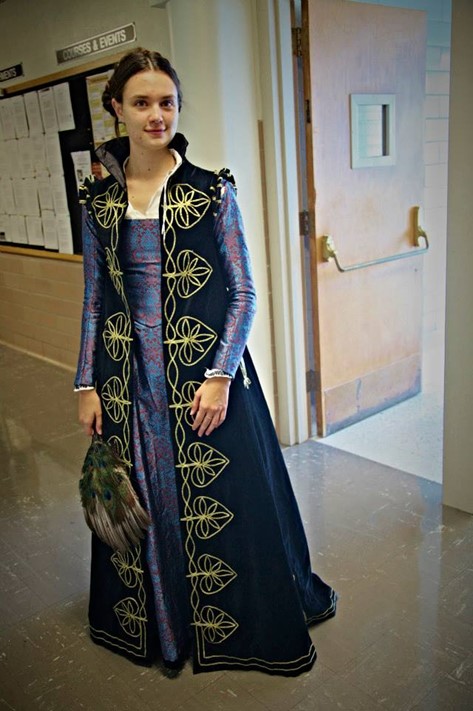
1560 CE Female Loose Gown and Kirtle

Title1565 English Elizabethan Gown 1
Entry #GGB2021.095
Alternate Names 
Year1560
Time range
Era
GenderFemale
region
Countries/cultures
MakerAvery Quatremaine
Difficulty4
ConfidenceImage Example

Intro:

Description:

Inspiration Images

Common Materials

Effective Substitutions

    •  

Ensemble Components

Accessories

Source/Links

Version2
date3/6/2021
Source of Period PicAvery Quartremaine
ModelHelena of Tor 031513-04
PhotographerVincent De Vere
  

Basic Entry, Female

1578 CE Female Wealthy Merchant Class Gown

TitleFemale Wealthy Merchant Class Gown
Entry #GGB2021.102
Alternate Names 
Year1578
Time range1578
EraElizabethan
Genderfemale
regionWestern europe
Countries/culturesEngland
MakerMary Elizebeth (Molly) Hathaway
Difficulty4
ConfidenceImage example

Intro:

The Elizabethan Gown is a decorated bodice and skirt worn over a chemise, corset and farthingale

Description:

No additional Information provided

Inspiration Images

Common Materials

  • Fabrics:
    • silk, satin, velvet, taffeta
  • Ornamentation:
    • bobbin lace, jewels, and embroidery

Effective Substitutions

  • Fabrics:
    • Heavy brocades, like upholstery fabrics, work well to give a rich look
    • Fancy bedspreads also work well for inserts
  • Ornamentation:
    • Buttons work well as jewels. 
    • Lace curtains sometimes look enough like bobbin lace to use

Ensemble Components

  • Chemise (high necked or low necked)
  • stockings
  • corset
  • outerskirt
  • bodice

  • farthingale (a bumroll can be added with the farthingale if wanted) 
  • underskirt
  • partlet
  • shoes

Accessories

  • snood, hat
  • strings of pearls or other jewels around the neck
  • choker necklace
  • rings, ear rings, gloves, girdle belt
  • ear rings
  • gloves
  • girdle belt
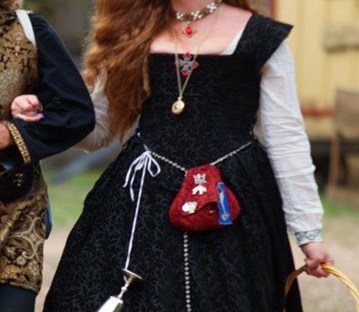
  • mirror hanging from the belt
  • decorative pouch hanging from the belt

Source/Links

Elizabeth of Valios by Alonso Sanchez Coello 1564

Elizabeth’s Wardrobe Unlocked by Janet Arnold

Elizabeth’s Wardrobe Unlocked  by Janet Arnold

1560 Elisabeth De Valois by Alonso Sanchez Coello…Grand Ladies  Web Page

Version2
date3/5/2021
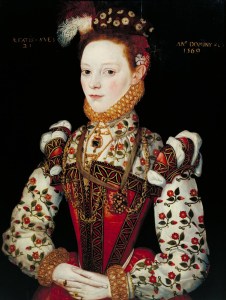
Source of Period PicA Young Lady Aged 21, Possibly Helena Snakenborg, Later Marchioness of Northampton 1569
Moderns version Made ByLaurie Coleman Downs
ModelMary Elizebeth (Molly) Hathaway 091413-10
PhotographerVincent De Vere
Entry #GGB2021.102

Female, Full Entry

1565 English Elizabethan Gown 1

Title1565 English Elizabethan Gown 1
Entry #GGB2021.096
Alternate Names 
Year1565
Time range1550-1600
EraElizabethan
GenderFemale
regionWestern Europe
Countries/culturesEngland
MakerHelena of Tor
Difficulty3
ConfidenceImage Example

Intro:

The Elizabethan Gown is a decorated bodice and skirt worn over a chemise, corset and farthingale

Description:

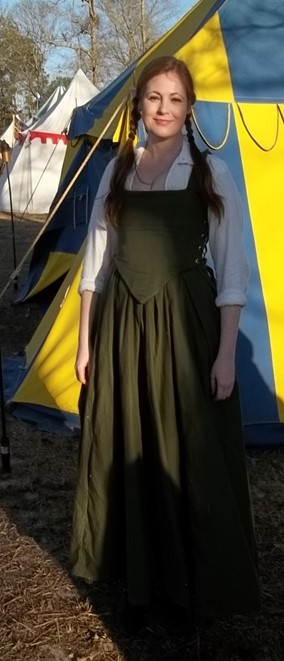
This gown was inspired by Steven Van Der Meulen of Elizabeth the First in The Hampden Portrait painted in 1563 and by a portrait of Mary Queen of Scots by an unknown artist in 1565 during her brief rule in Scotland.   The bodice is steel boned and laced on the sides. The lacing should be angling from the armpit to the middle of the back hip.  I did not incorporate that into this pattern though. 

   The skirt is an 8 paneled box pleated skirt with a button closure. To be accurate though the skirt should be cartridge pleated or knife pleated and hooked in the bodice.

This example was of a more basic construction for use during SCA events that may otherwise damage the more intricate dresses.  

Inspiration Images

Common Materials

  • Fabrics:
    • Silk, Satin, Velvet, taffeta
  • Ornamentation:
    • Bobbin Lace
    • Jewels
    • Embroidery

Effective Substitutions

  • Fabrics:
    • Heavy brocades, like upholstery fabrics, work very well to give a rich look. 
    • Fancy bedspreads also work well for inserts. 
  • Ornamentation:
    • Buttons work well as jewels. 
    • Lace curtains sometimes look enough like bobbin lace to use.   

Ensemble Components

  • Chemise (high necked or low necked)
  • stockings
  • corset
  • underskirt

  • outer skirt
  • bodice
  • shoes

Accessories

  • snood
  • hat
  • strings of pearls or other jewels around the neck
  • choker necklace
  • rings
  • ear rings
  • gloves
  • girdle belt
  • mirror hanging from the belt
  • decorative pouch hanging from the belt

Source/Links

Elizabeth of Valios by Alonso Sanchez Coello 1564

Elizabeth’s Wardrobe Unlocked by Janet Arnold

Elizabeth’s Wardrobe Unlocked  by Janet Arnold

1560 Elisabeth De Valois by Alonso Sanchez Coello…Grand Ladies

Version3
date3/7/2021
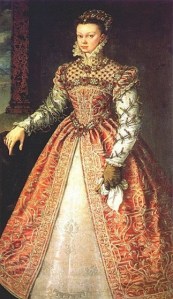
Source of Period Pic1560 Elisabeth De Valois by Alonso Sanchez Coello…
ModelHelena of Tor 031513-04
PhotographerVincent De Vere
  

Basic Entry, Female, Full Entry

1565 English Elizabethan Gown 2

Title1565 English Elizabethan Gown 2
Entry #GGB2021.097
Alternate Names 
Year1565
Time range1550-1600
EraElizabethan
GenderFemale
regionWestern Europe
Countries/culturesEngland
MakerHelena of Tor
Difficulty3
ConfidenceImage Example

Intro:

The Elizabethan Gown is a decorated bodice and skirt worn over a chemise, corset and farthingale

Description:

This gown was inspired by Steven Van Der Meulen of Elizabeth the First in The Hampden Portrait painted in 1563 and by a portrait of Mary Queen of Scots by an unknown artist in 1565 during her brief rule in Scotland.   The bodice is steel boned and laced on the sides. The lacing should be angling from the armpit to the middle of the back hip.  I did not incorporate that into this pattern though. 

   The skirt is an 8 paneled box pleated skirt with a button closure. To be accurate though the skirt should be cartridge pleated or knife pleated and hooked in the bodice. 

Inspiration Images

Common Materials

  • Fabrics:
    • Silk, Satin, Velvet, taffeta
  • Ornamentation:
    • Bobbin Lace
    • Jewels
    • Embroidery

Effective Substitutions

  • Fabrics:
    • Heavy brocades, like upholstery fabrics, work very well to give a rich look. 
    • Fancy bedspreads also work well for inserts. 
  • Ornamentation:
    • Buttons work well as jewels. 
    • Lace curtains sometimes look enough like bobbin lace to use.   

Ensemble Components

  • Chemise (high necked or low necked)
  • stockings
  • corset
  • underskirt

  • outer skirt
  • bodice
  • shoes

Accessories

  • snood
  • hat
  • strings of pearls or other jewels around the neck
  • choker necklace
  • rings
  • ear rings
  • gloves
  • girdle belt
  • mirror hanging from the belt
  • decorative pouch hanging from the belt

Source/Links

Elizabeth of Valios by Alonso Sanchez Coello 1564

Elizabeth’s Wardrobe Unlocked by Janet Arnold

Elizabeth’s Wardrobe Unlocked  by Janet Arnold

1560 Elisabeth De Valois by Alonso Sanchez Coello…Grand Ladies

Version2
date3/7/2021
Source of Period Pic1560 Elisabeth De Valois by Alonso Sanchez Coello…
ModelHelena of Tor 031513-04
PhotographerVincent De Vere
  

Basic Entry, Female

1565 English Elizabethan Gown 3

Title1565 English Elizabethan Gown 3
Entry #GGB2021.098
Alternate Names 
Year1565
Time range1550-1600
EraElizabethan
GenderFemale
regionWestern Europe
Countries/culturesEngland
MakerHelena of Tor
Difficulty5
ConfidenceImage Example

Intro:

The Elizabethan Gown is a decorated bodice and skirt worn over a chemise, corset and farthingale

Description:

This gown was inspired by Steven Van Der Meulen of Elizabeth the First in The Hampden Portrait painted in 1563 and by a portrait of Mary Queen of Scots by an unknown artist in 1565 during her brief rule in Scotland.   The bodice is steel boned and laced on the sides. The lacing should be angling from the armpit to the middle of the back hip.  I did not incorporate that into this pattern though. 

   The skirt is an 8 paneled box pleated skirt with a button closure. To be accurate though the skirt should be cartridge pleated or knife pleated and hooked in the bodice. 

This dress features many attached pearls and beads stitched to the fabric of the bodice.

Inspiration Images

Common Materials

  • Fabrics:
    • Silk, Satin, Velvet, taffeta
  • Ornamentation:
    • Bobbin Lace
    • Jewels
    • Embroidery

Effective Substitutions

  • Fabrics:
    • Heavy brocades, like upholstery fabrics, work very well to give a rich look. 
    • Fancy bedspreads also work well for inserts. 
  • Ornamentation:
    • Buttons work well as jewels. 
    • Lace curtains sometimes look enough like bobbin lace to use.   

Ensemble Components

  • Chemise (high necked or low necked)
  • stockings
  • corset
  • underskirt

  • outer skirt
  • bodice
  • shoes

Accessories

  • snood
  • hat
  • strings of pearls or other jewels around the neck
  • choker necklace
  • rings
  • ear rings
  • gloves
  • girdle belt
  • mirror hanging from the belt
  • decorative pouch hanging from the belt

Source/Links

Elizabeth of Valios by Alonso Sanchez Coello 1564

Elizabeth’s Wardrobe Unlocked by Janet Arnold

Elizabeth’s Wardrobe Unlocked  by Janet Arnold

1560 Elisabeth De Valois by Alonso Sanchez Coello…Grand Ladies

Version3
date3/7/2021
Source of Period Pic1560 Elisabeth De Valois by Alonso Sanchez Coello…
ModelHelena of Tor 031513-04
PhotographerVincent De Vere