A tunic dress under layer with an apron like over dress with shoulder straps pinned in place with distinctive brooch pins. Remains of decorative trim sometimes found on the top band of the dress. Often accessorized with beads and metal accessories. There are several theorized construction techniques. No current supportive evidence for belts.
Description:
Naturally dyed under dress with a Red wool over dress –
They are an overdress worn over a tunic-like under dress. They generally take the shape of a tube or flared tube with broaches that connect shoulder straps to the front of the over dress. The grave finds have shown general construction of wool and some linen with variation in color, finishing and decoration. There are many fabulous resources on line to research this easy to construct garment
Current research suggests that the general style of apron dress may have been used across Norse cultures with regional variations. Local and regional differences may have led to many variations on the theme.
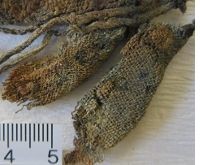
There is scant evidence from the grave finds due to excessive decomposition of the fabrics. These still seem to be dresses of a debatable authenticity. This has led to some of the different interpretations that are found on line.
Based on the articles I have read at this time I will side with the argument that this is a general category of garment that saw variations based on region, culture and time period. They can be grouped together as a style due to specific traits in common.
Inspiration Images
Common Materials
Fabrics:
wool
linen
Ornamentation:
tablet woven decorations
embroidery
Silk or linen strips or threads
Effective Substitutions
Fabrics:
linen
linen blends
cotton
wool blends
Ornamentation:
Ensemble Components
Hangeroc (apron overdress)
underdress
Coat/Kaftan
Accessories
strands of beads
glass or amber
Small tools (scissors, needle case, ear spoons, etc)
Brooches
Source/Links
Raymonds Quiet Press – source for reproduction broaches
A tunic dress under layer with an apron like over dress with shoulder straps pinned in place with distinctive brooch pins. Remains of decorative trim sometimes found on the top band of the dress. Often accessorized with beads and metal accessories. There are several theorized construction techniques. No current supportive evidence for belts.
Description:
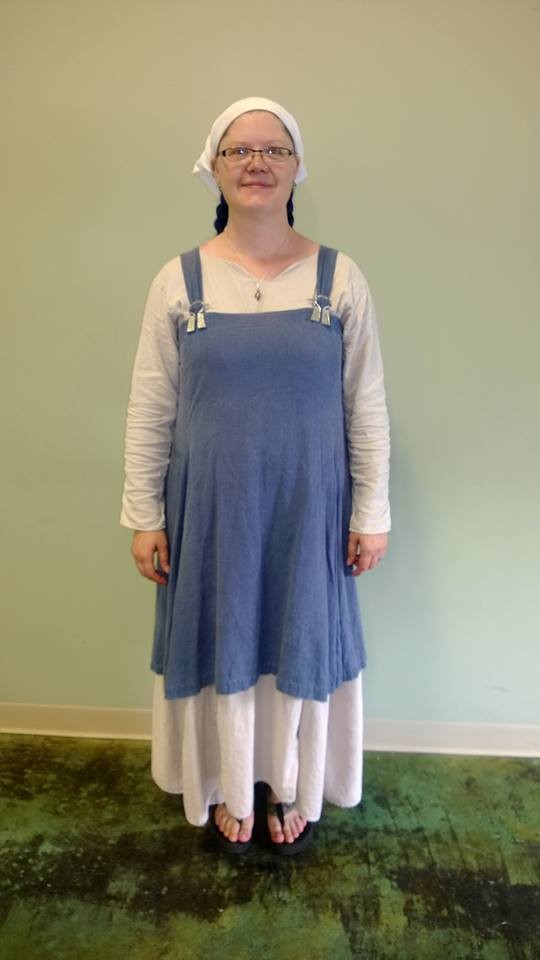
Linen under dress with a blue linen over dress featuring Rus style broaches – this is a variation made to allow for the dress to be worn on very hot days.
They are an overdress worn over a tunic-like under dress. They generally take the shape of a tube or flared tube with broaches that connect shoulder straps to the front of the over dress. The grave finds have shown general construction of wool and some linen with variation in color, finishing and decoration. There are many fabulous resources on line to research this easy to construct garment
Current research suggests that the general style of apron dress may have been used across Norse cultures with regional variations. Local and regional differences may have led to many variations on the theme.
There is scant evidence from the grave finds due to excessive decomposition of the fabrics. These still seem to be dresses of a debatable authenticity. This has led to some of the different interpretations that are found on line.
Based on the articles I have read at this time I will side with the argument that this is a general category of garment that saw variations based on region, culture and time period. They can be grouped together as a style due to specific traits in common.
Inspiration Images
Common Materials
Fabrics:
wool
linen
Ornamentation:
tablet woven decorations
embroidery
Silk or linen strips or threads
Effective Substitutions
Fabrics:
linen
linen blends
cotton
wool blends
Ornamentation:
Ensemble Components
Hangeroc (apron overdress)
underdress
Coat/Kaftan
Accessories
strands of beads
glass or amber
Small tools (scissors, needle case, ear spoons, etc)
Brooches
Source/Links
Raymonds Quiet Press – source for reproduction broaches
A tunic dress under layer with an apron like over dress with shoulder straps pinned in place with distinctive brooch pins. Remains of decorative trim sometimes found on the top band of the dress. Often accessorized with beads and metal accessories. There are several theorized construction techniques. No current supportive evidence for belts.
Description:
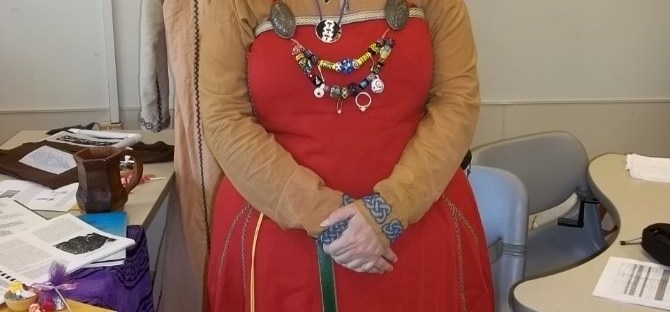
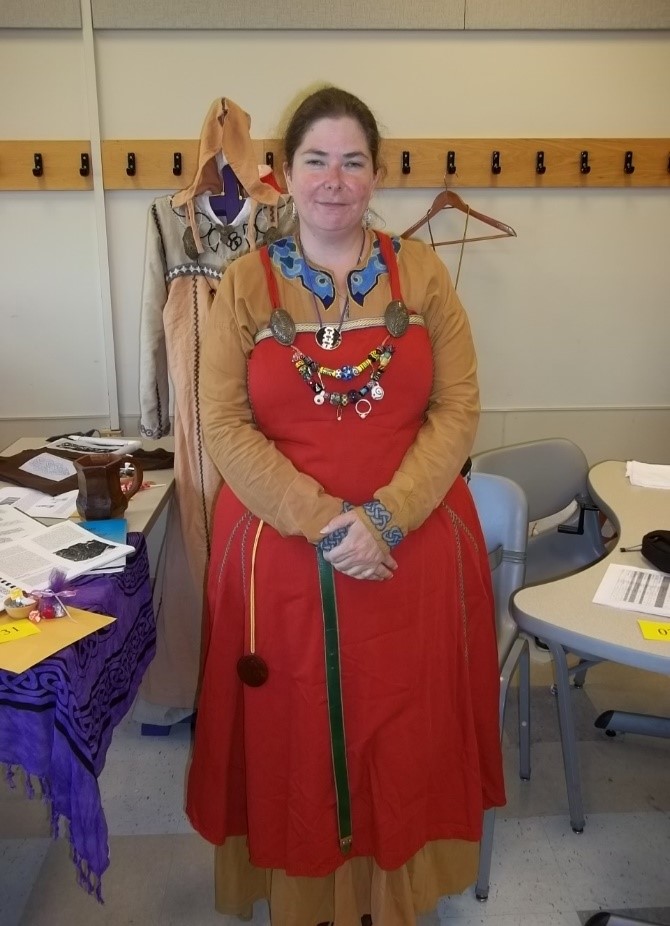
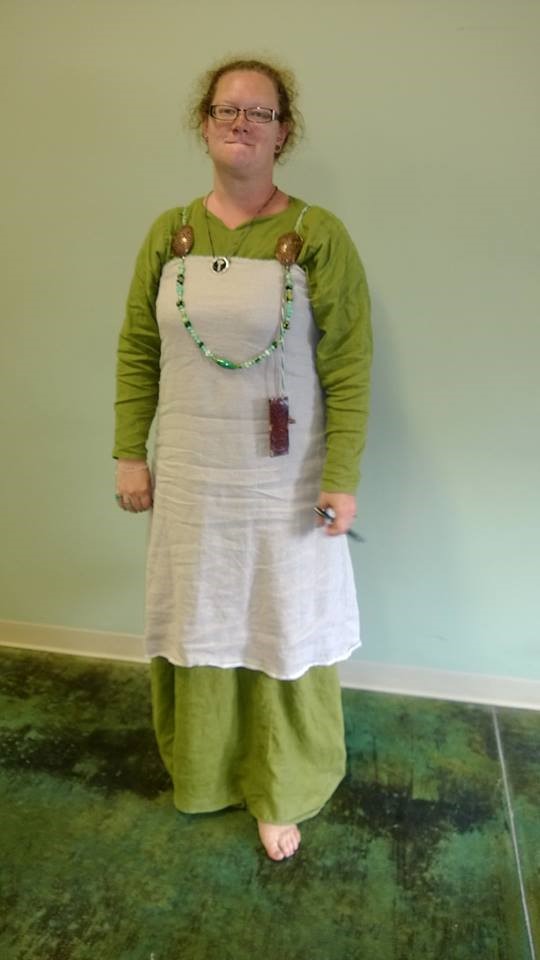
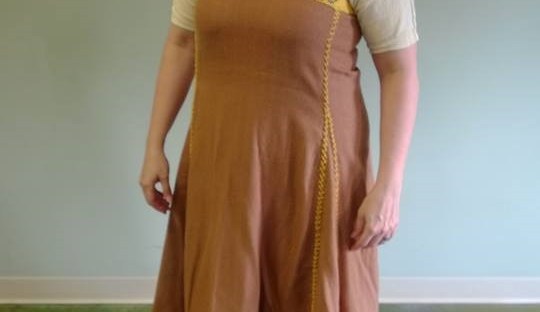
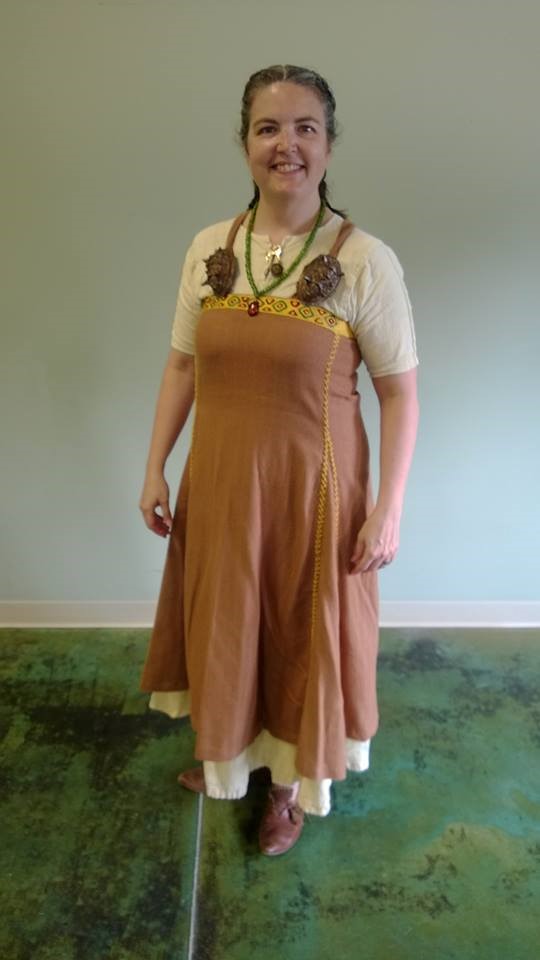
Red wool over dress torn over a tan linen under dress. The sort sleeves of the underdress pictured were due to a modern adaptation of the style for use in very hot weather. Current theory would suggest long sleeve underdress.
They are an overdress worn over a tunic-like under dress. They generally take the shape of a tube or flared tube with broaches that connect shoulder straps to the front of the over dress. The grave finds have shown general construction of wool and some linen with variation in color, finishing and decoration. There are many fabulous resources online to research this easy to construct garment
Current research suggests that the general style of apron dress may have been used across Norse cultures with regional variations. Local and regional differences may have led to many variations on the theme.
There is scant evidence from the grave finds due to excessive decomposition of the fabrics. These still seem to be dresses of a debatable authenticity. This has led to some of the different interpretations that are found on line.
Based on the articles I have read at this time I will side with the argument that this is a general category of garment that saw variations based on region, culture and time period. They can be grouped together as a style due to specific traits in common.
Inspiration Images
Common Materials
Fabrics:
wool
linen
Ornamentation:
tablet woven decorations
embroidery
Silk or linen strips or threads
Effective Substitutions
Fabrics:
linen
linen blends
cotton
wool blends
Ornamentation:
Ensemble Components
Hangeroc (apron overdress)
underdress
Coat/Kaftan
Accessories
strands of beads
glass or amber
Small tools (scissors, needle case, ear spoons, etc)
Brooches
Source/Links
Raymonds Quiet Press – source for reproduction broaches
A tunic dress under layer with an apron like over dress with shoulder straps pinned in place with distinctive brooch pins. Remains of decorative trim sometimes found on the top band of the dress. Often accessorized with beads and metal accessories. There are several theorized construction techniques. No current supportive evidence for belts.
Description:
Red wool over dress torn over a tan linen under dress. The sort sleeves of the underdress pictured were due to a modern adaptation of the style for use in very hot weather. Current theory would suggest long sleeve underdress.
They are an overdress worn over a tunic-like under dress. They generally take the shape of a tube or flared tube with broaches that connect shoulder straps to the front of the over dress. The grave finds have shown general construction of wool and some linen with variation in color, finishing and decoration. There are many fabulous resources online to research this easy to construct garment
Current research suggests that the general style of apron dress may have been used across Norse cultures with regional variations. Local and regional differences may have led to many variations on the theme.
There is scant evidence from the grave finds due to excessive decomposition of the fabrics. These still seem to be dresses of a debatable authenticity. This has led to some of the different interpretations that are found on line.
Based on the articles I have read at this time I will side with the argument that this is a general category of garment that saw variations based on region, culture and time period. They can be grouped together as a style due to specific traits in common.
Inspiration Images
Common Materials
Fabrics:
wool
linen
Ornamentation:
tablet woven decorations
embroidery
Silk or linen strips or threads
Effective Substitutions
Fabrics:
linen
linen blends
cotton
wool blends
Ornamentation:
Ensemble Components
Hangeroc (apron overdress)
underdress
Coat/Kaftan
Accessories
strands of beads
glass or amber
Small tools (scissors, needle case, ear spoons, etc)
Brooches
Source/Links
Raymonds Quiet Press – source for reproduction broaches
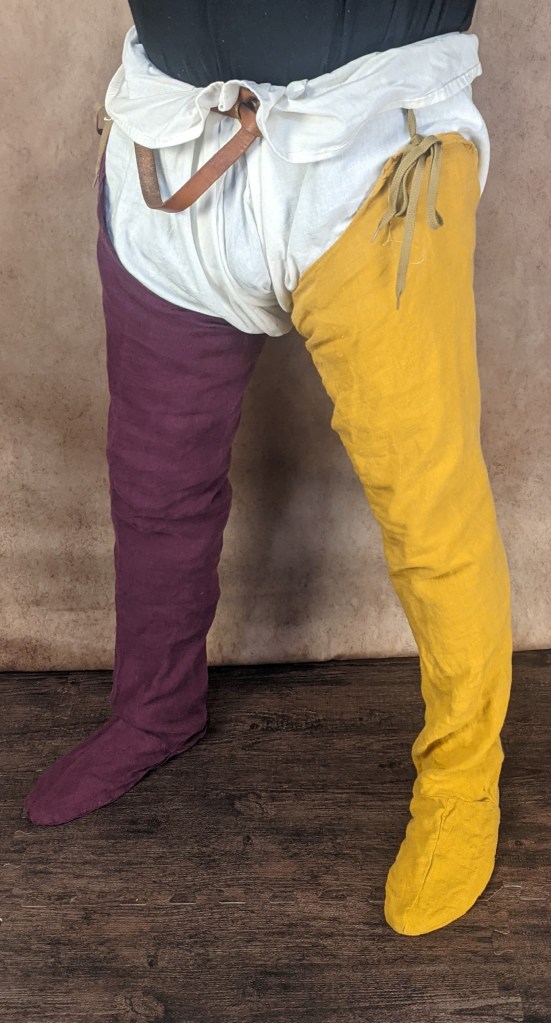
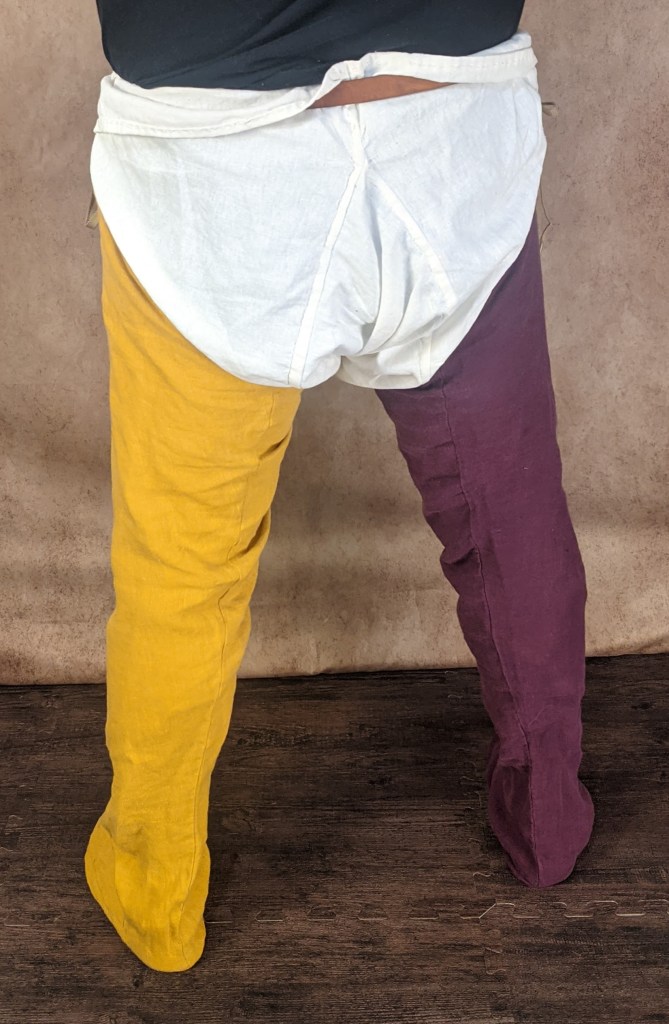
Examples of split hose sewn from linen and tied to the breech garter at the waist.
Description:
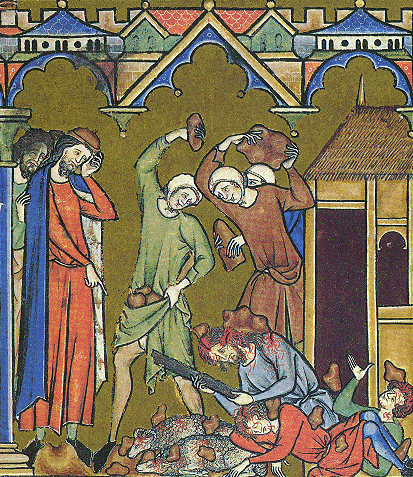
This is an example of split hose made out of linen and parti-colored. They have enclosed feet and a hole at the side to tie to a belt or girdle. They may commonly be seen with a garter tied just below the knee to assist in keeping the hose from slipping. The garter may be a tied woven band or a band with a buckle.
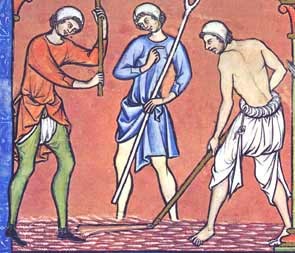
There is evidence supporting the use of some form of split hose stretching to early medieval times with their height in high medieval times. By the 1300’s the split hose were beginning to be less fashionable and were replaced by joined hose, however split hose continued to be used until the end of period.
The longer forms of the split hose may be associated with male fashion and the short hose with women and children, but people likely wore what they preferred as well as what matched their needs.
The best hose is made out of light wool fabric that has some spring to the weave and cut on the bias (diagonally.) although very wasteful of the fabric, the bias cut means that the resulting hose are slightly more elastic and fit better.
The historical use of various kinds of hose by women is assumed by us and use by members does occur.
Inspiration Images
Common Materials
Fabrics:
Wool
Effective Substitutions
Fabrics:
linen blends
Linen
wool
cotton
cotton blends
Wool blends
Ensemble Components
Hosen were worn by many different cultures and time periods and by many levels of society. Closely associated with the hosen are the Braies worn under the hosen and the girdle or belt used to hold them up as well as the garters to keep them from slipping worn just below the knee.
Accessories
Garters or woven material tied or a belt style garter. Girdle belt or belt worn at the waist and tied to the hosen to keep them up
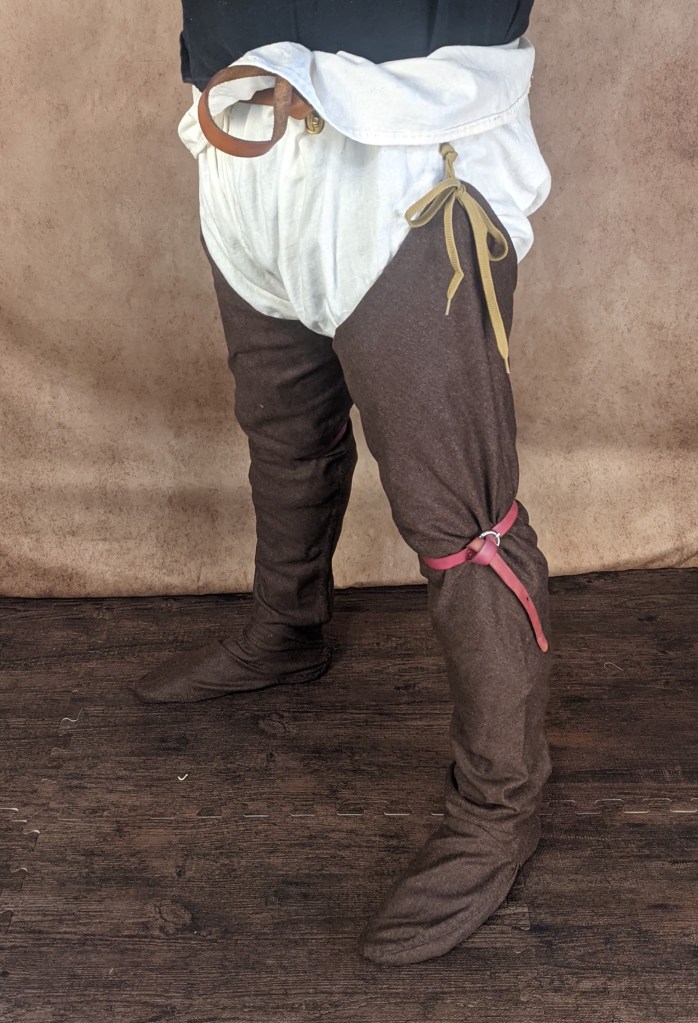
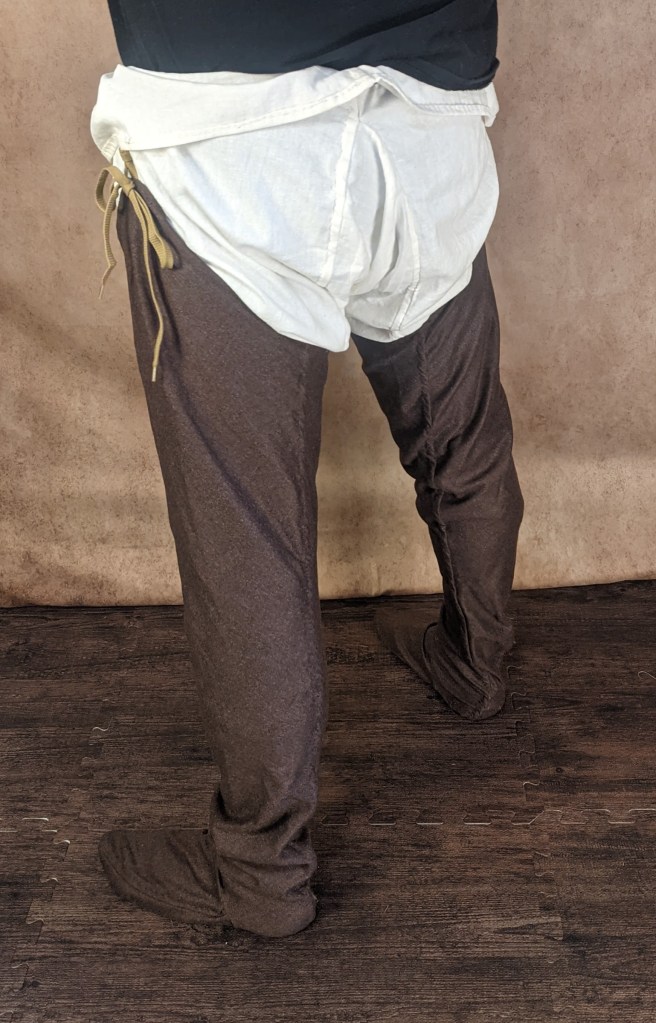
Examples of split hose sewn from linen and tied to the breech garter at the waist.
Description:
This is an example of split hose made out of wool. They have enclosed feet and a hole at the side to tie to a belt or girdle. They may commonly be seen with a garter tied just below the knee to assist in keeping the hose from slipping. The garter may be a tied woven band or a band with a buckle.
There is evidence supporting the use of some form of split hose stretching to early medieval times with their height in high medieval times. By the 1300’s the split hose were beginning to be less fashionable and were replaced by joined hose, however split hose continued to be used until the end of period.
The longer forms of the split hose may be associated with male fashion and the short hose with women and children, but people likely wore what they preferred as well as what matched their needs.
The best hose is made out of light wool fabric that has some spring to the weave and cut on the bias (diagonally.) although very wasteful of the fabric, the bias cut means that the resulting hose are slightly more elastic and fit better.
Inspiration Images
Common Materials
Fabrics:
Wool
Effective Substitutions
Fabrics:
linen blends
Linen
wool
cotton
cotton blends
Wool blends
Ensemble Components
Hosen were worn by many different cultures and time periods and by many levels of society. Closely associated with the hosen are the Braies worn under the hosen and the girdle or belt used to hold them up as well as the garters to keep them from slipping worn just below the knee.
Accessories
Garters or woven material tied or a belt style garter. Girdle belt or belt worn at the waist and tied to the hosen to keep them up
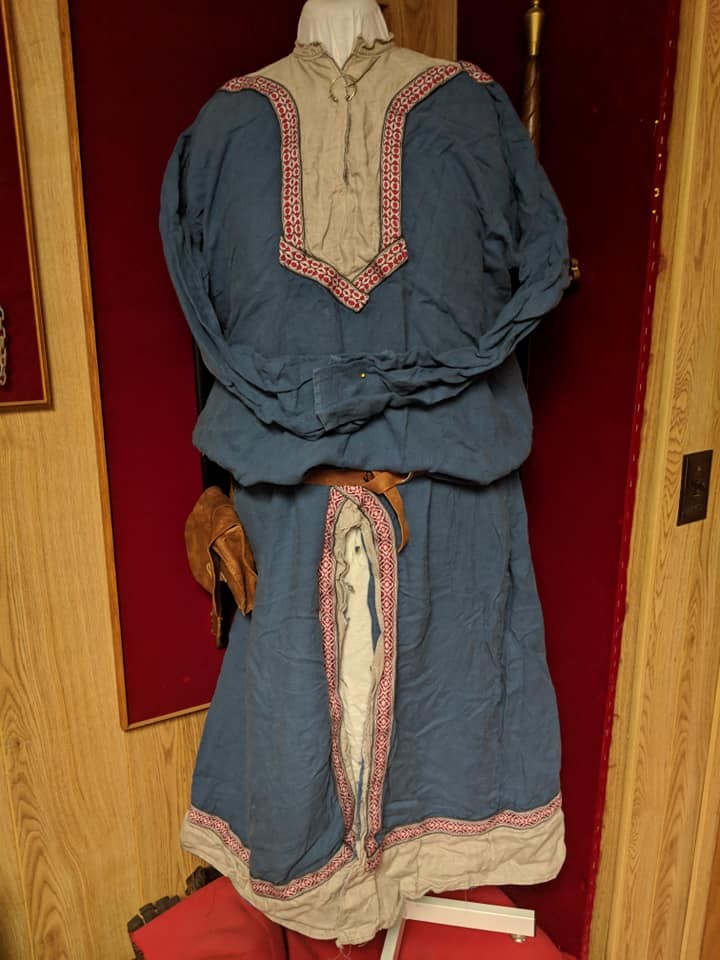
A version of the basic tunic used in many European cultures from antiquity through to the high middle ages by some. This tunic is split to allow wearer to ride a horse and have freedom of movement.
Description:
One of the many variations of the tunics made out of linen or wool. This example has a keyhole neck opening and featuring a split in front and back bottom to allow the wearer to ride a horse.
This variation was cut T tunic style out of a wide piece of fabric to minimize seams. A more period cut would include seams connecting the sleeve to the body. Trim is an applique of linen. Keyhole neck is held closed with a brooch pin. Tunics are about the easiest garments to construct.
Tunics are often the starting point for new members when just beginning in the SCA. This tunic could be made for less than $20 in 2021.
Inspiration Images
Common Materials
Fabrics:
wool
linen (including non-flax linen)
Ornamentation:
Effective Substitutions
Fabrics:
Wool blends,
Linen, linen/rayon
linen/cotton
some cottons could be used but cotton broad cloth is not advised as it is not a strong material and doesn’t drape well
Ornamentation:
Ensemble Components
Under shirt (likely of a similar cut)
Belt
Pouch
New members often start with just a tunic and belt.
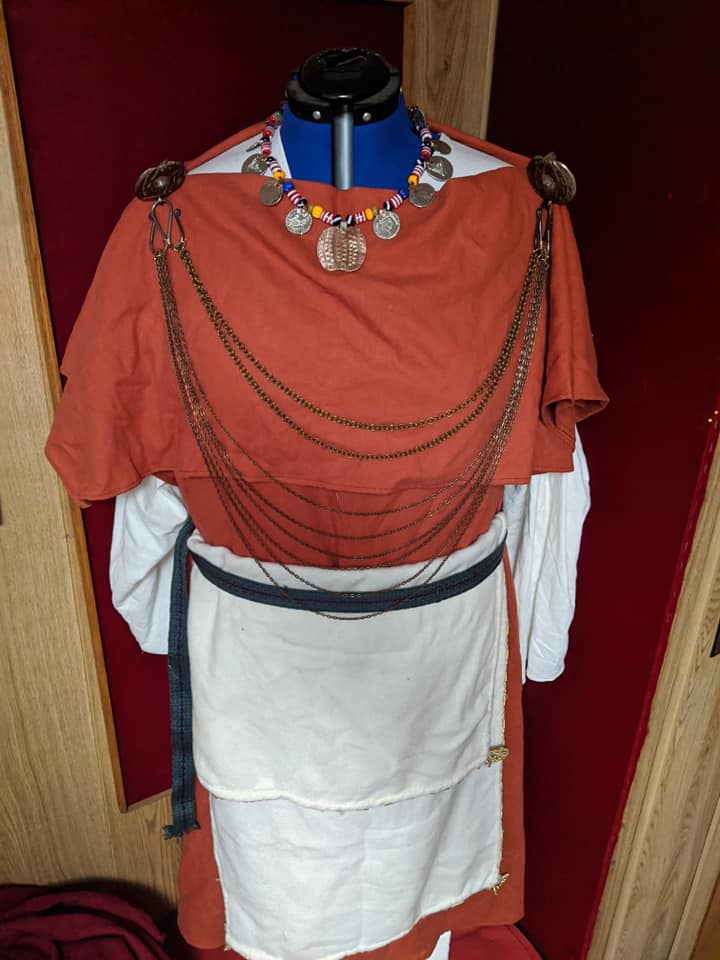
A fragmentary grave find of a Finnish dress. Style consists of an under tunic, an over dress of two rectangles of fabric and an apron. The layers are decorated with tablet weaving and metal coils. The grave find also was rich in metal artifacts
Description:
The complexity of this garment is in the decoration and accessories. The basic garment layers are exceedingly simple.
Under tunic: the base layer under tunic would most likely have been flax or nettle linen. It consists of 6 pieces, front and back panels, under arm gores extending into the sleeves and the sleeves that extend from hand to neckline.
Overdress: the over dress is related to other Norse dresses as well as stylistically similar to a peplos. It is two rectangles that are folded over at the top, pinned at the shoulders and stitched or pinned at the sides. This layer is likely wool in a tabby weave and decorated by tablet weaving.
Apron: The apron is folded over a belt and was likely wool. The notable thing about the aprons are their decorations made from coils of wire attached at the edges and along the bottom in a variety of styles and decorations.
Accessories:
Metal coiled arm bracelets (a very close approximation was sold as costume jewelry recently and can still be found)
Necklace made from coins and lampwork beads
Knife sheath and “puco” knife
Eura is a region in south west Finland. Many graves have been excavated in Luistari in the 1960’s and 70’s. Fabric reminants were preserved due to oxides from the metal finds. Grave 56 was a focus of attention because the metal preserved enough of the fabric in key points to allow for a reconstruction with some certainty
Inspiration Images
Common Materials
Fabrics:
Under dress: linen
over dress: wool
apron: wool
Ornamentation:
tablet woven trim
brass and bronze alloy coils
glass beads
Effective Substitutions
Fabrics:
Cottons and linen blends for the under dress
wool blends or linens and linen blends for the over dress in summer
wool blends or linen and linen blends for the apron
Some analysis of the actual colors of the grave finds has been done. SCA recreations commonly use colors that are available through natural dyes and are therefore plausible.
Ornamentation:
Ensemble Components
Underdress
Overdress
Apron
Belt
Optional Mantle (shawl)
Simple leather Shoes in the style of “bag shoes”
Metal and glass accessories
Accessories
Pair of brooch pins holding the overdress together at the shoulders












 SCA Iowa Garb Guide