Female, Full Entry

27 CE Female Roman Chiton and Palla

Title27 CE Female Roman Chiton and Palla
Entry #GGB2021.0001
Alternate Names Chiton, Palla
Year270CE
Time range27 – 400 CE
EraRoman Empire
GenderFemale
regionEurope
Countries/culturesEurope
MakerAnna Plentyn
Difficulty1
ConfidenceImage Examples

Intro:

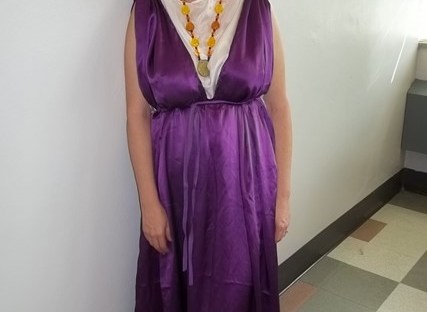
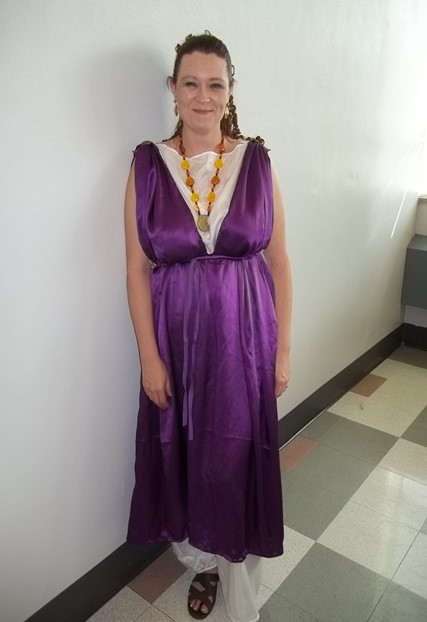
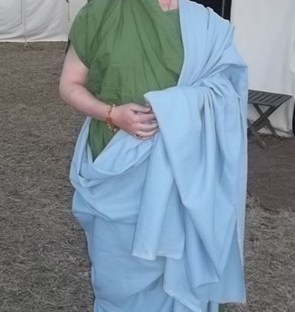
This consists of one piece or two pieces of fabric sewn at the sides and tacked at the top to form the tunic like chiton and a piece of fabric wrapped around as the palla. These are great beginner garb for hot weather

Description:

These are light and cool and fast to make.  The chiton is very much like a tunic. There are versions done with a single piece of fabric folded and tacked along to the top in a number of places or it can be done as two large rectangles of fabric that are sewn down the sides and tacked a few places along the top.  Using a rope it can be cinched in at the waist.  The palla can just be wrapped around and held.  Sandals that work to complete the outfit can be found in modern shoe stores.  Romans also had a variety of jewelry that can be made or purchased from retailers selling recreations or by modifying some modern costume jewelry.

Inspiration Images

Common Materials

  • Fabrics:
    • Most lower class garments in roman times were wool, but finding the right weights and weaves of wool now is hard. 
    • Upper classes would have some silks.
  • Ornamentation:

Effective Substitutions

  • Fabrics:
    • Avoid polyester, polyester blends. 
    • Cottons can work. 
    • Linens are good. 
    • Very light and fine wools may be very accurate, but harder to find.
  • Ornamentation:

Ensemble Components

  • Chiton
  • Palla
  • belt

  • sandals
  • jewelry

Accessories

  • “Roman” sandals are still sold today and work for starter garb. 
  • Belts can range from ropes to modern fashion chain belts. 
  • Many examples of roman jewelry are not complex and can be made easily.   There are some styles that look very similar to modern costume jewelry.

Source/Links

https://titarufiaprisca.wordpress.com/2011/03/16/on-making-roman-clothing/

http://www.fashion-era.com/ancient_costume/ancient-greek-dress-chiton.htm

https://titarufiaprisca.wordpress.com/2011/03/16/on-making-roman-clothing/

https://vestificasericata.wordpress.com/documentation/

https://www.getting-my-medieval-on.com/wp-content/uploads/2017/08/romanwomensgarb-arriamarina.pdf

https://romanasum.files.wordpress.com/2014/10/intro-to-roman-clothing4.pdf

https://www.getting-my-medieval-on.com/wp-content/uploads/2017/08/romanwomensgarb-arriamarina.pdf

Version2
date3/6/2021
Source of Period PicStatue of Livia Drusilla wearing a stola and palla
ModelAnna Plentyn 031113-13
PhotographerVincent De Vere
  
Basic Entry, Female

100 CE Female Roman Tunica and Stola

Title100 CE Female Roman Tunica and Stola
Entry #GGB2021.0003
Alternate NamesTunic or wrongly called a toga 
Year100CE
Time range27 – 400 CE
EraRoman Empire
GenderFemale
regionEurope
Countries/culturesEurope
MakerFionnghuala inghean Fhearghuis
Difficulty1
ConfidenceImage Examples

Intro:

Very simple tunic like dress worn with fabric draped and pinned at the shoulders, belted at the waist

Description:

Women of all classes would have worn the basic tunic dress but women of higher classes would add an additional layer of the stola pinned over the tunic.  In the example here, the white fabric is the tunic and the purple is the stola.  This would have been in addition to a Palla or long wrap that could be draped in a number of ways.

In addition there are many options for jewelry and footwear that works for roman garb.  There are even modern costume jewelry and modern sandals that can be found that stylistically work for roman accessories.

Beware of information about making “togas” for the college toga parties. 

Inspiration Images

Common Materials

  • Fabrics:
    • Most lower class garments in roman times were wool, but finding the right weights and weaves of wool now is hard. 
    • Upper classes would have some silks.
  • Ornamentation:

Effective Substitutions

  • Fabrics:
    • Avoid polyester, polyester blends. 
    • Cottons can work. 
    • Linens are good. 
    • Very light and fine wools may be very accurate, but harder to find.
  • Ornamentation:

Ensemble Components

  • Chiton
  • Palla
  • belt

  • sandals
  • jewelry
  • Stola

Accessories

  • “Roman” sandals are still sold today and work for starter garb. 
  • Belts can range from ropes to modern fashion chain belts. 
  • Many examples of roman jewelry are not complex and can be made easily.   There are some styles that look very similar to modern costume jewelry.

Source/Links

https://titarufiaprisca.wordpress.com/2011/03/16/on-making-roman-clothing/

http://www.fashion-era.com/ancient_costume/ancient-greek-dress-chiton.htm

https://titarufiaprisca.wordpress.com/2011/03/16/on-making-roman-clothing/

https://vestificasericata.wordpress.com/documentation/

https://www.getting-my-medieval-on.com/wp-content/uploads/2017/08/romanwomensgarb-arriamarina.pdf

https://romanasum.files.wordpress.com/2014/10/intro-to-roman-clothing4.pdf

https://www.getting-my-medieval-on.com/wp-content/uploads/2017/08/romanwomensgarb-arriamarina.pdf

Version2
date3/6/2021
Source of Period PicStatue of Livia Drusilla wearing a stola and palla
ModelFionnghuala inghean Fhearghuis 091413-11
PhotographerVincent De Vere
  
Full Entry, Male

900 CE Male Norse Tunic

Title900 CE Male Norse Tunic
Entry #GGB2021.0009
Alternate NamesT Tunic, Lendbreen tunic
Year900 CE
Time range600-1000 CE
EraEarly Medieval
GenderMale
regionNorthern Europe
Countries/cultures Northern Europe
Maker
Difficulty1
ConfidenceExtant Example

Intro:

Tunic, pants, leg wraps used in many northern European areas for a wide time frame in the early medieval era

Description:

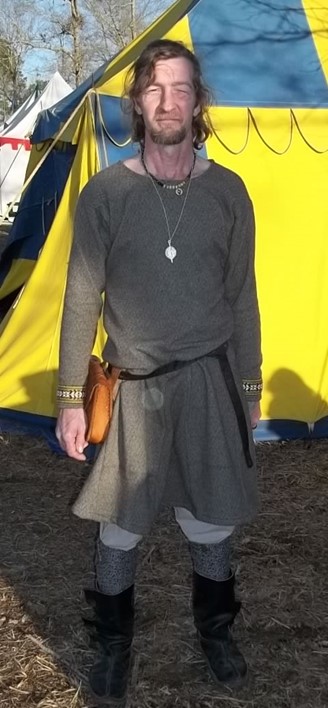
Linen under tunic Wool tunic with woven trim at wrists, pants tied with a drawstring at the waist,  wool leg wraps, Norse style boots, belt and pouch.

Many of the male garments from across northern Europe through the early middles ages share many similarities.

Inspiration Images

Common Materials

  • Fabrics:
    • linen
    • wool
  • Ornamentation:

Effective Substitutions

  • Fabrics:
    • cotton
    • cotton-linen
    • linen-rayon
    • wool blends
    • Scrub pants can be used for pants.  Strips of cloth can be used for leg wraps.  Various boots and shoes can be used if they do not stand out too much.
  • Ornamentation:

Ensemble Components

  • Under tunic
  • Over Tunic

  • Pants
  • Hood

Accessories

  • Belt
  • Leg Wraps
  • jewelry
  • Pouch
  • Turn Shoes
  • knife

Source/Links

https://www.cs.vassar.edu/~capriest/viktunic.html

https://www.medievalists.net/2014/11/early-medieval-tunic-recreated-norway/

Version2
date3/5/2021
Source of Period Pichttps://www.medievalists.net/2014/11/early-medieval-tunic-recreated-norway/
ModelBjarki Vikarason 031513-02
PhotographerVincent De Vere
  

Full Entry, Male

900 CE Anglo Saxon Tunic

Title900 CE Anglo Saxon Tunic
Entry #GGB2021.0008
Alternate Names tunic, over tunic
Year900 CE
Time range500-900 CE
EraEarly Medieval
GenderMale
regionWestern Europe, Northern Europe
Countries/culturesEngland
MakerElspeth of Stonehaven
Difficulty1
ConfidenceImage Example

Intro:

A tunic style outfit with accessories common to many early or pre medieval cultures. Under tunic, over tunic, pants with leg wraps, turn shoes and a mantled hood

Description:

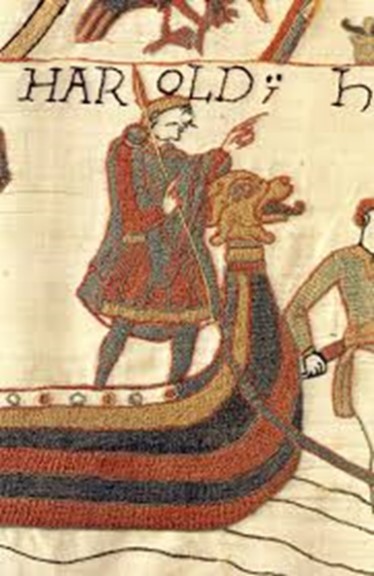
Few representations survive of early garments and many fewer extant examples, however what does survive would support much of what is shown here. 

The fabric shows woven in patterns that existed across Western Europe in the centuries before 1000 CE.  The basic style of layers of tunics and pants continued from before the centuries of the Roman influence to the age of Norman England. 

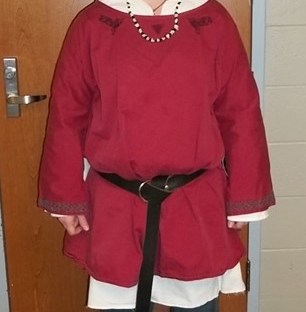
A base layer of a linen under tunic may have been worn below the long sleeved wool tunic and the wool outer tunic.  This example was made from Linen for use during warm summer events. 

The pants made heavy cotton cloth would have been wool in period. 

The over tunic is decorated with embroidery

Inspiration Images

Common Materials

  • Fabrics:
    • linen
    • wool
  • Ornamentation:
    • Embroidery
    • Tablet woven bands

Effective Substitutions

  • Fabrics:
    • cotton
    • cotton-linen
    • linen-rayon
    • wool blends
  • Ornamentation:

Ensemble Components

  • Under tunic
  • Over Tunic

  • Pants
  • Hood

Accessories

  • Belt
  • Leg Wraps
  • Pouch
  • Turn Shoes

Source/Links

Version2
date3/5/2021
Source of Period PicBayeux tapestry
ModelTola Rufusdóhtor 020213-24
PhotographerVincent De Vere
  

Female, Full Entry

900 CE Norse Hangerok 4

Title900 CE Norse Hangerok 4
Entry #GGB2021.013
Alternate Names Apron Dress, Smokkr
Year900 CE
Time range900-1000 CE
EraEarly medieval
Genderfemale
regionNorthern Europe
Countries/culturesNorse, Viking,
MakerMoire inghean Neill
Difficulty1
ConfidenceSpeculative reconstruction

Intro:

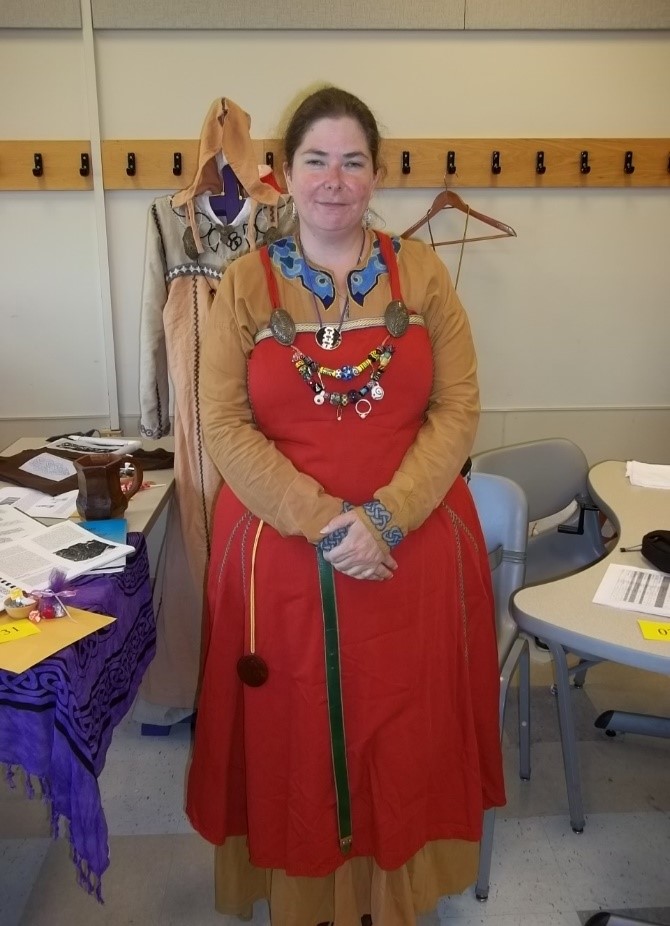
A tunic dress under layer with an apron like over dress with shoulder straps pinned in place with distinctive brooch pins.  Remains of decorative trim sometimes found on the top band of the dress.   Often accessorized with beads and metal accessories. There are several theorized construction techniques.  No current supportive evidence for belts. 

Description:

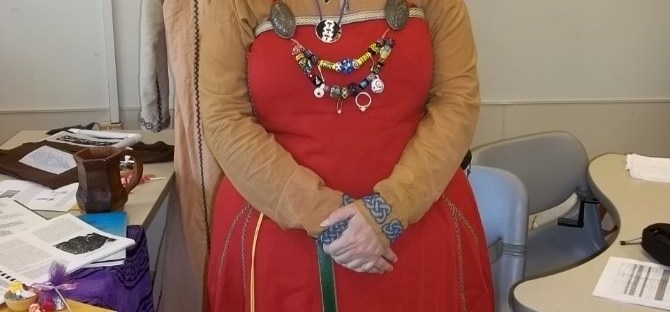
Naturally dyed under dress with a Red wool over dress – 

They are an overdress worn over a tunic-like under dress.  They generally take the shape of a tube or flared tube with broaches that connect shoulder straps to the front of the over dress.  The grave finds have shown general construction of wool and some linen with variation in color, finishing and decoration.  There are many fabulous resources on line to research this easy to construct garment

Current research suggests that the general style of apron dress may have been used across Norse cultures with regional variations.  Local and regional differences may have led to many variations on the theme.

 There is scant evidence from the grave finds due to excessive decomposition of the fabrics.  These still seem to be dresses of a debatable authenticity.  This has led to some of the different interpretations that are found on line.

Based on the articles I have read at this time I will side with the argument that this is a general category of garment that saw variations based on region, culture and time period.  They can be grouped together as a style due to specific traits in common. 

Inspiration Images

Common Materials

  • Fabrics:
    • wool
    • linen
  • Ornamentation:
    • tablet woven decorations
    • embroidery
    • Silk or linen strips or threads

Effective Substitutions

  • Fabrics:
    • linen
    • linen blends
    • cotton
    • wool blends
  • Ornamentation:

Ensemble Components

  • Hangeroc (apron overdress)
  • underdress

  • Coat/Kaftan

Accessories

  • strands of beads
    • glass or amber
  • Small tools (scissors, needle case, ear spoons, etc)
  • Brooches

Source/Links

Raymonds Quiet Press – source for reproduction broaches

https://raymonds-quiet-press.myshopify.com/

http://urd.priv.no/viking/smokkr.html

http://urd.priv.no/viking/kostrup.html

Version2
date2/21/2021
Source of Period Pichttp://urd.priv.no/viking/kostrup.html
ModelMoire inghean Neill 091413-01
PhotographerVincent De Vere
  
Female, Full Entry

900 CE Norse Hangerok 3

Title900 CE Norse Hangerok 3
Entry #GGB2021.012
Alternate Names Apron Dress, Smokkr
Year900 CE
Time range900-1000 CE
EraEarly medieval
Genderfemale
regionNorthern Europe
Countries/culturesNorse, Viking,
MakerNghuala inghean Vi Fallamhain
Difficulty1
ConfidenceSpeculative reconstruction

Intro:

A tunic dress under layer with an apron like over dress with shoulder straps pinned in place with distinctive brooch pins.  Remains of decorative trim sometimes found on the top band of the dress.   Often accessorized with beads and metal accessories. There are several theorized construction techniques.  No current supportive evidence for belts. 

Description:

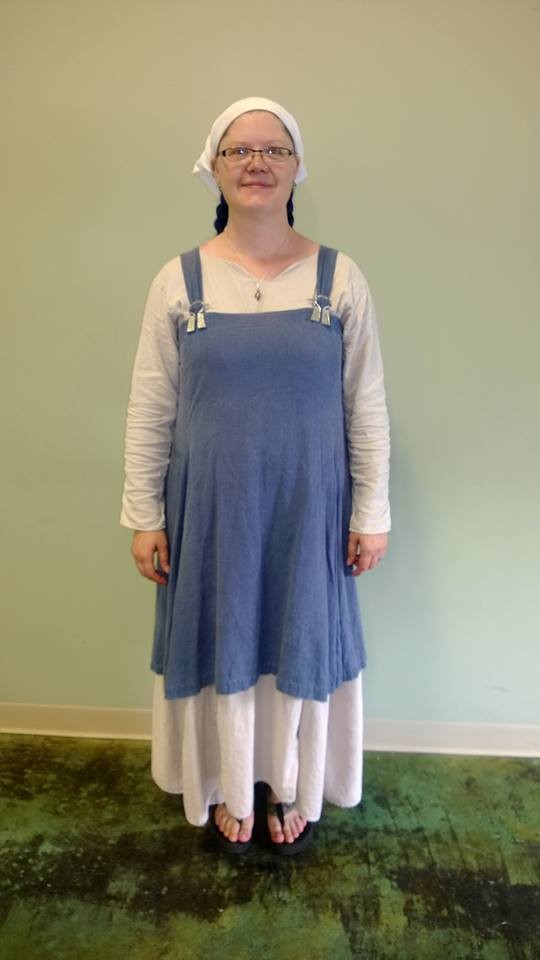
Linen under dress with a blue linen over dress featuring Rus style broaches –  this is a variation made to allow for the dress to be worn on very hot days.

They are an overdress worn over a tunic-like under dress.  They generally take the shape of a tube or flared tube with broaches that connect shoulder straps to the front of the over dress.  The grave finds have shown general construction of wool and some linen with variation in color, finishing and decoration.  There are many fabulous resources on line to research this easy to construct garment

Current research suggests that the general style of apron dress may have been used across Norse cultures with regional variations.  Local and regional differences may have led to many variations on the theme.

 There is scant evidence from the grave finds due to excessive decomposition of the fabrics.  These still seem to be dresses of a debatable authenticity.  This has led to some of the different interpretations that are found on line.

Based on the articles I have read at this time I will side with the argument that this is a general category of garment that saw variations based on region, culture and time period.  They can be grouped together as a style due to specific traits in common. 

Inspiration Images

Common Materials

  • Fabrics:
    • wool
    • linen
  • Ornamentation:
    • tablet woven decorations
    • embroidery
    • Silk or linen strips or threads

Effective Substitutions

  • Fabrics:
    • linen
    • linen blends
    • cotton
    • wool blends
  • Ornamentation:

Ensemble Components

  • Hangeroc (apron overdress)
  • underdress

  • Coat/Kaftan

Accessories

  • strands of beads
    • glass or amber
  • Small tools (scissors, needle case, ear spoons, etc)
  • Brooches

Source/Links

Raymonds Quiet Press – source for reproduction broaches

https://raymonds-quiet-press.myshopify.com/

http://urd.priv.no/viking/smokkr.html

http://urd.priv.no/viking/kostrup.html

Version2
date2/21/2021
Source of Period Pichttp://urd.priv.no/viking/kostrup.html
ModelNghuala inghean Vi  Fallamhain 082413-08
PhotographerVincent De Vere
  
Component Entry, Female, Male, Unisex

Coif, 2 piece

TitleCoif, 2 piece
Entry #GGC2021.003
Alternate NamesCoif  
Year1000-1600 CE
Time range1000-1600 CE
EraHigh Medieval, Late Medieval
Genderunisex
regionEuropean
Countries/culturesGermany, Western European, Central European
MakerVincent De Vere,
Difficulty1
ConfidenceExtant Example

Intro:

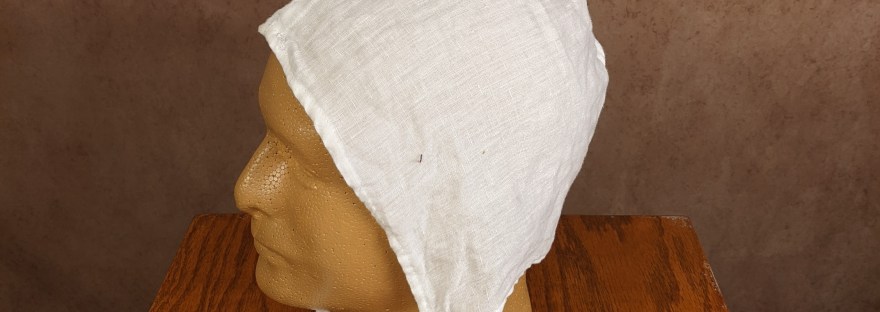
Head covering made from small scraps of linen fabric.                  

Description:

It’s underwear for your head.  Many images of the middle ages feature people wearing coifs to cover and protect their hair, oils from their head from their hats and for something to connect hats to.  They also are an easy accessory to add to your

These are very simple to construct either by machine or by hand and take very little fabric.  They are easily made from cotton fabric or linen and there are surviving examples and images that show a number of variations through time or cultures.

Inspiration Images

Common Materials

  • Fabrics:
    • linen  

Effective Substitutions

  • Fabrics:
    • linen blends
    • Linen
    • wool
    • cotton
    • cotton blends

Ensemble Components

Accessories

Source/Links

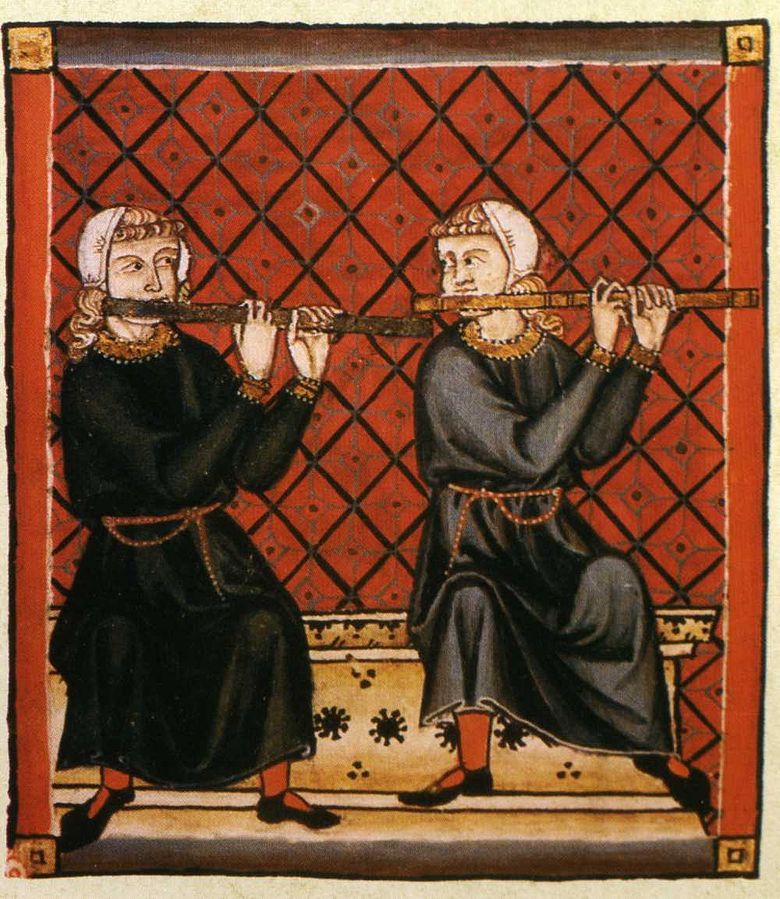
Illustration from Cantigas de Santa Maria manuscript. The Cantigas de Santa Maria (Songs to the Virgin Mary) are manuscripts written in Galician-Portuguese, with music notation, during the reign of Alfonso X El Sabio (1221-1284).

Version1
date12/30/2021
Source of Period PicBritish Library
Model Vincent de Vere
PhotographerVincent De Vere
  
Component Entry, Female, Male, Unisex

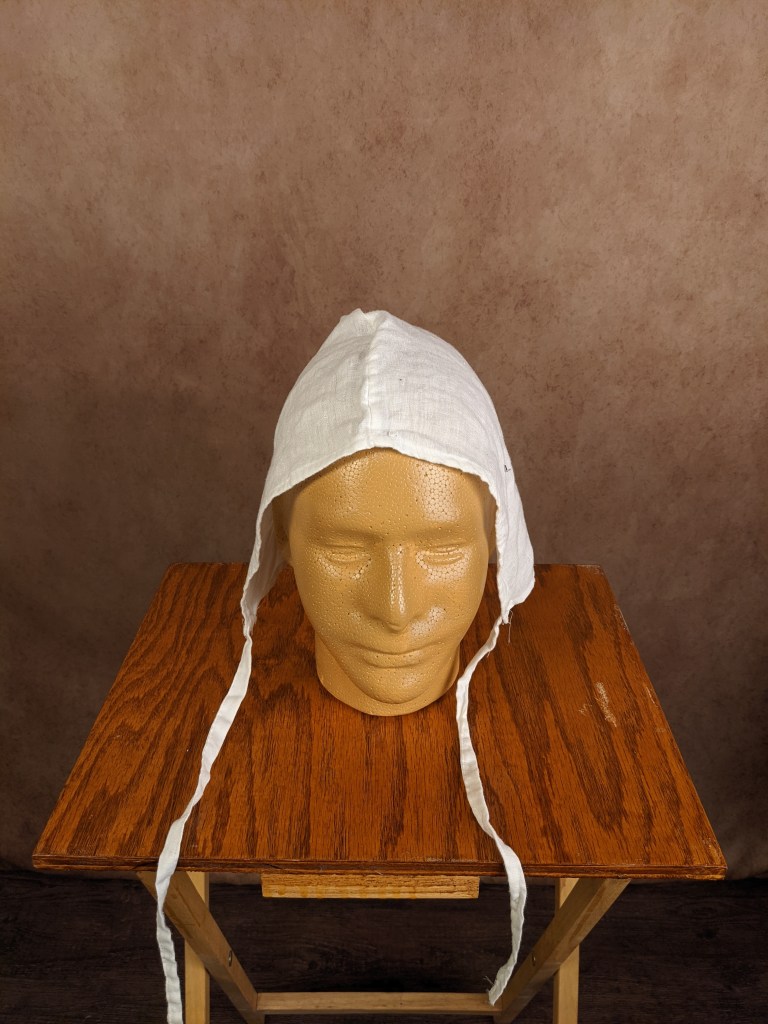
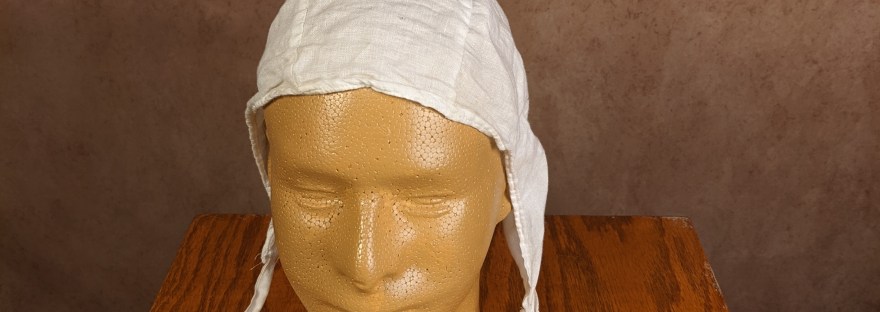
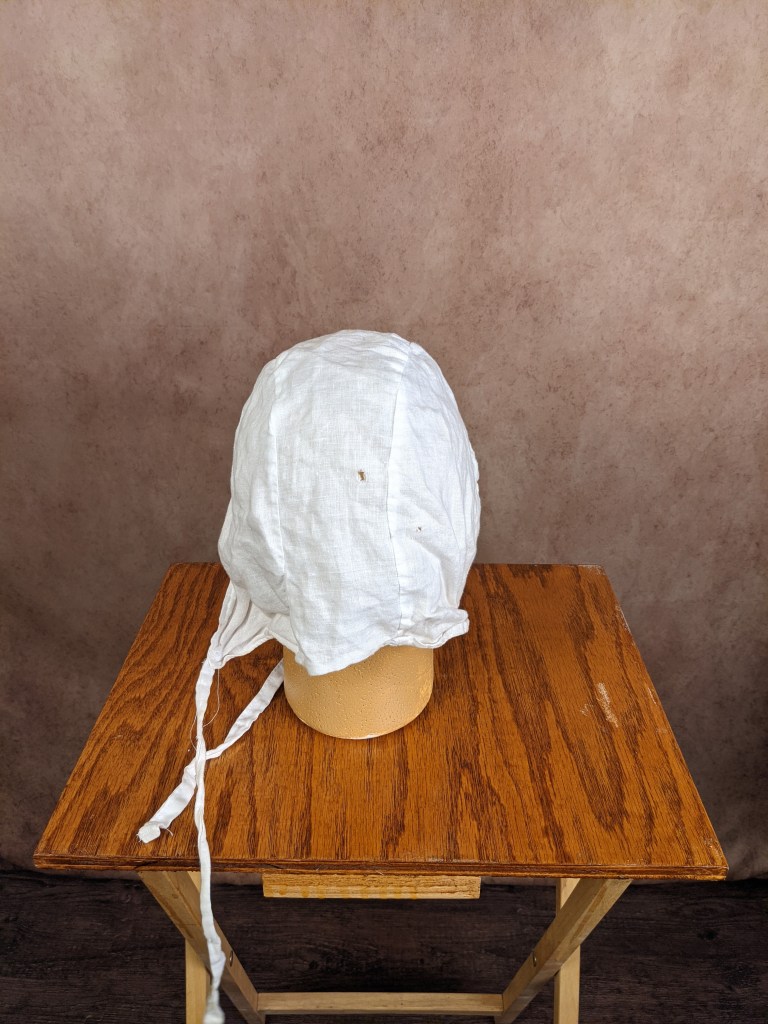
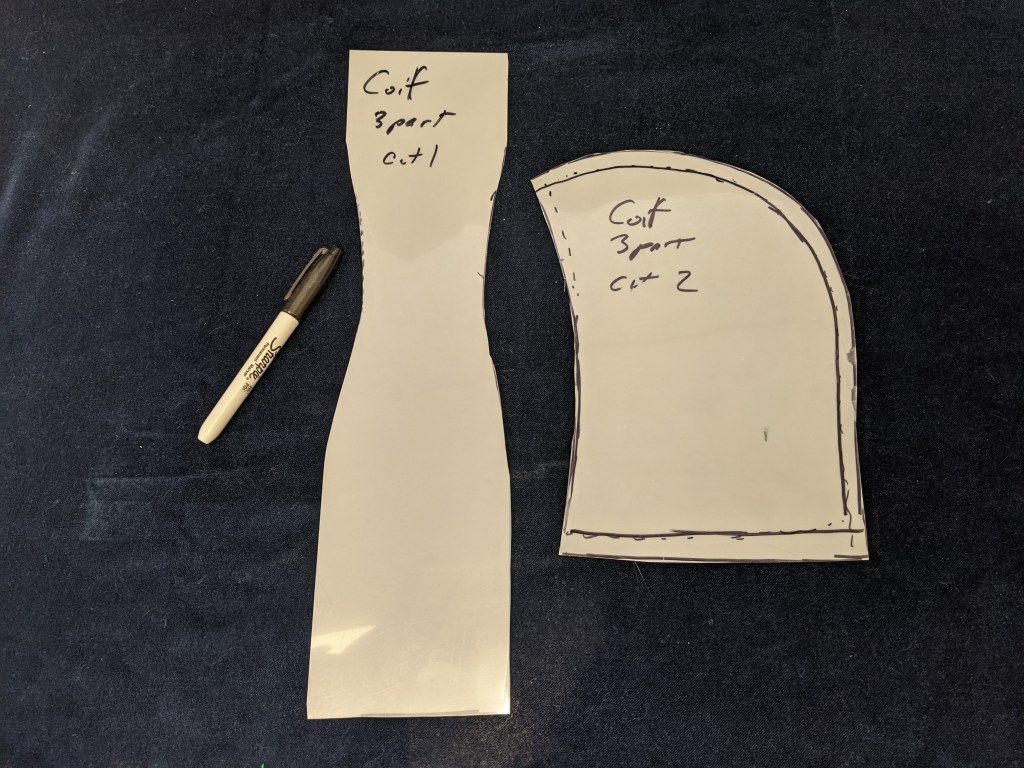
Coif, 3 piece

TitleCoif, 3 piece
Entry #GGC2021.004
Alternate NamesCoif  
Year1000-1600 CE
Time range1000-1600 CE
EraHigh Medieval, Late Medieval
Genderunisex
regionEuropean
Countries/culturesGermany, Western European, Central European
MakerVincent De Vere,
Difficulty1
ConfidenceExtant Example

Intro:

Head covering made from small scraps of linen fabric.                  

Description:

It’s underwear for your head.  Many images of the middle ages feature people wearing coifs to cover and protect their hair, oils from their head from their hats and for something to connect hats to.  They also are an easy accessory to add to your

These are very simple to construct either by machine or by hand and take very little fabric.  They are easily made from cotton fabric or linen and there are surviving examples and images that show a number of variations through time or cultures.

Inspiration Images

Common Materials

  • Fabrics:
    • linen  

Effective Substitutions

  • Fabrics:
    • linen blends
    • Linen
    • wool
    • cotton
    • cotton blends

Ensemble Components

Accessories

Source/Links

Illustration from Cantigas de Santa Maria manuscript. The Cantigas de Santa Maria (Songs to the Virgin Mary) are manuscripts written in Galician-Portuguese, with music notation, during the reign of Alfonso X El Sabio (1221-1284).

Version1
date12/30/2021
Source of Period PicBritish Library
Model Vincent de Vere
PhotographerVincent De Vere
  
Component Entry, Female, Male, Unisex

Apron, gathered

TitleApron, gathered
Entry #GGC2021.016
Alternate NamesApron
Year1000-1600 CE
Time range1000-1600 CE
Eraearly medieval, high Medieval, Late Medieval
Genderunisex
regionEuropean
Countries/culturesWestern European, Central European
MakerVincent De Vere,
Difficulty1
ConfidenceImage Example

Intro:

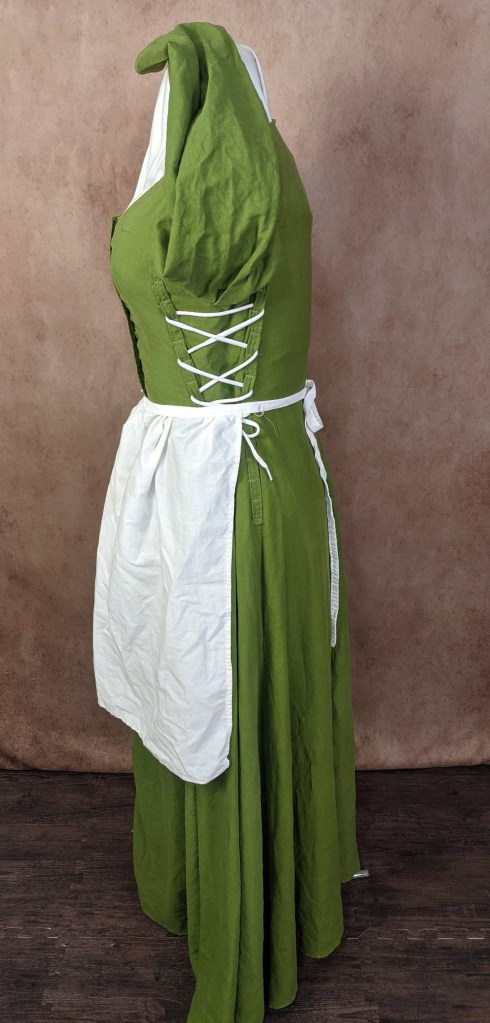
Basic gathered apron made from one yard of linen fabric                               

Description:

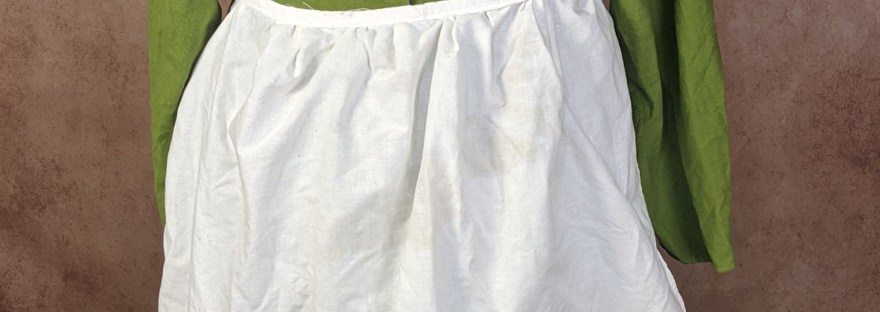
This apron is made from three pieces with two long narrow strips sewn into the waistband and one large rectangle gathered along the waistband to form the main portion of the apron.

Aprons are easily constructed accessories that are also functional accessories to use with your SCA clothing.  They can easily be made in a few minutes by machine or just a couple hours by hand.  They add to the completeness of an ensemble by adding another layer to the look.  They are also very functional in protecting the clothing beneath it.

Inspiration Images

Common Materials

  • Fabrics:
    • Linen  

Effective Substitutions

  • Fabrics:
    • linen blends
    • Linen
    • cotton
    • cotton blends

Ensemble Components

  •  

Accessories

Source/Links

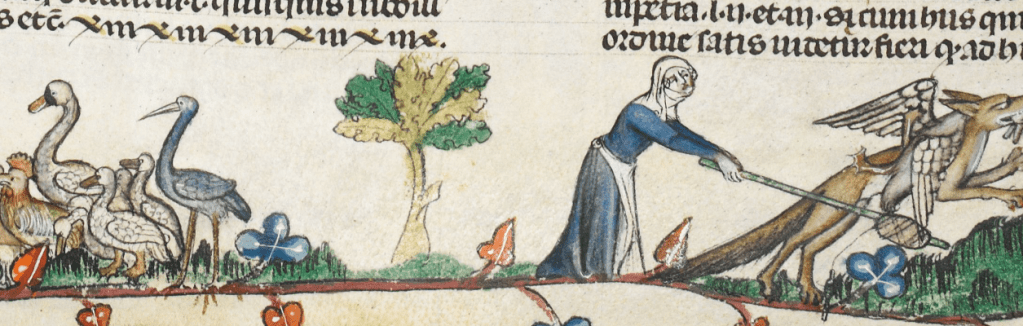
c 1300-c 1340, The Decretals of Gregory IX, edited by Raymund of Penyafort (or Peñafort); with the glossa ordinaria of Bernard of Parma in the margin. 

Version1
date12/30/2021
Source of Period PicBritish Library
Model Vincent de Vere
PhotographerVincent De Vere
  
Full Entry, Male

1000 CE Norman Riding Tunic 1

Title: 1000 CE Norman Riding Tunic 1
Entry #: GGB2021.027
Alternate Names: tunic, t tunic 
Year: 1000
Time range: 900-1200 CE
Era: Early Medieval
Gender: Male
region: Western Europe
Countries/cultures: England France
Maker: Vincent De Vere
Difficulty: 1
Confidence: Image example

Intro:

A version of the basic tunic used in many European cultures from antiquity through to the high middle ages by some.  This tunic is split to allow wearer to ride a horse and have freedom of movement.

Description:

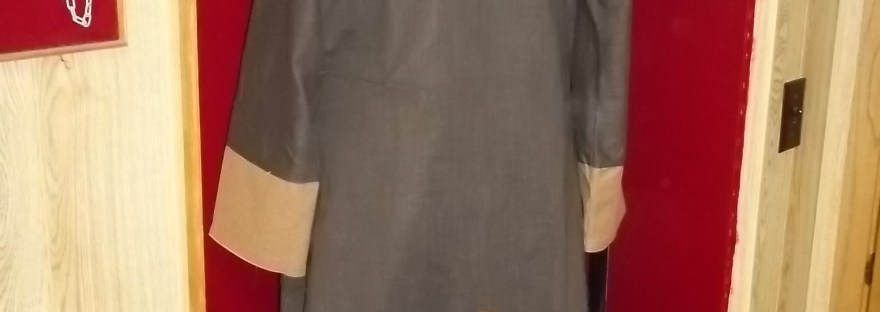
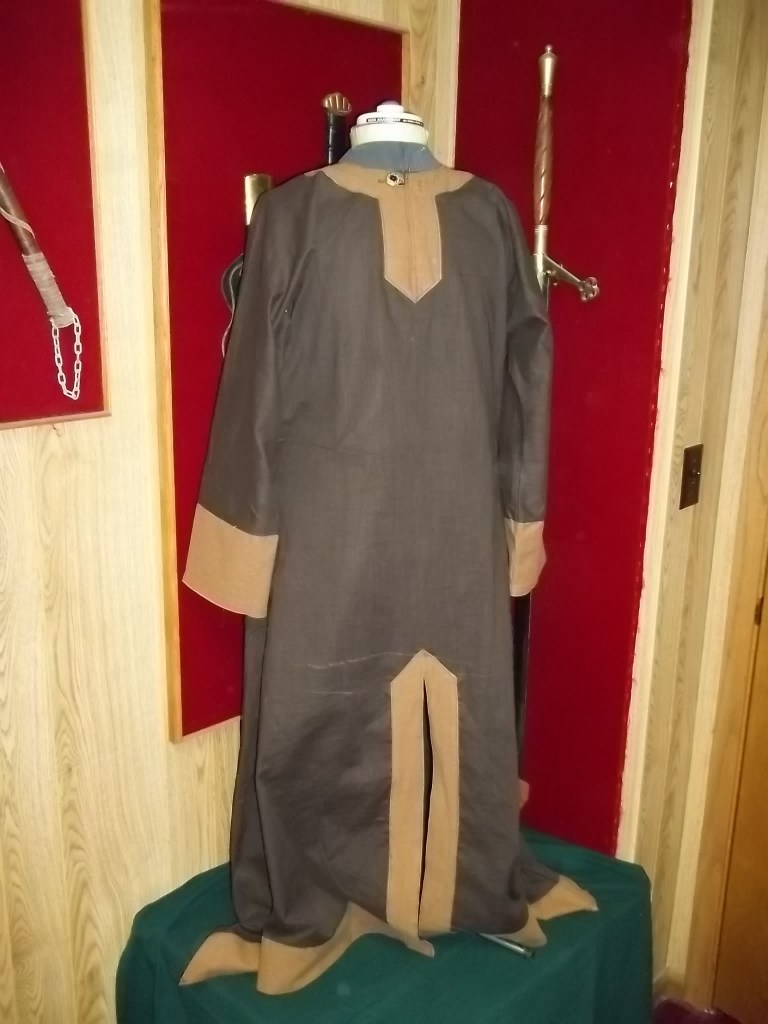
One of the many variations of the tunics made out of linen or wool. This example has a keyhole neck opening and featuring a split in front and back bottom to allow the wearer to ride a horse. 

This variation was cut T tunic style out of a wide piece of fabric to minimize seams. A more period cut would include seams connecting the sleeve to the body.  Trim is an applique of linen.  Keyhole neck is held closed with a brooch pin.  Tunics are about the easiest garments to construct.

Tunics are often the starting point for new members when just beginning in the SCA.  This tunic could be made for less than $20 in 2021.

Inspiration Images

Common Materials

  • Fabrics:
    • wool
    • linen (including non-flax linen)
  • Ornamentation:

Effective Substitutions

  • Fabrics:
    • Wool blends,
    • Linen, linen/rayon
    • linen/cotton
    • some cottons could be used but cotton broad cloth is not advised as it is not a strong material and doesn’t drape well
  • Ornamentation:

Ensemble Components

  • Under shirt (likely of a similar cut)
  • Belt
  • Pouch

New members often start with just a tunic and belt.

  • pants/trews/braccae
  • leg wraps
  • turn shoes/boots

Accessories

  • under tunic as bottom layer
  • belt
  • pants
  • over tunic or super tunic over the tunic
  • shoes
  • cloak or coat

Source/Links

http://www.virtue.to/articles/tunic_worksheet.html

http://alianorderavenglas.wordpress.com/as-50-challenge/13th-century-riding-tunic/

Version: 2
date: 3/1/2021
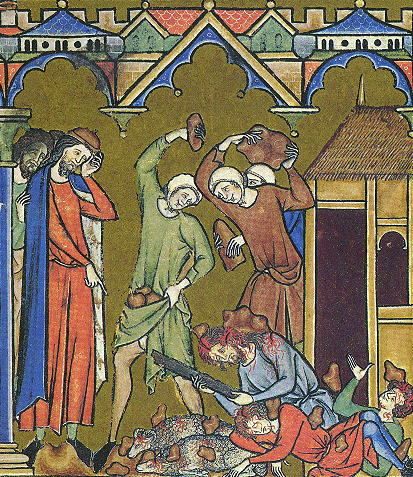
Source of Period Pic: Maciejowski Bible.
Model: Vincent De Vere
Photographer: Vincent De Vere