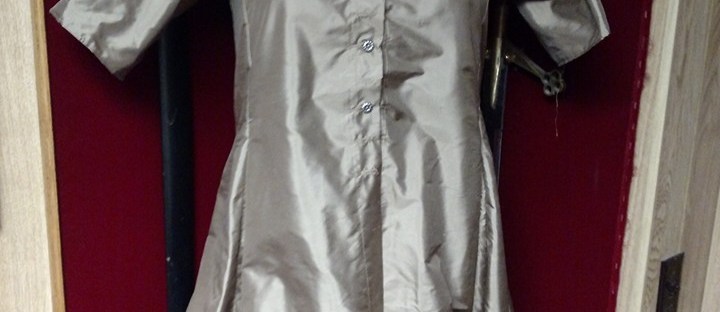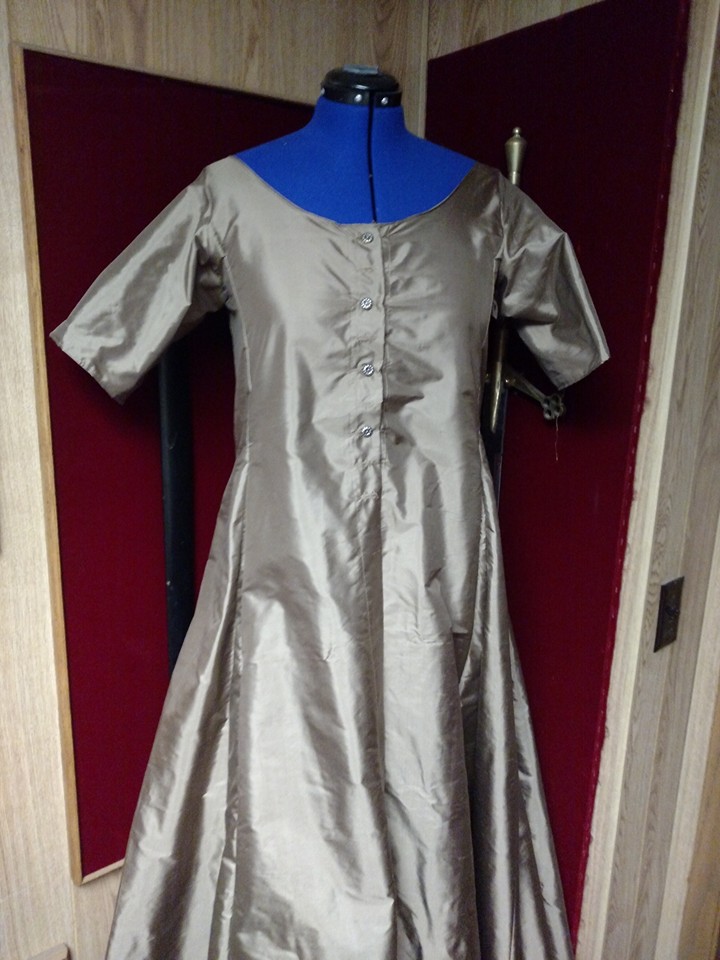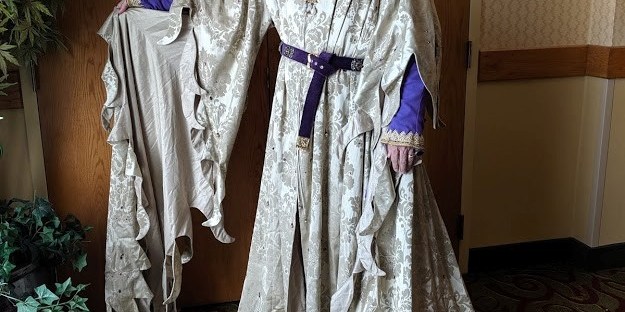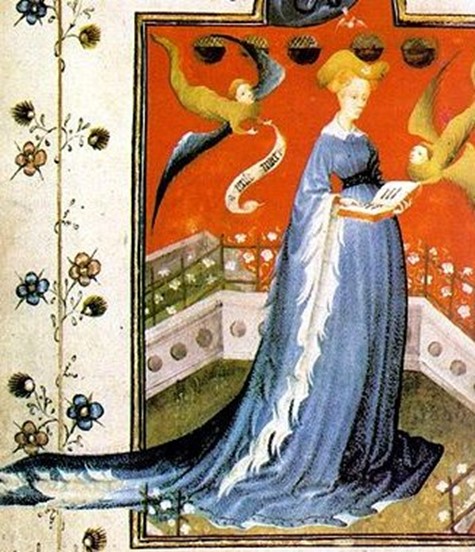
Female, Full Entry

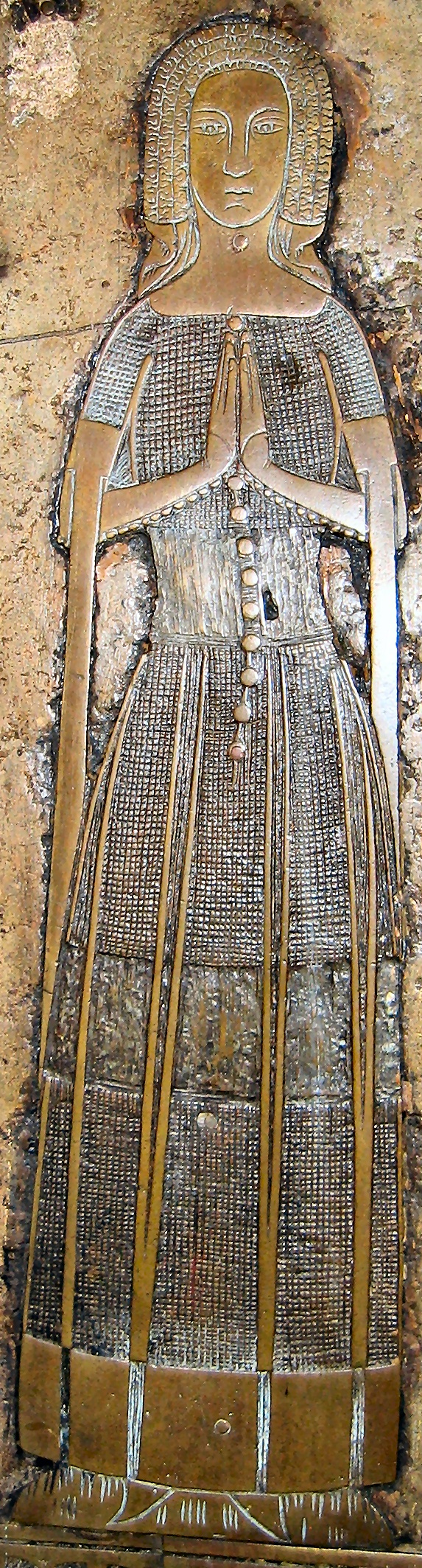
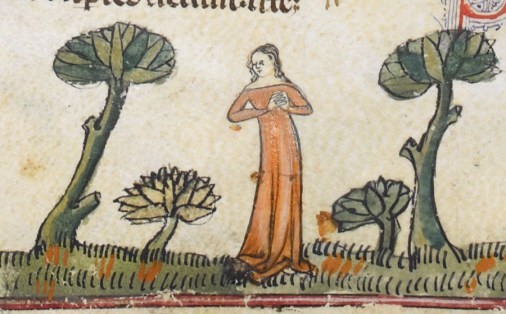
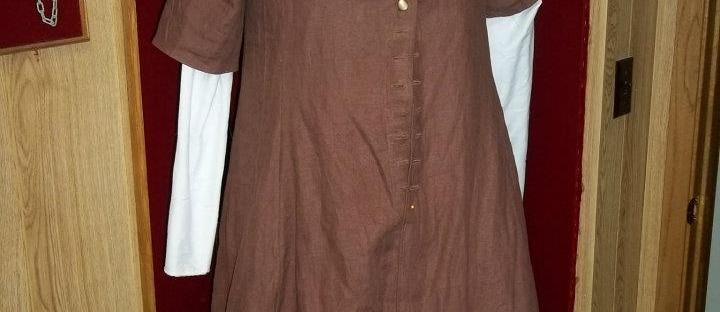
1370 CE Female, Cotehardie 1

Title: 1370 CE Female, Cotehardie 1
Entry #: GGB2021.047
Alternate Names: Gothic Fitted Dress 
Year: 1370
Time range: 1350-1400 CE
Era: High Medieval
Gender: Female
region: Western europe, central europe
Countries/cultures: France, England,
Maker: Vincent de Vere
Difficulty: 2
Confidence: Image Examples

Intro:

Fitted female garment forming an outer or middle layer.  

Description:

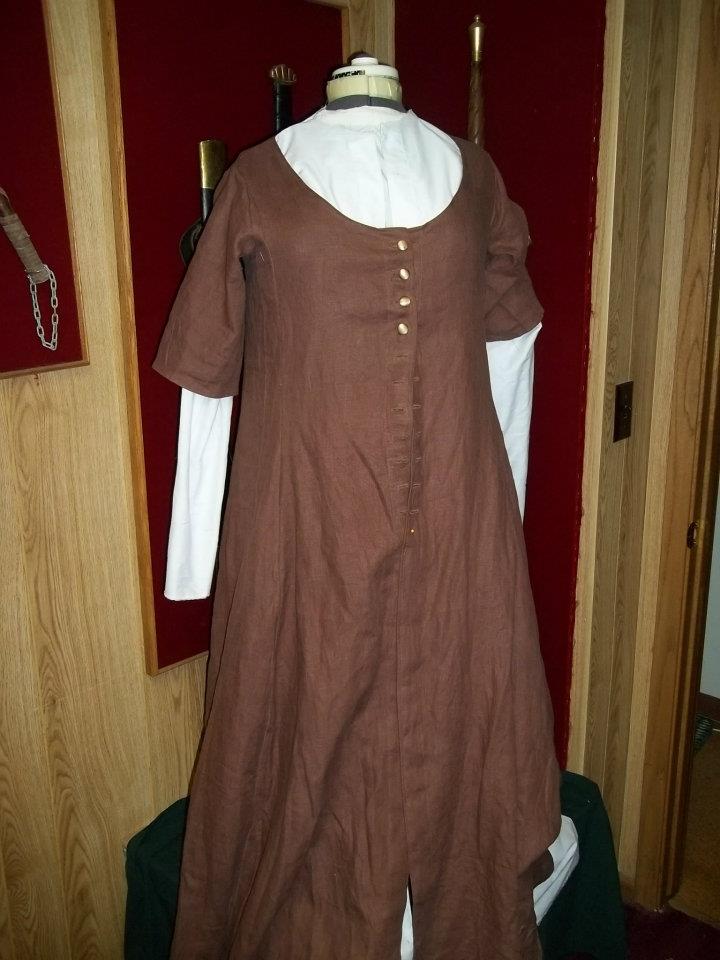
Light linen cotehardie over white kirtle
  As female garments became more fitted in the 1300s the unfitted tunic like dresses became more tailored and fitted. 
 A loose shift or slip like garment could be worn as a base layer.  There is limited evidence for underwear.  The bust could be supported with just the fitted layers.
 A kirtle layer worn between the shift and the cotehardie could be laced up the front and the sleeves could be buttoned or laced.  The kirtle layer is often fitted as to be supportive in the bust and not as long as the cotehardie layer. 
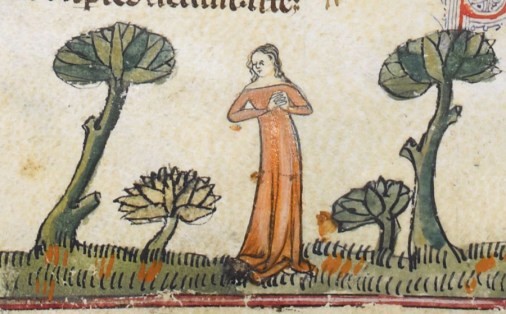
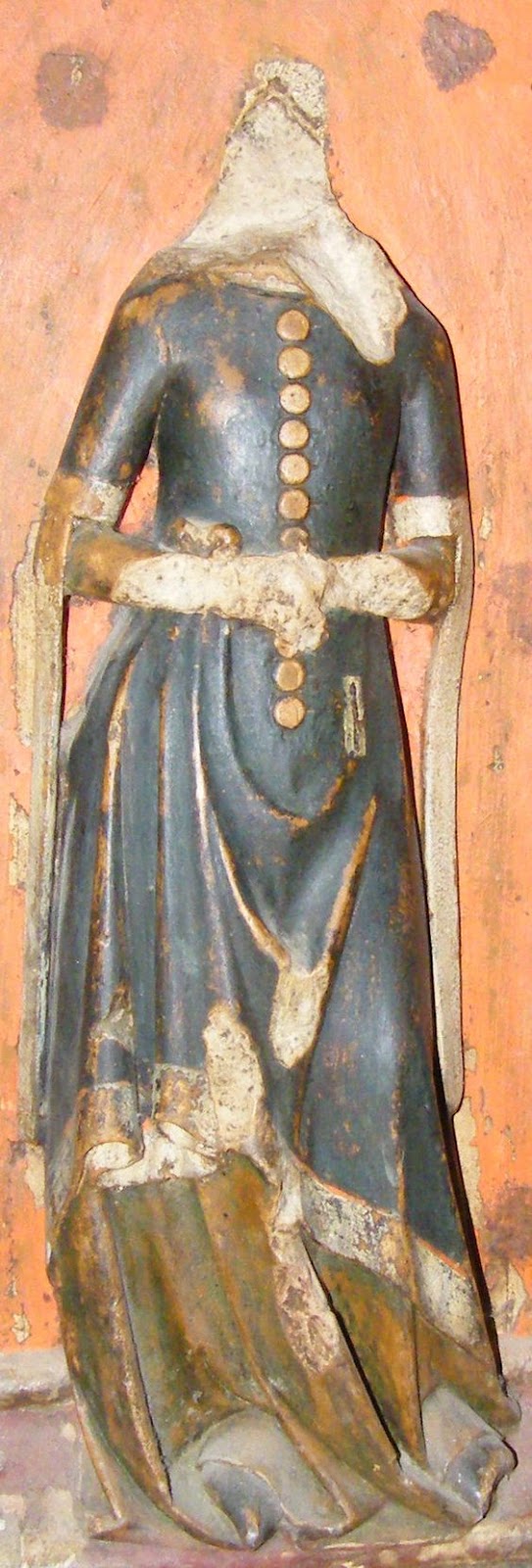
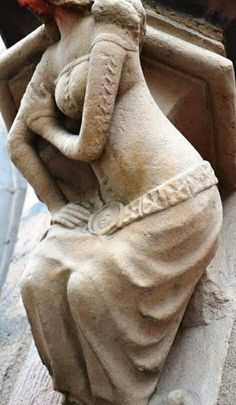
 The cotehardie layer over the kirtle later adds to the support of the bust line.  The neck line could be plunging or more modest.  The dress is often shown with a large number of closely spaced buttons on a front closure. The sleeves could be short, short with sleeve streamers (a very stereotypical cotehardie look) or longer.  Some examples extend over the hand almost to the fingers.  The cotehardie layer would be floor length.  The belt is often shown slung low on the hips.

Inspiration Images
Common Materials

  • Fabrics:
    • fine cloths
    • silks
    • brocades
    • fine wools
  • Ornamentation:

Effective Substitutions

  • Fabrics:
    • Silks
    • linens
    • linen blends with rayon or cotton
    • brocades.
    • Some cotton poly brocades can work to mimic the look of rich brocades, but the higher the poly content the more unpleasant the garment is to wear.
  • Ornamentation:

Ensemble Components

  • Slip/shift
  • Kirtle Cotehardie
  • purse

  • coifs/undercaps/hoods
  • belt
  • turnshoes

Accessories

Source/Links

http://www.chesholme.com/wfiles/2-1-Cotehardie.pdf

http://starsandgarters.org/2020/10/04/patterning-fitted-garments/

Version: 2
date: 2/26/2021
Source of Period Pic:
Model:
Photographer: Vincent De Vere
  

Full Entry, Male

1350 CE Male Cotehardie 2

Title: 1350 CE Male Cotehardie 2
Entry #: GGB2021.055
Alternate Names: Cote 
Year: 1350 CE
Time range: 1340-1400 CE
Era: High Medieval
Gender: Male
region: central europe
Countries/cultures: Germany
Maker: Lisette Reuss
Difficulty: 2
Confidence: Image Example

Intro:

Fitted male coat forming the outer layer or the middle layer of an ensemble

Description:

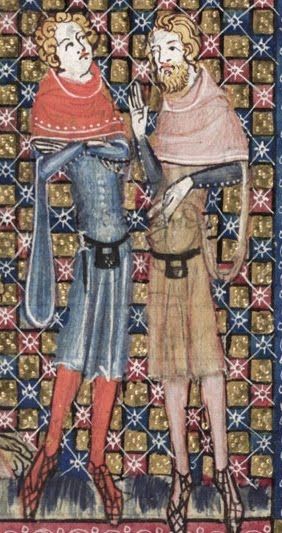
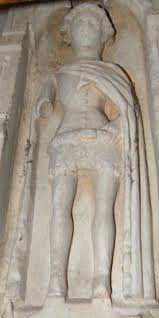
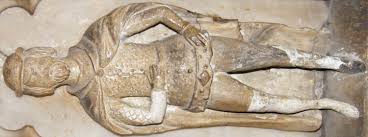
In some areas in Western Europe, male garments became more fitted in the 1300s. The unfitted cotes became the tailored and fitted cotehardies. Layers associated with cotehardies would be a linen undershirt, sometimes an early form of the doublet and braies and hosen.  Layers over the cotehardie could be gowns and houppelandes

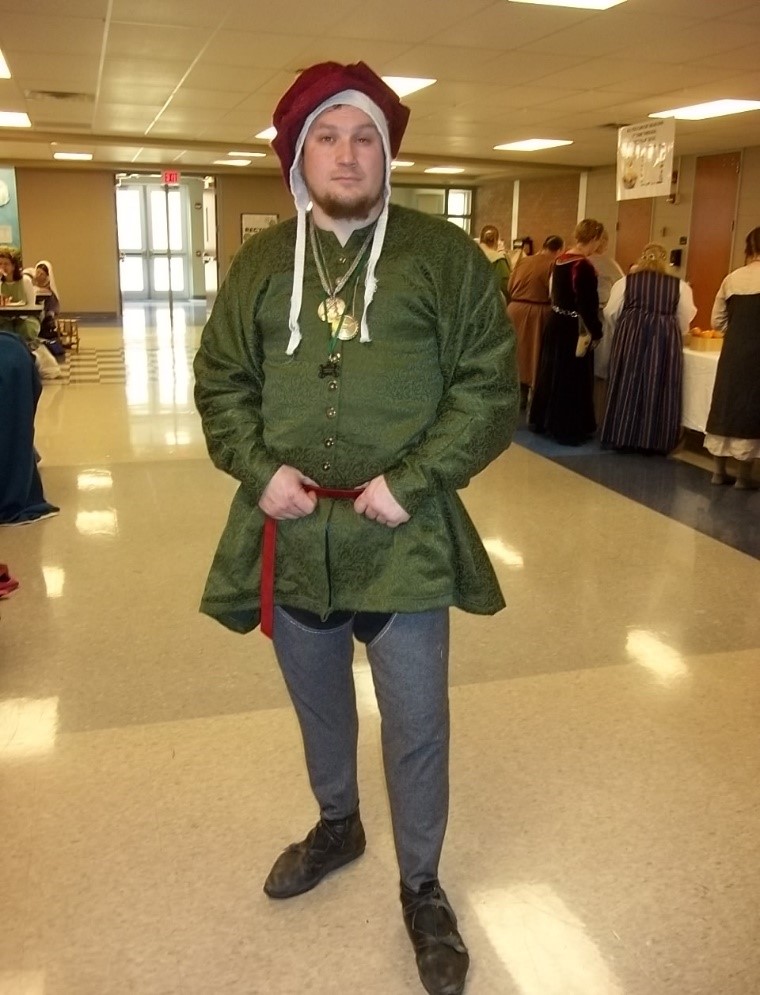
In some cases the cotehardies are shorter to the point of reaching just to the crotch depth.  Others are seen longer to the point of knee length. Some have decorative dagged edges.  They often feature a large number of closely spaced buttons  

Male cotehardies could have long or shorter sleeves including short sleeves showing off the doublet below, sometimes featuring sleeve streamers. The sleeves of the cotehardie or the layer under the cotehardie are very tight.

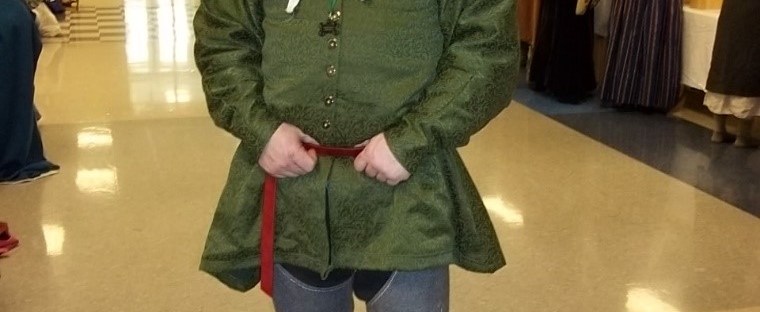
This cotehardie is done in the German style with a baggier upper sleeve and is worn with breis and hosen.  A hat and coif are warn on the head and turn shoes for the feet

Inspiration Images

Common Materials

  • Fabrics:
    • Wool
    • silks
    • brocades
    • velvets
  • Ornamentation:
    • cloth or metal buttons

Effective Substitutions

  • Fabrics:
    • cottons
    • linens
    • linen blends
    • wool blends
  • Ornamentation:

Ensemble Components

  • linen undershirt
  • likely an early form of the doublet
  • .  Turn shoes, slippers or low boots

  • braies and hosen
  • Layers over the cotehardie could be gowns and houppelandes

Accessories

  • low slung belts, around the hips
  • pouches
  • garters
  • hood

Source/Links

http://www.chesholme.com/wfiles/2-1-Cotehardie.pdf

http://starsandgarters.org/2020/10/04/patterning-fitted-garments/

Version: 2
date: 2/26/21
Source of Period Pic: http://en.wikipedia.org/wiki/File:Bologna_marriage_men.jpg
Model: Johan der hund
Photographer: Vincent de Vere
  

Full Entry, Male

1350 CE Male Cotehardie 1

Title: 1350 CE Male Cotehardie 1
Entry #: GGB2021.054
Alternate Names: Cote 
Year: 1350 CE
Time range: 1340-1400 CE
Era: High Medieval
Gender: Male
region: Western europe, central europe
Countries/cultures: France, England, germany
Maker: Vincent de Vere
Difficulty: 2
Confidence: Image Example

Intro:

Fitted male coat forming the outer layer or the middle layer of an ensemble

Description:

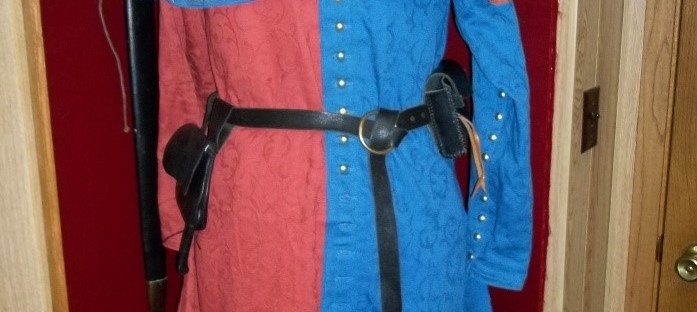
In some areas in Western Europe, male garments became more fitted in the 1300s. The unfitted cotes became the tailored and fitted cotehardies. Layers associated with cotehardies would be a linen undershirt, sometimes an early form of the doublet and braies and hosen.  Layers over the cotehardie could be gowns and houppelandes

In some cases the cotehardies are shorter to the point of reaching just to the crotch depth.  Others are seen longer to the point of knee length. Some have decorative dagged edges.  They often feature a large number of closely spaced buttons  

Male cotehardies could have long or shorter sleeves including short sleeves showing off the doublet below, sometimes featuring sleeve streamers. The sleeves of the cotehardie or the layer under the cotehardie are very tight.

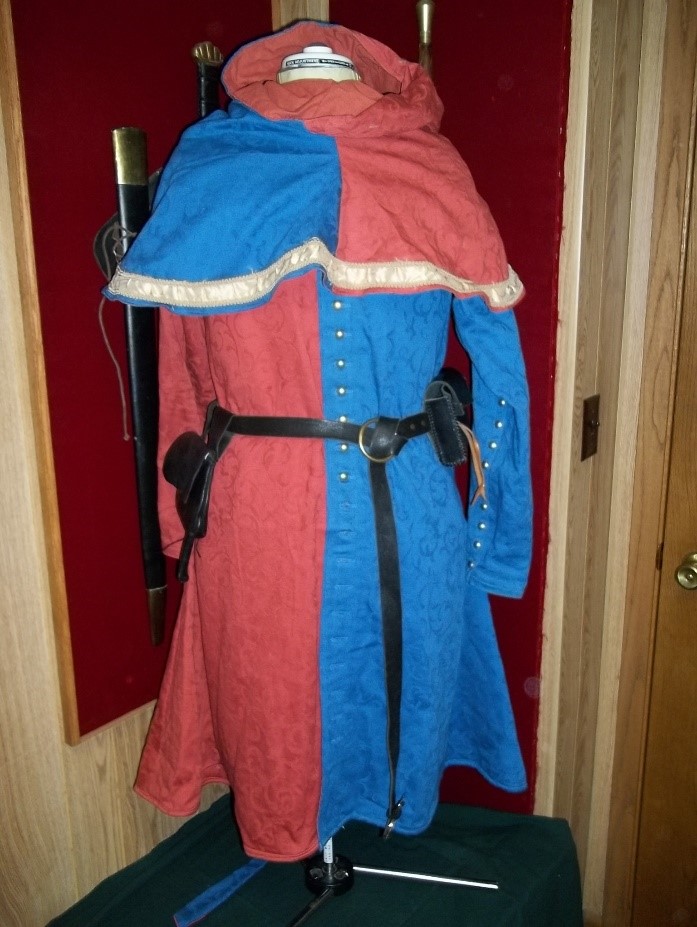
This cotehardie is an earlier style of the garment patterned off of the men’s wedding garment from the wedding of Nicolo da Bologna, being knee length and not overly tight below the waist line and a with a matching hood.  This garment is parti colored made from brocaded cotton fabric with silk trim.

Inspiration Images

Common Materials

  • Fabrics:
    • Wool
    • silks
    • brocades
    • velvets
  • Ornamentation:
    • cloth or metal buttons

Effective Substitutions

  • Fabrics:
    • cottons
    • linens
    • linen blends
    • wool blends
  • Ornamentation:

Ensemble Components

  • linen undershirt
  • likely an early form of the doublet
  • .  Turn shoes, slippers or low boots

  • braies and hosen
  • Layers over the cotehardie could be gowns and houppelandes

Accessories

  • low slung belts, around the hips
  • pouches
  • garters
  • hood

Source/Links

http://www.chesholme.com/wfiles/2-1-Cotehardie.pdf

http://starsandgarters.org/2020/10/04/patterning-fitted-garments/

Version: 2
date: 2/26/21
Source of Period Pic: http://en.wikipedia.org/wiki/File:Bologna_marriage_men.jpg
Model:
Photographer: Vincent de Vere
  

Female, Full Entry

1370 CE Female, Cotehardie 6

Title: 1370 CE Female, Cotehardie 6
Entry #: GGB2021.052
Alternate Names: Gothic Fitted Dress 
Year: 1370
Time range: 1350-1400 CE
Era: High Medieval
Gender: Female
region: Western europe, central europe
Countries/cultures: France, England,
Maker: Vincent de Vere
Difficulty: 2
Confidence: Image Examples

Intro:

Fitted female garment forming an outer or middle layer.  

Description:

 As female garments became more fitted in the 1300s the unfitted tunic like dresses became more tailored and fitted. 
 A loose shift or slip like garment could be worn as a base layer.  There is limited evidence for underwear.  The bust could be supported with just the fitted layers.
 A kirtle layer worn between the shift and the cotehardie could be laced up the front and the sleeves could be buttoned or laced.  The kirtle layer is often fitted as to be supportive in the bust and not as long as the cotehardie layer. 
 The cotehardie layer over the kirtle later adds to the support of the bust line.  The neck line could be plunging or more modest.  The dress is often shown with a large number of closely spaced buttons on a front closure. The sleeves could be short, short with sleeve streamers (a very stereotypical cotehardie look) or longer.  Some examples extend over the hand almost to the fingers.  The cotehardie layer would be floor length.  The belt is often shown slung low on the hips.

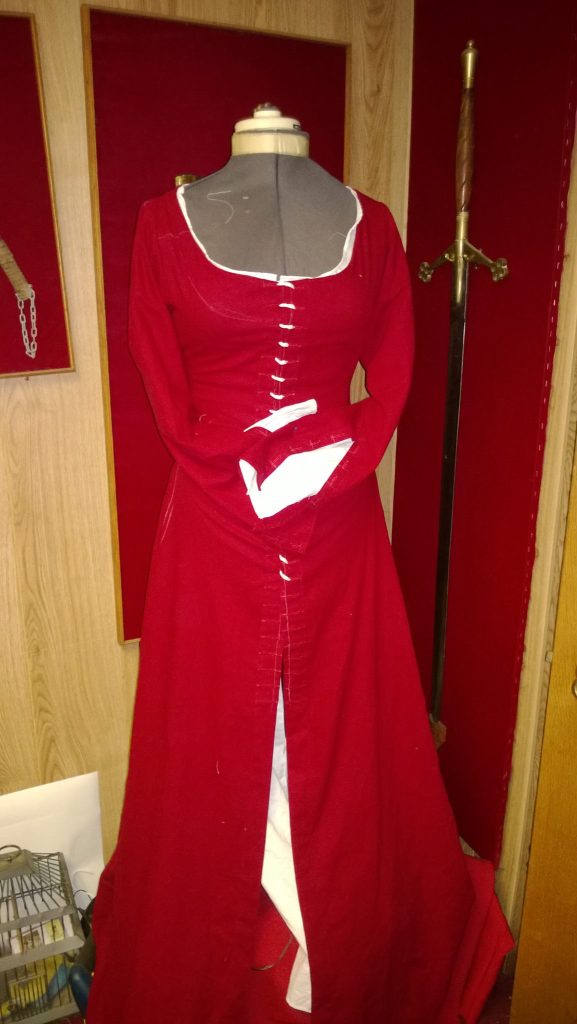
This example is a Red Linen cotehardie over a white kirtle

Inspiration Images

Common Materials

  • Fabrics:
    • fine cloths
    • silks
    • brocades
    • fine wools
  • Ornamentation:

Effective Substitutions

  • Fabrics:
    • Silks
    • linens
    • linen blends with rayon or cotton
    • brocades.
    • Some cotton poly brocades can work to mimic the look of rich brocades, but the higher the poly content the more unpleasant the garment is to wear.
  • Ornamentation:

Ensemble Components

  • Slip/shift
  • Kirtle Cotehardie
  • purse

  • coifs/undercaps/hoods
  • belt
  • turnshoes

Accessories

Source/Links

http://www.chesholme.com/wfiles/2-1-Cotehardie.pdf

http://starsandgarters.org/2020/10/04/patterning-fitted-garments/

Version: 2
date: 2/26/2021
Source of Period Pic:
Model:
Photographer: Vincent De Vere
  

Female, Full Entry

1380 CE Female Kirtle and Cote

Title: 1380 CE Female Kirtle and Cote
Entry #: GGB2021.061
Alternate Names: Cotehardie, gothic fitted gown 
Year: 1380 CE
Time range: 1350-1400 CE
Era: Late Medieval
Gender: Female
region: Western europe
Countries/cultures: France, england
Maker: Avery Quatremaine
Difficulty: 4
Confidence: Image Examples

Intro:

Fitted female garment forming an outer or middle layer including the foundational garments.  

Description:

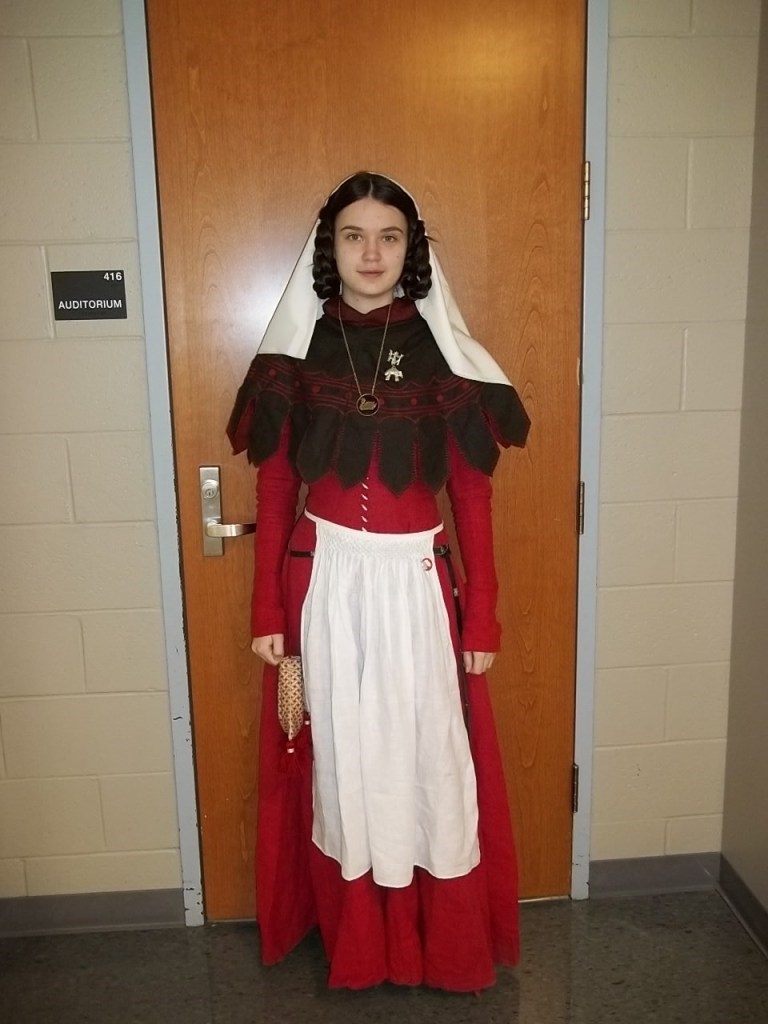
Red wool cote (in this case similar to other entries on cotehardies) over an unseen kirtle supportive layer.  Seen with accurate accessories of an apron, hood and veil.

As female garments became more fitted in the 1300s the unfitted tunic like dresses became more tailored and fitted. 

A loose shift or slip like garment could be worn as a base layer.  There is limited evidence for underwear.  The bust could be supported with just the fitted layers.

A kirtle layer worn between the shift and the cote could be laced up the front and the sleeves could be buttoned or laced.  The kirtle layer is often fitted as to be supportive in the bust and not as long as the cotehardie layer. 

The cote layer over the kirtle later adds to the support of the bust line.  The neck line could be plunging or more modest.  The dress is often shown with a large number of closely spaced buttons on a front closure. The sleeves could be short, short with sleeve streamers (a very stereotypical cote look) or longer.  Some examples extend over the hand almost to the fingers.  The cotehardie layer would be floor length.  The belt is often shown slung low on the hips. 

This is a case where the person who made the garment prefers to call this a cote, where others would call it a cotehardie or a gothic fitted dress. 

Inspiration Images

Common Materials

  • Fabrics:
    • Cote – wool, silks,
    • Kirtle – Wool, linens
    • Underdress – linen
    • Hood – wool
    • Apron – linen
  • Ornamentation:

Effective Substitutions

  • Fabrics:
    • Cote – wool blends, linens, linen blends, some cottons, silks, silk blends
    • Kirtle – Wool blends, linens, linen blends, some cottons
    • Underdress – linen, linen blends, some cottons
    • Hood – wool, wool blends, Linen,  linen blends, some cottons
    • Apron – linen, linen blends, cottons
  • Ornamentation:

Ensemble Components

  • Cote (Cotehardie)
  • kirtle

  • underdress/shift/slip
  • hose (knee high)

Accessories

  • Hoods – in this case a liripipe hood
  • belt
  • purse
  • turn shoes or slippers

Source/Links

http://www.chesholme.com/wfiles/2-1-Cotehardie.pdf

http://starsandgarters.org/2020/10/04/patterning-fitted-garments/

Version: 2
date: 3/1/2021
Source of Period Pic:
Model: Avery Quatremaine
Photographer: Vincent de Vere
  

Full Entry, Male

1350 CE Male Cotehardie 7

Title: 1350 CE Male Cotehardie 7
Entry #: GGB2021.060
Alternate Names: Cote 
Year: 1350 CE
Time range: 1340-1400 CE
Era: High Medieval
Gender: Male
region: Western europe, central europe
Countries/cultures: France, England, germany
Maker: Vincent de Vere
Difficulty: 3
Confidence: Image Example

Intro:

Fitted male coat forming the outer layer or the middle layer of an ensemble

Description:

In some areas in Western Europe, male garments became more fitted in the 1300s. The unfitted cotes became the tailored and fitted cotehardies. Layers associated with cotehardies would be a linen undershirt, sometimes an early form of the doublet and braies and hosen.  Layers over the cotehardie could be gowns and houppelandes

In some cases the cotehardies are shorter to the point of reaching just to the crotch depth.  Others are seen longer to the point of knee length. Some have decorative dagged edges.  They often feature a large number of closely spaced buttons  

Male cotehardies could have long or shorter sleeves including short sleeves showing off the doublet below, sometimes featuring sleeve streamers. The sleeves of the cotehardie or the layer under the cotehardie are very tight.

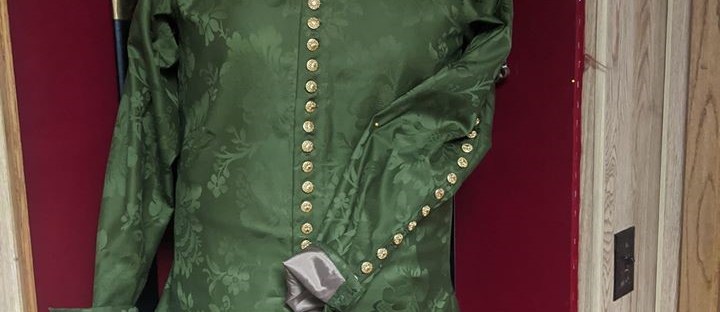
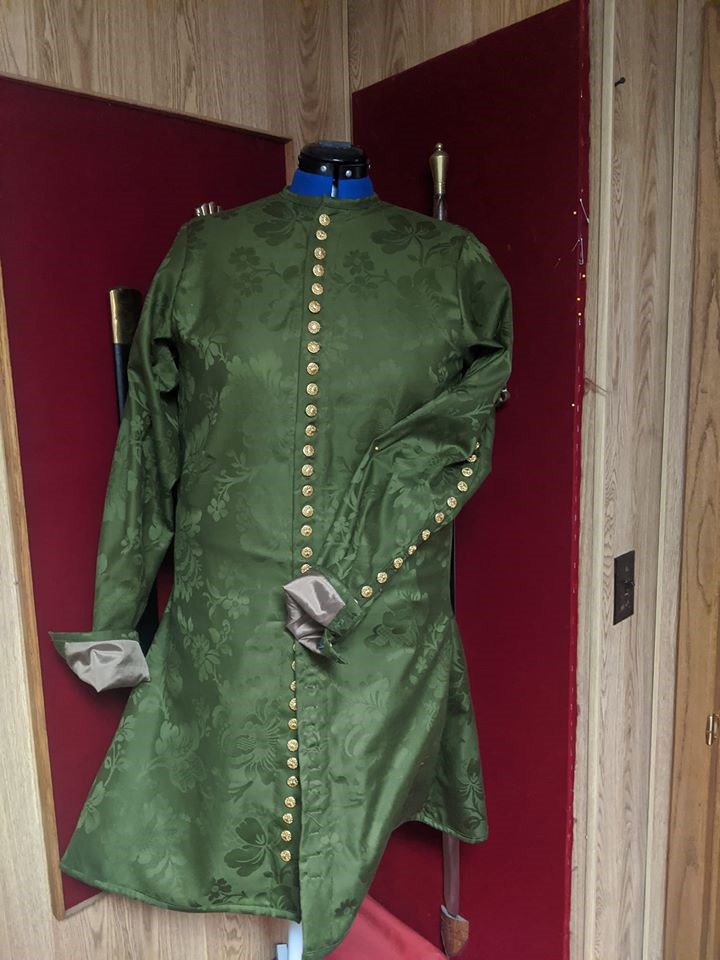
This cotehardie is brocaded fabric with a silk lining featuring a flared skirt

Inspiration Images

Common Materials

  • Fabrics:
    • Wool
    • silks
    • brocades
    • velvets
  • Ornamentation:
    • cloth or metal buttons

Effective Substitutions

  • Fabrics:
    • cottons
    • linens
    • linen blends
    • wool blends
  • Ornamentation:

Ensemble Components

  • linen undershirt
  • likely an early form of the doublet
  • .  Turn shoes, slippers or low boots

  • braies and hosen
  • Layers over the cotehardie could be gowns and houppelandes

Accessories

  • low slung belts, around the hips
  • pouches
  • garters
  • hood

Source/Links

http://www.chesholme.com/wfiles/2-1-Cotehardie.pdf

http://starsandgarters.org/2020/10/04/patterning-fitted-garments/

Version: 2
date: 2/26/21
Source of Period Pic: http://en.wikipedia.org/wiki/File:Bologna_marriage_men.jpg
Model:
Photographer: Vincent de Vere
  

Full Entry, Male

1300 CE Male Linen Cote

Title: 1300 CE Male Linen Cote
Entry #: GGB2021.045
Alternate Names: Gown, Frock coat, Tunic, over tunic, 
Year: 1300 CE
Time range: 1100-1400 CE
Era: High medieval
Gender: Male
region: Europe
Countries/cultures: Europe
Maker:
Difficulty: 2
Confidence: Image Examples

Intro:

A loose tunic like garment with buttons at the neck and cuffs bloused over a belt. Extending from below the waste to below the knee with long sleeves.

Description:

This garment, or variations of it can be seen in many paintings and illustrations that cross over several regions and time frames.  People from many stations in society use this functional garment, from laborers to merchants and higher. Varying slightly from its beginnings before 1100CE and fading in fashion for all but laborers late in period.

In general it is slightly more tailored tunic with the neck hole held closed by use of buttons rather than the earlier broaches.  Buttons may just close the neck hole, extend part way down the chest or to the bottom of the garment.  The cut is usually full producing a baggy garment belted at the waste and bloused over the belt.  Some assign the length of the garment to station, with average workmen wearing it shorter to the more wealthy merchants wearing a longer garment.

Likely worn with an undershirt and in some cases a simple doublet as well as hosen or trews.

Sometimes underrepresented in the SCA, cotes can easily produce a medieval look with an easily constructed garment.

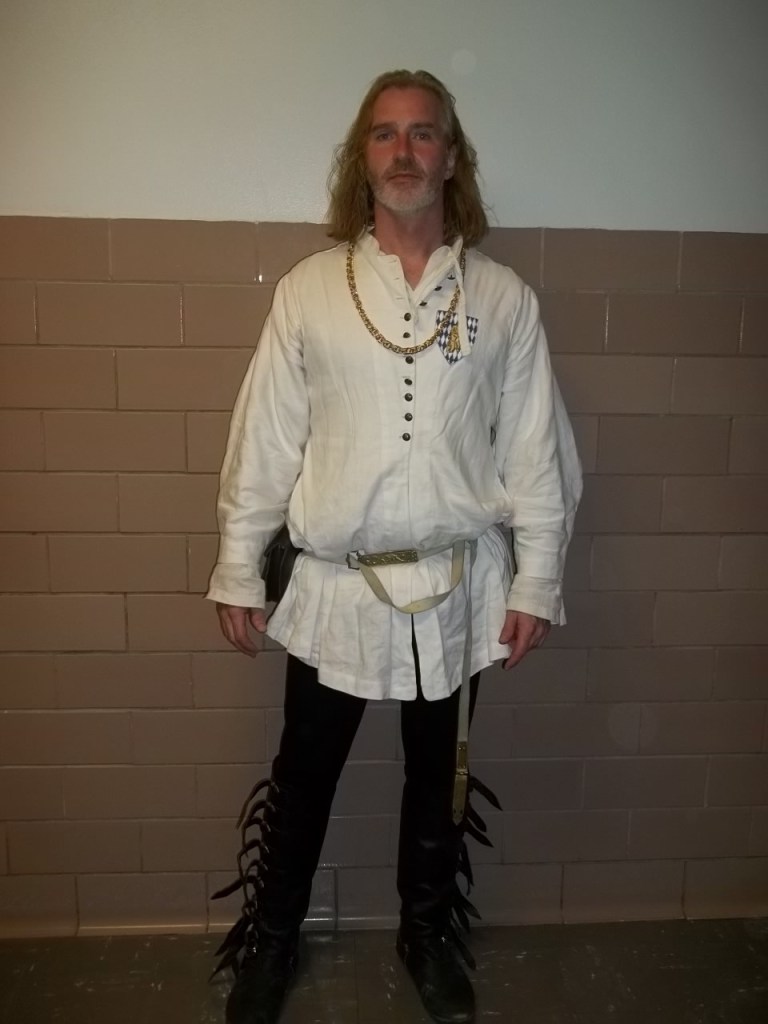
This example is a loose tunic like cote with buttons at the neck and cuffs bloused over a belt. Worn with riding boots.  A heraldic patch can be seen on the chest.

Inspiration Images

Common Materials

  • Fabrics:
    • wool
    • linen
    • brocades
  • Ornamentation:

Effective Substitutions

  • Fabrics:
    • wool blends
    • linen blends
    • cottons
    • lighter weight upholstery fabrics that simulate period patterns
  • Ornamentation:

Ensemble Components

  • Cote
  • under tunic
  • possibly a doublet

  • pants or breis/hosen
  • Could be covered by a surcote

Accessories

  • hat
  • shoes
  • belt
  • pouch

Source/Links

Version: 2
date: 2/25/2021
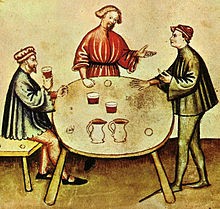
Source of Period Pic: http://en.wikipedia.org/wiki/File:48-aspetti_di_vita_quotidiana_ubriachezza_Taccuino_Sanitatis_Shoes.jpg
Model: Thaddeus Ellenbock
Photographer: Vincent de Vere
  

Female, Full Entry

1370 CE Female, Cotehardie 7

Title: 1370 CE Female, Cotehardie 7
Entry #: GGB2021.053
Alternate Names: Gothic Fitted Dress 
Year: 1370
Time range: 1350-1400 CE
Era: High Medieval
Gender: Female
region: Western europe, central europe
Countries/cultures: France, England,
Maker: Vincent de Vere
Difficulty: 3
Confidence: Image Examples

Intro:

Fitted female garment forming an outer or middle layer.  

Description:

Gold silk cotehardie shown here without a kirtle
 As female garments became more fitted in the 1300s the unfitted tunic like dresses became more tailored and fitted. 
 A loose shift or slip like garment could be worn as a base layer.  There is limited evidence for underwear.  The bust could be supported with just the fitted layers.
 A kirtle layer worn between the shift and the cotehardie could be laced up the front and the sleeves could be buttoned or laced.  The kirtle layer is often fitted as to be supportive in the bust and not as long as the cotehardie layer. 
 The cotehardie layer over the kirtle later adds to the support of the bust line.  The neck line could be plunging or more modest.  The dress is often shown with a large number of closely spaced buttons on a front closure. The sleeves could be short, short with sleeve streamers (a very stereotypical cotehardie look) or longer.  Some examples extend over the hand almost to the fingers.  The cotehardie layer would be floor length.  The belt is often shown slung low on the hips.

Inspiration Images
Common Materials

  • Fabrics:
    • fine cloths
    • silks
    • brocades
    • fine wools
  • Ornamentation:

Effective Substitutions

  • Fabrics:
    • Silks
    • linens
    • linen blends with rayon or cotton
    • brocades.
    • Some cotton poly brocades can work to mimic the look of rich brocades, but the higher the poly content the more unpleasant the garment is to wear.
  • Ornamentation:

Ensemble Components

  • Slip/shift
  • Kirtle Cotehardie
  • purse

  • coifs/undercaps/hoods
  • belt
  • turnshoes

Accessories

Source/Links

http://www.chesholme.com/wfiles/2-1-Cotehardie.pdf

http://starsandgarters.org/2020/10/04/patterning-fitted-garments/

Version: 2
date: 2/26/2021
Source of Period Pic:
Model:
Photographer: Vincent De Vere
  

Full Entry, Male

1380 CE Male Houppelande 1

Title1380 CE Male Houppelande 1
Entry #GGB2021.062
Alternate Names Gown, houpelande, poun, pellanda
Year1380
Time range1360-1430
EraLate Medieval
GenderMale
regionWestern Europe
Countries/culturesEngland, France
MakerRobert Rubow
Difficulty5
ConfidenceImage Examples

Intro:

The houppelande is an outermost layer of dress, which was worn by middle-to-upper classes, both men and women. It was worn over a more fitted undergarment. It is identified by volumes of fabric neatly pleated into a belt, and visually balanced by a large hat.

Description:

Men wore varying lengths, depending on the fashion of the time and possibly the age of the wearer. Women wore them long, often breaking on the floor. Sleeve style varied by region and time as well, from a straight construction to wide and open, or wide and closed again at the wrist.

Necklines and sleeves started similar to cotehardies, and varied to high buttoned collars and folded down collars. Fabrics were colorful, sometimes brocaded, and often lined to contrast. Later, the female houppelande was tightened at the sleeve, a deep V left in the neck, and became the ‘Burgundian’ gown.

Layers under the Houppelande include base layers of shifts/under dresses, a kirtle or supportive layer, a cote, dress, gown or cotehardie layer and the outer houppelande

First seen in documentation in 1359 CE, the garments seem to have evolved from other outer wear such as garde-corps or herigauts, warm, billowy outer layers pulled over the head. 

Houppelande in pic is made from a rich brocade worn over a blue cotehardie

Inspiration Images

Common Materials

  • Fabrics:
    • wool
    • linen
    • silk
    • tabby and brocade patterning
  • Ornamentation:
    • embroidery
    • lined with contrasting fur

Effective Substitutions

  • Fabrics:
    • wool blends
    • linen
    • linen blends
    • cotton damasks
  • Ornamentation:
    • costume or fake fur
    • contrasting fabric

Ensemble Components

  • undershirt
  • doublet

  • cotehardie/cote/gown
  • braies/undergarments

Accessories

  • shoes with a point,
  • hose & garters
  • belt
  • hat

Source/Links

http://www.virtue.to/articles/circle_houp.html

http://medievalweddingdresses.ideasforweddings.net/wp-content/uploads/2009/05/houppelande3.jpg, http://www.flickr.com/photos/medievalarchive/2482968742/in/photostream/, http://www.flickr.com/photos/medievalarchive/2711997808/in/photostream/, http://www.flickr.com/photos/17024607@N08/2143873264, http://wp.bymymeasure.com/526/houppelande-belts-of-the-early-15th-century

Version2
date3/3/2021
Source of Period Pichttps://en.wikipedia.org/wiki/Houppelande#/media/File:Prayer_book_of_Maria_d’Harcourt_-_Staatsbibliothek_zu_Berlin_MsGermQuart42_-_f19v.jpg
ModelRobert Rubow
PhotographerVincent De Vere
  

Basic Entry, Female

1480 CE Female Italian Gown

Title1480 CE Female Italian Gown
Entry #GGB2021.070
Alternate Names 
Year1480
Time range1480-1510
EraLate Medieval, Italian Renaissance
GenderFemale
regionSouthern Europe
Countries/culturesItaly
MakerElena del Mar
Difficulty2
ConfidenceImage Example

Intro:

Basic Italian Gown/ Northern Italian

Description:

Inspiration Images

Common Materials

  • Fabrics:
  • Ornamentation:

Effective Substitutions

  • Fabrics:
  • Ornamentation:

Ensemble Components

Accessories

Source/Links

Version2
date3/6/2021
Source of Period Pic 
ModelElena del Mar
PhotographerVincent De Vere