Component Entry, Female, Male, Unisex

Braies, Long 2 Piece

TitleBraies, Long 2 Piece
Entry #GGC2021.015
Alternate NamesBraies, underwear, Breeches  
YearAntiquity-end of period
Time rangeAntiquity-end of period
EraAntiquity, Bronze age, Iron Age, early medieval, high Medieval, Late Medieval
Genderunisex
regionEuropean
Countries/culturesWestern European, Central European
MakerVincent De Vere,
Difficulty1
ConfidenceImage Example

Intro:

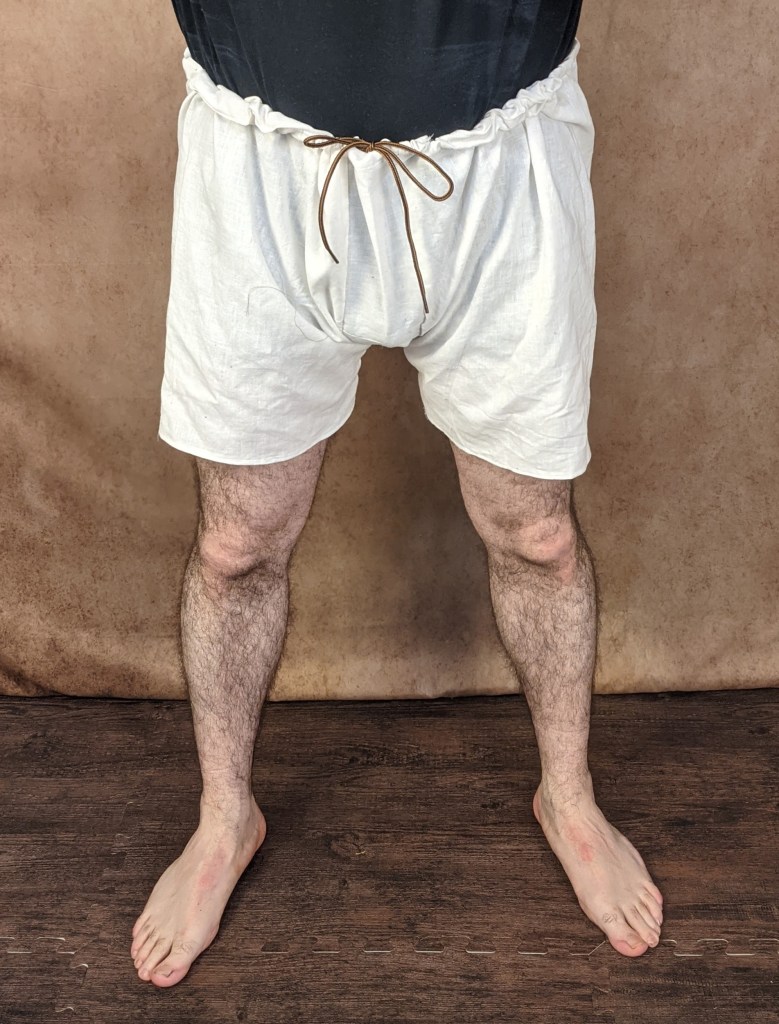
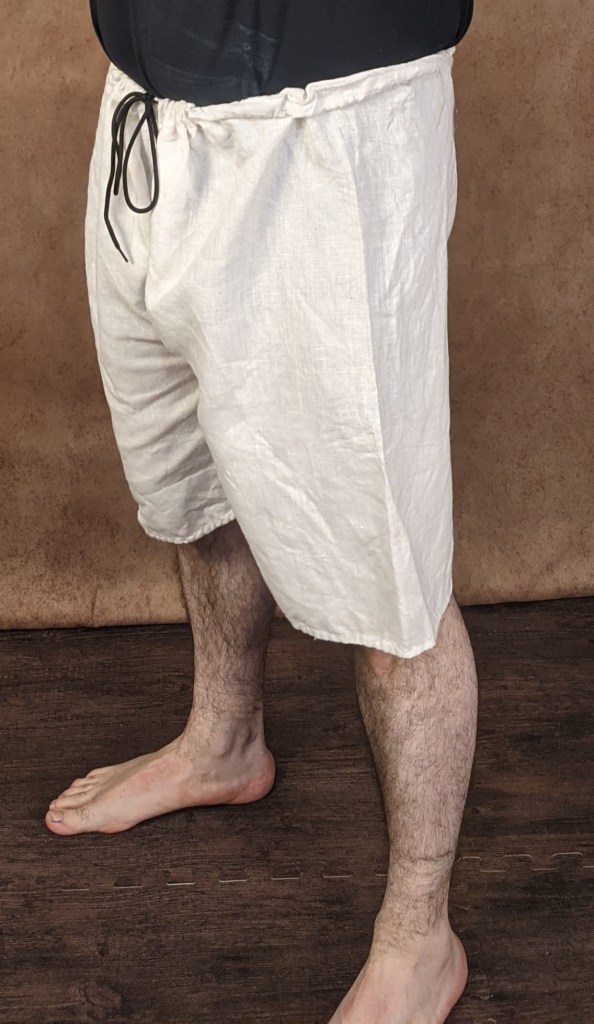
Attempt to replicate one of the simple versions of commonly seen undergarments.                      

Description:

.  

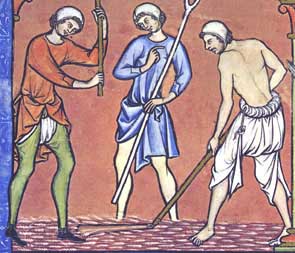
One of the many variations of the underwear seen in imagery from antiquity through to the end of the SCA period.  A common and personal garment like underwear is less likely to survive or be well represented in documentation.  There are many works of art that do represent people in undergarments and so the use of the garments can be documented and construction can be inferred.  Undergarments would nearly be universally constructed from linen.

Of the different styles of braies they vary in length, in how they are held up or how much fabric is used in their construction (ie, how baggy they are). Use of braies is often one of the later stages of refinement for SCA participants as they are rarely seen.  Wearing Braies can take some getting used to as they tend to have more fabric bunched up then we are modernly use to.

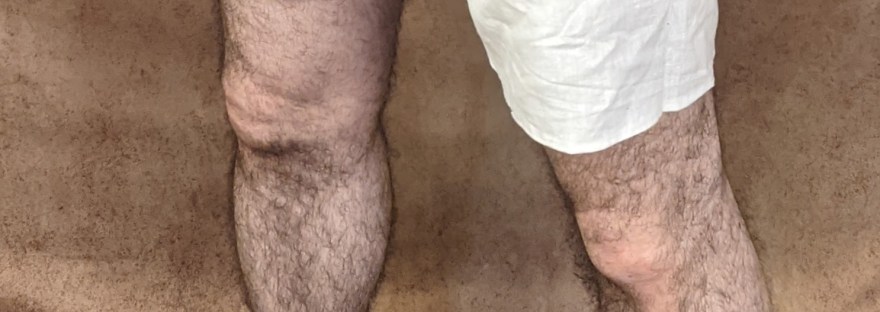
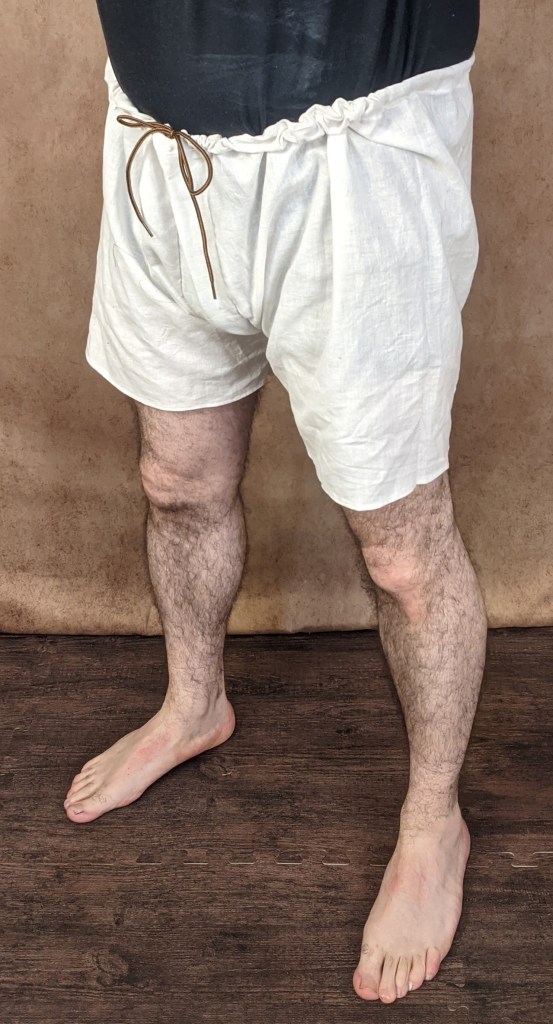
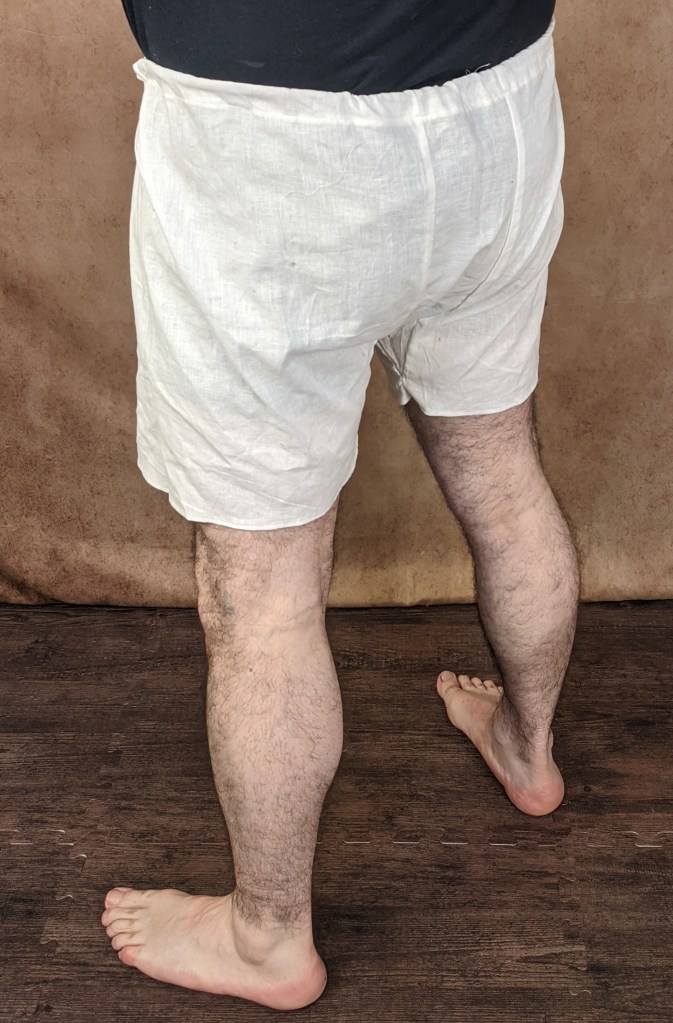
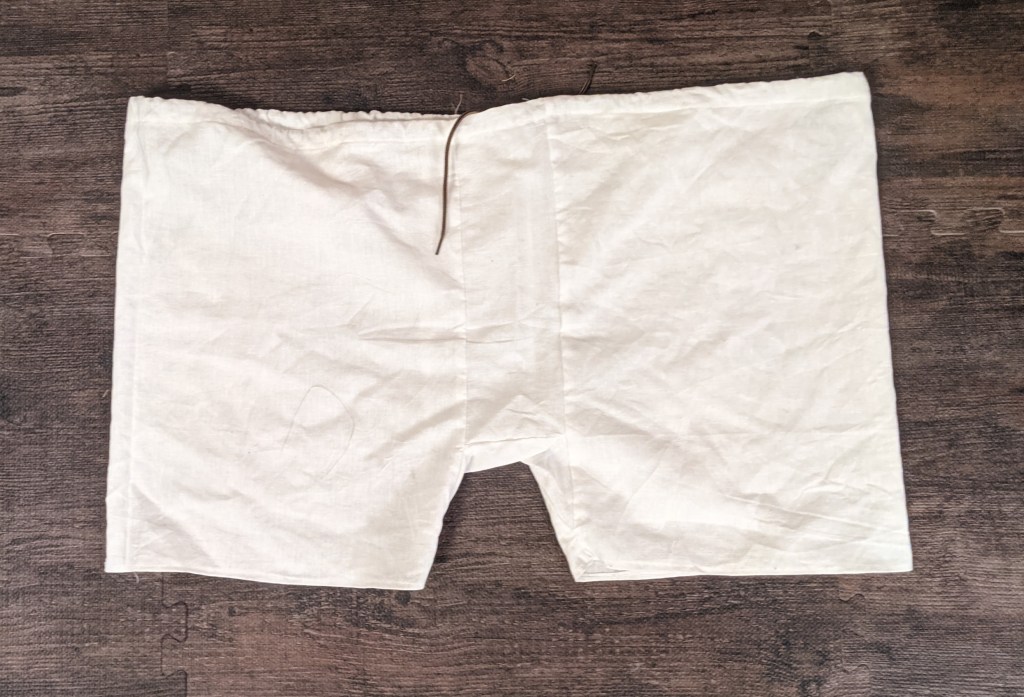
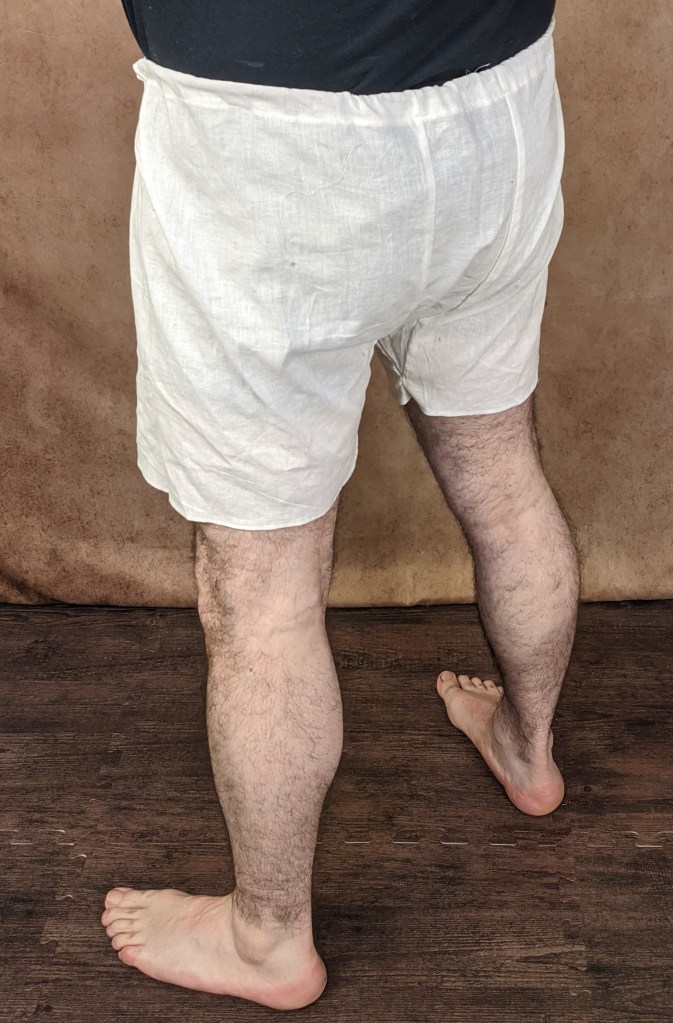
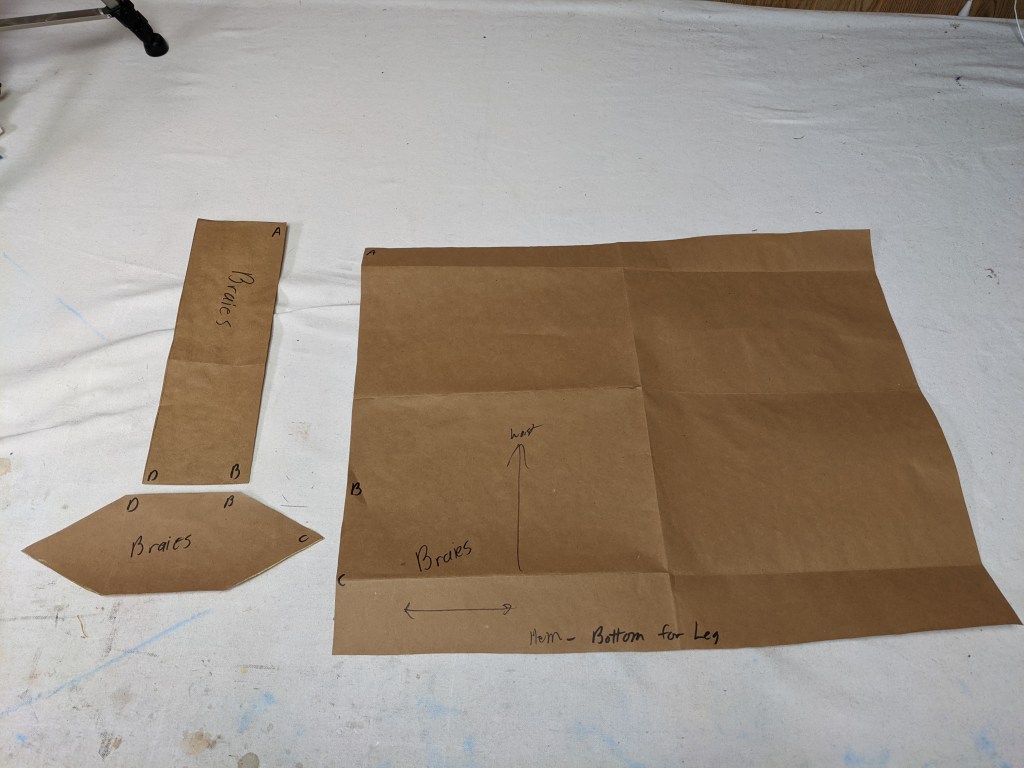
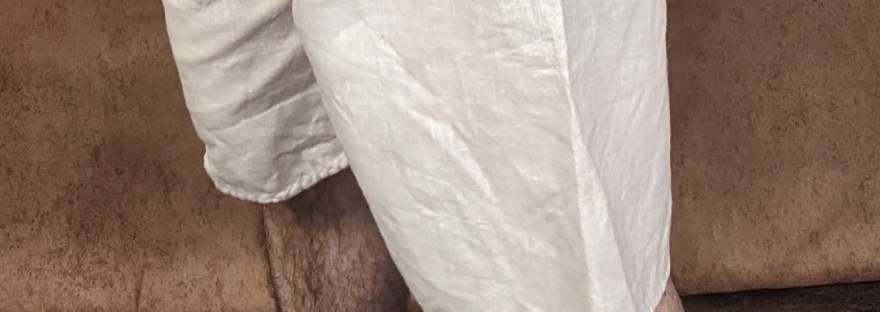
This is an attempt to replicate one of the very basic ‘boxer short’ style braies.  It is made from 2 pieces for either side and sewn together with a single center seam.  The waistline is folded over to allow for a drawstring.

The example is made out of linen and using a shoestring for the drawstring.

Many illustrations of people from all levels of society survive showing people wearing undergarments but this example gives us insight to the construction technique. The historical use of braies by women is assumed by us and use by members of the SCA is common.

Inspiration Images
Common Materials

  • Fabrics:
    • linen  

Effective Substitutions

  • Fabrics:
    • linen blends
    • Linen
    • wool
    • cotton
    • cotton blends

Ensemble Components

  • Underwear such as braies are seen through many time periods and cultures and so can be associated with many different ensembles

Accessories

Source/Links

Instructions for constructing braies like this are covered in books like Medieval Tailor’s Assistant, a very good book worth buying

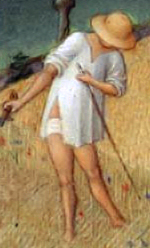
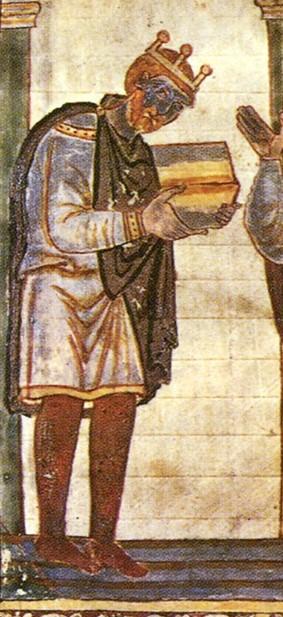
source image Public Domain

http://www.medievaltymes.com/courtyard/maciejowski_images_18.htm

Version1
date12/25/2021
Source of Period PicMaciejowski bible
Model Vincent de Vere
PhotographerVincent De Vere
  
Component Entry, Female, Male, Unisex

Braies, Simple Short 3 Piece

TitleBraies, Simple Short 3 Piece
Entry #GGC2021.012
Alternate NamesBraies, underwear, Breeches  
YearAntiquity-end of period
Time rangeAntiquity-end of period
EraAntiquity, Bronze age, Iron Age, early medieval, high Medieval, Late Medieval
Genderunisex
regionEuropean
Countries/culturesWestern European, Central European
MakerVincent De Vere,
Difficulty1
ConfidenceImage Example

Intro:

Attempt to replicate one of the simple versions of commonly seen undergarments.                      

Description:

Many illustrations of people from all levels of society survive showing people wearing

One of the many variations of the underwear seen in imagery from antiquity through to the end of the SCA period.  A common and personal garment like underwear is less likely to survive or be well represented in documentation.  There are many works of art that do represent people in undergarments and so the use of the garments can be documented and construction can be inferred.  Undergarments would nearly be universally constructed from linen.

Of the different styles of braies they vary in length, in how they are held up or how much fabric is used in their construction (ie, how baggy they are). Use of braies is often one of the later stages of refinement for SCA participants as they are rarely seen.  Wearing Braies can take some getting used to as they tend to have more fabric bunched up then we are modernly use to.

This is an attempt to replicate one of the very basic ‘boxer short’ style braies.  It is made from 3 pieces, either leg is sewn up the leg and sewn together with a central panel between either side.  The waistline is folded over to allow for a drawstring.

The example is made out of linen and using a shoestring for the drawstring.

The historical use of braies by women is assumed by us and use by members of the SCA is common.

.  

Inspiration Images

Common Materials

  • Fabrics:
    • linen  

Effective Substitutions

  • Fabrics:
    • linen blends
    • Linen
    • wool
    • cotton
    • cotton blends

Ensemble Components

  • Underwear such as braies are seen through many time periods and cultures and so can be associated with many different ensembles

Accessories

Source/Links

Instructions for constructing braies like this are covered in books like Medieval Tailor’s Assistant, a very good book worth buying

source image Public Domain

A loincloth in 1412 Très Riches Heures du Duc de Berry

Version1
date12/25/2021
Source of Period PicA loincloth in 1412 Très Riches Heuresdu Duc de Berry
Model Vincent de Vere
PhotographerVincent De Vere
  
Component Entry, Female, Male, Unisex

Braies, Short 5 Piece

TitleBraies, Short 5 Piece
Entry #GGC2021.013
Alternate NamesBraies, underwear, Breeches  
YearAntiquity-end of period
Time rangeAntiquity-end of period
EraAntiquity, Bronze age, Iron Age, early medieval, high Medieval, Late Medieval
Genderunisex
regionEuropean
Countries/culturesWestern European, Central European
MakerVincent De Vere,
Difficulty1
ConfidenceImage Example

Intro:

Attempt to replicate one of the simple versions of commonly seen undergarments.                      

Description:

Many illustrations of people from all levels of society survive showing people wearing

One of the many variations of the underwear seen in imagery from antiquity through to the end of the SCA period.  A common and personal garment like underwear is less likely to survive or be well represented in documentation.  There are many works of art that do represent people in undergarments and so the use of the garments can be documented and construction can be inferred.  Undergarments would nearly be universally constructed from linen.

Of the different styles of braies they vary in length, in how they are held up or how much fabric is used in their construction (ie, how baggy they are). Use of braies is often one of the later stages of refinement for SCA participants as they are rarely seen.  Wearing Braies can take some getting used to as they tend to have more fabric bunched up then we are modernly use to.

This is an attempt to replicate one of the very basic ‘boxer short’ style braies.  It is made from 5 pieces, either leg is sewn up the leg and sewn together with a central panel made from a front and back panel as well as bottom gusset. The waistline is folded over to allow for a drawstring.

The example is made out of linen and using a shoestring for the drawstring.

The historical use of braies by women is assumed by us and use by members of the SCA is common.

.  

Inspiration Images

Common Materials

  • Fabrics:
    • linen  

Effective Substitutions

  • Fabrics:
    • linen blends
    • Linen
    • wool
    • cotton
    • cotton blends

Ensemble Components

  • Underwear such as braies are seen through many time periods and cultures and so can be associated with many different ensembles

Accessories

Source/Links

Instructions for constructing braies like this are covered in books like Medieval Tailor’s Assistant, a very good book worth buying

source image Public Domain

A loincloth in 1412 Très Riches Heures du Duc de Berry

Version1
date12/25/2021
Source of Period PicA loincloth in 1412 Très Riches Heuresdu Duc de Berry
Model Vincent de Vere
PhotographerVincent De Vere
  
Female, Full Entry

27 CE Female Roman Ionic Chiton/Tunica 2

Title27 CE Female Roman Ionic Chiton/Tunica 2
Entry #GGB2021.0002
Alternate NamesTunica, ionic chiton, tunica matron,
Year270CE
Time range27 – 400 CE
EraRoman Empire
GenderFemale
regionEurope
Countries/culturesEurope
MakerIulia Kaloetina Eirenikina
Difficulty1
ConfidenceImage Examples

Intro:

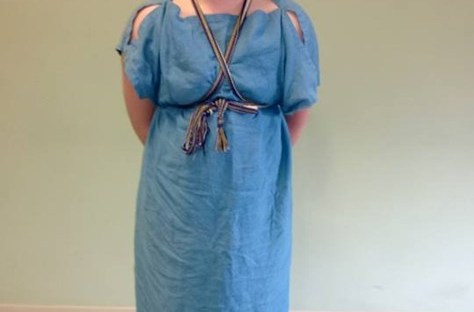
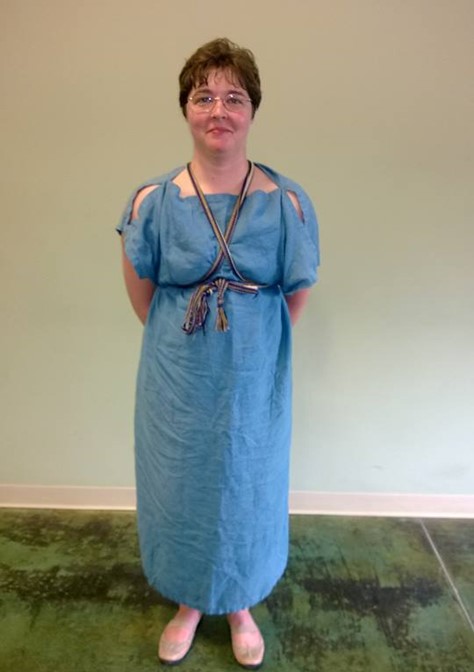
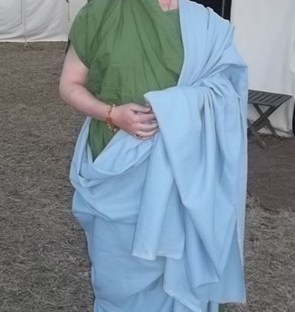
This basic garment, sometimes called an ionic chiton, could work for either a Grecian chiton or a lower class roman tunica.  Two pieces of fabric sewn at the sides and tacked at the sleeves.

Description:

These are light and cool and fast to make.  The chiton is very much like a tunic. There are versions done with a single piece of fabric folded and tacked along to the top in a number of places or it can be done as two large rectangles of fabric that are sewn down the sides and tacked a few places along the top.  Using a rope it can be cinched in at the waist.  The palla can just be wrapped around and held.  Sandals that work to complete the outfit can be found in modern shoe stores.  Romans also had a variety of jewelry that can be made or purchased from retailers selling recreations or by modifying some modern costume jewelry.

There is a distinct variation between the Doric and Ionic chitons, as well as the roman woman’s tunic, it will not be entered into here but all of the dresses serve as easy and fast warm weather garb.

Further distinctions can be made between earlier Greek and later Roman clothing.  It will not be discussed here.

Inspiration Images

Common Materials

  • Fabrics:
    • Wool
    • linen
    • silk. 
    • The wools used would have been very fine wools that are sometimes hard to find now.
  • Ornamentation:

Effective Substitutions

  • Fabrics:
    • Avoid polyester, polyester blends. 
    • Linen
    • linen blends
    • cotton
      • The cotton broadcloths (the cheap cottons that fill Walmart and the quilting fabric stores) are weak fabrics that don’t last long and never look quite right.  They never drape and lay the way the period images show. 
    • silk
      • silk like poly will be uncomfortable in the heat. 
  • Ornamentation:

Ensemble Components

  • Chiton/Tunic
  • Palla
  • belt or cording

  • sandals
  • jewelry
  • Stola

Accessories

  • “Roman” sandals are still sold today and work for starter garb. 
  • Belts can range from ropes to modern fashion chain belts. 
  • Many examples of roman jewelry are not complex and can be made easily.   There are some styles that look very similar to modern costume jewelry.

Source/Links

https://titarufiaprisca.wordpress.com/2011/03/16/on-making-roman-clothing/

http://www.fashion-era.com/ancient_costume/ancient-greek-dress-chiton.htm

https://titarufiaprisca.wordpress.com/2011/03/16/on-making-roman-clothing/

https://vestificasericata.wordpress.com/documentation/

https://www.getting-my-medieval-on.com/wp-content/uploads/2017/08/romanwomensgarb-arriamarina.pdf

https://romanasum.files.wordpress.com/2014/10/intro-to-roman-clothing4.pdf

https://www.getting-my-medieval-on.com/wp-content/uploads/2017/08/romanwomensgarb-arriamarina.pdf

Version2
date3/6/2021
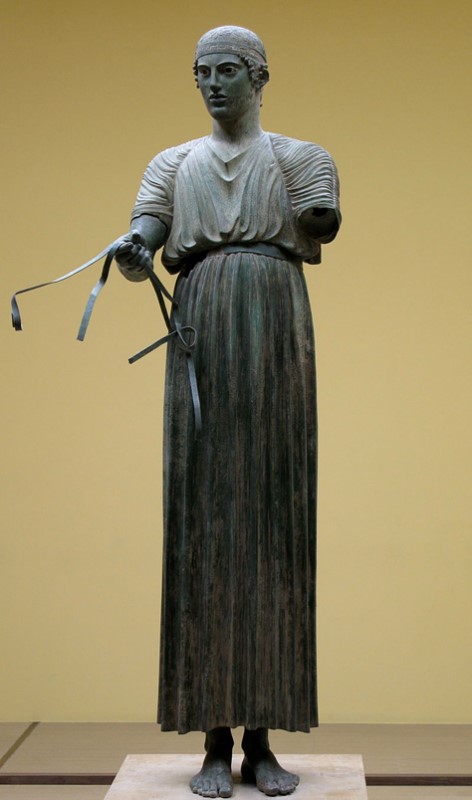
Source of Period PicThe Charioteer of Delphi, 470s B.C. Bronze. Delphi Museum, Greece.
ModelIulia Kaloetina Eirenikina 082413-09
PhotographerVincent De Vere
  
Female, Full Entry

27 CE Female Roman Chiton and Palla

Title27 CE Female Roman Chiton and Palla
Entry #GGB2021.0001
Alternate Names Chiton, Palla
Year270CE
Time range27 – 400 CE
EraRoman Empire
GenderFemale
regionEurope
Countries/culturesEurope
MakerAnna Plentyn
Difficulty1
ConfidenceImage Examples

Intro:

This consists of one piece or two pieces of fabric sewn at the sides and tacked at the top to form the tunic like chiton and a piece of fabric wrapped around as the palla. These are great beginner garb for hot weather

Description:

These are light and cool and fast to make.  The chiton is very much like a tunic. There are versions done with a single piece of fabric folded and tacked along to the top in a number of places or it can be done as two large rectangles of fabric that are sewn down the sides and tacked a few places along the top.  Using a rope it can be cinched in at the waist.  The palla can just be wrapped around and held.  Sandals that work to complete the outfit can be found in modern shoe stores.  Romans also had a variety of jewelry that can be made or purchased from retailers selling recreations or by modifying some modern costume jewelry.

Inspiration Images

Common Materials

  • Fabrics:
    • Most lower class garments in roman times were wool, but finding the right weights and weaves of wool now is hard. 
    • Upper classes would have some silks.
  • Ornamentation:

Effective Substitutions

  • Fabrics:
    • Avoid polyester, polyester blends. 
    • Cottons can work. 
    • Linens are good. 
    • Very light and fine wools may be very accurate, but harder to find.
  • Ornamentation:

Ensemble Components

  • Chiton
  • Palla
  • belt

  • sandals
  • jewelry

Accessories

  • “Roman” sandals are still sold today and work for starter garb. 
  • Belts can range from ropes to modern fashion chain belts. 
  • Many examples of roman jewelry are not complex and can be made easily.   There are some styles that look very similar to modern costume jewelry.

Source/Links

https://titarufiaprisca.wordpress.com/2011/03/16/on-making-roman-clothing/

http://www.fashion-era.com/ancient_costume/ancient-greek-dress-chiton.htm

https://titarufiaprisca.wordpress.com/2011/03/16/on-making-roman-clothing/

https://vestificasericata.wordpress.com/documentation/

https://www.getting-my-medieval-on.com/wp-content/uploads/2017/08/romanwomensgarb-arriamarina.pdf

https://romanasum.files.wordpress.com/2014/10/intro-to-roman-clothing4.pdf

https://www.getting-my-medieval-on.com/wp-content/uploads/2017/08/romanwomensgarb-arriamarina.pdf

Version2
date3/6/2021
Source of Period PicStatue of Livia Drusilla wearing a stola and palla
ModelAnna Plentyn 031113-13
PhotographerVincent De Vere
  
Basic Entry, Female

100 CE Female Roman Tunica and Stola

Title100 CE Female Roman Tunica and Stola
Entry #GGB2021.0003
Alternate NamesTunic or wrongly called a toga 
Year100CE
Time range27 – 400 CE
EraRoman Empire
GenderFemale
regionEurope
Countries/culturesEurope
MakerFionnghuala inghean Fhearghuis
Difficulty1
ConfidenceImage Examples

Intro:

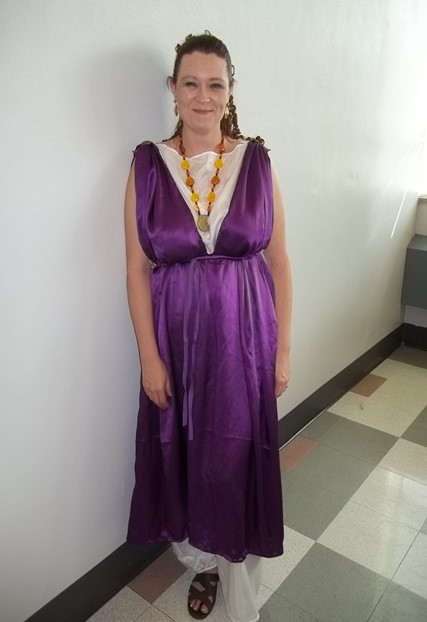
Very simple tunic like dress worn with fabric draped and pinned at the shoulders, belted at the waist

Description:

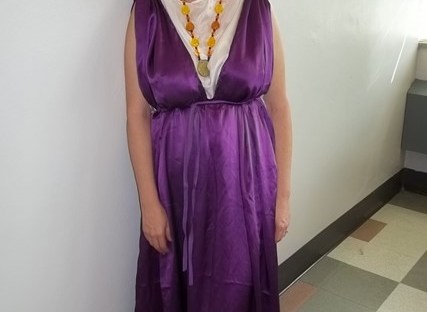
Women of all classes would have worn the basic tunic dress but women of higher classes would add an additional layer of the stola pinned over the tunic.  In the example here, the white fabric is the tunic and the purple is the stola.  This would have been in addition to a Palla or long wrap that could be draped in a number of ways.

In addition there are many options for jewelry and footwear that works for roman garb.  There are even modern costume jewelry and modern sandals that can be found that stylistically work for roman accessories.

Beware of information about making “togas” for the college toga parties. 

Inspiration Images

Common Materials

  • Fabrics:
    • Most lower class garments in roman times were wool, but finding the right weights and weaves of wool now is hard. 
    • Upper classes would have some silks.
  • Ornamentation:

Effective Substitutions

  • Fabrics:
    • Avoid polyester, polyester blends. 
    • Cottons can work. 
    • Linens are good. 
    • Very light and fine wools may be very accurate, but harder to find.
  • Ornamentation:

Ensemble Components

  • Chiton
  • Palla
  • belt

  • sandals
  • jewelry
  • Stola

Accessories

  • “Roman” sandals are still sold today and work for starter garb. 
  • Belts can range from ropes to modern fashion chain belts. 
  • Many examples of roman jewelry are not complex and can be made easily.   There are some styles that look very similar to modern costume jewelry.

Source/Links

https://titarufiaprisca.wordpress.com/2011/03/16/on-making-roman-clothing/

http://www.fashion-era.com/ancient_costume/ancient-greek-dress-chiton.htm

https://titarufiaprisca.wordpress.com/2011/03/16/on-making-roman-clothing/

https://vestificasericata.wordpress.com/documentation/

https://www.getting-my-medieval-on.com/wp-content/uploads/2017/08/romanwomensgarb-arriamarina.pdf

https://romanasum.files.wordpress.com/2014/10/intro-to-roman-clothing4.pdf

https://www.getting-my-medieval-on.com/wp-content/uploads/2017/08/romanwomensgarb-arriamarina.pdf

Version2
date3/6/2021
Source of Period PicStatue of Livia Drusilla wearing a stola and palla
ModelFionnghuala inghean Fhearghuis 091413-11
PhotographerVincent De Vere
  
Female, Full Entry

500 CE Female Byzantine Tunica and Delmatica

Title500 CE Female Byzantine Tunica and Delmatica
Entry #GGB2021.0004
Alternate Names Female byzantine court dress
Year500 CE
Time range500-700 CE
EraEarly medieval
GenderFemale
regionEastern Europe, middle east
Countries/culturesByzantine
MakerKonstantia Kaloethina
Difficulty2
ConfidenceImage Examples

Intro:

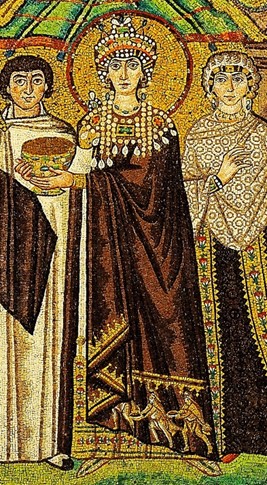
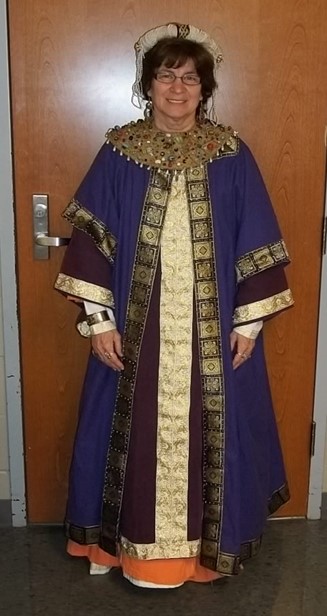
Court garb, multi layered and richly decorated garment consisting of layers of dresses and robes as well as a decorated collar.

Description:

Essentially wide sleeved tunics and robes, made from rich fabrics and decorated with embroidered embellishments.

Multiple layers of rich garments would show the wealth of the individual.  Fabrics were lighter and finer in weave, assuming to be linens and silks.  

Inspiration Images

Common Materials

  • Fabrics:
    • Fine fabrics
    • linens
    • silks
    • solid colors embellished with embroidered decorations or appliqued shames rather than designs that were woven in
  • Ornamentation:

Effective Substitutions

  • Fabrics:
    • cottons
    • linen blends
    • some fine poly’s for silk effects, but the poly blends have many drawbacks,
  • Ornamentation:

Ensemble Components

  • outer wide sleeved robe
  • under tunics of various colors

  • shoes or slippers

Accessories

  • worn with roman inspired cloak called a chlamys
  • various hats

Source/Links

Version2
date3/6/2021
Source of Period PicPetar Milošević photo of Theodora (San Vitale) Ravenna, Italy
ModelKonstantia Kaloethina 032313-5
PhotographerVincent De Vere
  

Full Entry, Male

600 CE Norse Klappenrock over Tunic

Title600 CE Norse Klappenrock over Tunic
Entry #GGB2021.0005
Alternate Names Klappenrock, warriors coat, Viking coat
Year600 CE
Time range600 – 900 CE
EraEarly medieval
GenderMale
regionNorthern Europe
Countries/culturesNorse, Viking
MakerVincent De Vere, Kristine nic Tallieur
Difficulty2
ConfidenceImage examples/ fragmentary evidence

Intro:

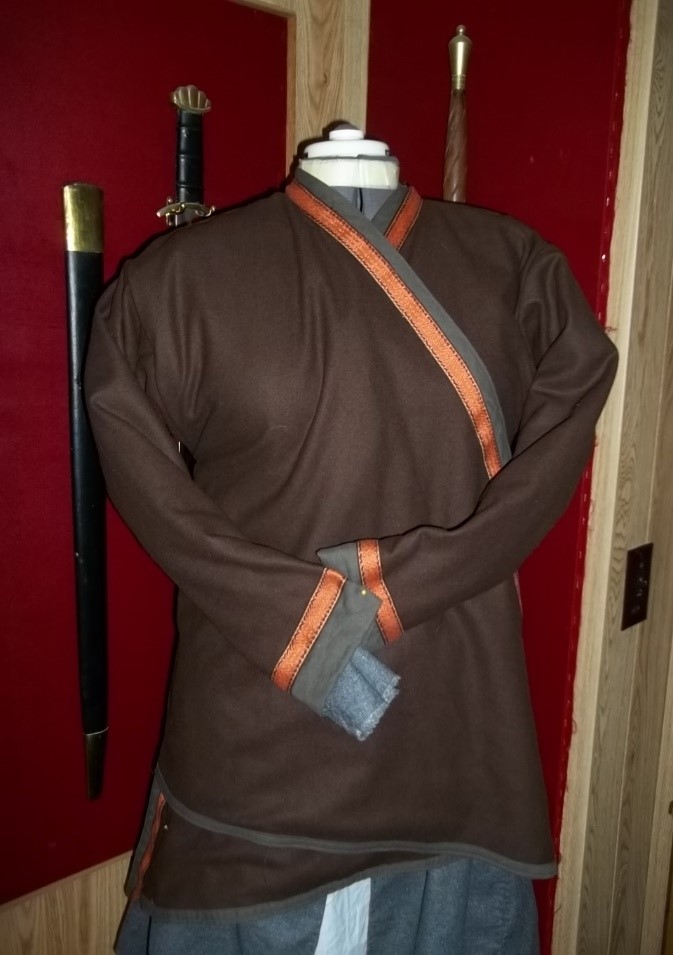
A tunic and an outer layer coat associated with Norse cultures.  The front panels cross over each other and the coat is held closed with a belt.  Often trimmed with tablet woven trim and possibly fur. 

Description:

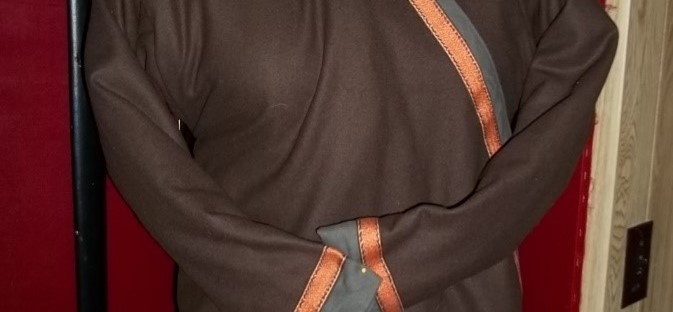
Wool coat lined with linen decorated with a tablet woven band.  The coat is shown over a Bocksten style tunic and under tunic.  Often associated with fragments found in Haithabu

Inspiration Images

Common Materials

  • Fabrics:
    • Wool 2/2 twill
    • cross twill
    • diamond twill
    • herringbone twill
    • wool that could be lined with will or linen. 
  • Ornamentation:
    • Tablet woven trim in wool, linen, or silk. Possibly brocaded with metal.
    • Embroidery

Effective Substitutions

  • Fabrics:
    • Wool blends
    • linen blends
  • Ornamentation:
    • Appropriately patterned commercially woven trim
    • Inkle-woven Trim
    • Tablet woven trim
    • Cotton or poly thread

Ensemble Components

  • Birka style coat
  • Bocksten cut tunic
  • Bocksten cut under tunic

  • Pants
  • Shoes

Accessories

  • Belt
  • pouch
  • Simple Hat
  • leg wraps

Source/Links

https://sites.google.com/site/archoevidence/home/viking-clothing-guides

Version2
date2/21/2021
Source of Period PicSutton Hoo Helm decoration, British museum 
Model 
PhotographerVincent De Vere
  

Full Entry, Male

800 CE Male Anglo Saxon Tunic

Title800 CE Male Anglo Saxon Tunic
Entry #GGB2021.0007
Alternate Names tunic, over tunic
Year800 CE
Time range500-900 CE
EraEarly Medieval
GenderMale
regionWestern Europe
Countries/culturesEngland
MakerRichard of Wolfwood
Difficulty1
ConfidenceImage Example

Intro:

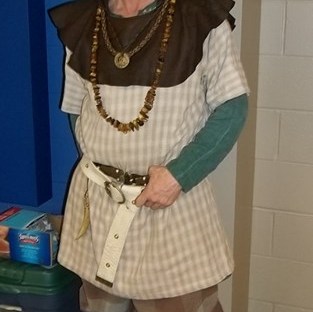
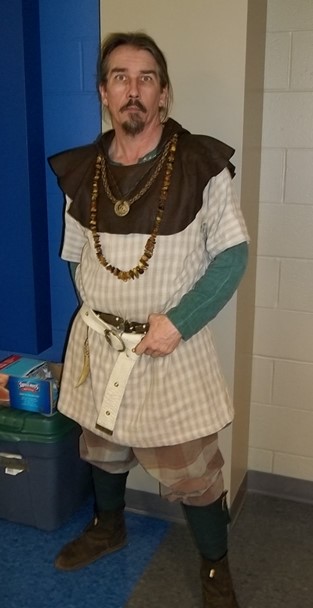
A tunic style outfit with accessories common to many early or pre medieval cultures. Under tunic, over tunic, pants with leg wraps, turn shoes and a mantled hood

Description:

Few representations survive of early garments and many fewer extant examples, however what does survive would support much of what is shown here. 

The fabric shows woven in patterns that existed across Western Europe in the centuries before 1000 CE.  The basic style of layers of tunics and pants continued from before the centuries of the Roman influence to the age of Norman England. 

A base layer of a linen under tunic may have been worn below the long sleeved wool tunic and the wool outer tunic.  This example was made from Linen for use during warm summer events. 

The pants made from striped linen cloth would have been wool in period.  The leg wraps are made from strips of wool fabric but are often woven as narrow bands.  These are also know and winingas. The shoes are an early style of turn shoe.

The hood has a wide mantle and is made from light wool.  The amber would have been a common item traded from Eastern Europe.

Inspiration Images

Common Materials

  • Fabrics:
    • linen
    • wool
  • Ornamentation:
    • Embroidery
    • Tablet woven bands

Effective Substitutions

  • Fabrics:
    • cotton
    • cotton-linen
    • linen-rayon
    • wool blends
  • Ornamentation:

Ensemble Components

  • Under tunic
  • Over Tunic

  • Pants
  • Hood

Accessories

  • Belt
  • Leg Wraps
  • Pouch
  • Turn Shoes

Source/Links

https://www.cs.vassar.edu/~capriest/viktunic.html

Version2
date3/5/2021
Source of Period PicOriginally from MS 183, f.1v at Corpus Christi College, Cambridge
ModelRichard Jones 020213-19
PhotographerVincent De Vere
  

Female, Full Entry

800 CE Female Byzantine Delmatikion

Title800 CE Female Byzantine Delmatikion
Entry #GGB2021.0006
Alternate Names Female byzantine court dress
Year800 CE
Time range700-1083 CE
EraEarly medieval
GenderFemale
regionEastern Europe, middle east
Countries/culturesByzantine
MakerDiana Tantini
Difficulty2
ConfidenceImage Examples

Intro:

Court garb, multi layered and richly decorated garment consisting of layers of dresses and robes as well as a decorated collar.

Description:

Essentially wide sleeved tunics and robes, made from rich fabrics and decorated with embroidered embellishments.

Multiple layers of rich garments would show the wealth of the individual.  Fabrics were lighter and finer in weave, assuming to be linens and silks.  

Inspiration Images

Common Materials

  • Fabrics:
    • Fine fabrics
    • linens
    • silks
    • solid colors embellished with embroidered decorations or appliqued shames rather than designs that were woven in
  • Ornamentation:

Effective Substitutions

  • Fabrics:
    • cottons
    • linen blends
    • some fine poly’s for silk effects, but the poly blends have many drawbacks,
  • Ornamentation:

Ensemble Components

  • outer wide sleeved robe
  • under tunics of various colors

  • shoes or slippers

Accessories

  • worn with roman inspired cloak called a chlamys
  • various hats

Source/Links

Version2
date3/6/2021
Source of Period PicPetar Milošević photo of Theodora (San Vitale) Ravenna, Italy
ModelDiane Wilson 020213-21
PhotographerVincent De Vere