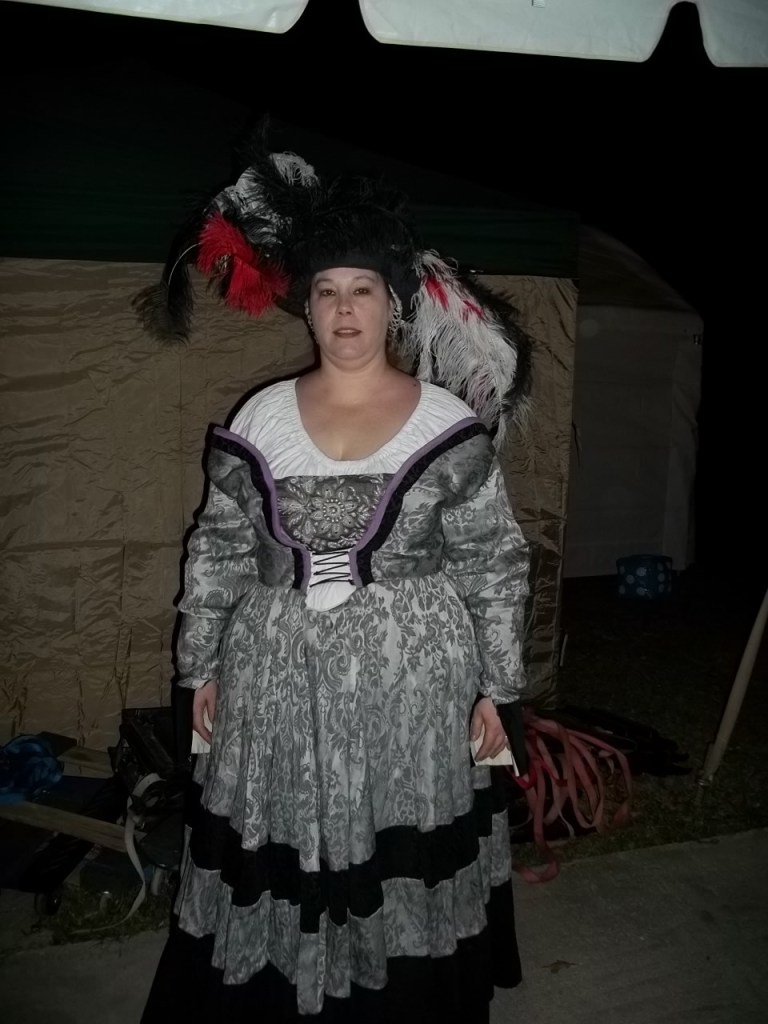
Full Entry, Male

1350 CE Male Cotehardie 2

Title: 1350 CE Male Cotehardie 2
Entry #: GGB2021.055
Alternate Names: Cote 
Year: 1350 CE
Time range: 1340-1400 CE
Era: High Medieval
Gender: Male
region: central europe
Countries/cultures: Germany
Maker: Lisette Reuss
Difficulty: 2
Confidence: Image Example

Intro:

Fitted male coat forming the outer layer or the middle layer of an ensemble

Description:

In some areas in Western Europe, male garments became more fitted in the 1300s. The unfitted cotes became the tailored and fitted cotehardies. Layers associated with cotehardies would be a linen undershirt, sometimes an early form of the doublet and braies and hosen.  Layers over the cotehardie could be gowns and houppelandes

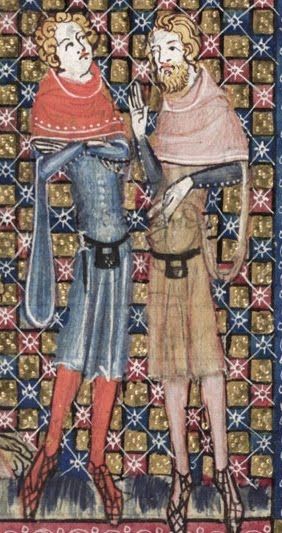
In some cases the cotehardies are shorter to the point of reaching just to the crotch depth.  Others are seen longer to the point of knee length. Some have decorative dagged edges.  They often feature a large number of closely spaced buttons  

Male cotehardies could have long or shorter sleeves including short sleeves showing off the doublet below, sometimes featuring sleeve streamers. The sleeves of the cotehardie or the layer under the cotehardie are very tight.

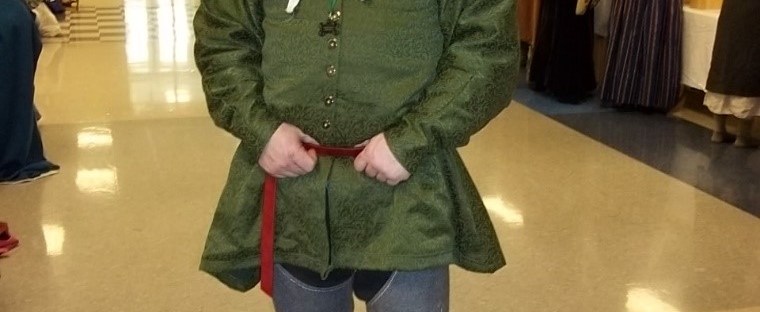
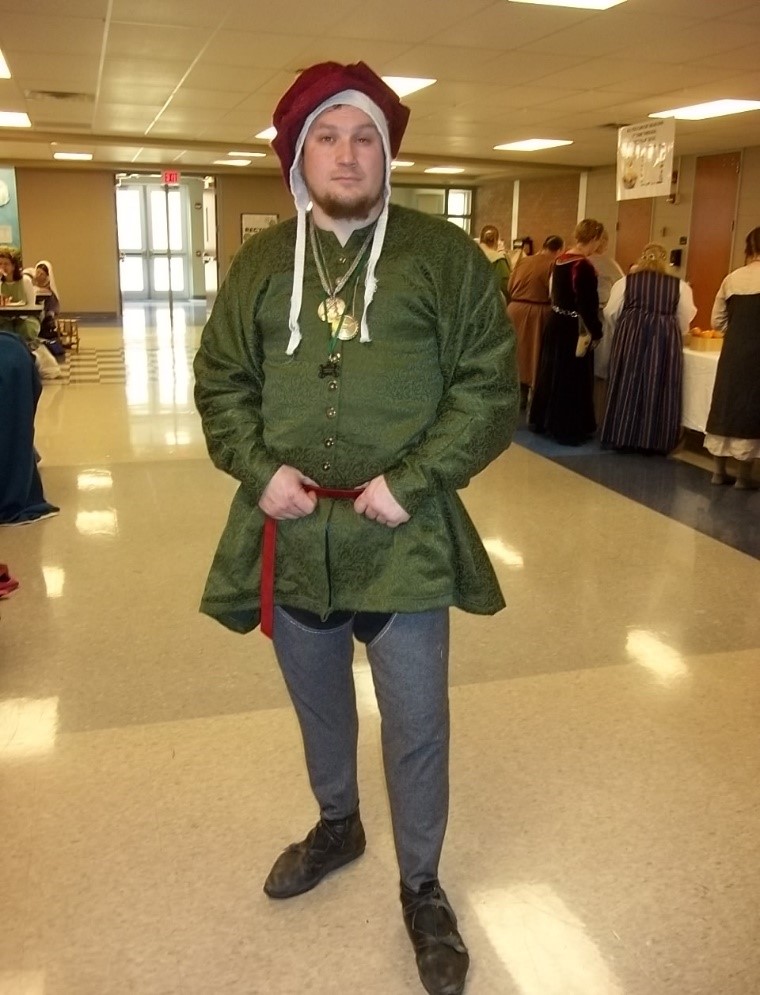
This cotehardie is done in the German style with a baggier upper sleeve and is worn with breis and hosen.  A hat and coif are warn on the head and turn shoes for the feet

Inspiration Images
Common Materials

  • Fabrics:
    • Wool
    • silks
    • brocades
    • velvets
  • Ornamentation:
    • cloth or metal buttons

Effective Substitutions

  • Fabrics:
    • cottons
    • linens
    • linen blends
    • wool blends
  • Ornamentation:

Ensemble Components

  • linen undershirt
  • likely an early form of the doublet
  • .  Turn shoes, slippers or low boots

  • braies and hosen
  • Layers over the cotehardie could be gowns and houppelandes

Accessories

  • low slung belts, around the hips
  • pouches
  • garters
  • hood

Source/Links

http://www.chesholme.com/wfiles/2-1-Cotehardie.pdf

http://starsandgarters.org/2020/10/04/patterning-fitted-garments/

Version: 2
date: 2/26/21
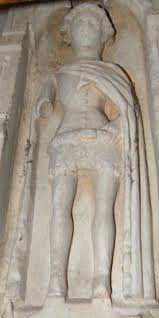
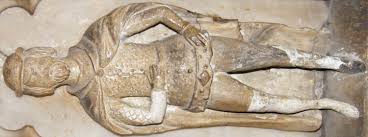
Source of Period Pic: http://en.wikipedia.org/wiki/File:Bologna_marriage_men.jpg
Model: Johan der hund
Photographer: Vincent de Vere
  

Full Entry, Male

1350 CE Male Cotehardie 1

Title: 1350 CE Male Cotehardie 1
Entry #: GGB2021.054
Alternate Names: Cote 
Year: 1350 CE
Time range: 1340-1400 CE
Era: High Medieval
Gender: Male
region: Western europe, central europe
Countries/cultures: France, England, germany
Maker: Vincent de Vere
Difficulty: 2
Confidence: Image Example

Intro:

Fitted male coat forming the outer layer or the middle layer of an ensemble

Description:

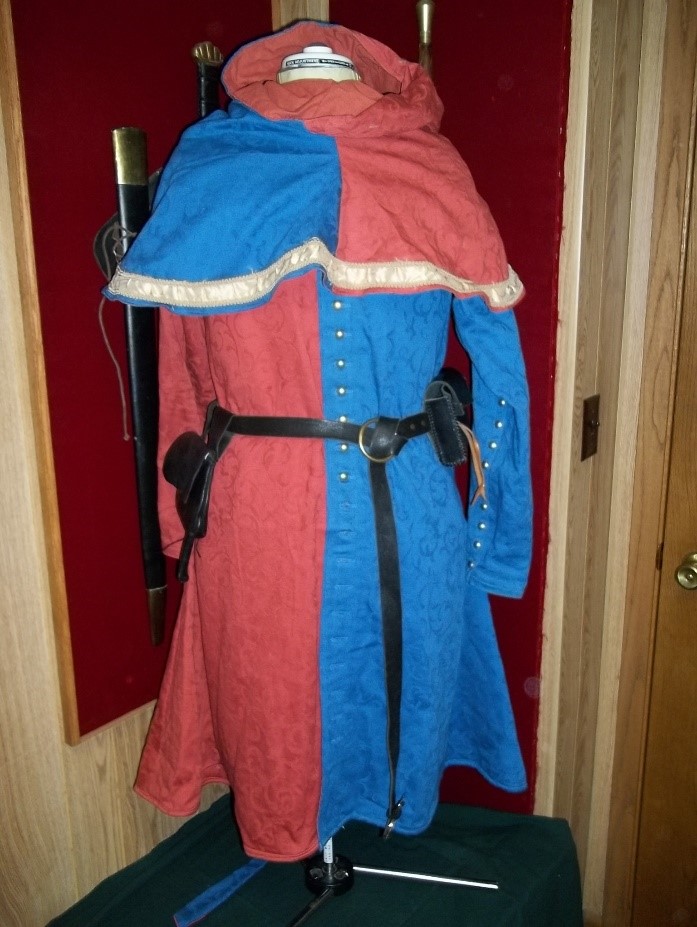
In some areas in Western Europe, male garments became more fitted in the 1300s. The unfitted cotes became the tailored and fitted cotehardies. Layers associated with cotehardies would be a linen undershirt, sometimes an early form of the doublet and braies and hosen.  Layers over the cotehardie could be gowns and houppelandes

In some cases the cotehardies are shorter to the point of reaching just to the crotch depth.  Others are seen longer to the point of knee length. Some have decorative dagged edges.  They often feature a large number of closely spaced buttons  

Male cotehardies could have long or shorter sleeves including short sleeves showing off the doublet below, sometimes featuring sleeve streamers. The sleeves of the cotehardie or the layer under the cotehardie are very tight.

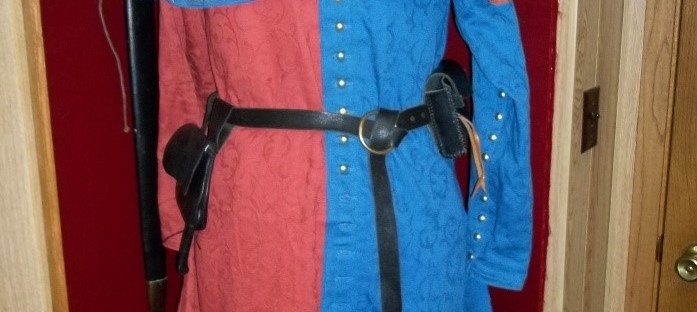
This cotehardie is an earlier style of the garment patterned off of the men’s wedding garment from the wedding of Nicolo da Bologna, being knee length and not overly tight below the waist line and a with a matching hood.  This garment is parti colored made from brocaded cotton fabric with silk trim.

Inspiration Images

Common Materials

  • Fabrics:
    • Wool
    • silks
    • brocades
    • velvets
  • Ornamentation:
    • cloth or metal buttons

Effective Substitutions

  • Fabrics:
    • cottons
    • linens
    • linen blends
    • wool blends
  • Ornamentation:

Ensemble Components

  • linen undershirt
  • likely an early form of the doublet
  • .  Turn shoes, slippers or low boots

  • braies and hosen
  • Layers over the cotehardie could be gowns and houppelandes

Accessories

  • low slung belts, around the hips
  • pouches
  • garters
  • hood

Source/Links

http://www.chesholme.com/wfiles/2-1-Cotehardie.pdf

http://starsandgarters.org/2020/10/04/patterning-fitted-garments/

Version: 2
date: 2/26/21
Source of Period Pic: http://en.wikipedia.org/wiki/File:Bologna_marriage_men.jpg
Model:
Photographer: Vincent de Vere
  

Female, Full Entry

1370 CE Female, Cotehardie 6

Title: 1370 CE Female, Cotehardie 6
Entry #: GGB2021.052
Alternate Names: Gothic Fitted Dress 
Year: 1370
Time range: 1350-1400 CE
Era: High Medieval
Gender: Female
region: Western europe, central europe
Countries/cultures: France, England,
Maker: Vincent de Vere
Difficulty: 2
Confidence: Image Examples

Intro:

Fitted female garment forming an outer or middle layer.  

Description:

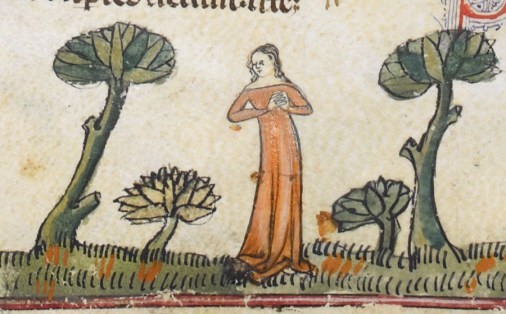
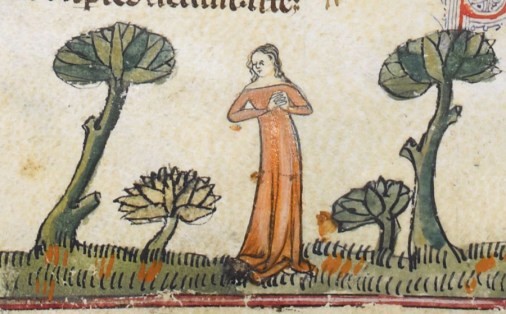
 As female garments became more fitted in the 1300s the unfitted tunic like dresses became more tailored and fitted. 
 A loose shift or slip like garment could be worn as a base layer.  There is limited evidence for underwear.  The bust could be supported with just the fitted layers.
 A kirtle layer worn between the shift and the cotehardie could be laced up the front and the sleeves could be buttoned or laced.  The kirtle layer is often fitted as to be supportive in the bust and not as long as the cotehardie layer. 
 The cotehardie layer over the kirtle later adds to the support of the bust line.  The neck line could be plunging or more modest.  The dress is often shown with a large number of closely spaced buttons on a front closure. The sleeves could be short, short with sleeve streamers (a very stereotypical cotehardie look) or longer.  Some examples extend over the hand almost to the fingers.  The cotehardie layer would be floor length.  The belt is often shown slung low on the hips.

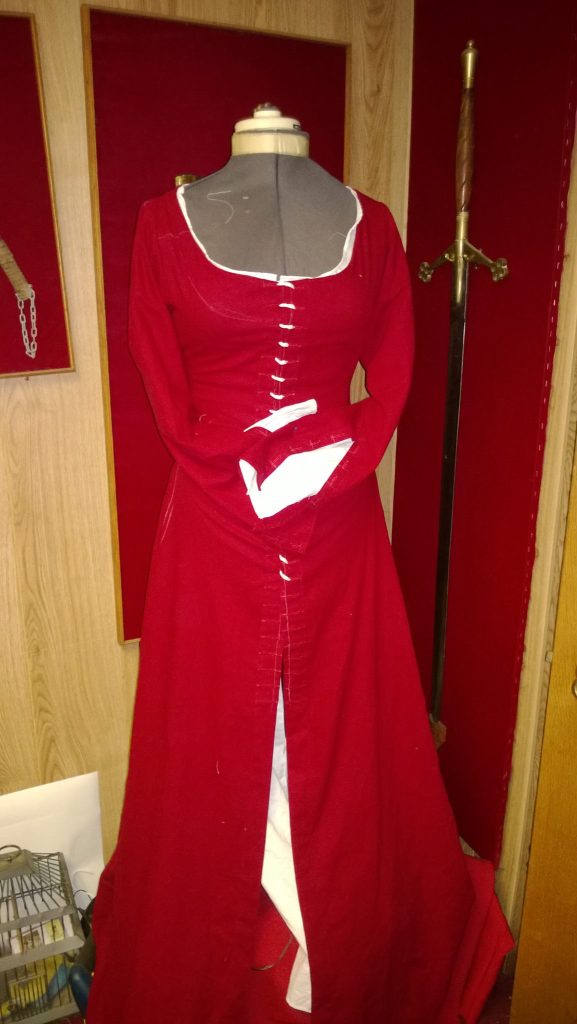
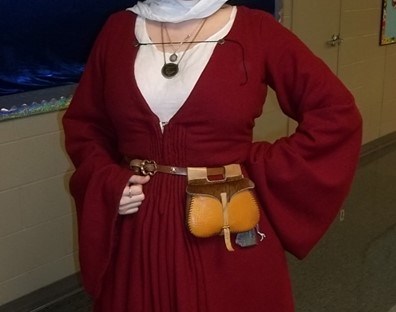
This example is a Red Linen cotehardie over a white kirtle

Inspiration Images

Common Materials

  • Fabrics:
    • fine cloths
    • silks
    • brocades
    • fine wools
  • Ornamentation:

Effective Substitutions

  • Fabrics:
    • Silks
    • linens
    • linen blends with rayon or cotton
    • brocades.
    • Some cotton poly brocades can work to mimic the look of rich brocades, but the higher the poly content the more unpleasant the garment is to wear.
  • Ornamentation:

Ensemble Components

  • Slip/shift
  • Kirtle Cotehardie
  • purse

  • coifs/undercaps/hoods
  • belt
  • turnshoes

Accessories

Source/Links

http://www.chesholme.com/wfiles/2-1-Cotehardie.pdf

http://starsandgarters.org/2020/10/04/patterning-fitted-garments/

Version: 2
date: 2/26/2021
Source of Period Pic:
Model:
Photographer: Vincent De Vere
  

Female, Full Entry

1380 CE Female Kirtle and Cote

Title: 1380 CE Female Kirtle and Cote
Entry #: GGB2021.061
Alternate Names: Cotehardie, gothic fitted gown 
Year: 1380 CE
Time range: 1350-1400 CE
Era: Late Medieval
Gender: Female
region: Western europe
Countries/cultures: France, england
Maker: Avery Quatremaine
Difficulty: 4
Confidence: Image Examples

Intro:

Fitted female garment forming an outer or middle layer including the foundational garments.  

Description:

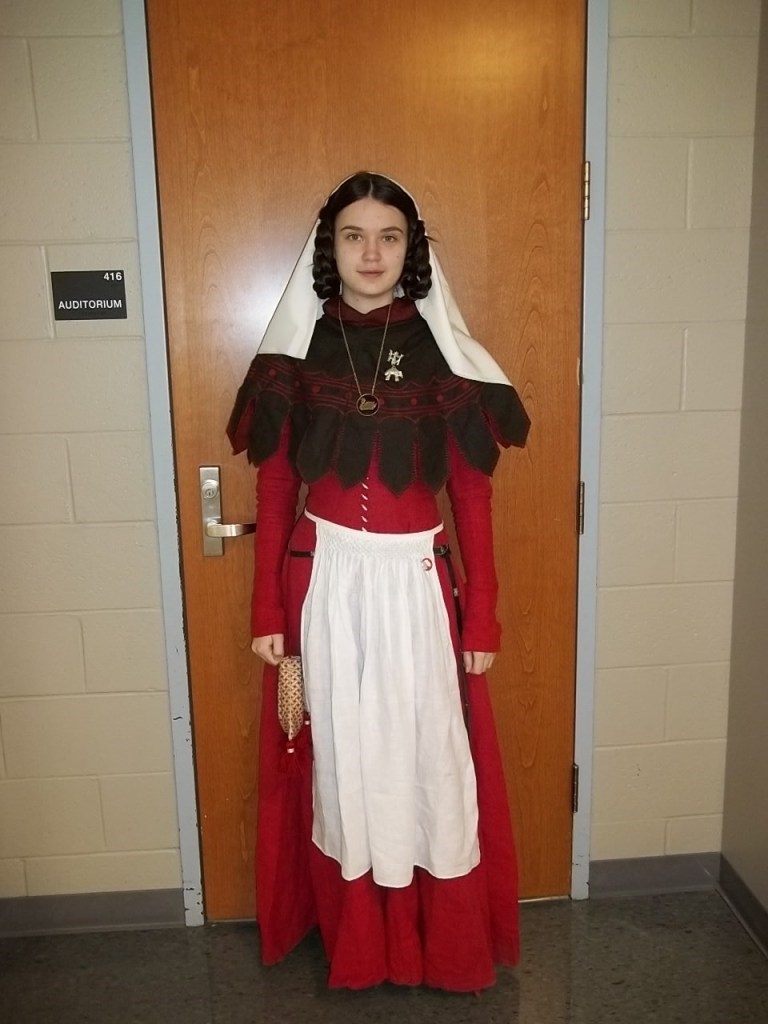
Red wool cote (in this case similar to other entries on cotehardies) over an unseen kirtle supportive layer.  Seen with accurate accessories of an apron, hood and veil.

As female garments became more fitted in the 1300s the unfitted tunic like dresses became more tailored and fitted. 

A loose shift or slip like garment could be worn as a base layer.  There is limited evidence for underwear.  The bust could be supported with just the fitted layers.

A kirtle layer worn between the shift and the cote could be laced up the front and the sleeves could be buttoned or laced.  The kirtle layer is often fitted as to be supportive in the bust and not as long as the cotehardie layer. 

The cote layer over the kirtle later adds to the support of the bust line.  The neck line could be plunging or more modest.  The dress is often shown with a large number of closely spaced buttons on a front closure. The sleeves could be short, short with sleeve streamers (a very stereotypical cote look) or longer.  Some examples extend over the hand almost to the fingers.  The cotehardie layer would be floor length.  The belt is often shown slung low on the hips. 

This is a case where the person who made the garment prefers to call this a cote, where others would call it a cotehardie or a gothic fitted dress. 

Inspiration Images

Common Materials

  • Fabrics:
    • Cote – wool, silks,
    • Kirtle – Wool, linens
    • Underdress – linen
    • Hood – wool
    • Apron – linen
  • Ornamentation:

Effective Substitutions

  • Fabrics:
    • Cote – wool blends, linens, linen blends, some cottons, silks, silk blends
    • Kirtle – Wool blends, linens, linen blends, some cottons
    • Underdress – linen, linen blends, some cottons
    • Hood – wool, wool blends, Linen,  linen blends, some cottons
    • Apron – linen, linen blends, cottons
  • Ornamentation:

Ensemble Components

  • Cote (Cotehardie)
  • kirtle

  • underdress/shift/slip
  • hose (knee high)

Accessories

  • Hoods – in this case a liripipe hood
  • belt
  • purse
  • turn shoes or slippers

Source/Links

http://www.chesholme.com/wfiles/2-1-Cotehardie.pdf

http://starsandgarters.org/2020/10/04/patterning-fitted-garments/

Version: 2
date: 3/1/2021
Source of Period Pic:
Model: Avery Quatremaine
Photographer: Vincent de Vere
  

Full Entry, Male

1350 CE Male Cotehardie 7

Title: 1350 CE Male Cotehardie 7
Entry #: GGB2021.060
Alternate Names: Cote 
Year: 1350 CE
Time range: 1340-1400 CE
Era: High Medieval
Gender: Male
region: Western europe, central europe
Countries/cultures: France, England, germany
Maker: Vincent de Vere
Difficulty: 3
Confidence: Image Example

Intro:

Fitted male coat forming the outer layer or the middle layer of an ensemble

Description:

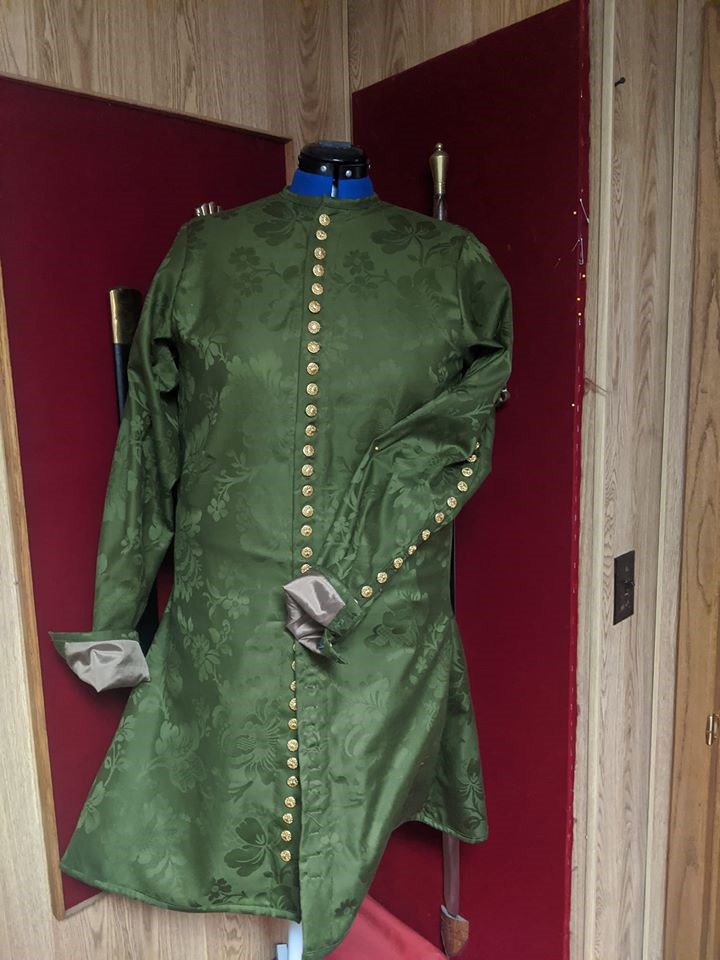
In some areas in Western Europe, male garments became more fitted in the 1300s. The unfitted cotes became the tailored and fitted cotehardies. Layers associated with cotehardies would be a linen undershirt, sometimes an early form of the doublet and braies and hosen.  Layers over the cotehardie could be gowns and houppelandes

In some cases the cotehardies are shorter to the point of reaching just to the crotch depth.  Others are seen longer to the point of knee length. Some have decorative dagged edges.  They often feature a large number of closely spaced buttons  

Male cotehardies could have long or shorter sleeves including short sleeves showing off the doublet below, sometimes featuring sleeve streamers. The sleeves of the cotehardie or the layer under the cotehardie are very tight.

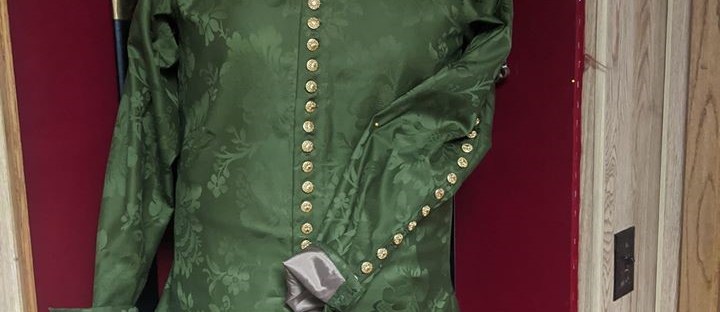
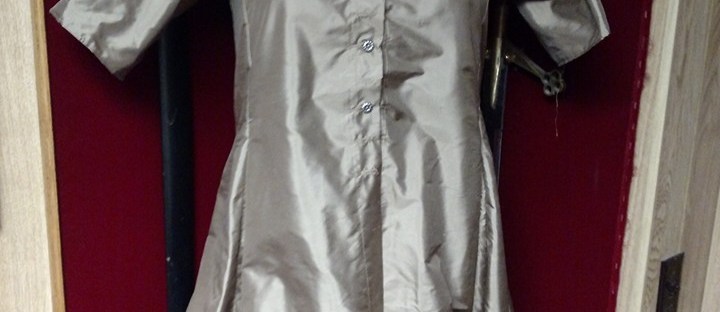
This cotehardie is brocaded fabric with a silk lining featuring a flared skirt

Inspiration Images

Common Materials

  • Fabrics:
    • Wool
    • silks
    • brocades
    • velvets
  • Ornamentation:
    • cloth or metal buttons

Effective Substitutions

  • Fabrics:
    • cottons
    • linens
    • linen blends
    • wool blends
  • Ornamentation:

Ensemble Components

  • linen undershirt
  • likely an early form of the doublet
  • .  Turn shoes, slippers or low boots

  • braies and hosen
  • Layers over the cotehardie could be gowns and houppelandes

Accessories

  • low slung belts, around the hips
  • pouches
  • garters
  • hood

Source/Links

http://www.chesholme.com/wfiles/2-1-Cotehardie.pdf

http://starsandgarters.org/2020/10/04/patterning-fitted-garments/

Version: 2
date: 2/26/21
Source of Period Pic: http://en.wikipedia.org/wiki/File:Bologna_marriage_men.jpg
Model:
Photographer: Vincent de Vere
  

Female, Full Entry

1370 CE Female, Cotehardie 7

Title: 1370 CE Female, Cotehardie 7
Entry #: GGB2021.053
Alternate Names: Gothic Fitted Dress 
Year: 1370
Time range: 1350-1400 CE
Era: High Medieval
Gender: Female
region: Western europe, central europe
Countries/cultures: France, England,
Maker: Vincent de Vere
Difficulty: 3
Confidence: Image Examples

Intro:

Fitted female garment forming an outer or middle layer.  

Description:

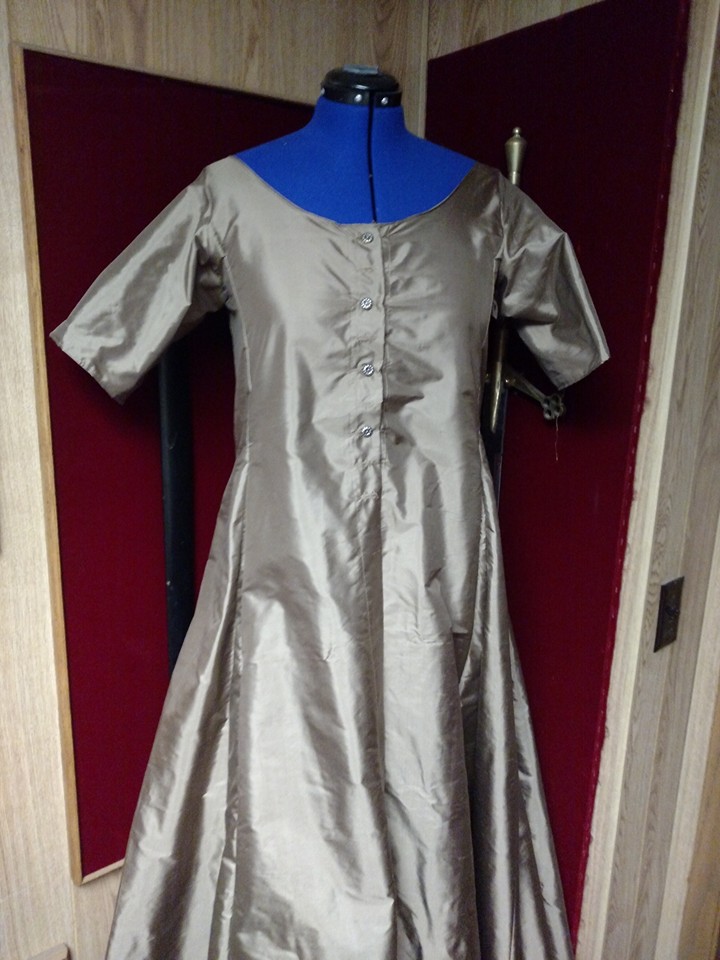
Gold silk cotehardie shown here without a kirtle
 As female garments became more fitted in the 1300s the unfitted tunic like dresses became more tailored and fitted. 
 A loose shift or slip like garment could be worn as a base layer.  There is limited evidence for underwear.  The bust could be supported with just the fitted layers.
 A kirtle layer worn between the shift and the cotehardie could be laced up the front and the sleeves could be buttoned or laced.  The kirtle layer is often fitted as to be supportive in the bust and not as long as the cotehardie layer. 
 The cotehardie layer over the kirtle later adds to the support of the bust line.  The neck line could be plunging or more modest.  The dress is often shown with a large number of closely spaced buttons on a front closure. The sleeves could be short, short with sleeve streamers (a very stereotypical cotehardie look) or longer.  Some examples extend over the hand almost to the fingers.  The cotehardie layer would be floor length.  The belt is often shown slung low on the hips.

Inspiration Images

Common Materials

  • Fabrics:
    • fine cloths
    • silks
    • brocades
    • fine wools
  • Ornamentation:

Effective Substitutions

  • Fabrics:
    • Silks
    • linens
    • linen blends with rayon or cotton
    • brocades.
    • Some cotton poly brocades can work to mimic the look of rich brocades, but the higher the poly content the more unpleasant the garment is to wear.
  • Ornamentation:

Ensemble Components

  • Slip/shift
  • Kirtle Cotehardie
  • purse

  • coifs/undercaps/hoods
  • belt
  • turnshoes

Accessories

Source/Links

http://www.chesholme.com/wfiles/2-1-Cotehardie.pdf

http://starsandgarters.org/2020/10/04/patterning-fitted-garments/

Version: 2
date: 2/26/2021
Source of Period Pic:
Model:
Photographer: Vincent De Vere
  

Female, Full Entry

1490 CE German Female Housebook Dress

Title1490 CE German Female Housebook Dress
Entry #GGB2021.071
Alternate Names 
Year1490
Time range1480-1500
EraLate medieval
GenderFemale
regionCentral europe
Countries/culturesGermany
MakerAmira bint Timurhan
Difficulty3
ConfidenceImage Example

Intro:

Dress with front and back pleated section. Most often portrayed in the a book of engravings by the Master of the Housebook.

Description:

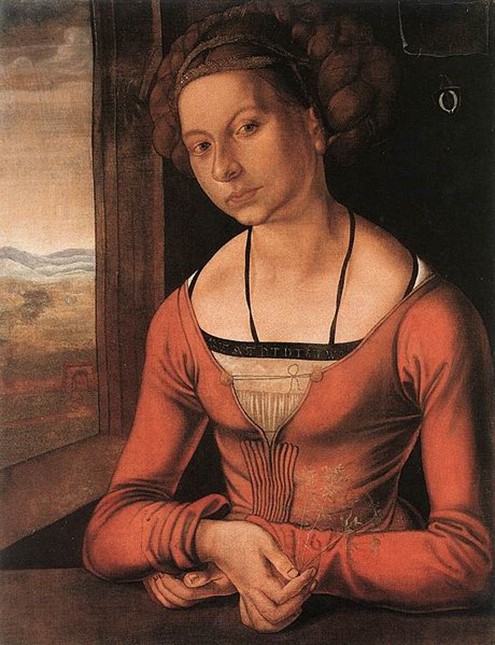
This dress is commonly known as a housebook dress because it was frequently portrayed in a book of engravings called the Housebook. It is a dress with pleated inset in both front and back with fall into the fullness of the skirt. The haub is a pleated rectangle of fabric (I use linen) which is wound about the head to produce is shape. The tail of the haub can be tucked back into it, wound around your neck and simply left to hang.

Inspiration Images

Common Materials

  • Fabrics:
    • Gown – wools, finely woven wools, brocaded or patterned cloths.  Rich textiles, collars featuring velvets and furs.  Fur trim
    • Kirtle – wools lined in linen
    • Underclothes – Linen
  • Ornamentation:

Effective Substitutions

  • Fabrics:
    • Gown – Some cottons, linens, Linen blends wool blends, brocades, some poly/cotton upholstery fabrics to achieve the woven in patterns. 
    • Kirtle – Linen and linen blends, some cottons to lighten the under layers
    • Underclothes – Linen, linen blends, cottons
  • Ornamentation:

Ensemble Components

  • Haube
  • chemise
  • hosen

  • pointed shoes
  • housebook dress

Accessories

  • thin leather belt
  • mantle (short cloak)
  • schaube (heavy long coat)
  • purse
  • apron

Source/Links

http://myra.hem.nu/costume/images/HousebookMaster/LL%28FiledtKoko1985%29/MH.StCatherine%28LLcat47%29.jpg

http://craftyagatha.com/wp-content/uploads/2011/06/pleat-detail3.png (detail of back pleats) http://employees.oneonta.edu/farberas/arth/Images/ARTH_214images/prints/housebook_aristotle_and_phyllis.jpg

http://myra.hem.nu/costume/Documentation/Documentation.htm

Version2
date3/2/2021
Source of Period Pichttps://commons.wikimedia.org/wiki/File:Durer,_Portrait_of_a_Young_F%C3%BCrleger_with_Her_Hair_Done_Up.jpg
ModelAmira bint Timurhan
PhotographerVincent De Vere
  

Female, Full Entry

1550 Female German Cranach Gown 4

Title: 1550 Female German Cranach Gown 4
Entry #: GGB2021.077
Alternate Names: Kampfrau, Trossfrau, Cranach, Saxony Court gown 
Year: 1550
Time range: 1470-1550
Era: Late medieval
Gender: Female
region: Central europe
Countries/cultures: Germany/Switzerland 
Maker: Katherine de Heilige
Difficulty: 5
Confidence: Image Example

Intro:

The very stylized and flamboyant dress style seen in the SCA related to the Saxony (German) and Swiss court gowns worn by the women who followed the Landsknecht mercenary forces.  (May imply someone with a dubious occupation.) 

Description:

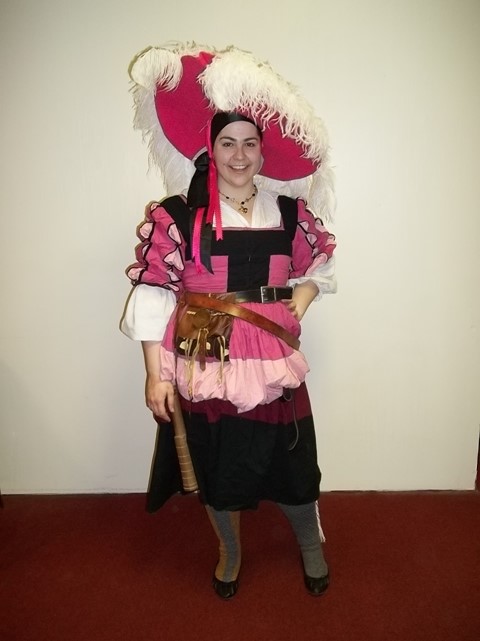
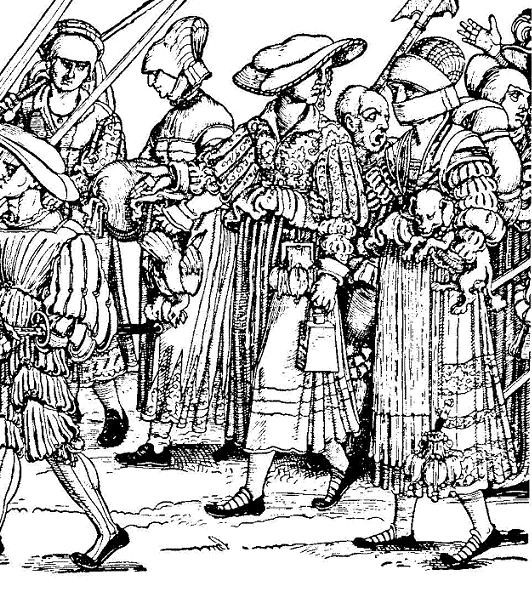
Highly ornamented and fanciful takes on the German and Saxony court dresses worn by flamboyant camp followers living off the spoils of war. Landsknechts and their women were not constrained by (or ignored) some of the sumptuary laws governing what people can wear.

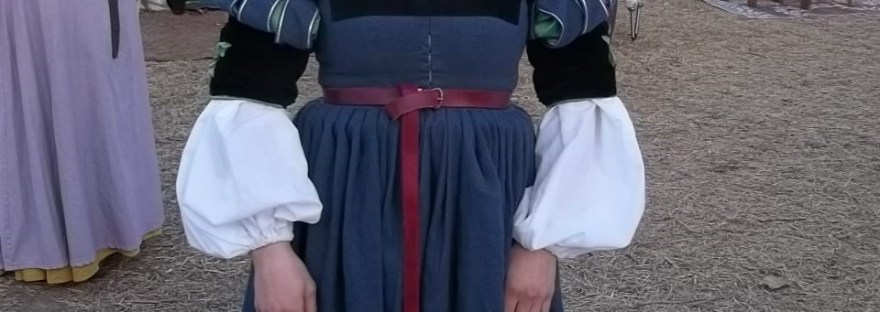
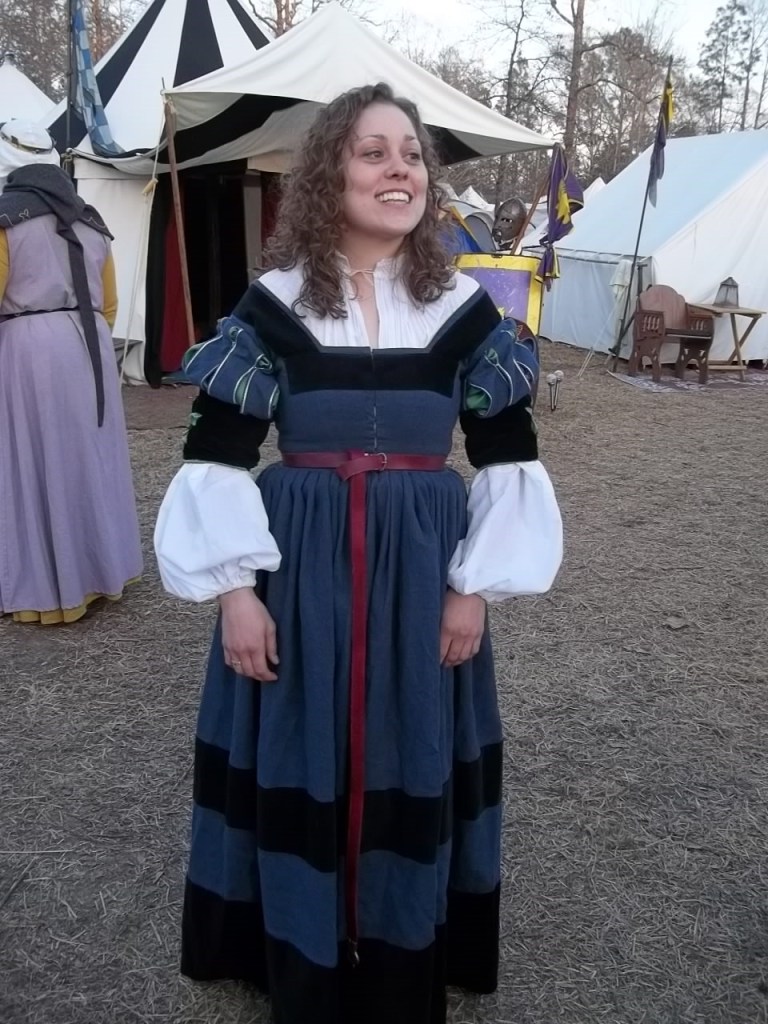
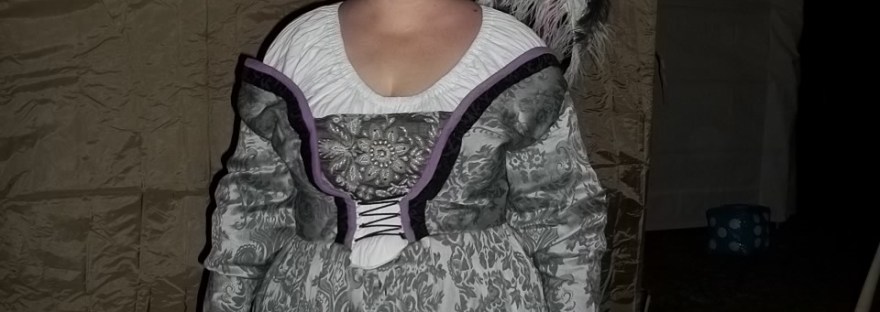
Many of the outer garments were made from wool.  Contrasting color collars and cuffs, bight colors, rich fabrics.  No two looking the same.  Bodice laced shut exposing layers underneath.  Some necklines are very wide creating garments nearly falling off the shoulders.  Long and short sleeves are seen.  Many garments ‘slashed’ to expose layers underneath sleeves

Roll pleated skirt which could be hiked up into the belt for ease of movement but also exposing their legs. Many illustrations also show stripes of fabric parallel to the hem line on the skirts.   Patterned stockings are seen in some illustrations.  “Cow mouth” shoes with a wide toe area.

Note on Names:

Cranach – last name or two painters associated with this style

Tross – the camp followers of the mercenaries

Trossfrau/kampfrau – (maybe) a modern name given to the ‘wives’ of the mercenaries

It’s cool but read up on the culture before deciding to make one.

Inspiration Images

Common Materials

  • Fabrics:
    • Wool main garments in bright colors, vivid patterns, rich fabrics added as trim. 
    • Silks, velvets,
    • A lot of fabric to make the dresses. 
  • Ornamentation:
    • Knitted stockings
    • linen undergarments

Effective Substitutions

  • Fabrics:
    • Some poly/cotton brocades to simulate the rich fabrics. 
    • Wool blends are easier to find. 
    • Linen blends and cottons for undergarments. 
    • Very hard to make these dresses look right without investing in the right materials.
  • Ornamentation:

Ensemble Components

  • Gown – bodice and attached skirt
  • Placket over breasts
  • underdress

  • stockings
  • hats, including large, feathered hats

Accessories

  • Retailers catering to reenactors sell the cow mouth shoes and striped stockings in vibrant colors
  • Belts
  • pouch/purse.

Source/Links

https://sophie-stitches.weebly.com/german-saxon-cranach-gown.html

Version: 2
date: 3/2/21
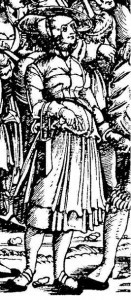
Source of Period Pic: Women and Knaves, 1530CE Max Geisberg, Army Train, 1532CE Edhard Schoen
Model: Katherine de Heilige
Photographer: Vincent De Vere
  

Female, Full Entry

1550 Female German Cranach Gown 3

Title: 1550 Female German Cranach Gown 3
Entry #: GGB2021.075
Alternate Names: Kampfrau, Trossfrau, Cranach, Saxony Court gown 
Year: 1550
Time range: 1470-1550
Era: Late medieval
Gender: Female
region: Central europe
Countries/cultures: Germany/Switzerland 
Maker: Katherine de Heilige
Difficulty: 5
Confidence: Image Example

Intro:

The very stylized and flamboyant dress style seen in the SCA related to the Saxony (German) and Swiss court gowns worn by the women who followed the Landsknecht mercenary forces.  (May imply someone with a dubious occupation.) 

Description:

Highly ornamented and fanciful takes on the German and Saxony court dresses worn by flamboyant camp followers living off the spoils of war. Landsknechts and their women were not constrained by (or ignored) some of the sumptuary laws governing what people can wear.

Many of the outer garments were made from wool.  Contrasting color collars and cuffs, bight colors, rich fabrics.  No two looking the same.  Bodice laced shut exposing layers underneath.  Some necklines are very wide creating garments nearly falling off the shoulders.  Long and short sleeves are seen.  Many garments ‘slashed’ to expose layers underneath sleeves

Roll pleated skirt which could be hiked up into the belt for ease of movement but also exposing their legs. Many illustrations also show stripes of fabric parallel to the hem line on the skirts.   Patterned stockings are seen in some illustrations.  “Cow mouth” shoes with a wide toe area.

Note on Names:

Cranach – last name or two painters associated with this style

Tross – the camp followers of the mercenaries

Trossfrau/kampfrau – (maybe) a modern name given to the ‘wives’ of the mercenaries

It’s cool but read up on the culture before deciding to make one.

Inspiration Images

Common Materials

  • Fabrics:
    • Wool main garments in bright colors, vivid patterns, rich fabrics added as trim. 
    • Silks, velvets,
    • A lot of fabric to make the dresses. 
  • Ornamentation:
    • Knitted stockings
    • linen undergarments

Effective Substitutions

  • Fabrics:
    • Some poly/cotton brocades to simulate the rich fabrics. 
    • Wool blends are easier to find. 
    • Linen blends and cottons for undergarments. 
    • Very hard to make these dresses look right without investing in the right materials.
  • Ornamentation:

Ensemble Components

  • Gown – bodice and attached skirt
  • Placket over breasts
  • underdress

  • stockings
  • hats, including large, feathered hats

Accessories

  • Retailers catering to reenactors sell the cow mouth shoes and striped stockings in vibrant colors
  • Belts
  • pouch/purse.

Source/Links

https://sophie-stitches.weebly.com/german-saxon-cranach-gown.html

Version: 2
date: 3/2/21
Source of Period Pic: Women and Knaves, 1530CE Max Geisberg, Army Train, 1532CE Edhard Schoen
Model: Emma Ness
Photographer: Vincent De Vere
  

Female, Full Entry

1550 Female German Cranach Gown 2

Title: 1550 Female German Cranach Gown 2
Entry #: GGB2021.075
Alternate Names: Kampfrau, Trossfrau, Cranach, Saxony Court gown 
Year: 1550
Time range: 1470-1550
Era: Late medieval
Gender: Female
region: Central europe
Countries/cultures: Germany/Switzerland 
Maker: Appolonia von Bremen
Difficulty: 5
Confidence: Image Example

Intro:

The very stylized and flamboyant dress style seen in the SCA related to the Saxony (German) and Swiss court gowns worn by the women who followed the Landsknecht mercenary forces.  (May imply someone with a dubious occupation.) 

Description:

Highly ornamented and fanciful takes on the German and Saxony court dresses worn by flamboyant camp followers living off the spoils of war. Landsknechts and their women were not constrained by (or ignored) some of the sumptuary laws governing what people can wear.

Many of the outer garments were made from wool.  Contrasting color collars and cuffs, bight colors, rich fabrics.  No two looking the same.  Bodice laced shut exposing layers underneath.  Some necklines are very wide creating garments nearly falling off the shoulders.  Long and short sleeves are seen.  Many garments ‘slashed’ to expose layers underneath sleeves

Roll pleated skirt which could be hiked up into the belt for ease of movement but also exposing their legs. Many illustrations also show stripes of fabric parallel to the hem line on the skirts.   Patterned stockings are seen in some illustrations.  “Cow mouth” shoes with a wide toe area.

Note on Names:

Cranach – last name or two painters associated with this style

Tross – the camp followers of the mercenaries

Trossfrau/kampfrau – (maybe) a modern name given to the ‘wives’ of the mercenaries

It’s cool but read up on the culture before deciding to make one.

Inspiration Images

Common Materials

  • Fabrics:
    • Wool main garments in bright colors, vivid patterns, rich fabrics added as trim. 
    • Silks, velvets,
    • A lot of fabric to make the dresses. 
  • Ornamentation:
    • Knitted stockings
    • linen undergarments

Effective Substitutions

  • Fabrics:
    • Some poly/cotton brocades to simulate the rich fabrics. 
    • Wool blends are easier to find. 
    • Linen blends and cottons for undergarments. 
    • Very hard to make these dresses look right without investing in the right materials.
  • Ornamentation:

Ensemble Components

  • Gown – bodice and attached skirt
  • Placket over breasts
  • underdress

  • stockings
  • hats, including large, feathered hats

Accessories

  • Retailers catering to reenactors sell the cow mouth shoes and striped stockings in vibrant colors
  • Belts
  • pouch/purse.

Source/Links

https://sophie-stitches.weebly.com/german-saxon-cranach-gown.html

Version: 2
date: 3/2/21
Source of Period Pic: Women and Knaves, 1530CE Max Geisberg, Army Train, 1532CE Edhard Schoen
Model: Bearcat
Photographer: Vincent De Vere