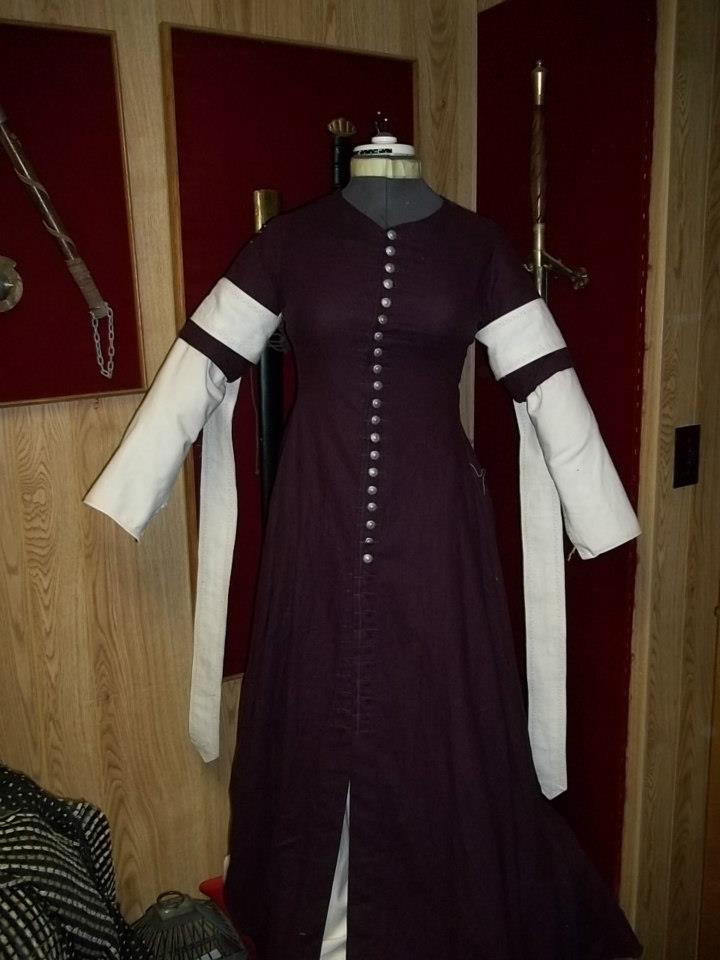
Female, Full Entry

1100 CE Female Norman Gown 4

Title: 1100 CE Female Norman Gown 4
Entry #: GGB2021.030
Alternate Names: Gown, Cotte, 
Year: 1100 CE
Time range: 1000-1200 CE
Era: High Medieval
Gender: Female
region: Western Europe
Countries/cultures: Norman, Anglo Saxon, England, france
Maker: Elspeth Stonehaven
Difficulty: 1
Confidence: Image Examples

Intro:

A common tunic dress style garment prevalent both in England as well as central Europe for the time leading up to and after the Norman invasion of 1066 CE

Description:

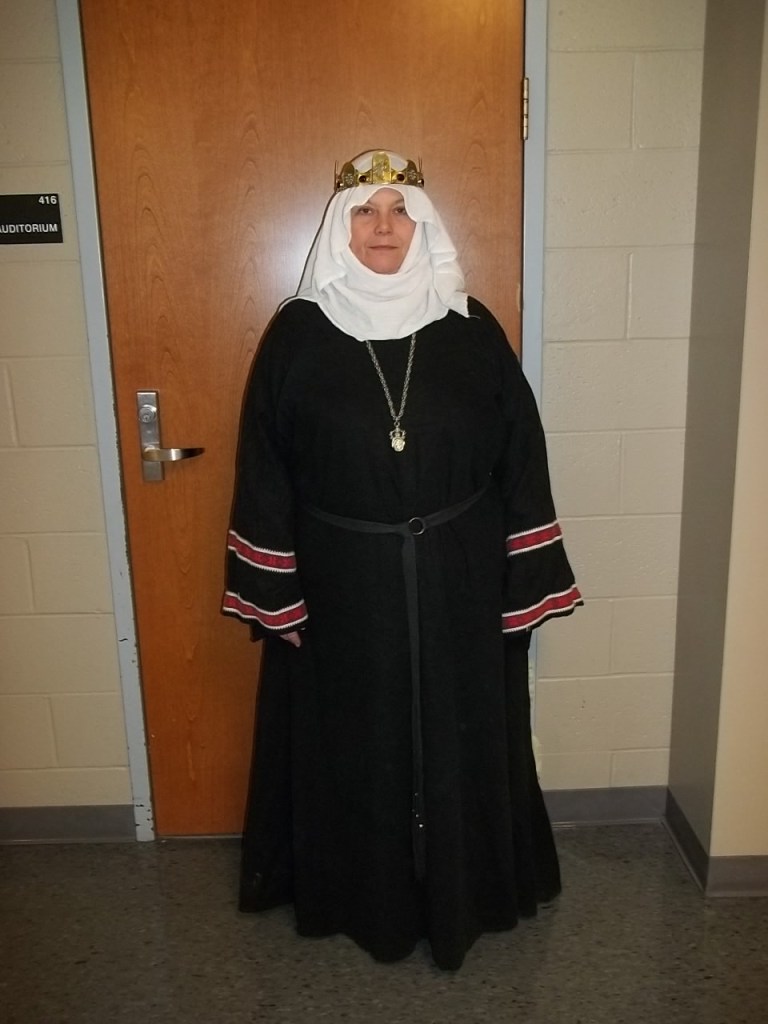
A common style worn by women in pre and post Norman invasion in England as well as France consisted of a tunic style underdress and over dress.

The underdress called a chemise, chainse or smock would commonly be made of linen. 

The over tunic or cotte would be longer for higher status women or shorter for working class. Sleeves are shown in some painting both tight to the wrist as well as bell or trumpet sleeves. Commonly made out of wool and perhaps decorated with embroidery or the applique of contrasting fabrics.

Commonly work with this would be simple turn or bag shoes, and a head covering such as a wimple and veil. 

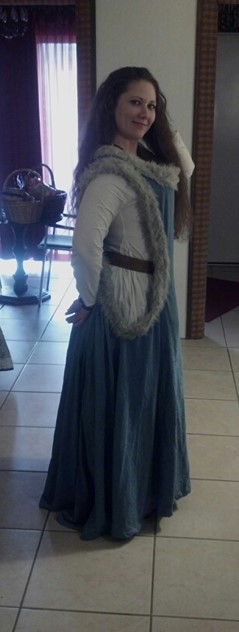
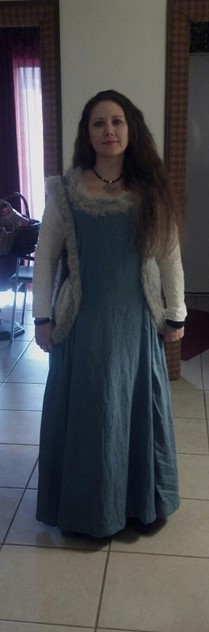
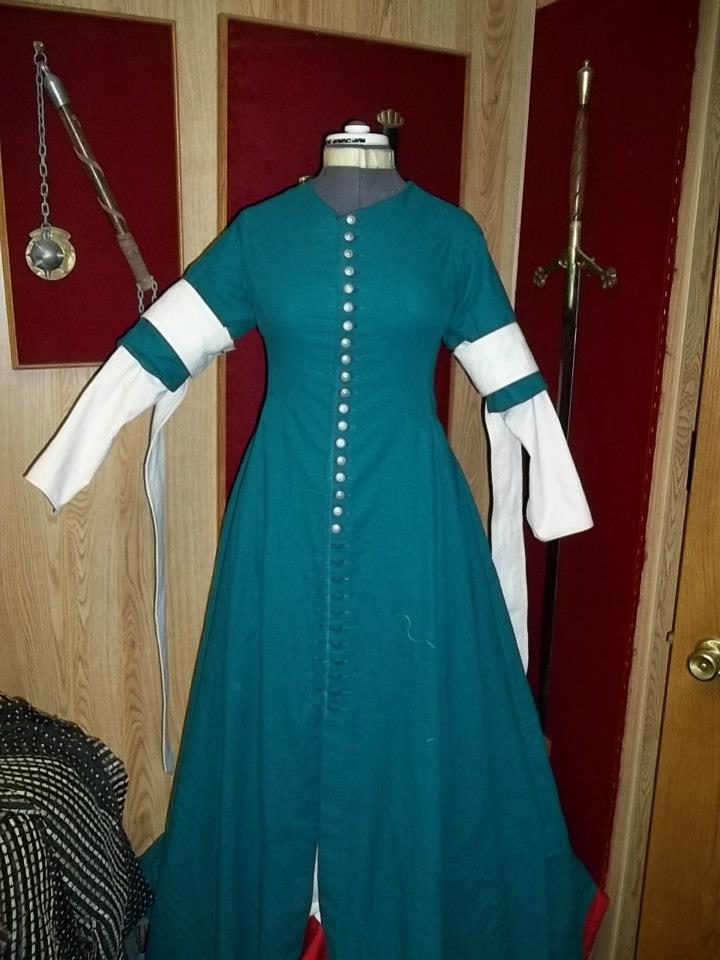
This dress is constructed as a tunic style dress,  A blue bell-sleeved over dress, or gown, worn over a green and white underdress, with a chemise under that.

Inspiration Images
Common Materials

  • Fabrics:
    • Underdress – Linen, including non-flax linens
    • Overdress – Wool
    • Wimple/veil – Linen or silk for high status women
  • Ornamentation:

Effective Substitutions

  • Fabrics:
    • Underdress – linen, linen blends, cottons
    • Overdresses – Wool blends, linens, linen blends, some heaver cottons
    • Wimple/Veil – linen, silk, poly (watch out for candles!)
  • Ornamentation:

Ensemble Components

  • Underdress – below the knee, long sleeved, white or off white light fabrics
  • Overdress

  • Headwear
  • Shoes

Accessories

  • Belt
  • Pouch
  • Bag

Source/Links

Version: 2
date: 3/5/2021
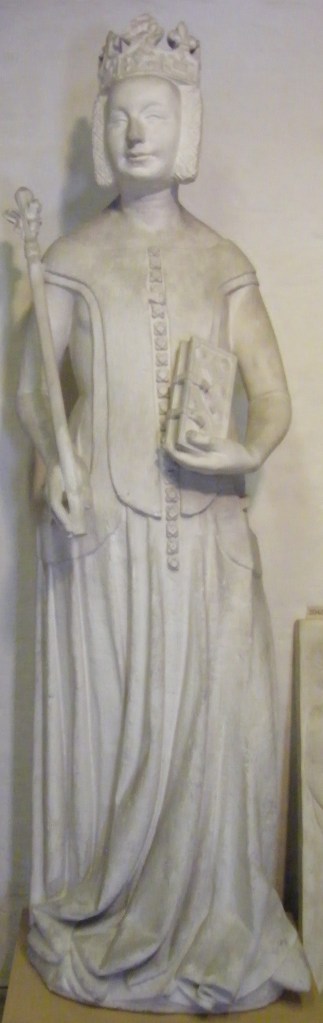
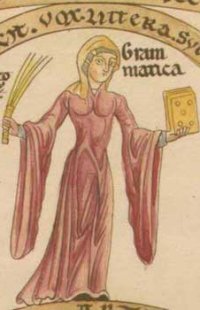
Source of Period Pic: Figure of Grammatica, from the Hortus Deliciarum – 12th century
Model: Elspeth Stonehaven
Photographer: Vincent De Vere
  

Female, Full Entry

1200 CE Female Sideless Surcote 2

Title: 1200 CE Female Sideless Surcote 2
Entry #: GGB2021.040
Alternate Names: pellote 
Year: 1200 CE
Time range: 1100-1300’s CE
Era: High medieval
Gender: Female
region: European, western europe
Countries/cultures: England, france, spain
Maker: Beocca the Fair of Hastings
Difficulty: 1
Confidence: extant examples

Intro:

Outer layer garment with deeply cut arm holes worn with often form fitted undergarments that came in many variations and with examples for all sexes.

Description:

Sideless Surcotes are easily spotted by the deeply cut arm holes.  They commonly expose a more fitted garment beneath such as kirtles or fitted cotes. 

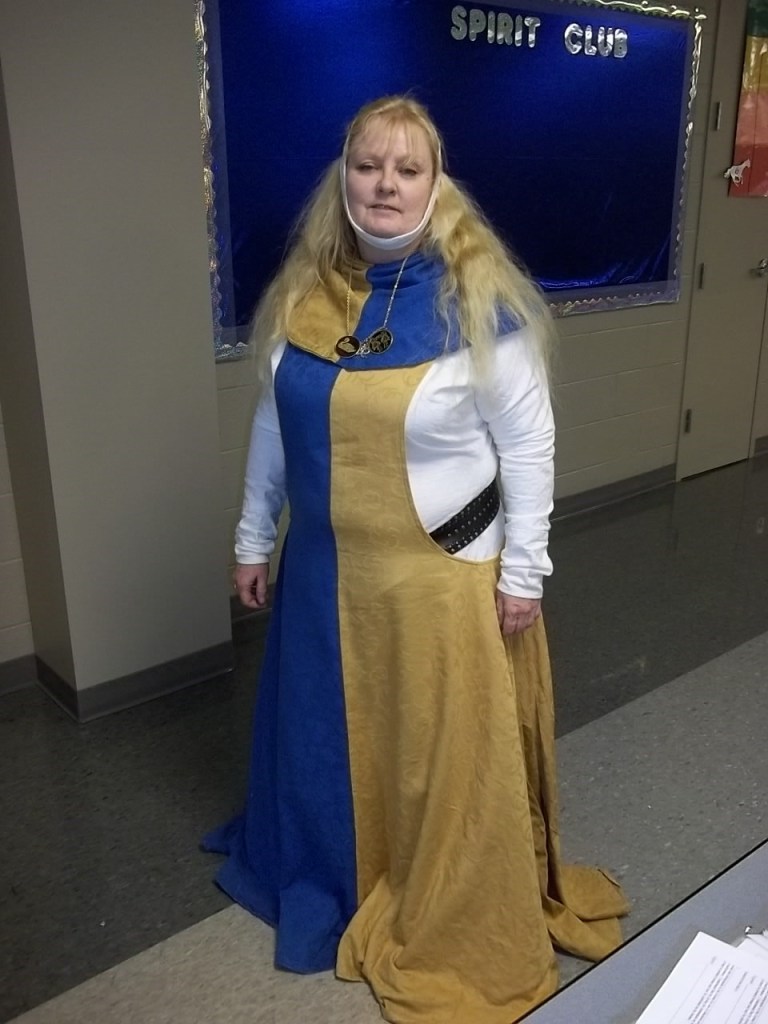
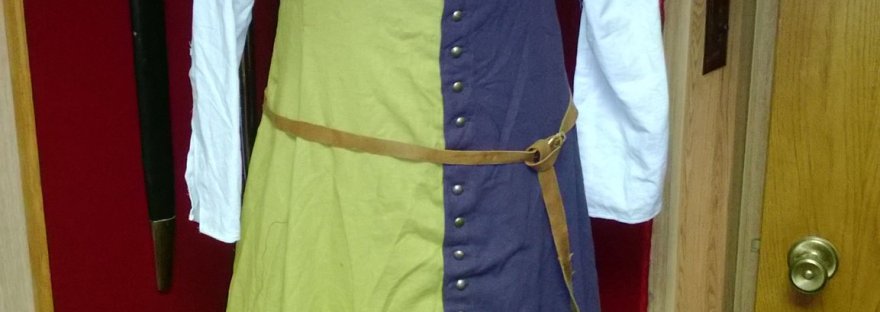
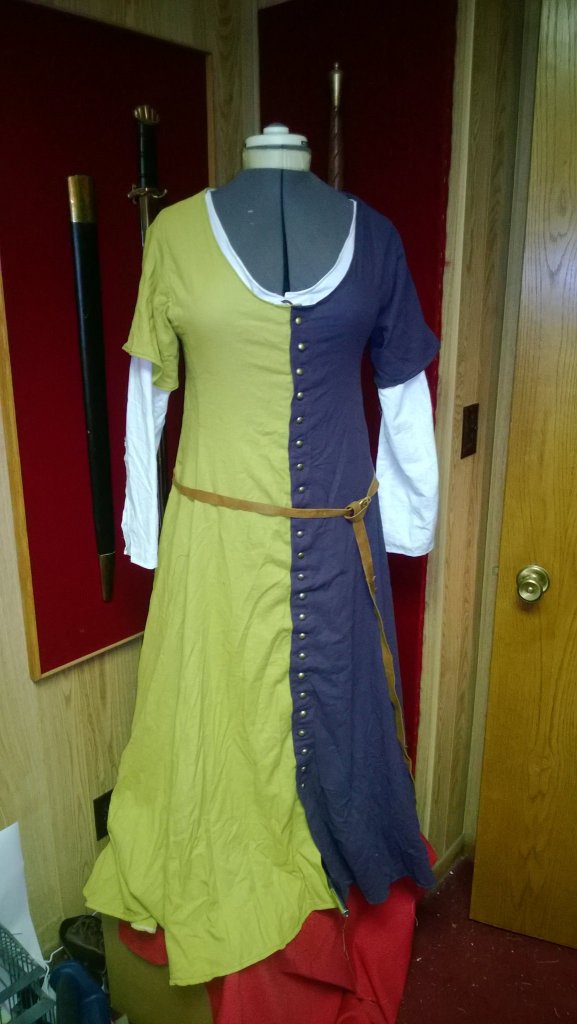
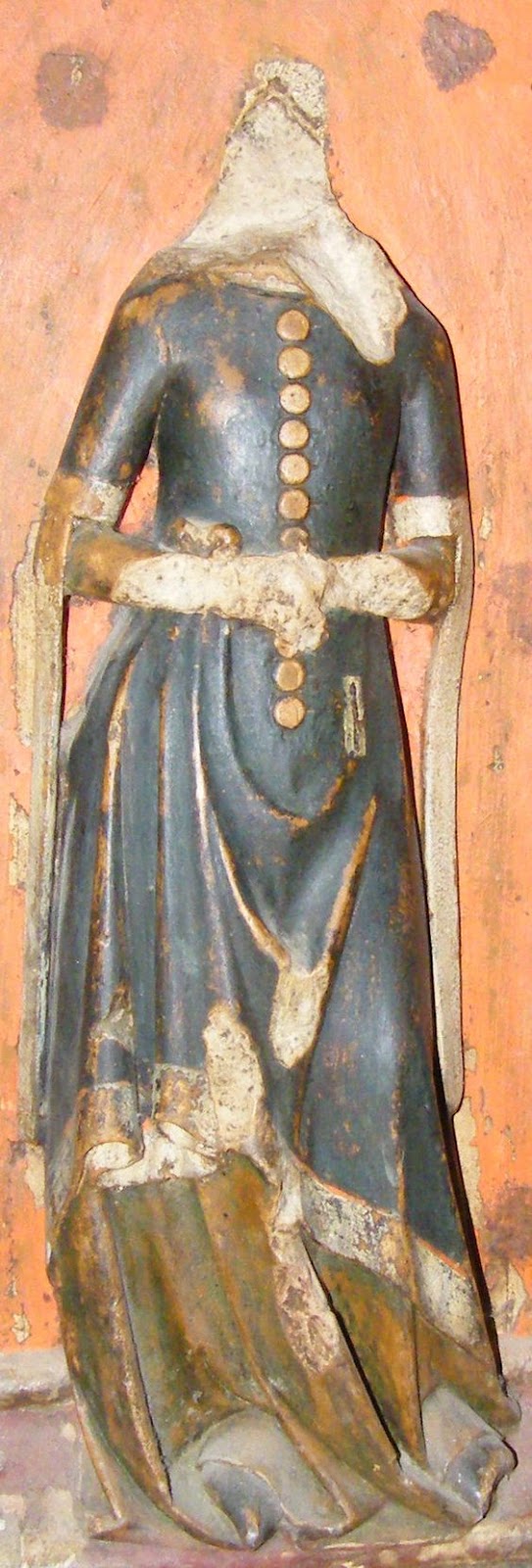
Parti-colored sideless surcote worn with a mantled hood.

These over dresses could vary from heraldic lesser modified cotes to heavily modified overdresses with narrow vertical front bands.  Easily sewn and open for many variations and modifications. Used in many parts of Europe during the first part of the high middle ages

Variations can include constructed materials, fur trim, heraldic displays, variations of depth of armhole, width of plastron (front and back bands,) width of hem, style of fitted under dress.

Inspiration Images

Medieval Combat Society

Common Materials

  • Fabrics:
    • Salk
    • celvets
    • brocades
    • fine wools
    • extant examples found constructed from silk damasks and jacquard
  • Ornamentation:

Effective Substitutions

  • Fabrics:
    • Silks
    • velvets
    • brocades
    • fine to medium coarse wools
    • wool blends
    • linen and linen blends
    • substituting poly velvets for silk velvets, or cotton velveteen – Not stretch velvets or crushed velvets.
  • Ornamentation:
    • High quality fake furs for trimming and lining. 

Ensemble Components

  • Sideless Surcote
  • Kirtle or cote
  • Underdress/undergarments

  • knee length hose
  • turn shoes or slippers
  • mantled hood

Accessories

  • belt
  • (worn under the surcote and over the fitted garment)
  • coif/hat/veil – works well with a barbette and fillet

Source/Links

http://www.wodefordhall.com/surcote.htm

http://www.bayrose.org/AandS/handouts/Sideless_Surcoat_web.pdf

Version: 2
date: 3/6/21
Source of Period Pic: http://www.insecula.com/oeuvre/O0000311.html
Model: Beocca the Fair of Hastings
Photographer: Vincent De Vere
  

Female, Full Entry

1200 CE Female Sideless Surcote 1

Title: 1200 CE Female Sideless Surcote 1
Entry #: GGB2021.039
Alternate Names: pellote 
Year: 1200 CE
Time range: 1100-1300’s CE
Era: High medieval
Gender: Female
region: European, western europe
Countries/cultures: England, france, spain
Maker: Jacqueline Storme
Difficulty: 1
Confidence: extant examples

Intro:

Outer layer garment with deeply cut arm holes worn with often form fitted undergarments that came in many variations and with examples for all sexes.

Description:

Sideless Surcotes are easily spotted by the deeply cut arm holes.  They commonly expose a more fitted garment beneath such as kirtles or fitted cotes. 

Parti-colored sideless surcote worn with a mantled hood.

These over dresses could vary from heraldic lesser modified cotes to heavily modified overdresses with narrow vertical front bands.  Easily sewn and open for many variations and modifications. Used in many parts of Europe during the first part of the high middle ages

Variations can include constructed materials, fur trim, heraldic displays, variations of depth of armhole, width of plastron (front and back bands,) width of hem, style of fitted under dress.

Inspiration Images

Common Materials

  • Fabrics:
    • Salk
    • celvets
    • brocades
    • fine wools
    • extant examples found constructed from silk damasks and jacquard
  • Ornamentation:

Effective Substitutions

  • Fabrics:
    • Silks
    • velvets
    • brocades
    • fine to medium coarse wools
    • wool blends
    • linen and linen blends
    • substituting poly velvets for silk velvets, or cotton velveteen – Not stretch velvets or crushed velvets.
  • Ornamentation:
    • High quality fake furs for trimming and lining. 

Ensemble Components

  • Sideless Surcote
  • Kirtle or cote
  • Underdress/undergarments

  • knee length hose
  • turn shoes or slippers
  • mantled hood

Accessories

  • belt
  • (worn under the surcote and over the fitted garment)
  • coif/hat/veil – works well with a barbette and fillet

Source/Links

http://www.wodefordhall.com/surcote.htm

http://www.bayrose.org/AandS/handouts/Sideless_Surcoat_web.pdf

Version: 2
date: 3/6/21
Source of Period Pic: http://www.insecula.com/oeuvre/O0000311.html
Model: Jacqueline Storme
Photographer: Jacqueline Storme
  

Component Entry, Male

Undershirt/Tunic (Saint Louis Shirt)

Title1200 CE Linen Saint Louis Shirt 1
Entry #GGC2021.001
Alternate NamesShirt of Saint Louis the 9th Undershirt, tunic,
Year1270 CE
Time range1200-1300 CE
EraHigh medieval
GenderMale
regionEurope
Countries/culturesFrance
MakerVincent De Vere,
Difficulty1
ConfidenceExtant example

Intro:

A tunic and an outer layer coat associated with Norse cultures.  The front panels cross over each Attempt to replicate the surviving shirt labeled as belonging to Saint Louis the 9th found in Notre-Dame de Paris,     

Description:

Wool coat lined with linen decorated with a tablet woven band.  The coat is shown over a

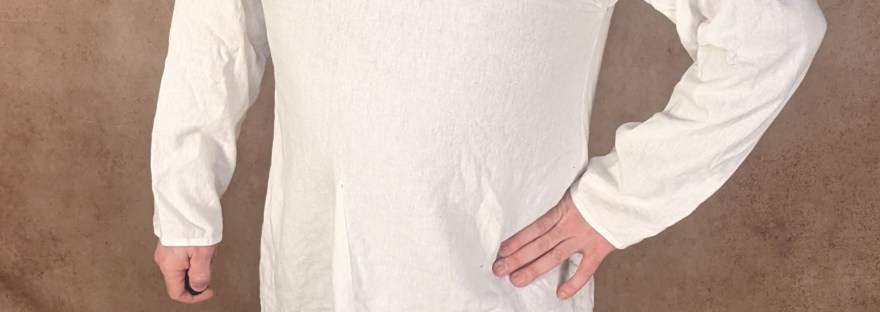
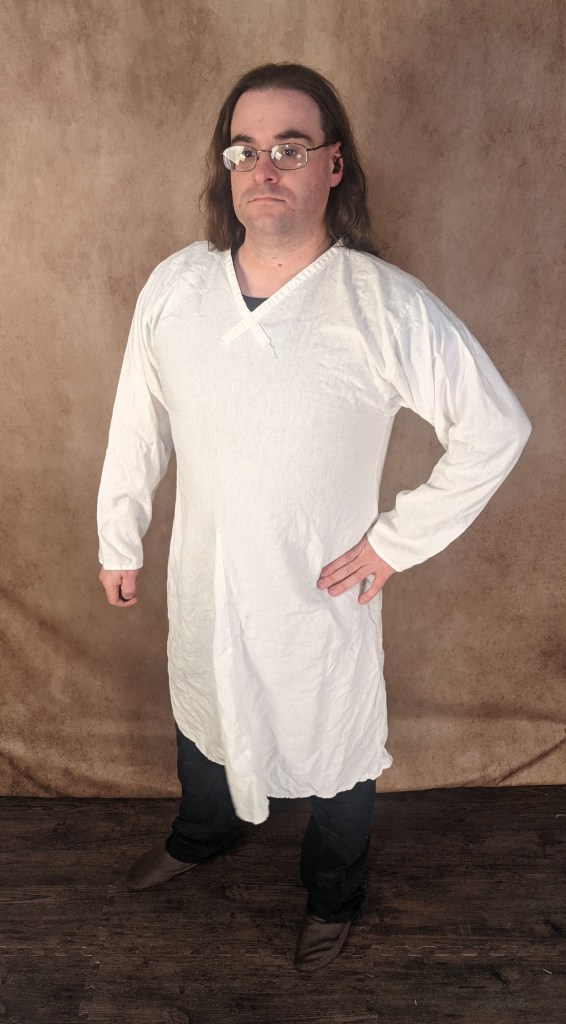
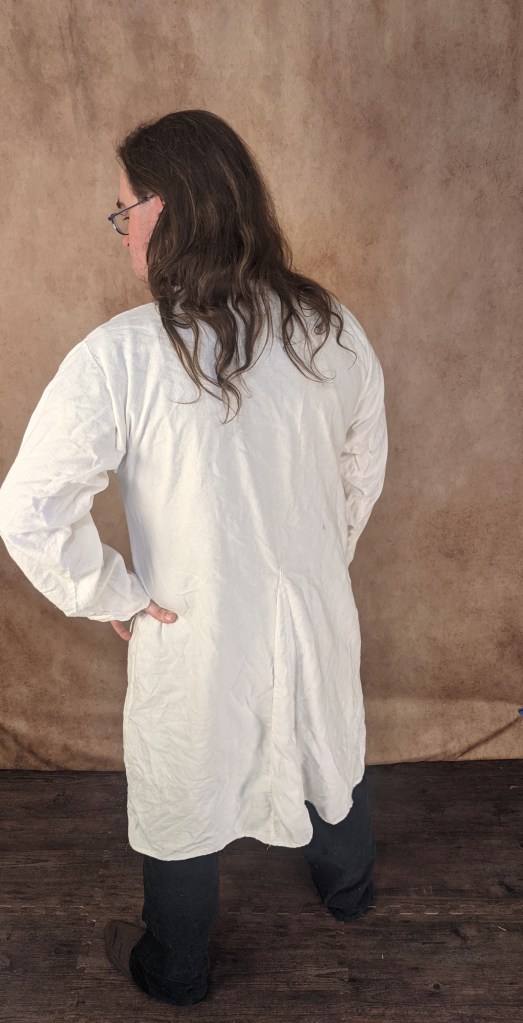
One of the many variations of the tunics. This is an attempt to replicate one of the few surviving examples of undershirts.  The extant example can be found in the Notre-Dame de Paris and is claimed to belong to Saint Louis the 9th (1226-1270CE) king of France.  Although the exact lineage is not provable, the garment is a representation of n undergarment from before 1300CE. 

It is often assumed that the extant example is representative of one of the many variations for methods of construction for undergarments for men.  Many illustrations of people from all levels of society survive showing people wearing undergarments but this example gives us insight to the construction technique.

The original is made from linen as is the reconstruction.  Undergarments and additional layers are a good way to add to an ensemble as well as serving the purpose that the original served.  The undergarments that get sweaty or dirty, are more easily washed than the outer garments that are often more expensive and harder to clean.  

Inspiration Images

Common Materials

  • Fabrics:
    • Undergarments were generally made from linen 

Effective Substitutions

  • Fabrics:
    • Linen
    • linen blends
    • Linen rayon
    • Linen cotton
    • cotton

Ensemble Components

  • Undershirt

Accessories

Source/Links

https://en.wikipedia.org/wiki/Shirt_of_Saint_Louis

source image Public Domain

File:Trésors de Saint Louis dans le trésor de Notre-Dame de Paris 2018-05-12.jpg

Version1
date12/24/2021
Source of Period Pichttps://en.wikipedia.org/wiki/Shirt_of_Saint_Louis
Model Vincent de Vere
PhotographerVincent de Vere
  
Maker:S,Date:2017-9-29,Ver:6,Lens:Kan03,Act:Lar02,E-ve
Full Entry, Male

1350 CE Male Cotehardie 6

Title: 1350 CE Male Cotehardie 6
Entry #: GGB2021.059
Alternate Names: Cote 
Year: 1350 CE
Time range: 1340-1400 CE
Era: High Medieval
Gender: Male
region: Western europe, central europe
Countries/cultures: France, England, germany
Maker: Vincent de Vere
Difficulty: 3
Confidence: Image Example

Intro:

Fitted male coat forming the outer layer or the middle layer of an ensemble

Description:

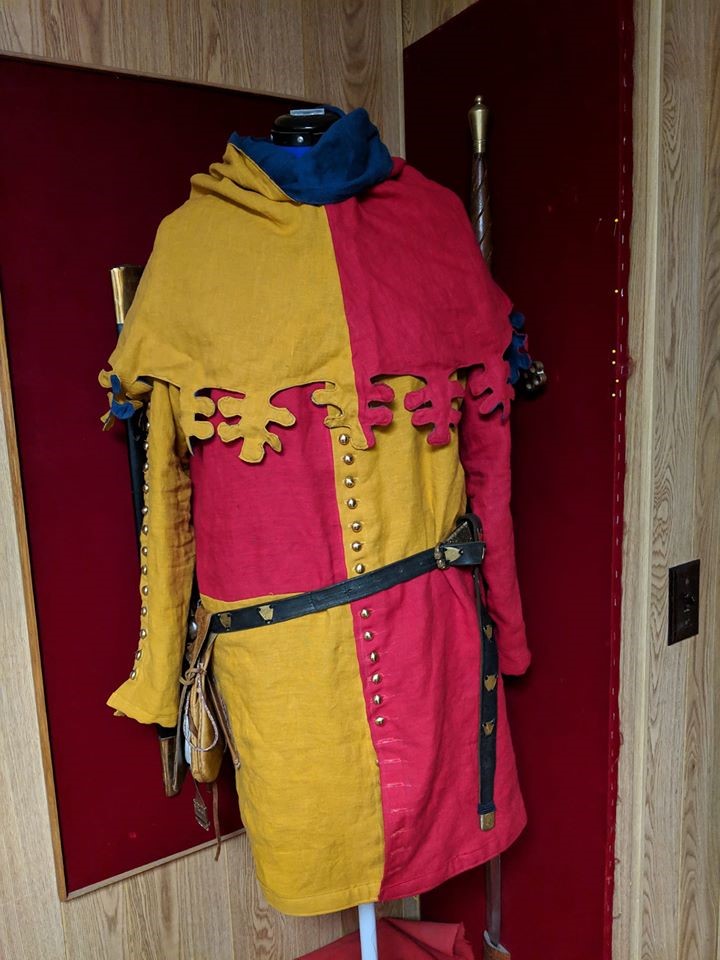
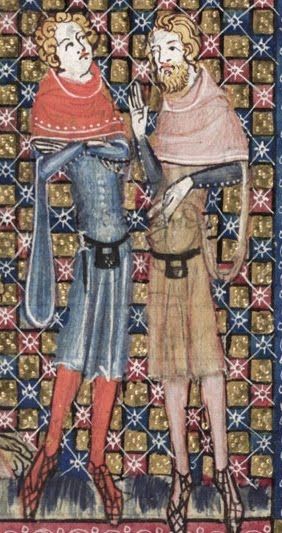
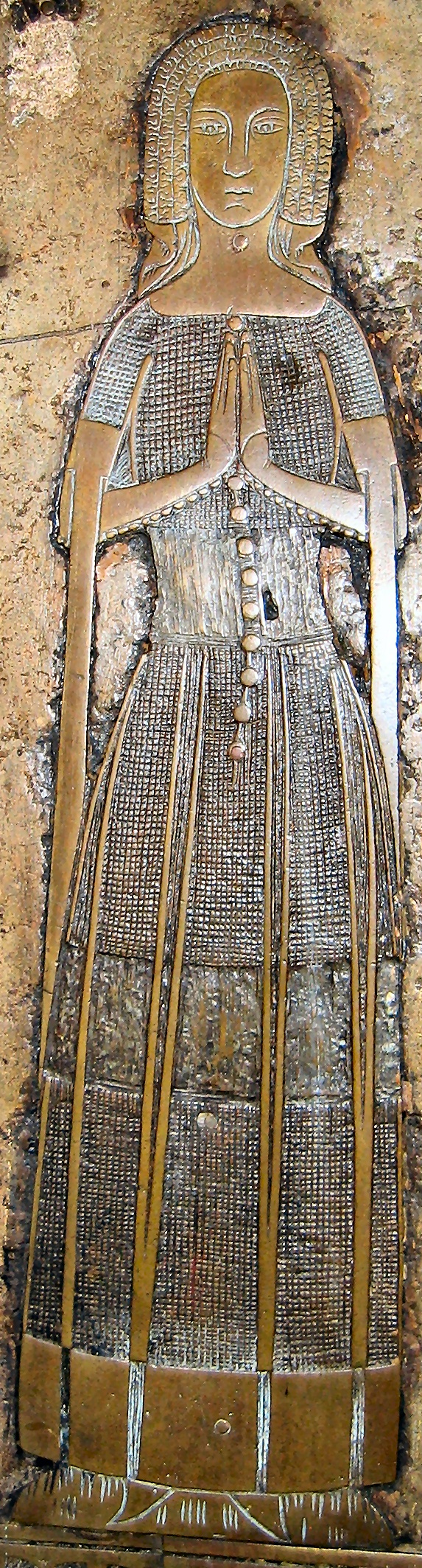
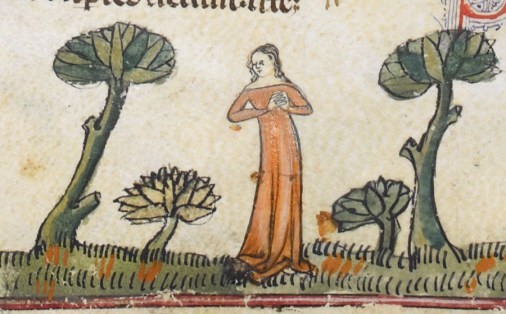
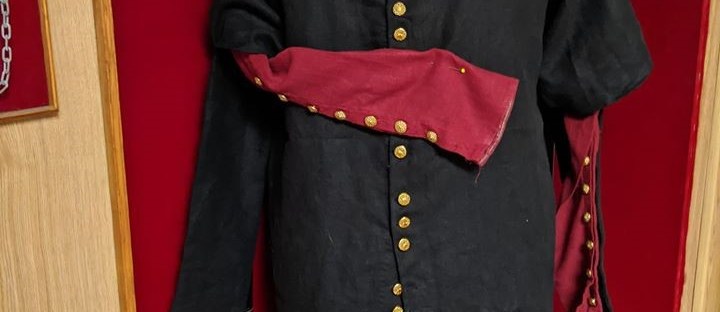
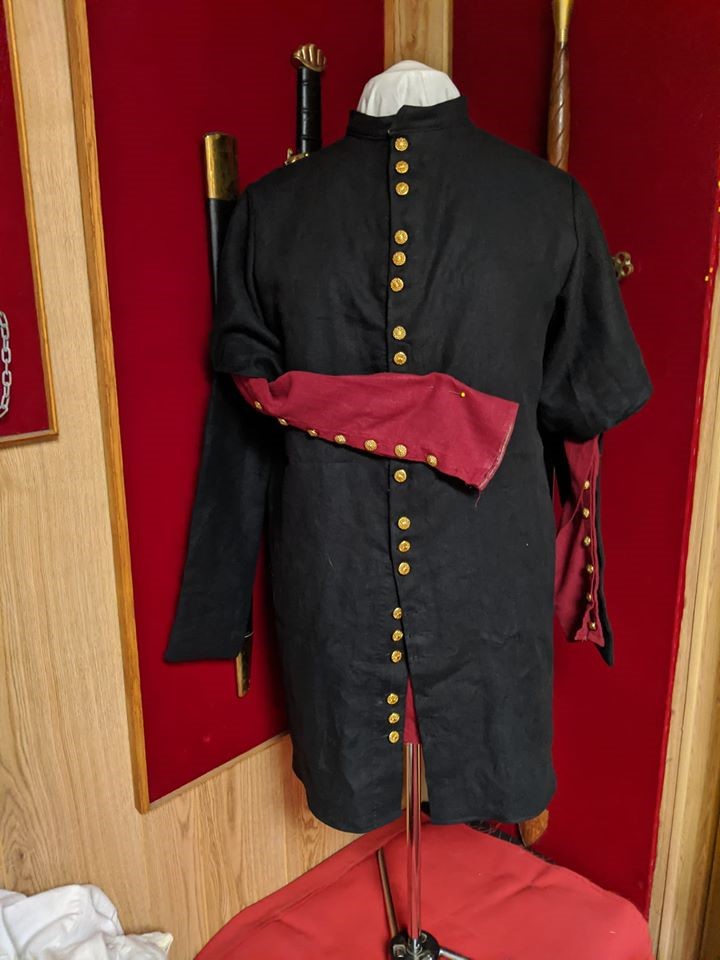
In some areas in Western Europe, male garments became more fitted in the 1300s. The unfitted cotes became the tailored and fitted cotehardies. Layers associated with cotehardies would be a linen undershirt, sometimes an early form of the doublet and braies and hosen.  Layers over the cotehardie could be gowns and houppelandes

In some cases the cotehardies are shorter to the point of reaching just to the crotch depth.  Others are seen longer to the point of knee length. Some have decorative dagged edges.  They often feature a large number of closely spaced buttons  

Male cotehardies could have long or shorter sleeves including short sleeves showing off the doublet below, sometimes featuring sleeve streamers. The sleeves of the cotehardie or the layer under the cotehardie are very tight.

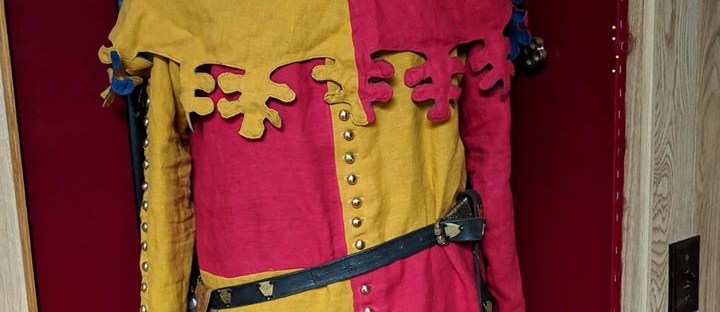
This cotehardie is a parti colored light weight linen cotehardie with a dagged liripipe hood.

Inspiration Images

Common Materials

  • Fabrics:
    • Wool
    • silks
    • brocades
    • velvets
  • Ornamentation:
    • cloth or metal buttons

Effective Substitutions

  • Fabrics:
    • cottons
    • linens
    • linen blends
    • wool blends
  • Ornamentation:

Ensemble Components

  • linen undershirt
  • likely an early form of the doublet
  • .  Turn shoes, slippers or low boots

  • braies and hosen
  • Layers over the cotehardie could be gowns and houppelandes

Accessories

  • low slung belts, around the hips
  • pouches
  • garters
  • hood

Source/Links

http://www.chesholme.com/wfiles/2-1-Cotehardie.pdf

http://starsandgarters.org/2020/10/04/patterning-fitted-garments/

Version: 2
date: 2/26/21
Source of Period Pic: http://en.wikipedia.org/wiki/File:Bologna_marriage_men.jpg
Model:
Photographer: Vincent de Vere
  

Female, Full Entry

1370 CE Female, Cotehardie 5

Title: 1370 CE Female, Cotehardie 5
Entry #: GGB2021.051
Alternate Names: Gothic Fitted Dress 
Year: 1370
Time range: 1350-1400 CE
Era: High Medieval
Gender: Female
region: Western europe, central europe
Countries/cultures: France, England,
Maker: Vincent de Vere
Difficulty: 2
Confidence: Image Examples

Intro:

Fitted female garment forming an outer or middle layer.  

Description:

Purple and gold parti colored cotehardie over white kirtle
  As female garments became more fitted in the 1300s the unfitted tunic like dresses became more tailored and fitted. 
 A loose shift or slip like garment could be worn as a base layer.  There is limited evidence for underwear.  The bust could be supported with just the fitted layers.
 A kirtle layer worn between the shift and the cotehardie could be laced up the front and the sleeves could be buttoned or laced.  The kirtle layer is often fitted as to be supportive in the bust and not as long as the cotehardie layer. 
 The cotehardie layer over the kirtle later adds to the support of the bust line.  The neck line could be plunging or more modest.  The dress is often shown with a large number of closely spaced buttons on a front closure. The sleeves could be short, short with sleeve streamers (a very stereotypical cotehardie look) or longer.  Some examples extend over the hand almost to the fingers.  The cotehardie layer would be floor length.  The belt is often shown slung low on the hips.

Inspiration Images

Common Materials

  • Fabrics:
    • fine cloths
    • silks
    • brocades
    • fine wools
  • Ornamentation:

Effective Substitutions

  • Fabrics:
    • Silks
    • linens
    • linen blends with rayon or cotton
    • brocades.
    • Some cotton poly brocades can work to mimic the look of rich brocades, but the higher the poly content the more unpleasant the garment is to wear.
  • Ornamentation:

Ensemble Components

  • Slip/shift
  • Kirtle Cotehardie
  • purse

  • coifs/undercaps/hoods
  • belt
  • turnshoes

Accessories

Source/Links

http://www.chesholme.com/wfiles/2-1-Cotehardie.pdf

http://starsandgarters.org/2020/10/04/patterning-fitted-garments/

Version: 2
date: 2/26/2021
Source of Period Pic:
Model:
Photographer: Vincent De Vere
  

Full Entry, Male

1350 CE Male Cotehardie 5

Title: 1350 CE Male Cotehardie 5
Entry #: GGB2021.058
Alternate Names: Cote 
Year: 1350 CE
Time range: 1340-1400 CE
Era: High Medieval
Gender: Male
region: Western europe, central europe
Countries/cultures: France, England, germany
Maker: Vincent de Vere
Difficulty: 3
Confidence: Image Example

Intro:

Fitted male coat forming the outer layer or the middle layer of an ensemble

Description:

In some areas in Western Europe, male garments became more fitted in the 1300s. The unfitted cotes became the tailored and fitted cotehardies. Layers associated with cotehardies would be a linen undershirt, sometimes an early form of the doublet and braies and hosen.  Layers over the cotehardie could be gowns and houppelandes

In some cases the cotehardies are shorter to the point of reaching just to the crotch depth.  Others are seen longer to the point of knee length. Some have decorative dagged edges.  They often feature a large number of closely spaced buttons  

Male cotehardies could have long or shorter sleeves including short sleeves showing off the doublet below, sometimes featuring sleeve streamers. The sleeves of the cotehardie or the layer under the cotehardie are very tight.

This cotehardie is a light weight linen cotehardie with the outer layer having sleeves with tippets or sleeve streamers 

Inspiration Images

Common Materials

  • Fabrics:
    • Wool
    • silks
    • brocades
    • velvets
  • Ornamentation:
    • cloth or metal buttons

Effective Substitutions

  • Fabrics:
    • cottons
    • linens
    • linen blends
    • wool blends
  • Ornamentation:

Ensemble Components

  • linen undershirt
  • likely an early form of the doublet
  • .  Turn shoes, slippers or low boots

  • braies and hosen
  • Layers over the cotehardie could be gowns and houppelandes

Accessories

  • low slung belts, around the hips
  • pouches
  • garters
  • hood

Source/Links

http://www.chesholme.com/wfiles/2-1-Cotehardie.pdf

http://starsandgarters.org/2020/10/04/patterning-fitted-garments/

Version: 2
date: 2/26/21
Source of Period Pic: http://en.wikipedia.org/wiki/File:Bologna_marriage_men.jpg
Model:
Photographer: Vincent de Vere
  

Female, Full Entry

1370 CE Female, Cotehardie 4

Title: 1370 CE Female, Cotehardie 4
Entry #: GGB2021.050
Alternate Names: Gothic Fitted Dress 
Year: 1370
Time range: 1350-1400 CE
Era: High Medieval
Gender: Female
region: Western europe, central europe
Countries/cultures: France, England,
Maker: Vincent de Vere
Difficulty: 2
Confidence: Image Examples

Intro:

Fitted female garment forming an outer or middle layer.  

Description:

Blue linen/rayon cotehardie over white kirtle with white sleeve streamers (aka tippets)
  As female garments became more fitted in the 1300s the unfitted tunic like dresses became more tailored and fitted. 
 A loose shift or slip like garment could be worn as a base layer.  There is limited evidence for underwear.  The bust could be supported with just the fitted layers.
 A kirtle layer worn between the shift and the cotehardie could be laced up the front and the sleeves could be buttoned or laced.  The kirtle layer is often fitted as to be supportive in the bust and not as long as the cotehardie layer. 
 The cotehardie layer over the kirtle later adds to the support of the bust line.  The neck line could be plunging or more modest.  The dress is often shown with a large number of closely spaced buttons on a front closure. The sleeves could be short, short with sleeve streamers (a very stereotypical cotehardie look) or longer.  Some examples extend over the hand almost to the fingers.  The cotehardie layer would be floor length.  The belt is often shown slung low on the hips.

Inspiration Images

Common Materials

  • Fabrics:
    • fine cloths
    • silks
    • brocades
    • fine wools
  • Ornamentation:

Effective Substitutions

  • Fabrics:
    • Silks
    • linens
    • linen blends with rayon or cotton
    • brocades.
    • Some cotton poly brocades can work to mimic the look of rich brocades, but the higher the poly content the more unpleasant the garment is to wear.
  • Ornamentation:

Ensemble Components

  • Slip/shift
  • Kirtle Cotehardie
  • purse

  • coifs/undercaps/hoods
  • belt
  • turnshoes

Accessories

Source/Links

http://www.chesholme.com/wfiles/2-1-Cotehardie.pdf

http://starsandgarters.org/2020/10/04/patterning-fitted-garments/

Version: 2
date: 2/26/2021
Source of Period Pic:
Model:
Photographer: Vincent De Vere
  

Full Entry, Male

1350 CE Male Cotehardie 4

Title: 1350 CE Male Cotehardie 4
Entry #: GGB2021.057
Alternate Names: Cote 
Year: 1350 CE
Time range: 1340-1400 CE
Era: High Medieval
Gender: Male
region: Western europe, central europe
Countries/cultures: France, England, germany
Maker: Vincent de Vere
Difficulty: 4
Confidence: Image Example

Intro:

Fitted male coat forming the outer layer or the middle layer of an ensemble

Description:

In some areas in Western Europe, male garments became more fitted in the 1300s. The unfitted cotes became the tailored and fitted cotehardies. Layers associated with cotehardies would be a linen undershirt, sometimes an early form of the doublet and braies and hosen.  Layers over the cotehardie could be gowns and houppelandes

In some cases the cotehardies are shorter to the point of reaching just to the crotch depth.  Others are seen longer to the point of knee length. Some have decorative dagged edges.  They often feature a large number of closely spaced buttons  

Male cotehardies could have long or shorter sleeves including short sleeves showing off the doublet below, sometimes featuring sleeve streamers. The sleeves of the cotehardie or the layer under the cotehardie are very tight.

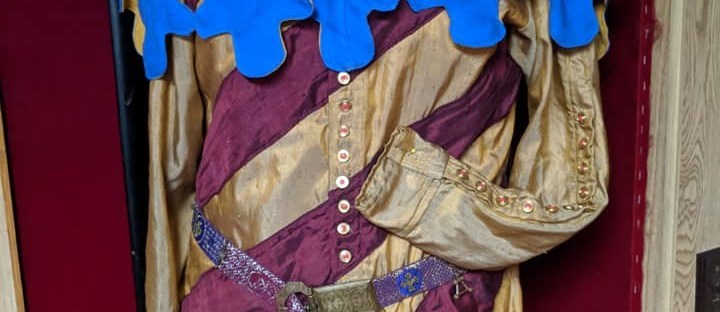
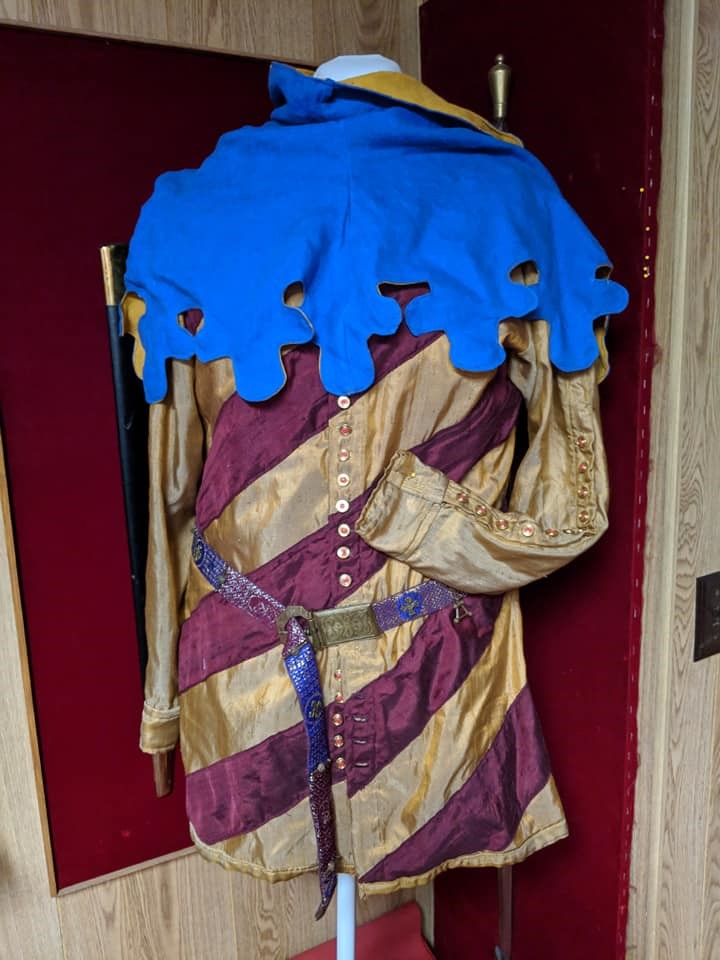
This cotehardie has the group livery colors and has silk stripes appliqued on the silk cotehardie lined in linen and a liripipe hood with dagges

Inspiration Images

Common Materials

  • Fabrics:
    • Wool
    • silks
    • brocades
    • velvets
  • Ornamentation:
    • cloth or metal buttons

Effective Substitutions

  • Fabrics:
    • cottons
    • linens
    • linen blends
    • wool blends
  • Ornamentation:

Ensemble Components

  • linen undershirt
  • likely an early form of the doublet
  • .  Turn shoes, slippers or low boots

  • braies and hosen
  • Layers over the cotehardie could be gowns and houppelandes

Accessories

  • low slung belts, around the hips
  • pouches
  • garters
  • hood

Source/Links

http://www.chesholme.com/wfiles/2-1-Cotehardie.pdf

http://starsandgarters.org/2020/10/04/patterning-fitted-garments/

Version: 2
date: 2/26/21
Source of Period Pic: http://en.wikipedia.org/wiki/File:Bologna_marriage_men.jpg
Model:
Photographer: Vincent de Vere
  

Female, Full Entry

1370 CE Female, Cotehardie 3

Title: 1370 CE Female, Cotehardie 3
Entry #: GGB2021.049
Alternate Names: Gothic Fitted Dress 
Year: 1370
Time range: 1350-1400 CE
Era: High Medieval
Gender: Female
region: Western europe, central europe
Countries/cultures: France, England,
Maker: Vincent de Vere
Difficulty: 2
Confidence: Image Examples

Intro:

Fitted female garment forming an outer or middle layer.  

Description:

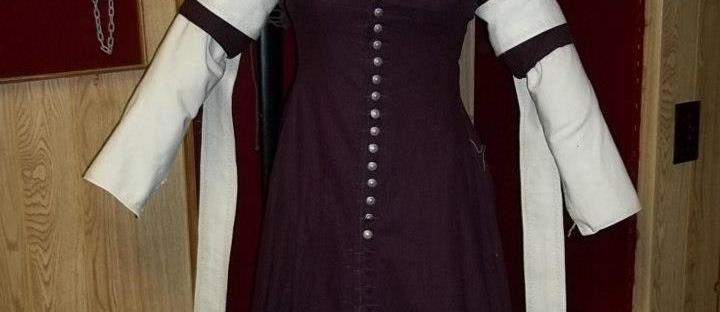
Purple linen/rayon cotehardie over white kirtle with white sleeve streamers (aka tippets)
  As female garments became more fitted in the 1300s the unfitted tunic like dresses became more tailored and fitted. 
 A loose shift or slip like garment could be worn as a base layer.  There is limited evidence for underwear.  The bust could be supported with just the fitted layers.
 A kirtle layer worn between the shift and the cotehardie could be laced up the front and the sleeves could be buttoned or laced.  The kirtle layer is often fitted as to be supportive in the bust and not as long as the cotehardie layer. 
 The cotehardie layer over the kirtle later adds to the support of the bust line.  The neck line could be plunging or more modest.  The dress is often shown with a large number of closely spaced buttons on a front closure. The sleeves could be short, short with sleeve streamers (a very stereotypical cotehardie look) or longer.  Some examples extend over the hand almost to the fingers.  The cotehardie layer would be floor length.  The belt is often shown slung low on the hips.

Inspiration Images

Common Materials

  • Fabrics:
    • fine cloths
    • silks
    • brocades
    • fine wools
  • Ornamentation:

Effective Substitutions

  • Fabrics:
    • Silks
    • linens
    • linen blends with rayon or cotton
    • brocades.
    • Some cotton poly brocades can work to mimic the look of rich brocades, but the higher the poly content the more unpleasant the garment is to wear.
  • Ornamentation:

Ensemble Components

  • Slip/shift
  • Kirtle Cotehardie
  • purse

  • coifs/undercaps/hoods
  • belt
  • turnshoes

Accessories

Source/Links

http://www.chesholme.com/wfiles/2-1-Cotehardie.pdf

http://starsandgarters.org/2020/10/04/patterning-fitted-garments/

Version: 2
date: 2/26/2021
Source of Period Pic:
Model:
Photographer: Vincent De Vere