Female, Full Entry

900 CE Norse Hangerok 2

Title900 CE Norse Hangerok 2
Entry #GGB2021.011
Alternate Names Apron Dress, Smokkr
Year900 CE
Time range900-1000 CE
EraEarly medieval
Genderfemale
regionNorthern Europe
Countries/culturesNorse, Viking,
MakerGyda Glora
Difficulty1
ConfidenceSpeculative reconstruction

Intro:

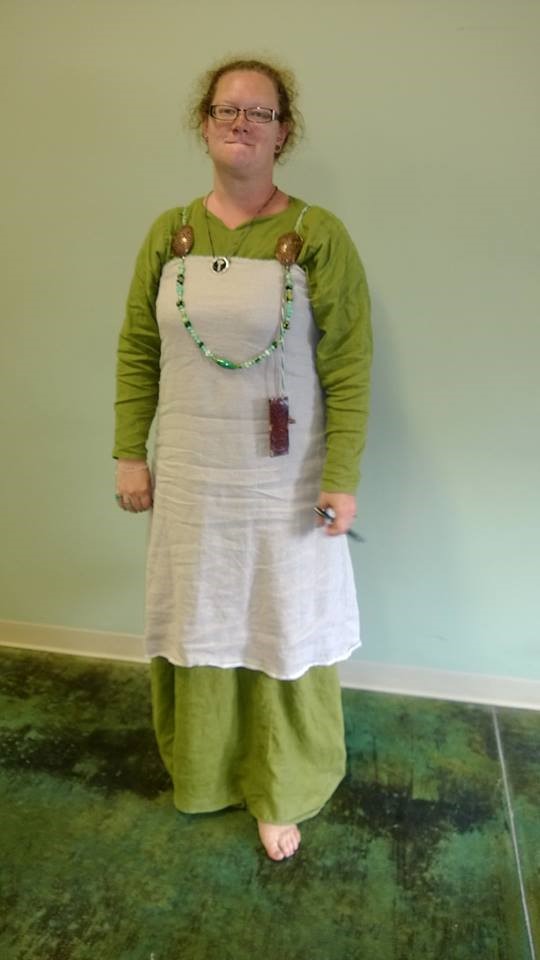
A tunic dress under layer with an apron like over dress with shoulder straps pinned in place with distinctive brooch pins.  Remains of decorative trim sometimes found on the top band of the dress.   Often accessorized with beads and metal accessories. There are several theorized construction techniques.  No current supportive evidence for belts. 

Description:

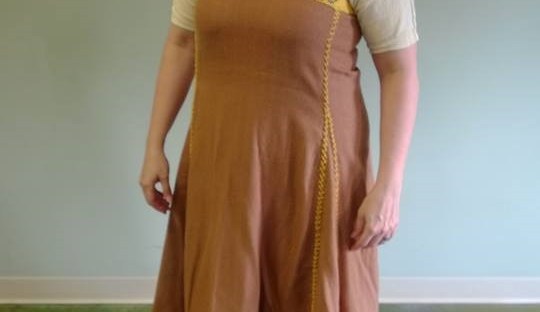
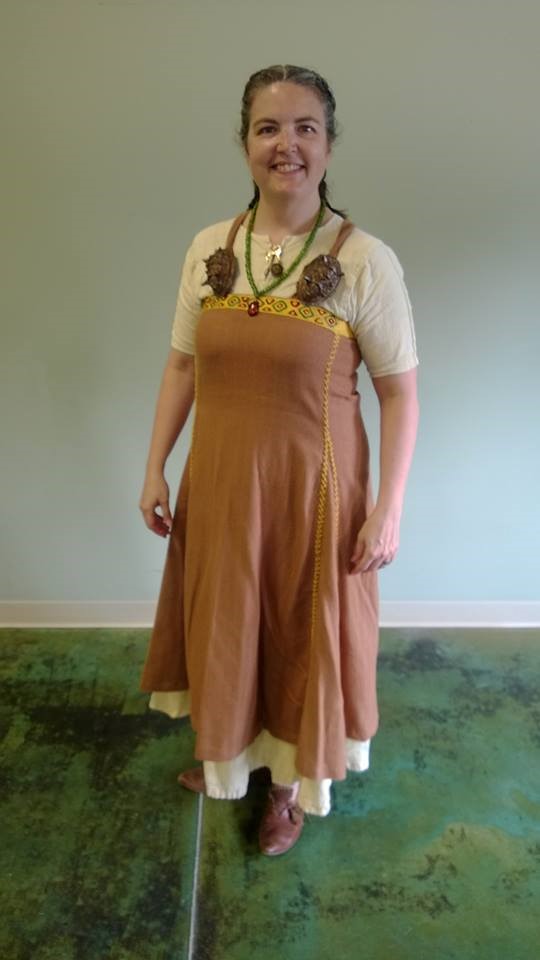
Red wool over dress torn over a tan linen under dress.  The sort sleeves of the underdress pictured were due to a modern adaptation of the style for use in very hot weather.  Current theory would suggest long sleeve underdress.

They are an overdress worn over a tunic-like under dress.  They generally take the shape of a tube or flared tube with broaches that connect shoulder straps to the front of the over dress.  The grave finds have shown general construction of wool and some linen with variation in color, finishing and decoration.  There are many fabulous resources online to research this easy to construct garment

Current research suggests that the general style of apron dress may have been used across Norse cultures with regional variations.  Local and regional differences may have led to many variations on the theme.

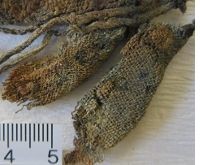
 There is scant evidence from the grave finds due to excessive decomposition of the fabrics.  These still seem to be dresses of a debatable authenticity.  This has led to some of the different interpretations that are found on line.

Based on the articles I have read at this time I will side with the argument that this is a general category of garment that saw variations based on region, culture and time period.  They can be grouped together as a style due to specific traits in common. 

Inspiration Images
Common Materials

  • Fabrics:
    • wool
    • linen
  • Ornamentation:
    • tablet woven decorations
    • embroidery
    • Silk or linen strips or threads

Effective Substitutions

  • Fabrics:
    • linen
    • linen blends
    • cotton
    • wool blends
  • Ornamentation:

Ensemble Components

  • Hangeroc (apron overdress)
  • underdress

  • Coat/Kaftan

Accessories

  • strands of beads
    • glass or amber
  • Small tools (scissors, needle case, ear spoons, etc)
  • Brooches

Source/Links

Raymonds Quiet Press – source for reproduction broaches

https://raymonds-quiet-press.myshopify.com/

http://urd.priv.no/viking/smokkr.html

http://urd.priv.no/viking/kostrup.html

Version2
date2/21/2021
Source of Period Pichttp://urd.priv.no/viking/kostrup.html
ModelGyda Glora 082413-07
PhotographerVincent De Vere
  
Female, Full Entry

900 CE Norse Hangerok 1

Title900 CE Norse Hangerok 1
Entry #GGB2021.010
Alternate Names Apron Dress, Smokkr
Year900 CE
Time range900-1000 CE
EraEarly medieval
Genderfemale
regionNorthern Europe
Countries/culturesNorse, Viking,
MakerVasilla Krasnaia
Difficulty2
ConfidenceSpeculative reconstruction

Intro:

A tunic dress under layer with an apron like over dress with shoulder straps pinned in place with distinctive brooch pins.  Remains of decorative trim sometimes found on the top band of the dress.   Often accessorized with beads and metal accessories. There are several theorized construction techniques.  No current supportive evidence for belts. 

Description:

Red wool over dress torn over a tan linen under dress.  The sort sleeves of the underdress pictured were due to a modern adaptation of the style for use in very hot weather.  Current theory would suggest long sleeve underdress.

They are an overdress worn over a tunic-like under dress.  They generally take the shape of a tube or flared tube with broaches that connect shoulder straps to the front of the over dress.  The grave finds have shown general construction of wool and some linen with variation in color, finishing and decoration.  There are many fabulous resources online to research this easy to construct garment

Current research suggests that the general style of apron dress may have been used across Norse cultures with regional variations.  Local and regional differences may have led to many variations on the theme.

 There is scant evidence from the grave finds due to excessive decomposition of the fabrics.  These still seem to be dresses of a debatable authenticity.  This has led to some of the different interpretations that are found on line.

Based on the articles I have read at this time I will side with the argument that this is a general category of garment that saw variations based on region, culture and time period.  They can be grouped together as a style due to specific traits in common. 

Inspiration Images

Common Materials

  • Fabrics:
    • wool
    • linen
  • Ornamentation:
    • tablet woven decorations
    • embroidery
    • Silk or linen strips or threads

Effective Substitutions

  • Fabrics:
    • linen
    • linen blends
    • cotton
    • wool blends
  • Ornamentation:

Ensemble Components

  • Hangeroc (apron overdress)
  • underdress

  • Coat/Kaftan

Accessories

  • strands of beads
    • glass or amber
  • Small tools (scissors, needle case, ear spoons, etc)
  • Brooches

Source/Links

Raymonds Quiet Press – source for reproduction broaches

https://raymonds-quiet-press.myshopify.com/

http://urd.priv.no/viking/smokkr.html

http://urd.priv.no/viking/kostrup.html

Version2
date2/21/2021
Source of Period Pichttp://urd.priv.no/viking/kostrup.html
ModelVasilla Krasnaia 082413-06
PhotographerVincent De Vere
  

Component Entry, Female, Male, Unisex

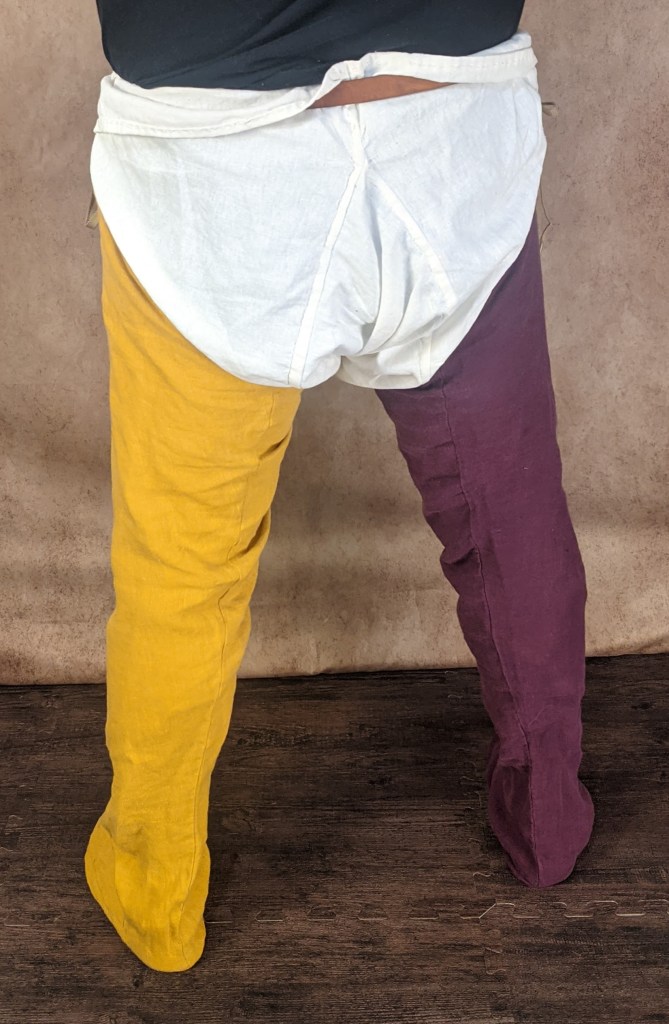
Hose Linen 1

TitleHose Linen 1
Entry #GGC2021.008
Alternate Namesseparate hose, split hose, hose, hosen, stocking, chausses 
Year1000-1500 CE
Time range1000-1500 CE
Eraearly medieval, high Medieval, Late Medieval
Genderunisex
regionEuropean
Countries/culturesWestern European, Central European
MakerVincent De Vere,
Difficulty2
ConfidenceImage Example

Intro:

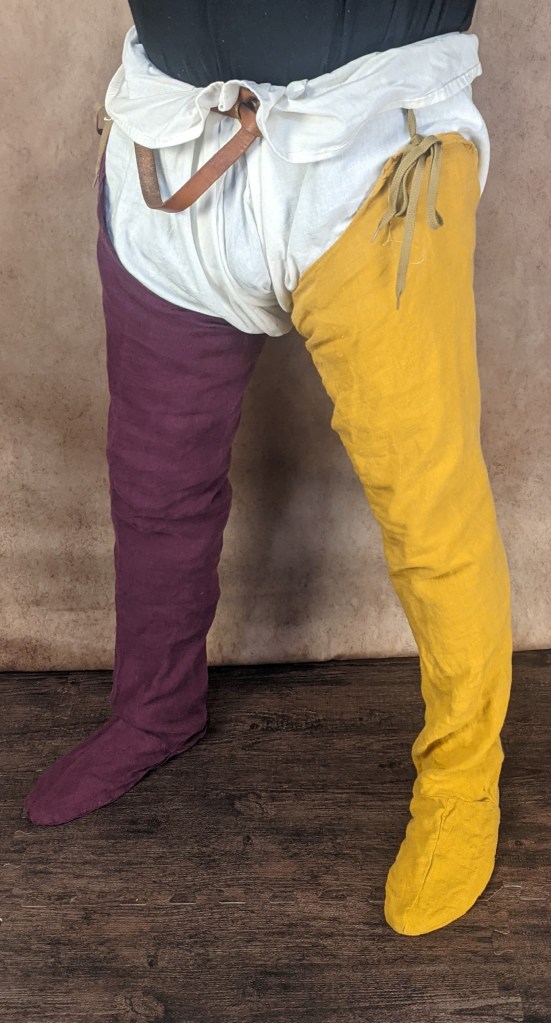
Examples of split hose sewn from linen and tied to the breech garter at the waist.                          

Description:

This is an example of split hose made out of linen and parti-colored.  They have enclosed feet and a hole at the side to tie to a belt or girdle.  They may commonly be seen with a garter tied just below the knee to assist in keeping the hose from slipping.  The garter may be a tied woven band or a band with a buckle.

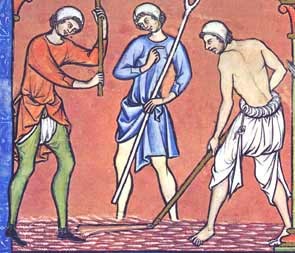
There is evidence supporting the use of some form of split hose stretching to early medieval times with their height in high medieval times.  By the 1300’s the split hose were beginning to be less fashionable and were replaced by joined hose, however split hose continued to be used until the end of period. 

The longer forms of the split hose may be associated with male fashion and the short hose with women and children, but people likely wore what they preferred as well as what matched their needs.

The best hose is made out of light wool fabric that has some spring to the weave and cut on the bias (diagonally.) although very wasteful of the fabric, the bias cut means that the resulting hose are slightly more elastic and fit better. 

The historical use of various kinds of hose by women is assumed by us and use by members does occur.

Inspiration Images

Common Materials

  • Fabrics:
    • Wool  

Effective Substitutions

  • Fabrics:
    • linen blends
    • Linen
    • wool
    • cotton
    • cotton blends
    • Wool blends

Ensemble Components

  • Hosen were worn by many different cultures and time periods and by many levels of society.  Closely associated with the hosen are the Braies worn under the hosen and the girdle or belt used to hold them up as well as the garters to keep them from slipping worn just below the knee. 

Accessories

  • Garters or woven material tied or a belt style garter.  Girdle belt or belt worn at the waist and tied to the hosen to keep them up

Source/Links

http://www.medievaltymes.com/courtyard/maciejowski_images_18.htm

Version1
date12/25/2021
Source of Period Picmaciejowski bible
Model Vincent de Vere
PhotographerVincent De Vere
  
Component Entry, Female, Male, Unisex

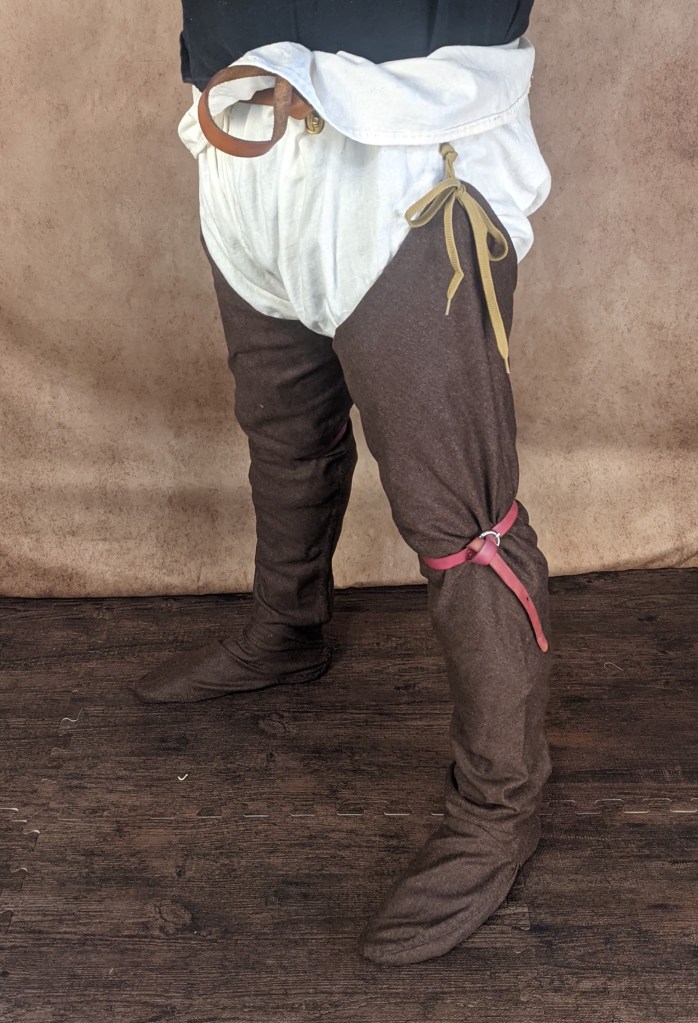
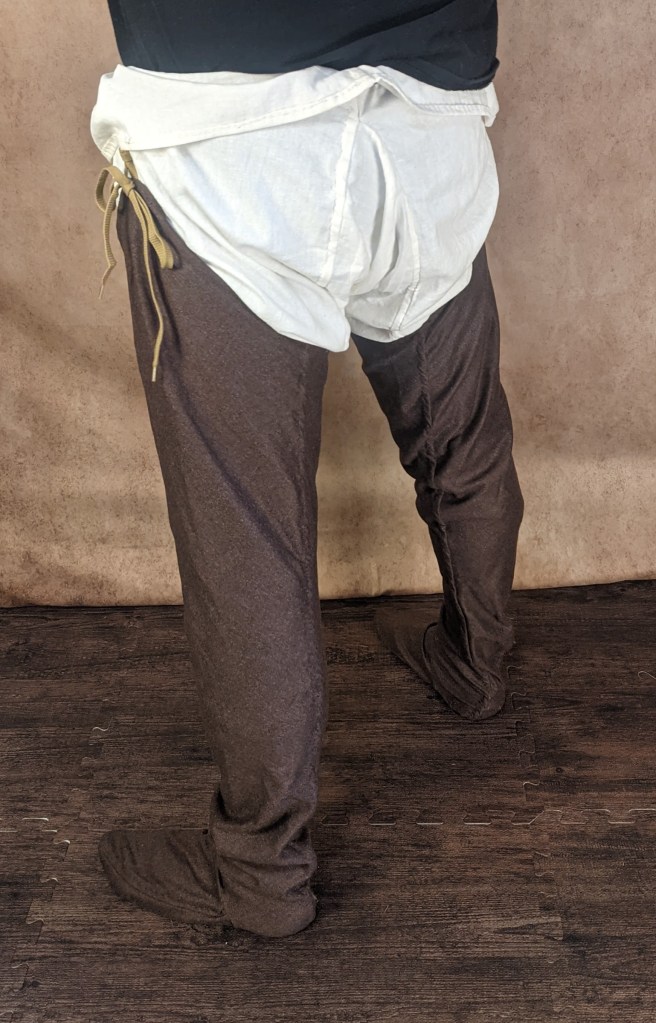
Hose wool 1

TitleHose wool 1
Entry #GGC2021.009
Alternate Namesseparate hose, split hose, hose, hosen, stocking, chausses 
Year1000-1500 CE
Time range1000-1500 CE
Eraearly medieval, high Medieval, Late Medieval
Genderunisex
regionEuropean
Countries/culturesWestern European, Central European
MakerVincent De Vere,
Difficulty2
ConfidenceImage Example

Intro:

Examples of split hose sewn from linen and tied to the breech garter at the waist.                          

Description:

This is an example of split hose made out of wool.  They have enclosed feet and a hole at the side to tie to a belt or girdle.  They may commonly be seen with a garter tied just below the knee to assist in keeping the hose from slipping.  The garter may be a tied woven band or a band with a buckle.

There is evidence supporting the use of some form of split hose stretching to early medieval times with their height in high medieval times.  By the 1300’s the split hose were beginning to be less fashionable and were replaced by joined hose, however split hose continued to be used until the end of period. 

The longer forms of the split hose may be associated with male fashion and the short hose with women and children, but people likely wore what they preferred as well as what matched their needs.

The best hose is made out of light wool fabric that has some spring to the weave and cut on the bias (diagonally.) although very wasteful of the fabric, the bias cut means that the resulting hose are slightly more elastic and fit better. 

Inspiration Images

Common Materials

  • Fabrics:
    • Wool  

Effective Substitutions

  • Fabrics:
    • linen blends
    • Linen
    • wool
    • cotton
    • cotton blends
    • Wool blends

Ensemble Components

  • Hosen were worn by many different cultures and time periods and by many levels of society.  Closely associated with the hosen are the Braies worn under the hosen and the girdle or belt used to hold them up as well as the garters to keep them from slipping worn just below the knee. 

Accessories

  • Garters or woven material tied or a belt style garter.  Girdle belt or belt worn at the waist and tied to the hosen to keep them up

Source/Links

http://www.medievaltymes.com/courtyard/maciejowski_images_18.htm

Version1
date12/30/2021
Source of Period Picmaciejowski bible
Model Vincent de Vere
PhotographerVincent De Vere
  
Component Entry, Female, Male, Unisex

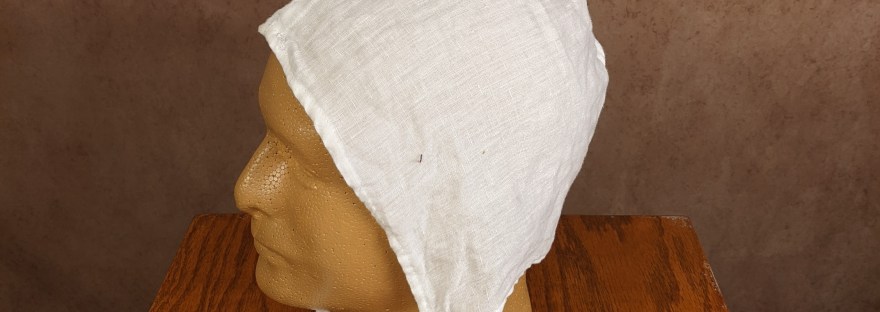
Coif, 2 piece

TitleCoif, 2 piece
Entry #GGC2021.003
Alternate NamesCoif  
Year1000-1600 CE
Time range1000-1600 CE
EraHigh Medieval, Late Medieval
Genderunisex
regionEuropean
Countries/culturesGermany, Western European, Central European
MakerVincent De Vere,
Difficulty1
ConfidenceExtant Example

Intro:

Head covering made from small scraps of linen fabric.                  

Description:

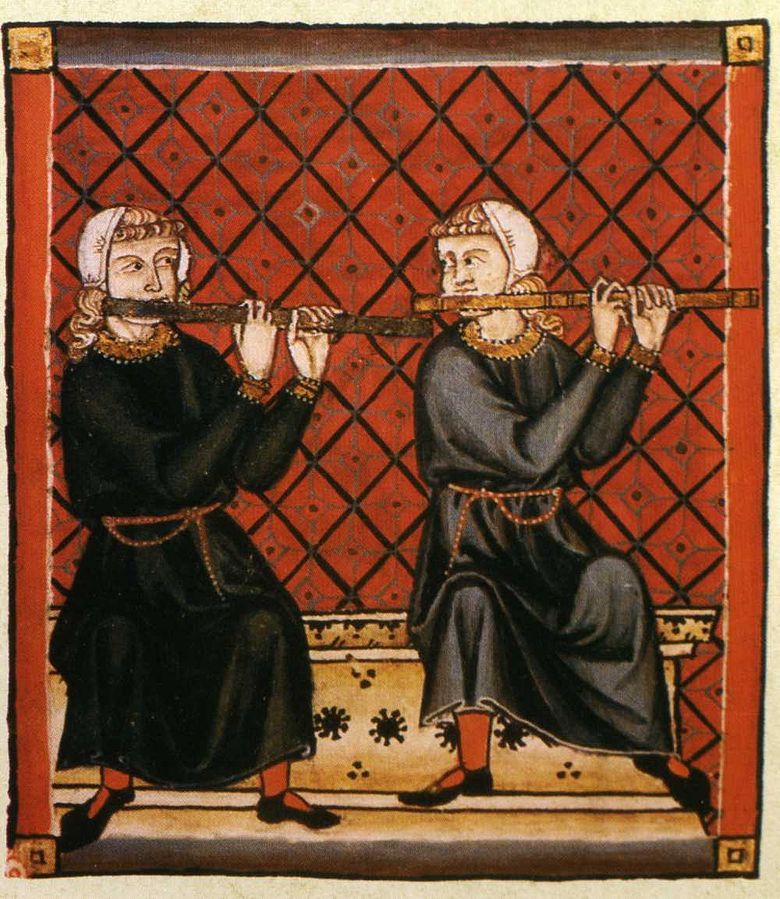
It’s underwear for your head.  Many images of the middle ages feature people wearing coifs to cover and protect their hair, oils from their head from their hats and for something to connect hats to.  They also are an easy accessory to add to your

These are very simple to construct either by machine or by hand and take very little fabric.  They are easily made from cotton fabric or linen and there are surviving examples and images that show a number of variations through time or cultures.

Inspiration Images

Common Materials

  • Fabrics:
    • linen  

Effective Substitutions

  • Fabrics:
    • linen blends
    • Linen
    • wool
    • cotton
    • cotton blends

Ensemble Components

Accessories

Source/Links

Illustration from Cantigas de Santa Maria manuscript. The Cantigas de Santa Maria (Songs to the Virgin Mary) are manuscripts written in Galician-Portuguese, with music notation, during the reign of Alfonso X El Sabio (1221-1284).

Version1
date12/30/2021
Source of Period PicBritish Library
Model Vincent de Vere
PhotographerVincent De Vere
  
Component Entry, Female, Male, Unisex

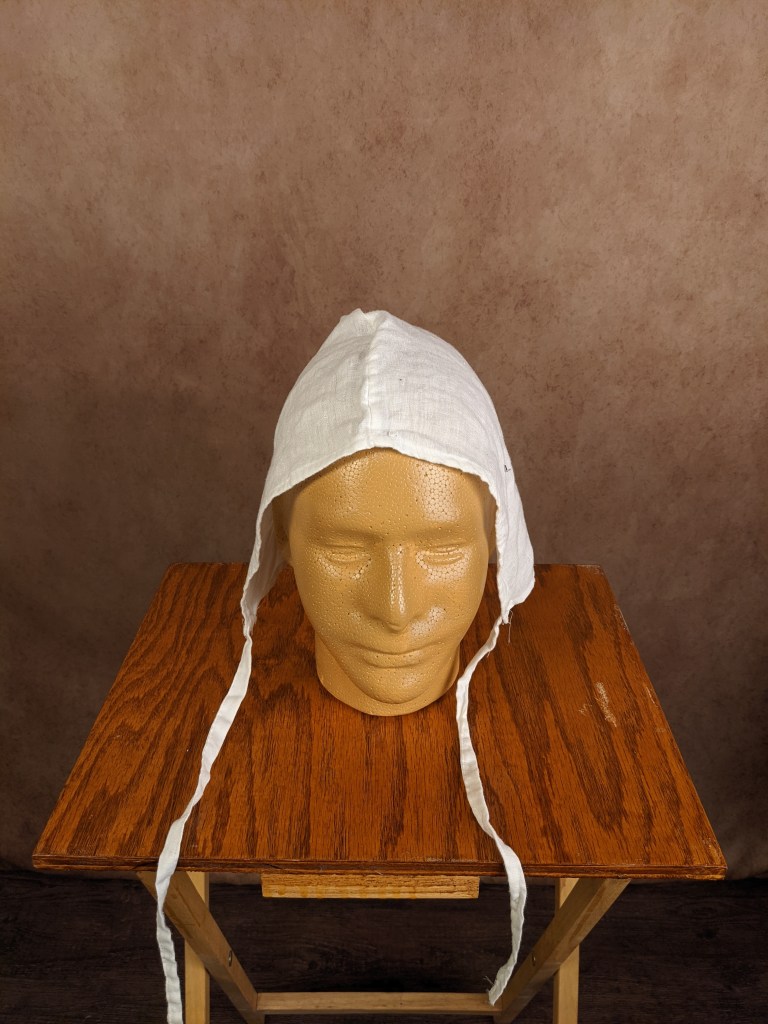
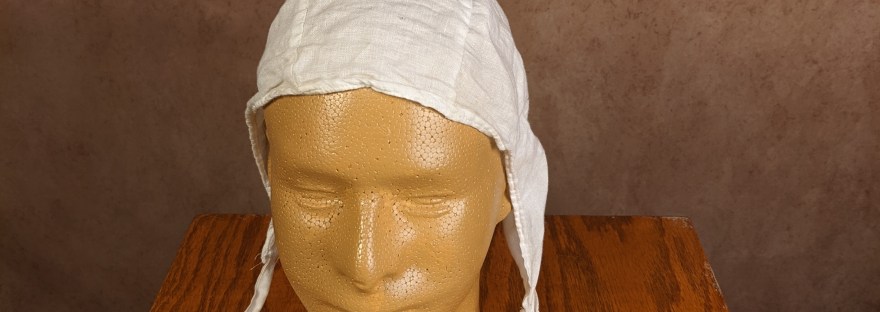
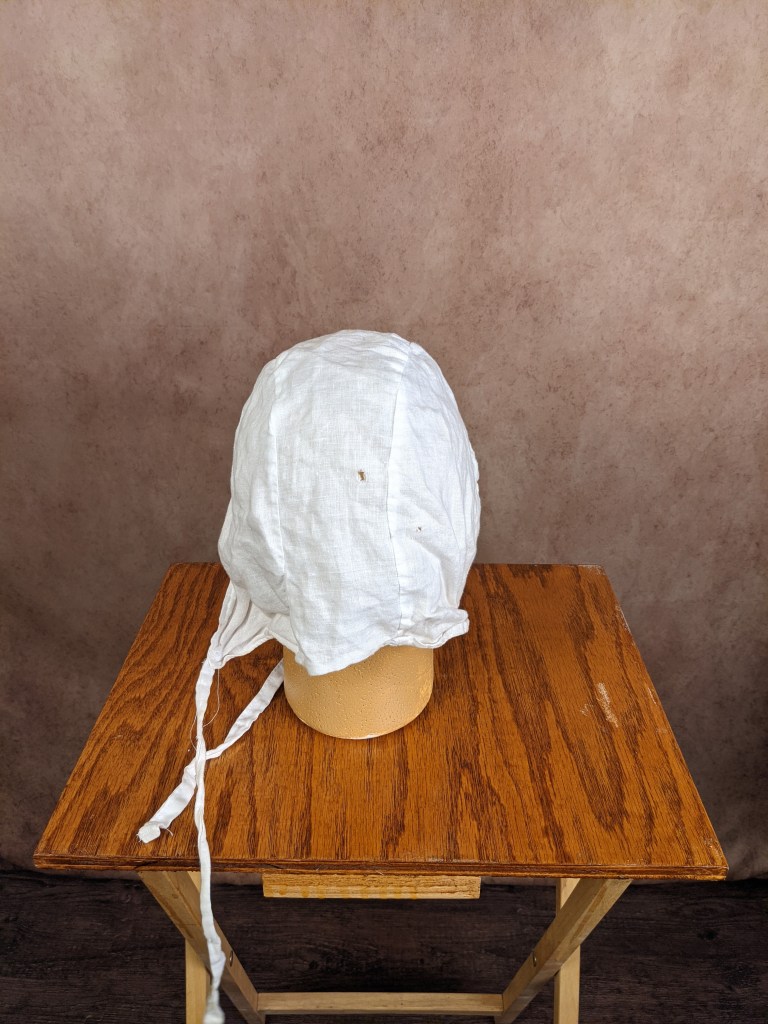
Coif, 3 piece

TitleCoif, 3 piece
Entry #GGC2021.004
Alternate NamesCoif  
Year1000-1600 CE
Time range1000-1600 CE
EraHigh Medieval, Late Medieval
Genderunisex
regionEuropean
Countries/culturesGermany, Western European, Central European
MakerVincent De Vere,
Difficulty1
ConfidenceExtant Example

Intro:

Head covering made from small scraps of linen fabric.                  

Description:

It’s underwear for your head.  Many images of the middle ages feature people wearing coifs to cover and protect their hair, oils from their head from their hats and for something to connect hats to.  They also are an easy accessory to add to your

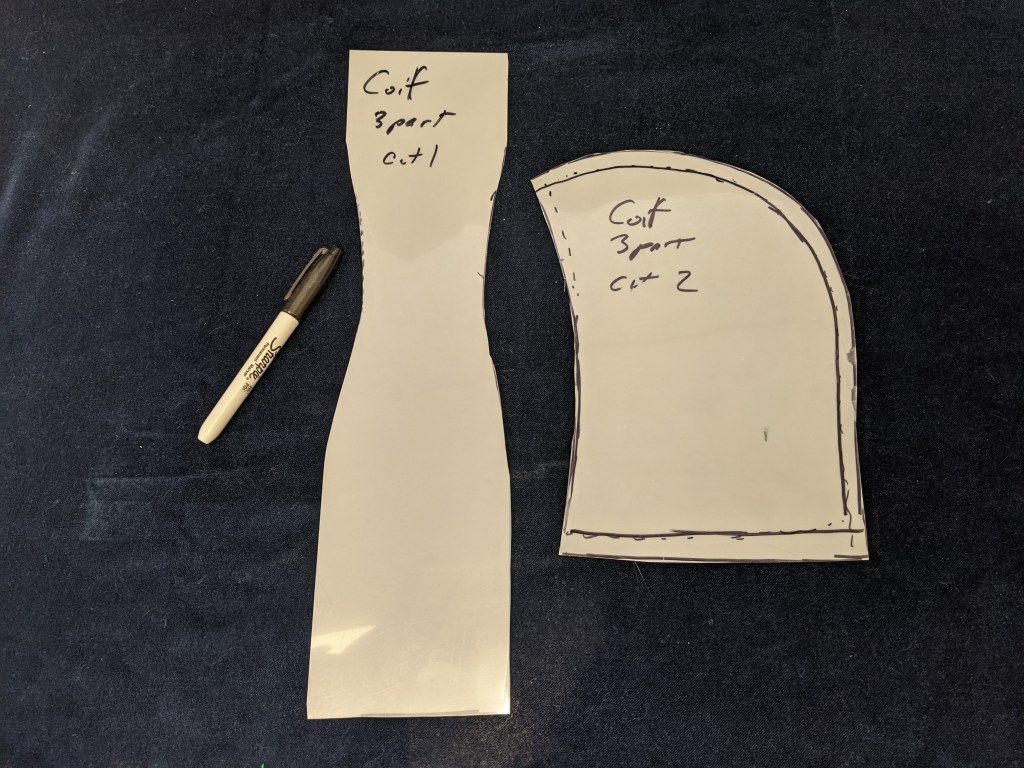
These are very simple to construct either by machine or by hand and take very little fabric.  They are easily made from cotton fabric or linen and there are surviving examples and images that show a number of variations through time or cultures.

Inspiration Images

Common Materials

  • Fabrics:
    • linen  

Effective Substitutions

  • Fabrics:
    • linen blends
    • Linen
    • wool
    • cotton
    • cotton blends

Ensemble Components

Accessories

Source/Links

Illustration from Cantigas de Santa Maria manuscript. The Cantigas de Santa Maria (Songs to the Virgin Mary) are manuscripts written in Galician-Portuguese, with music notation, during the reign of Alfonso X El Sabio (1221-1284).

Version1
date12/30/2021
Source of Period PicBritish Library
Model Vincent de Vere
PhotographerVincent De Vere
  
Component Entry, Female, Male, Unisex

Narrow Belt with Reproduction Buckle

TitleNarrow Belt with Reproduction Buckle
Entry #GGC2021.032
Alternate NamesBelt
Year1066 CE
Time range1000-1200CE
EraHigh Medieval
GenderUnisex
regionEurope
Countries/culturesEurope
MakerVincent De Vere,
Difficulty1
ConfidenceExtant Example

Intro:

 Various belts.      

Description:

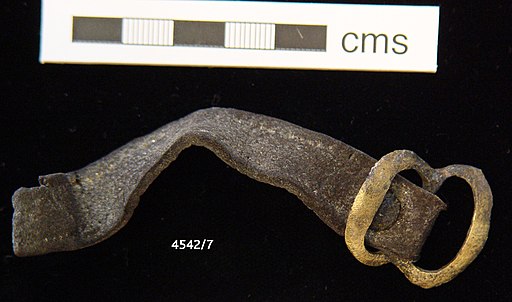
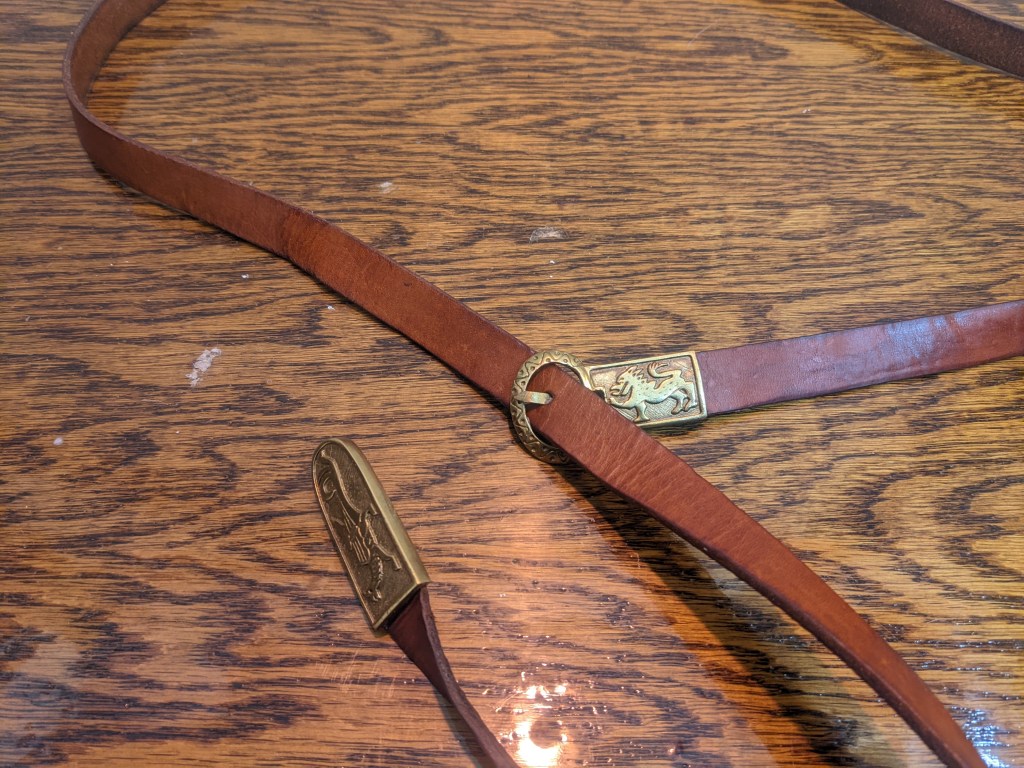
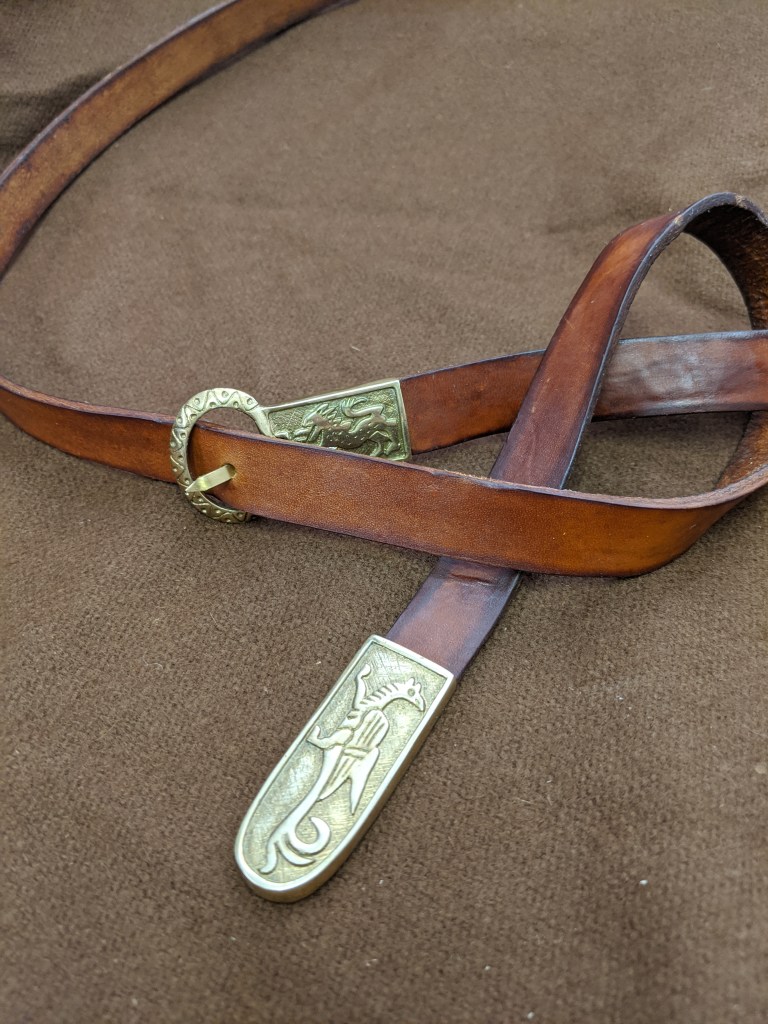
This is a reproduction of an extant example buckle and strap end attached to a strip of leather to form a belt.

This reproduction buckle is based on an extant example and was dated to a time range in the high medieval period. It is available through several reputable vendors. It would be an example of a very inexpensive reproduction piece.

Inspiration Images

Common Materials

  • Fabrics:
    • Leather
  • Ornamentation:

Effective Substitutions

  • Fabrics:
    • Leather
  • Ornamentation:

Ensemble Components

Accessories

Source/Links

The Portable Antiquities Scheme/ The Trustees of the British Museum, CC BY-SA 4.0 <https://creativecommons.org/licenses/by-sa/4.0&gt;, via Wikimedia Commons

https://armourandcastings.com/en_US/products/prjazhka-e14-2

Norman belt set, Britain, 11-12 c. For 20 mm wide belt.

Version1
date1/2/2022
Source of Period PicBritish Museum
Model 
PhotographerVincent De Vere
  
Component Entry, Unisex

Shoe, bag shoe

TitleShoe, bag shoe
Entry #GGC2022.017
Alternate Names
Year1000 CE
Time range3000 BCE – 1200 CE
Eraall
Genderunisex
regionEurope
Countries/cultures
MakerVincent De Vere,
Difficulty1
ConfidenceExtant Examples

Intro:

Simple slip on shoes.

Description:

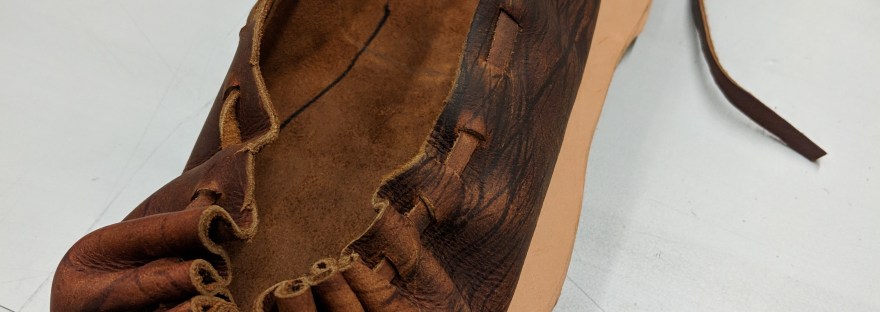
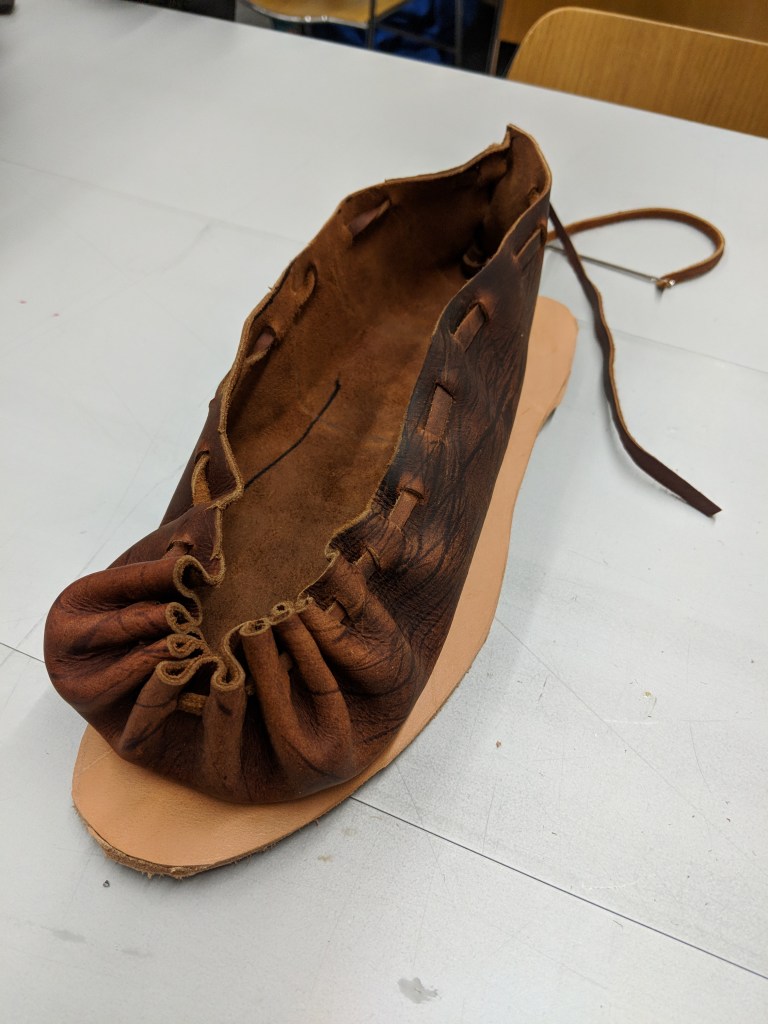
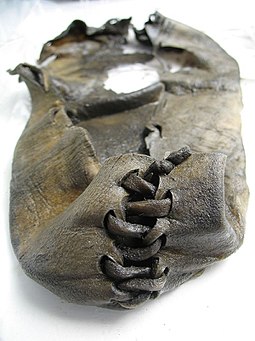
Low slip on shoes that are constructed from a single piece of leather and a leather thong.  Evidence of shoes much like this have been found to our knowledge, from sites ranging from 3000 BCE to 1200 CE or later.  Basic shoes of this style have also been found in the archeological record across Europe. 

This recreation shoe later had a stiffing sole and tread glued to the bottom to prevent the wearer from slipping at events.  Although this modification is not historically correct, modifications done for personal safety and comfort are common in the SCA.

Inspiration Images

Common Materials

  • Fabrics:
    • Leather
  • Ornamentation:

Effective Substitutions

  • Fabrics:
    • chrome tanned leather, but oak tan/veg tan leather will work far better

Ensemble Components

Accessories

Source/Links

The Jotunheimen shoe. Vegard Vike/Kulturhistorisk museum, CC BY-SA 4.0 <https://creativecommons.org/licenses/by-sa/4.0&gt;, via Wikimedia Commons

Stepping Through Time: Archaeological Footwear from Prehistoric Times until 1800, By Olaf Goubitz.  ISBN  9089320040 ISBN-13 ‏ : ‎ 978-9089320049

Version1
date1/9/2022
Source of Period PicThe Jotunheimen shoe. Vegard Vike/Kulturhistorisk museum, CC BY-SA 4.0 <https://creativecommons.org/licenses/by-sa/4.0&gt;, via Wikimedia Commons
Model 
PhotographerVincent De Vere
  

Full Entry, Male

1200 CE Male Wool Cote

Title: 1200 CE Male Wool Cote
Entry #: GGB2021.041
Alternate Names: Gown, Frock coat, Tunic, over tunic, 
Year: 1200
Time range: 1100-1400 CE
Era: High medieval
Gender: Male
region: Europe
Countries/cultures: Europe
Maker: Gwen A’Brooke
Difficulty: 2
Confidence: Image Examples

Intro:

A loose tunic like garment commonly with buttons at the neck and cuffs bloused over a belt. Extending from below the waste to below the knee with long sleeves.

Description:

This garment, or variations of it can be seen in many paintings and illustrations that cross over several regions and time frames.  People from many stations in society use this functional garment, from laborers to merchants and higher. Varying slightly from its beginnings before 1100CE and fading in fashion for all but laborers late in period.

In general it is slightly more tailored tunic with the neck hole held closed by use of buttons rather than the earlier broaches.  Buttons may just close the neck hole, extend part way down the chest or to the bottom of the garment.  The cut is usually full producing a baggy garment belted at the waste and bloused over the belt.  Some assign the length of the garment to station, with average workmen wearing it shorter to the more wealthy merchants wearing a longer garment.

Likely worn with an undershirt and in some cases a simple doublet as well as hosen or trews.

Sometimes underrepresented in the SCA, cotes can easily produce a medieval look with an easily constructed garment.

This example has layers of cotes with a tight neck hole.  Split for ease of movement below the waist.  These are very tunic like cotes.

Inspiration Images

Common Materials

  • Fabrics:
    • Wool
    • linen
    • brocade
  • Ornamentation:

Effective Substitutions

  • Fabrics:
    • wool blends
    • linen blends
    • cottons
    • lighter weight upholstery fabrics that simulate period patterns
  • Ornamentation:

Ensemble Components

  • Cote
  • Under Tunic

  • possibly a doublet
  • pants or braes/hosen

Accessories

  • belt
  • pouch
  • hat
  • shoes

Source/Links

The Medieval Tailors Assistant, by Sarah Thursfield, has instructions on constructing such

Version:3
date: 2/27/2021
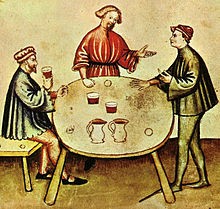
Source of Period Pic: http://en.wikipedia.org/wiki/File:48-aspetti_di_vita_quotidiana_ubriachezza_Taccuino_Sanitatis_Shoes.jpg
Model: Ulfr Thyrison
Photographer: Vincent De Vere
  

Full Entry, Male

1200 CE Male Linen Cote

Title: 1200 CE Male Linen Cote
Entry #: GGB2021.041
Alternate Names: Gown, Frock coat, Tunic, over tunic, 
Year: 1200
Time range: 1100-1400 CE
Era: High medieval
Gender: Male
region: Europe
Countries/cultures: Europe
Maker: Vincent De Vere
Difficulty: 2
Confidence: Image Examples

Intro:

A loose tunic like garment commonly with buttons at the neck and cuffs bloused over a belt. Extending from below the waste to below the knee with long sleeves.

Description:

This garment, or variations of it can be seen in many paintings and illustrations that cross over several regions and time frames.  People from many stations in society use this functional garment, from laborers to merchants and higher. Varying slightly from its beginnings before 1100CE and fading in fashion for all but laborers late in period.

In general it is slightly more tailored tunic with the neck hole held closed by use of buttons rather than the earlier broaches.  Buttons may just close the neck hole, extend part way down the chest or to the bottom of the garment.  The cut is usually full producing a baggy garment belted at the waste and bloused over the belt.  Some assign the length of the garment to station, with average workmen wearing it shorter to the more wealthy merchants wearing a longer garment.

Likely worn with an undershirt and in some cases a simple doublet as well as hosen or trews.

Sometimes underrepresented in the SCA, cotes can easily produce a medieval look with an easily constructed garment.

This example has layers of cotes with a tight neck hole.  Split for ease of movement below the waist.  These are very tunic like cotes.

Inspiration Images

Common Materials

  • Fabrics:
    • Wool
    • linen
    • brocade
  • Ornamentation:

Effective Substitutions

  • Fabrics:
    • wool blends
    • linen blends
    • cottons
    • lighter weight upholstery fabrics that simulate period patterns
  • Ornamentation:

Ensemble Components

  • Cote
  • Under Tunic

  • possibly a doublet
  • pants or braes/hosen

Accessories

  • belt
  • pouch
  • hat
  • shoes

Source/Links

The Medieval Tailors Assistant, by Sarah Thursfield, has instructions on constructing such

Version:2
date: 2/27/2021
Source of Period Pic: http://en.wikipedia.org/wiki/File:48-aspetti_di_vita_quotidiana_ubriachezza_Taccuino_Sanitatis_Shoes.jpg
Model:
Photographer: Vincent De Vere