Female, Full Entry

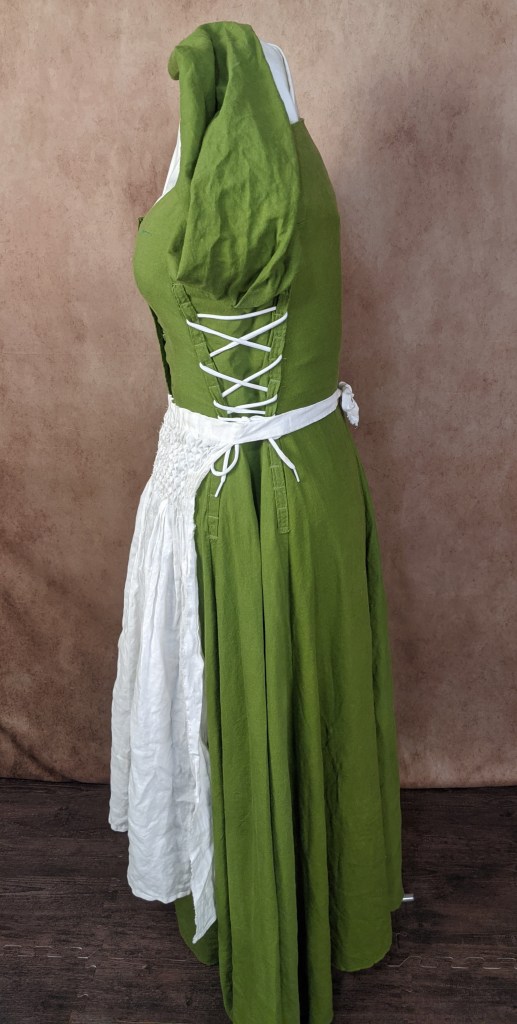
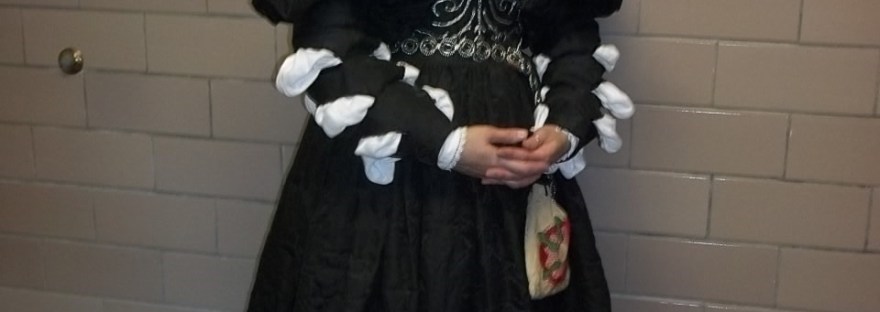
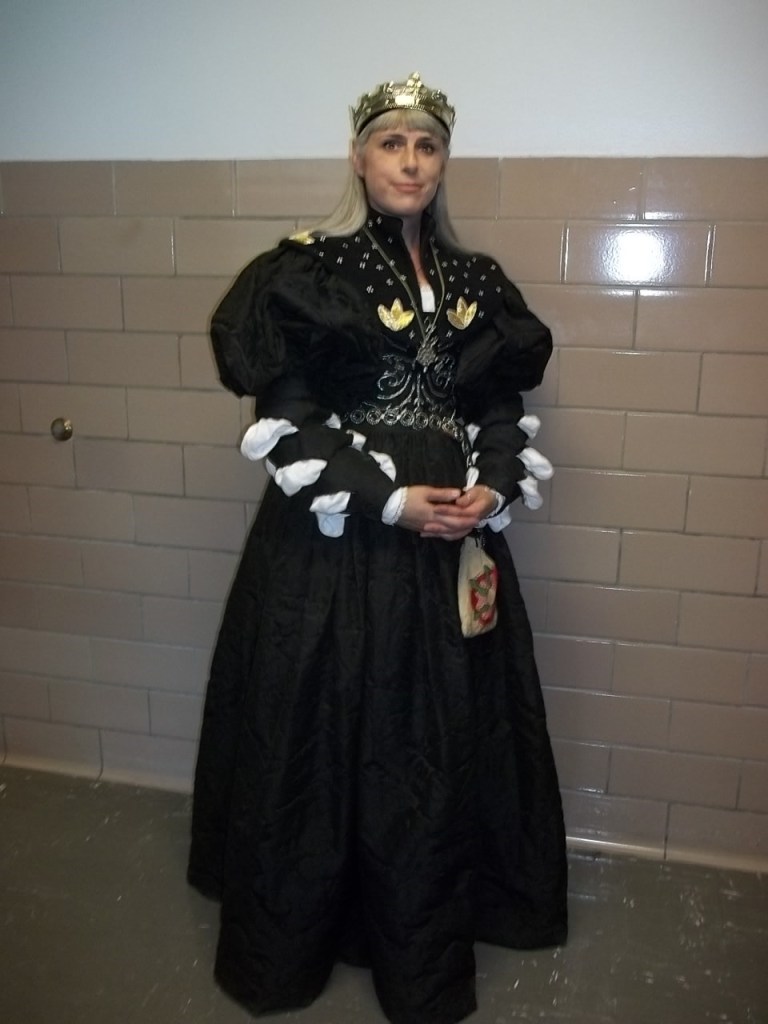
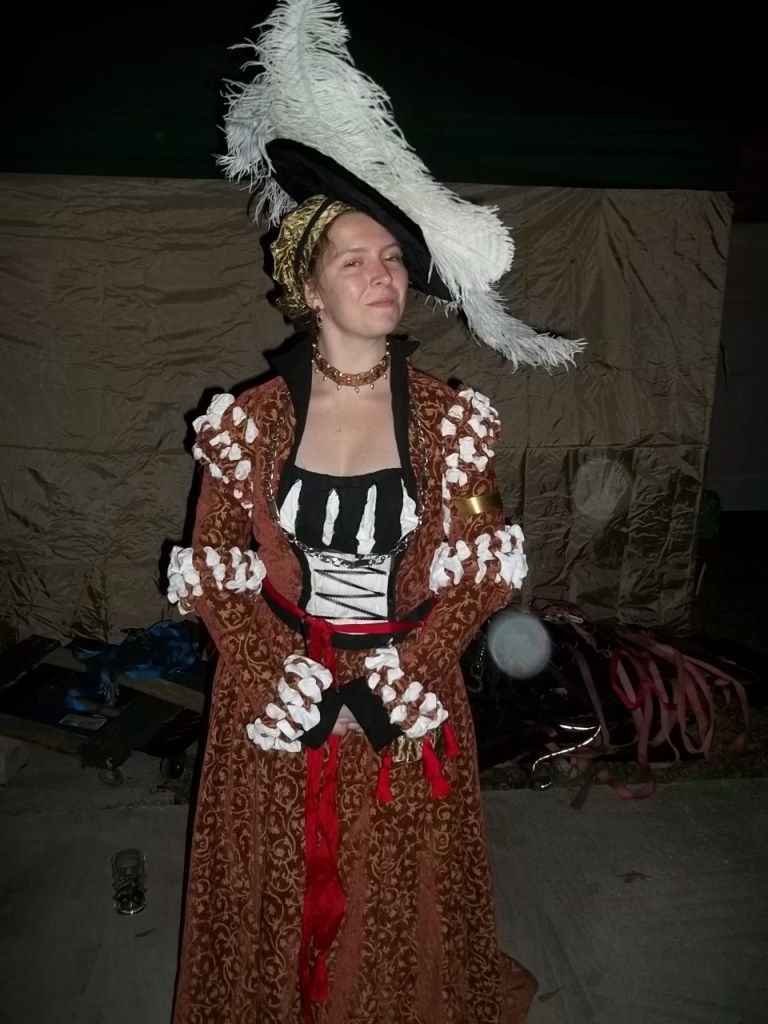
1550 Female German Cranach Gown 1

Title: 1550 Female German Cranach Gown 1
Entry #: GGB2021.074
Alternate Names: Kampfrau, Trossfrau, Cranach, Saxony Court gown 
Year: 1550
Time range: 1470-1550
Era: Late medieval
Gender: Female
region: Central europe
Countries/cultures: Germany/Switzerland 
Maker: Bearcat
Difficulty: 5
Confidence: Image Example

Intro:

The very stylized and flamboyant dress style seen in the SCA related to the Saxony (German) and Swiss court gowns worn by the women who followed the Landsknecht mercenary forces.  (May imply someone with a dubious occupation.) 

Description:

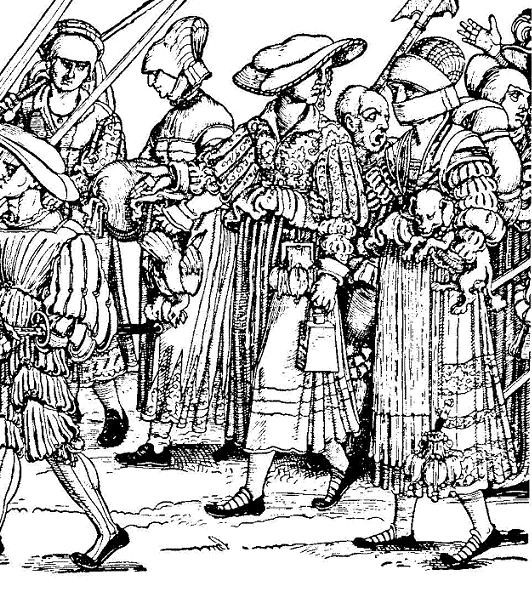
Highly ornamented and fanciful takes on the German and Saxony court dresses worn by flamboyant camp followers living off the spoils of war. Landsknechts and their women were not constrained by (or ignored) some of the sumptuary laws governing what people can wear.

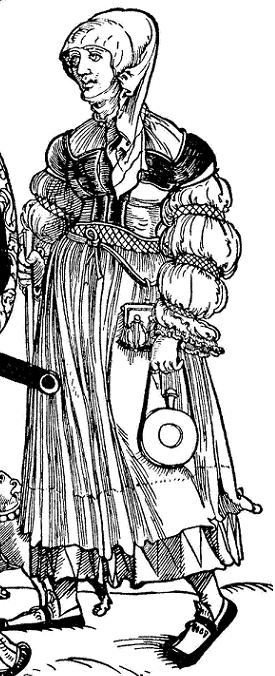
Many of the outer garments were made from wool.  Contrasting color collars and cuffs, bight colors, rich fabrics.  No two looking the same.  Bodice laced shut exposing layers underneath.  Some necklines are very wide creating garments nearly falling off the shoulders.  Long and short sleeves are seen.  Many garments ‘slashed’ to expose layers underneath sleeves

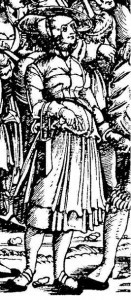
Roll pleated skirt which could be hiked up into the belt for ease of movement but also exposing their legs. Many illustrations also show stripes of fabric parallel to the hem line on the skirts.   Patterned stockings are seen in some illustrations.  “Cow mouth” shoes with a wide toe area.

Note on Names:

Cranach – last name or two painters associated with this style

Tross – the camp followers of the mercenaries

Trossfrau/kampfrau – (maybe) a modern name given to the ‘wives’ of the mercenaries

It’s cool but read up on the culture before deciding to make one.

Inspiration Images
Common Materials

  • Fabrics:
    • Wool main garments in bright colors, vivid patterns, rich fabrics added as trim. 
    • Silks, velvets,
    • A lot of fabric to make the dresses. 
  • Ornamentation:
    • Knitted stockings
    • linen undergarments

Effective Substitutions

  • Fabrics:
    • Some poly/cotton brocades to simulate the rich fabrics. 
    • Wool blends are easier to find. 
    • Linen blends and cottons for undergarments. 
    • Very hard to make these dresses look right without investing in the right materials.
  • Ornamentation:

Ensemble Components

  • Gown – bodice and attached skirt
  • Placket over breasts
  • underdress

  • stockings
  • hats, including large, feathered hats

Accessories

  • Retailers catering to reenactors sell the cow mouth shoes and striped stockings in vibrant colors
  • Belts
  • pouch/purse.

Source/Links

https://sophie-stitches.weebly.com/german-saxon-cranach-gown.html

Version: 2
date: 3/2/21
Source of Period Pic: Women and Knaves, 1530CE Max Geisberg, Army Train, 1532CE Edhard Schoen
Model: Bearcat
Photographer: Vincent De Vere
  

Component Entry, Female

Apron, pleated

TitleApron, gathered
Entry #GGC2021.017
Alternate NamesApron
Year1000-1600 CE
Time range1000-1600 CE
Erahigh Medieval, Late Medieval
Genderwomen
regionEuropean
Countries/culturesWestern European, Central European
MakerVincent De Vere,
Difficulty2
ConfidenceImage Example

Intro:

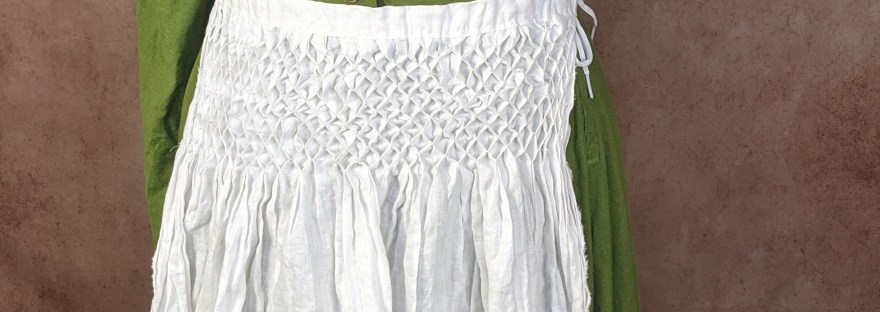
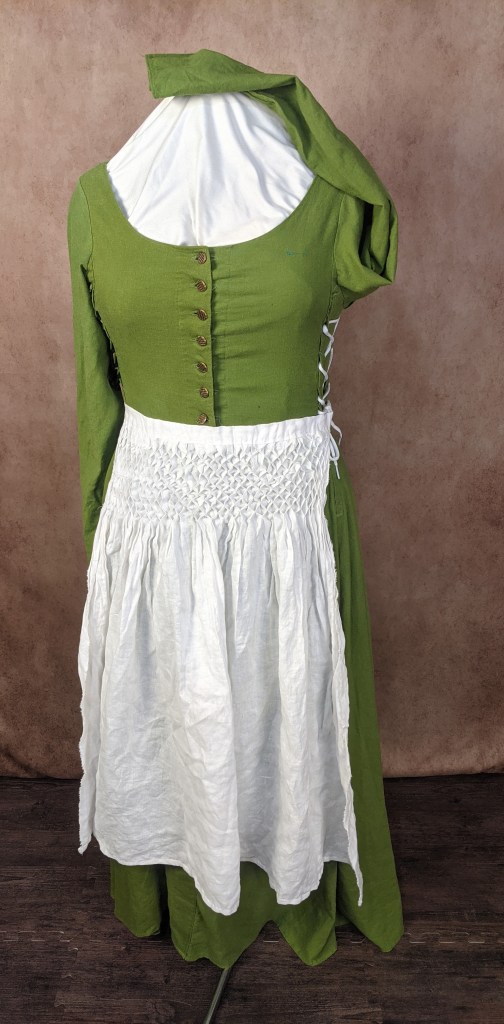
Apron made from one yard of linen fabric featuring honeycomb pleating decoration.                                    

Description:

This apron is made from three pieces with two long narrow strips sewn into the waistband and one large rectangle decorated with honeycomb pleating.

Aprons are easily constructed accessories that are also functional accessories to use with your SCA clothing.  They can easily be made in a few minutes by machine or just a couple hours by hand.  They add to the completeness of an ensemble by adding another layer to the look.  They are also very functional in protecting the clothing beneath it.

The honeycomb pleating makes this apron appear much more complex but the decoration can be done in a few hours of work and makes a much more decorative accessory.  

Inspiration Images

Common Materials

  • Fabrics:
    • Linen  

Effective Substitutions

  • Fabrics:
    • linen blends
    • Linen
    • cotton
    • cotton blends

Ensemble Components

  •  

Accessories

Source/Links

woodcut Tailor and Seamstress by Erhard Schon, 1525-1530

These are images from the The German single-leaf woodcut, 1500-1550, Max Geisberg ; rev. and edited by Walter L. Strauss, New York : Hacker Art Books, 1974.

Version1
date12/30/2021
Source of Period PicThe German single-leaf woodcut,
Model Vincent de Vere
PhotographerVincent De Vere
  
Full Entry, Male

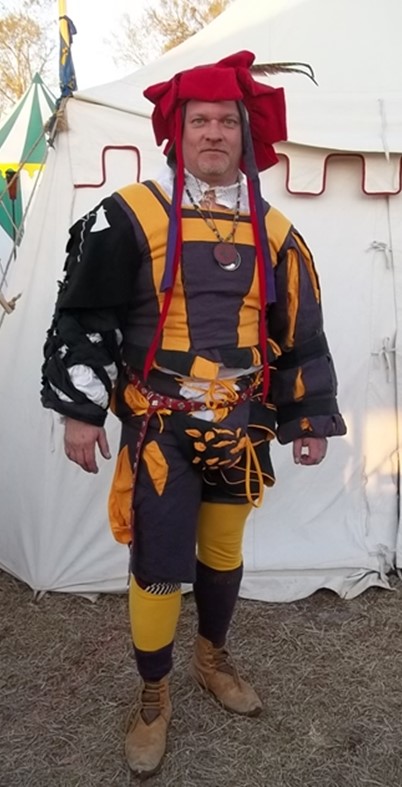
1500 CE German Male Landsknecht

Title1500 CE German Male Landsknecht
Entry #GGB2021.085
Alternate Names Waffenkleid, Reitrock, waffenrock
Year1500
Time range1470-1550 CE
EraLate Medieval
GenderMale
regionCentral Europe
Countries/culturesGermany/Switzerland
Maker
Difficulty4
ConfidenceImage of Example

Intro:

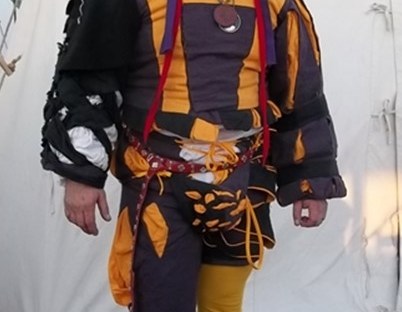
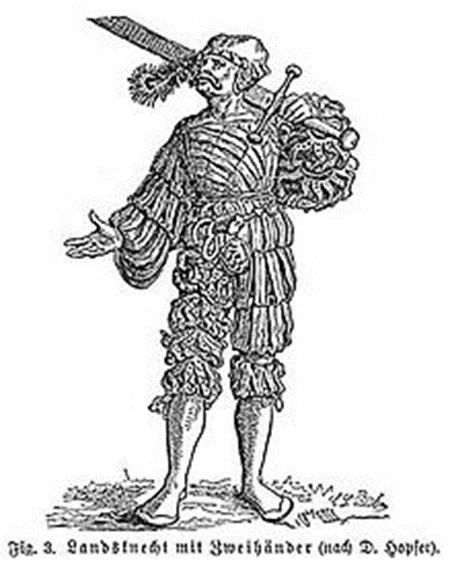
Highly ornamented “war coats” worn by military forces out of areas around Germany and Switzerland.  Closely associated with (and evolving into) the more flamboyant Landsknecht mercenaries

Description:

Bright clashing colors, bold stripes mismatched parts.  Sleeves and legs with decorative slashes.  Wool over garments worn by mercenaries and often scavenged from the best parts found on the battlefield.  The top buttons closed and the garment is worn over at least an undershirt, and breeches.  Usually seen with long stockings and sometimes with the wide ‘cow mouth’ shoes. The sleeves and skirt portions have a lot of fabric pleated in. 

Related terms:

Waffenrock: war coat

Reitrock: riding coat, split for riding

Waffenkleid: war tunic

Inspiration Images

Common Materials

  • Fabrics:
    • Wool main garments in bright colors, or color combinations. 
    • linen undergarments
  • Ornamentation:
    • Knitted stockings

Effective Substitutions

  • Fabrics:
    • Some poly/cotton brocades to simulate the rich fabrics.  Wool blends are easier to find. 
    • Linen blends and cottons for undergarments. 
    • Very hard to make these look right without investing in the right materials.
  • Ornamentation:

Ensemble Components

  • Coat – wool overlayer with attached skirt
  • Undershirt – linen shirt

  • Breeches – wool pants to the knee
  • Stockings

Accessories

  • Retailers catering to reenactors sell the cow mouth shoes and striped stockings in vibrant colors. 
  • Belt
  • pouch/purse.

Source/Links

http://research.fibergeek.com/category/garbclothing/16th-century/landsknecht-waffenrock-1517/

Version2
date3/2/2021
Source of Period Pic 
ModelBrockman 031113-10
PhotographerVincent De Vere
  

Basic Entry, Female

1540 CE Female Italian Florentine Gown

Title1540 CE Female Italian Florentine Gown
Entry #GGB2021.091
Alternate Names gown
Year1540
Time range
EraItalian Renaissance
GenderFemale
regionSouthern Europe
Countries/culturesItaly/Florence
MakerJennette “Neva” Jorgensen
Difficulty5
ConfidenceImage Examples

Intro:

No information provided

Description:

No information provided

Inspiration Images

Common Materials

  • Fabrics:
  • Ornamentation:

Effective Substitutions

  • Fabrics:
  • Ornamentation:

Ensemble Components

Accessories

Source/Links

Version2
date3/7/2021
Source of Period Pic 
ModelGinevera da Ravenna 091413-05
PhotographerVincent De Vere