Component Entry, Female, Male, Unisex

Apron, gathered

TitleApron, gathered
Entry #GGC2021.016
Alternate NamesApron
Year1000-1600 CE
Time range1000-1600 CE
Eraearly medieval, high Medieval, Late Medieval
Genderunisex
regionEuropean
Countries/culturesWestern European, Central European
MakerVincent De Vere,
Difficulty1
ConfidenceImage Example

Intro:

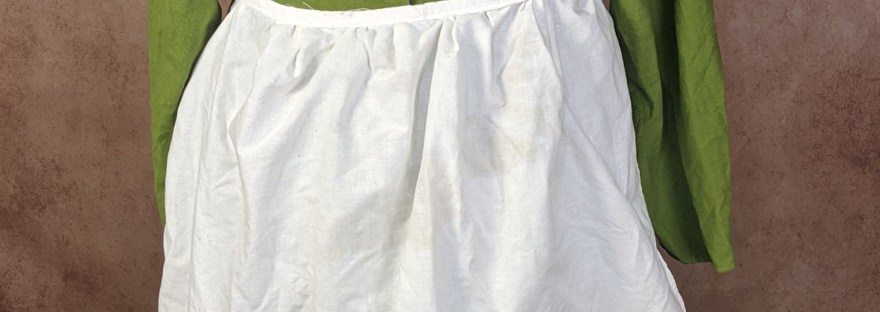
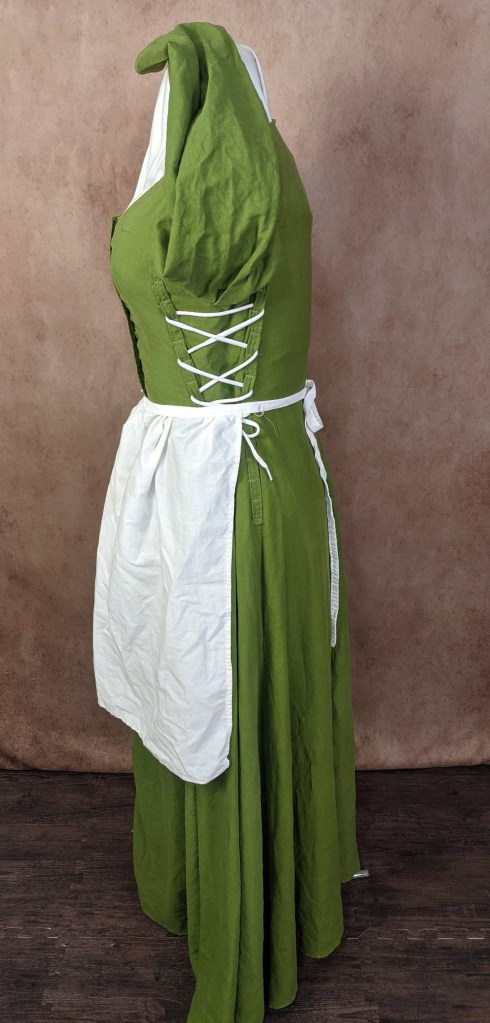
Basic gathered apron made from one yard of linen fabric                               

Description:

This apron is made from three pieces with two long narrow strips sewn into the waistband and one large rectangle gathered along the waistband to form the main portion of the apron.

Aprons are easily constructed accessories that are also functional accessories to use with your SCA clothing.  They can easily be made in a few minutes by machine or just a couple hours by hand.  They add to the completeness of an ensemble by adding another layer to the look.  They are also very functional in protecting the clothing beneath it.

Inspiration Images

Common Materials

  • Fabrics:
    • Linen  

Effective Substitutions

  • Fabrics:
    • linen blends
    • Linen
    • cotton
    • cotton blends

Ensemble Components

  •  

Accessories

Source/Links

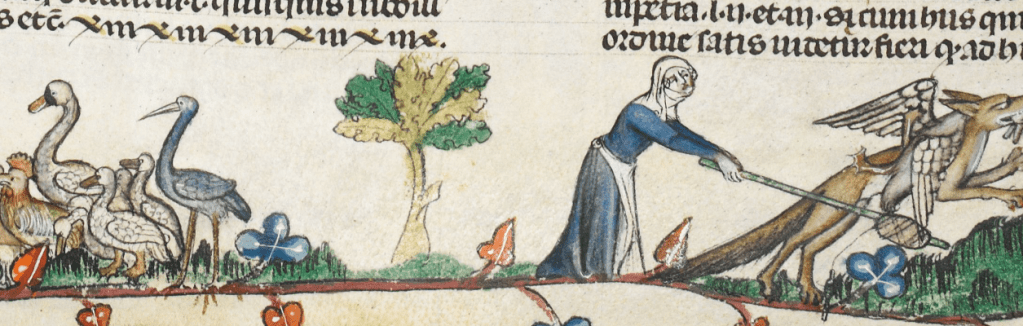
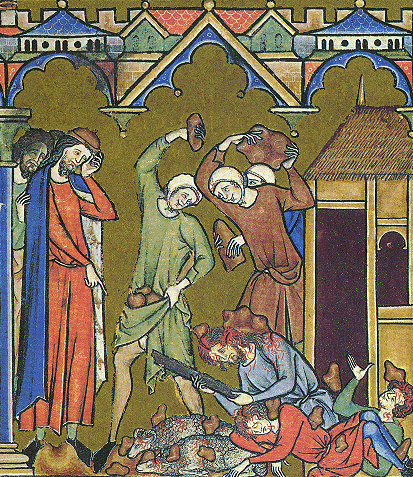
c 1300-c 1340, The Decretals of Gregory IX, edited by Raymund of Penyafort (or Peñafort); with the glossa ordinaria of Bernard of Parma in the margin. 

Version1
date12/30/2021
Source of Period PicBritish Library
Model Vincent de Vere
PhotographerVincent De Vere
  
Component Entry, Female, Male, Unisex

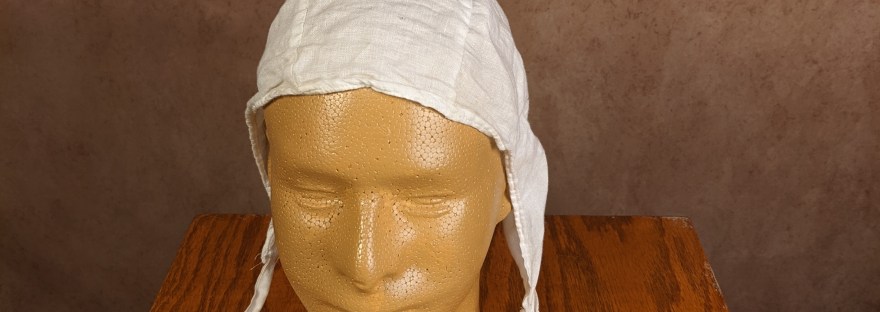
Coif, 2 piece

TitleCoif, 2 piece
Entry #GGC2021.003
Alternate NamesCoif  
Year1000-1600 CE
Time range1000-1600 CE
EraHigh Medieval, Late Medieval
Genderunisex
regionEuropean
Countries/culturesGermany, Western European, Central European
MakerVincent De Vere,
Difficulty1
ConfidenceExtant Example

Intro:

Head covering made from small scraps of linen fabric.                  

Description:

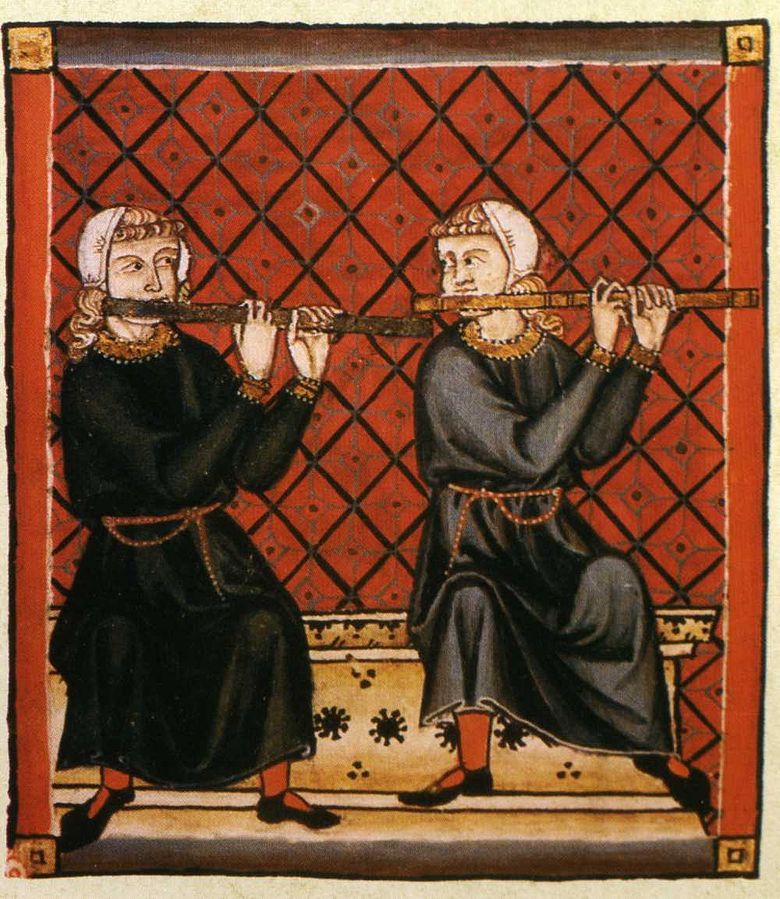
It’s underwear for your head.  Many images of the middle ages feature people wearing coifs to cover and protect their hair, oils from their head from their hats and for something to connect hats to.  They also are an easy accessory to add to your

These are very simple to construct either by machine or by hand and take very little fabric.  They are easily made from cotton fabric or linen and there are surviving examples and images that show a number of variations through time or cultures.

Inspiration Images
Common Materials

  • Fabrics:
    • linen  

Effective Substitutions

  • Fabrics:
    • linen blends
    • Linen
    • wool
    • cotton
    • cotton blends

Ensemble Components

Accessories

Source/Links

Illustration from Cantigas de Santa Maria manuscript. The Cantigas de Santa Maria (Songs to the Virgin Mary) are manuscripts written in Galician-Portuguese, with music notation, during the reign of Alfonso X El Sabio (1221-1284).

Version1
date12/30/2021
Source of Period PicBritish Library
Model Vincent de Vere
PhotographerVincent De Vere
  
Component Entry, Female, Male, Unisex

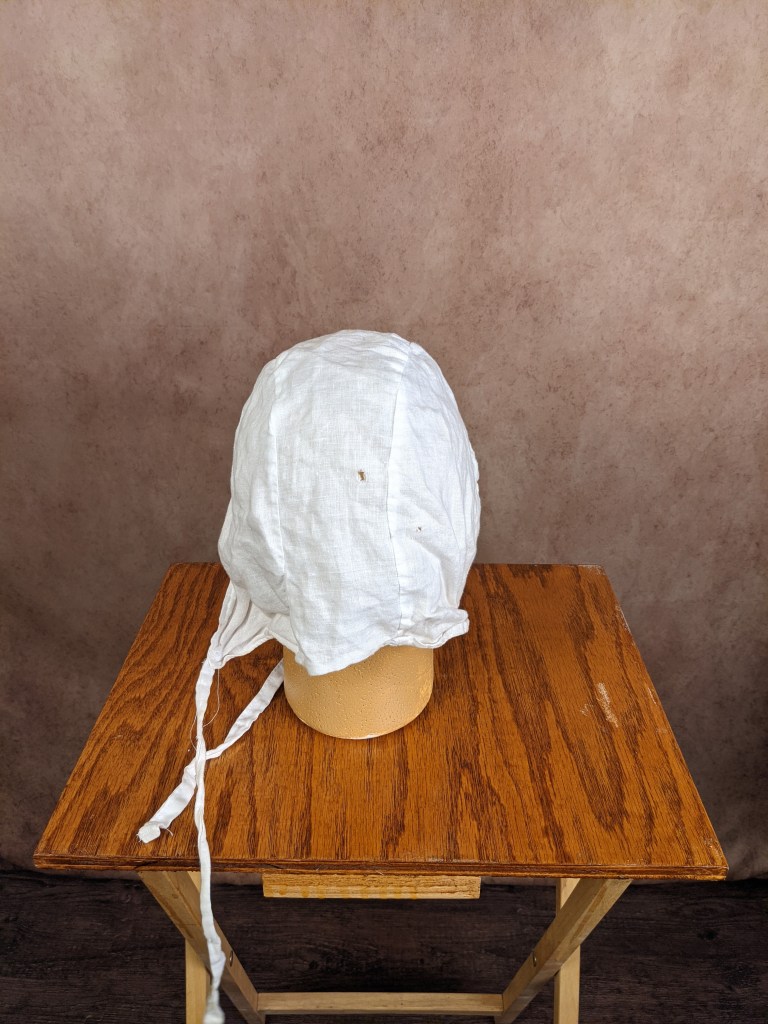
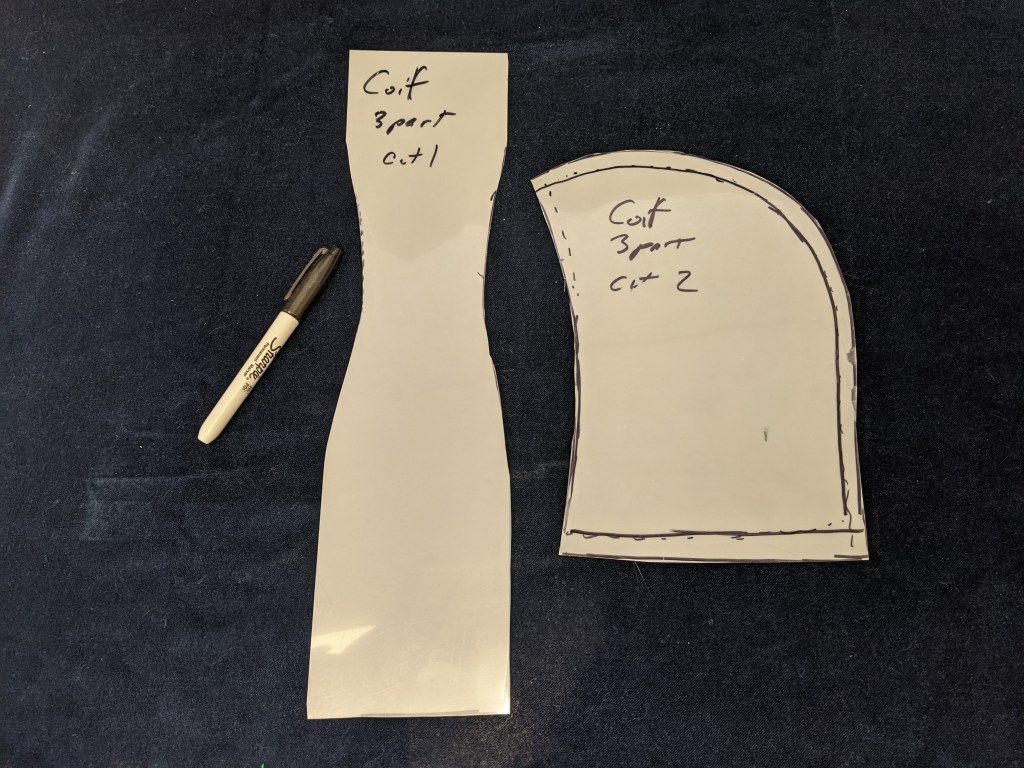
Coif, 3 piece

TitleCoif, 3 piece
Entry #GGC2021.004
Alternate NamesCoif  
Year1000-1600 CE
Time range1000-1600 CE
EraHigh Medieval, Late Medieval
Genderunisex
regionEuropean
Countries/culturesGermany, Western European, Central European
MakerVincent De Vere,
Difficulty1
ConfidenceExtant Example

Intro:

Head covering made from small scraps of linen fabric.                  

Description:

It’s underwear for your head.  Many images of the middle ages feature people wearing coifs to cover and protect their hair, oils from their head from their hats and for something to connect hats to.  They also are an easy accessory to add to your

These are very simple to construct either by machine or by hand and take very little fabric.  They are easily made from cotton fabric or linen and there are surviving examples and images that show a number of variations through time or cultures.

Inspiration Images

Common Materials

  • Fabrics:
    • linen  

Effective Substitutions

  • Fabrics:
    • linen blends
    • Linen
    • wool
    • cotton
    • cotton blends

Ensemble Components

Accessories

Source/Links

Illustration from Cantigas de Santa Maria manuscript. The Cantigas de Santa Maria (Songs to the Virgin Mary) are manuscripts written in Galician-Portuguese, with music notation, during the reign of Alfonso X El Sabio (1221-1284).

Version1
date12/30/2021
Source of Period PicBritish Library
Model Vincent de Vere
PhotographerVincent De Vere
  
Component Entry, Female, Male, Unisex

Hose Linen 1

TitleHose Linen 1
Entry #GGC2021.008
Alternate Namesseparate hose, split hose, hose, hosen, stocking, chausses 
Year1000-1500 CE
Time range1000-1500 CE
Eraearly medieval, high Medieval, Late Medieval
Genderunisex
regionEuropean
Countries/culturesWestern European, Central European
MakerVincent De Vere,
Difficulty2
ConfidenceImage Example

Intro:

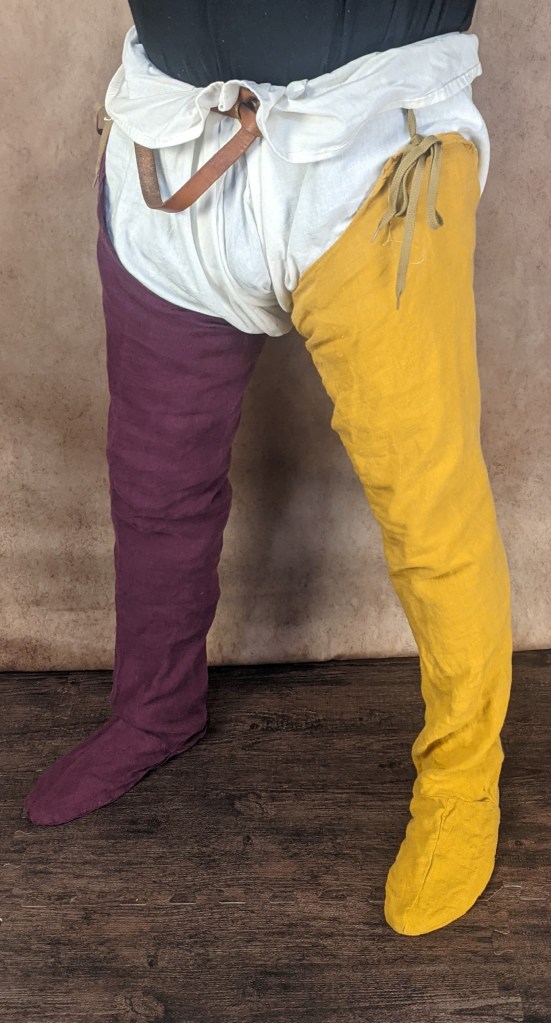
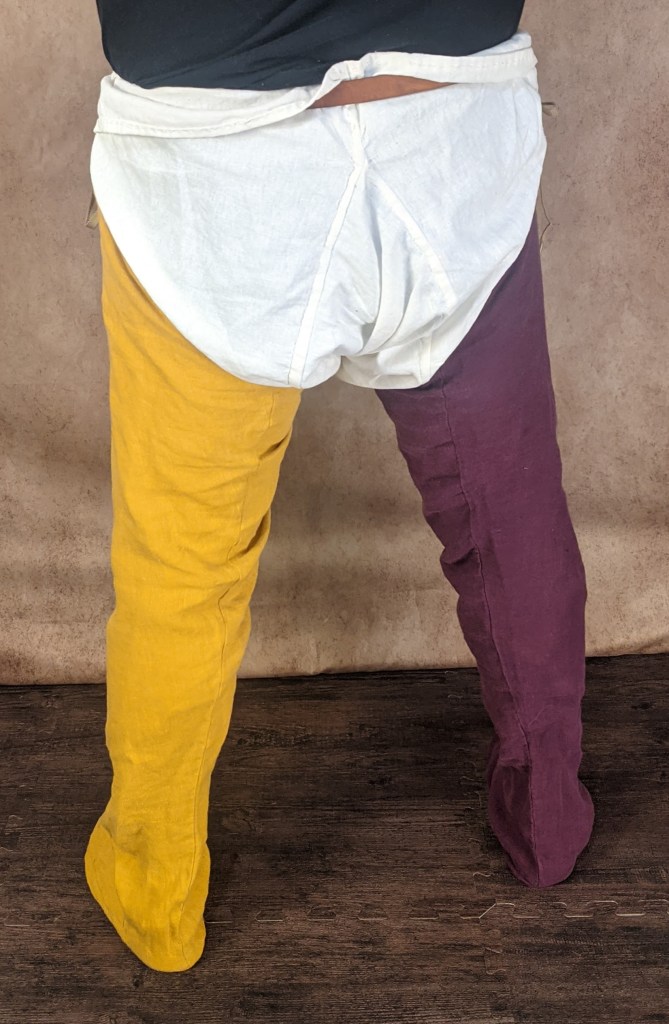
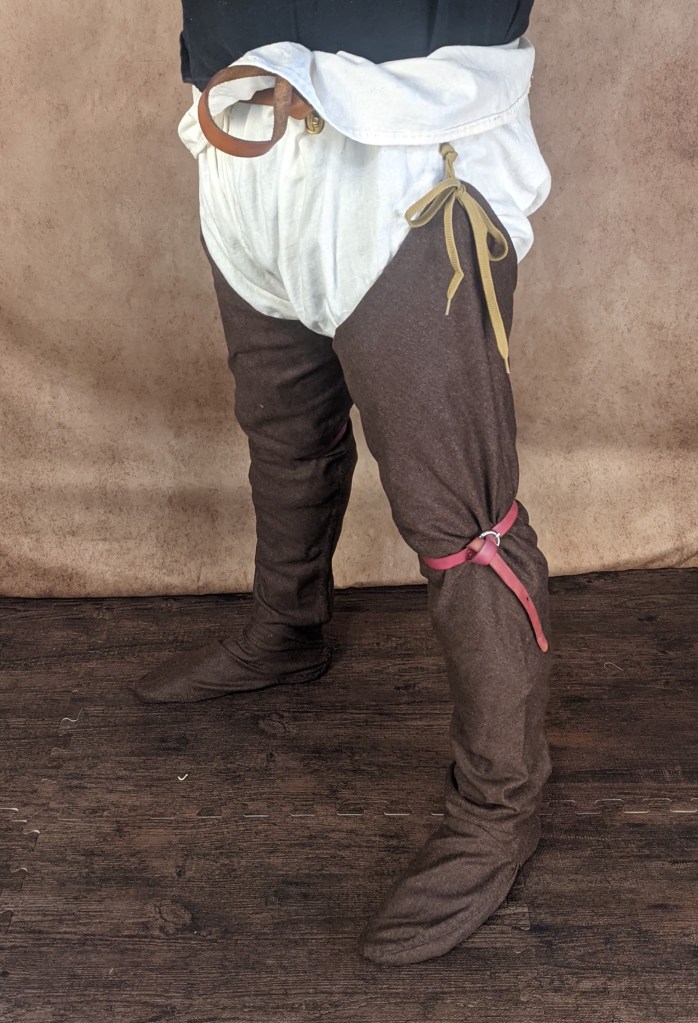
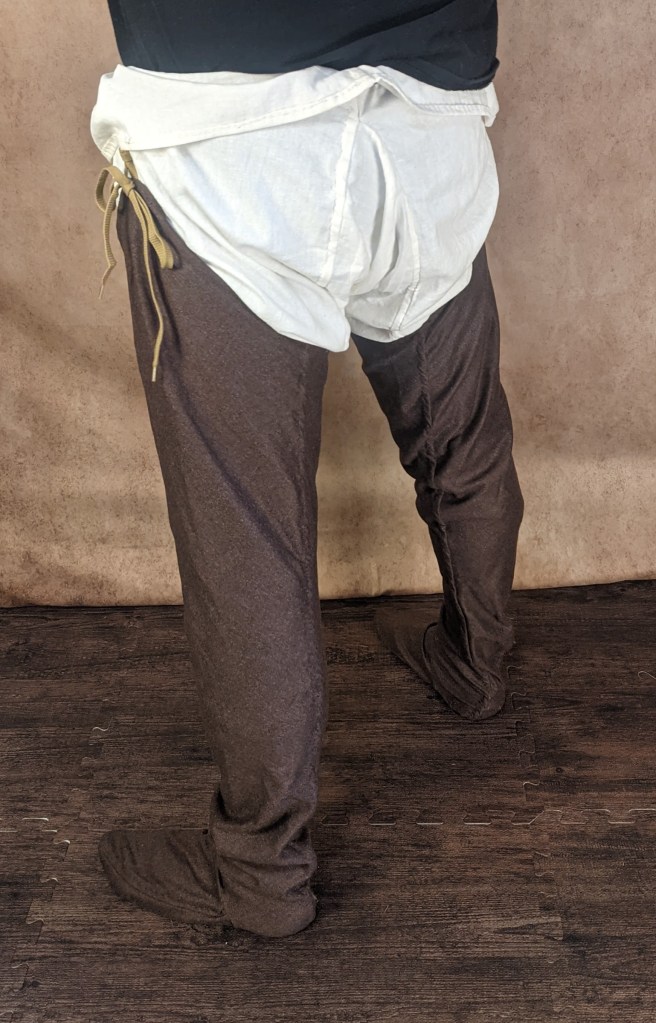
Examples of split hose sewn from linen and tied to the breech garter at the waist.                          

Description:

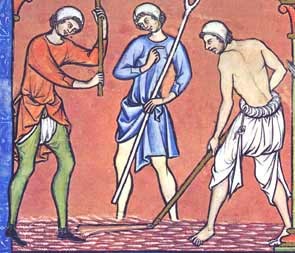
This is an example of split hose made out of linen and parti-colored.  They have enclosed feet and a hole at the side to tie to a belt or girdle.  They may commonly be seen with a garter tied just below the knee to assist in keeping the hose from slipping.  The garter may be a tied woven band or a band with a buckle.

There is evidence supporting the use of some form of split hose stretching to early medieval times with their height in high medieval times.  By the 1300’s the split hose were beginning to be less fashionable and were replaced by joined hose, however split hose continued to be used until the end of period. 

The longer forms of the split hose may be associated with male fashion and the short hose with women and children, but people likely wore what they preferred as well as what matched their needs.

The best hose is made out of light wool fabric that has some spring to the weave and cut on the bias (diagonally.) although very wasteful of the fabric, the bias cut means that the resulting hose are slightly more elastic and fit better. 

The historical use of various kinds of hose by women is assumed by us and use by members does occur.

Inspiration Images

Common Materials

  • Fabrics:
    • Wool  

Effective Substitutions

  • Fabrics:
    • linen blends
    • Linen
    • wool
    • cotton
    • cotton blends
    • Wool blends

Ensemble Components

  • Hosen were worn by many different cultures and time periods and by many levels of society.  Closely associated with the hosen are the Braies worn under the hosen and the girdle or belt used to hold them up as well as the garters to keep them from slipping worn just below the knee. 

Accessories

  • Garters or woven material tied or a belt style garter.  Girdle belt or belt worn at the waist and tied to the hosen to keep them up

Source/Links

http://www.medievaltymes.com/courtyard/maciejowski_images_18.htm

Version1
date12/25/2021
Source of Period Picmaciejowski bible
Model Vincent de Vere
PhotographerVincent De Vere
  
Full Entry, Male

1000 CE Norman Riding Tunic 2

Title: 1000 CE Norman Riding Tunic 2
Entry #: GGB2021.028
Alternate Names: tunic, t tunic 
Year: 1000
Time range: 900-1200 CE
Era: Early Medieval
Gender: Male
region: Western Europe
Countries/cultures: England France
Maker: Vincent De Vere, Kristine Nic Tallier
Difficulty: 2
Confidence: Image example

Intro:

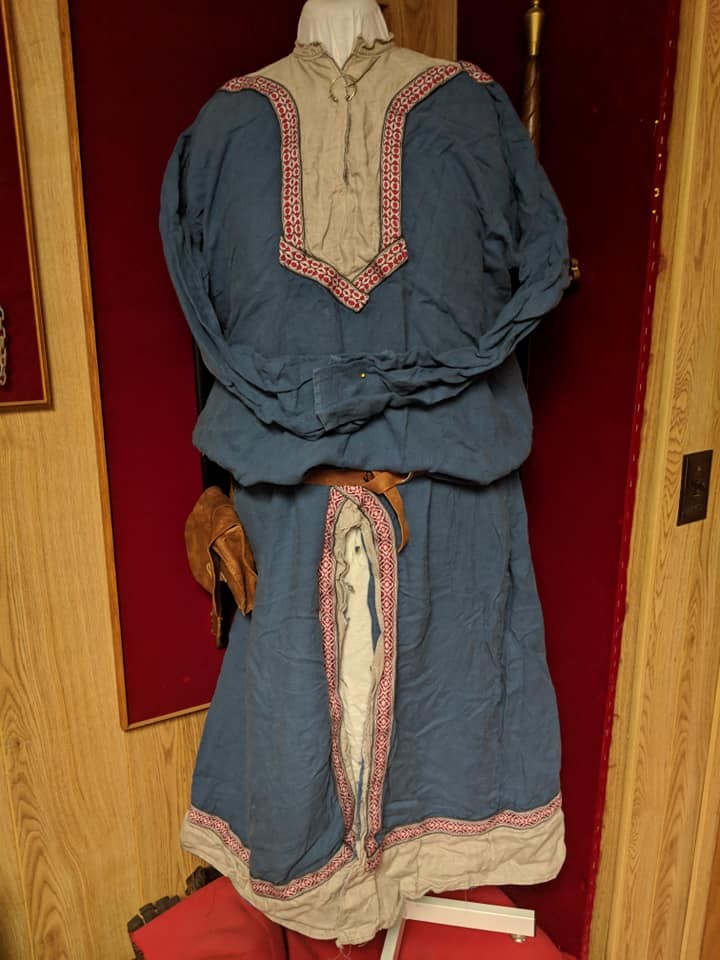
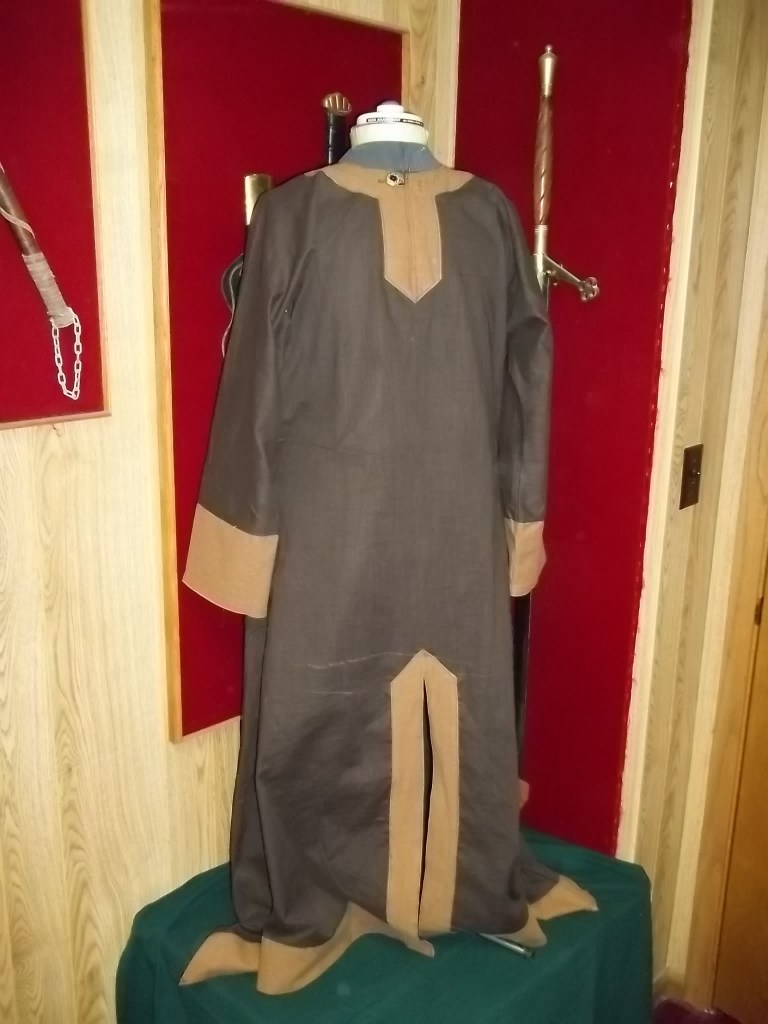
A version of the basic tunic used in many European cultures from antiquity through to the high middle ages by some.  This tunic is split to allow wearer to ride a horse and have freedom of movement.

Description:

One of the many variations of the tunics made out of linen or wool. This example has a keyhole neck opening and featuring a split in front and back bottom to allow the wearer to ride a horse. 

This variation was cut T tunic style out of a wide piece of fabric to minimize seams. A more period cut would include seams connecting the sleeve to the body.  Trim is an applique of linen.  Keyhole neck is held closed with a brooch pin.  Tunics are about the easiest garments to construct.

Tunics are often the starting point for new members when just beginning in the SCA.  This tunic could be made for less than $20 in 2021.

Inspiration Images

Common Materials

  • Fabrics:
    • wool
    • linen (including non-flax linen)
  • Ornamentation:

Effective Substitutions

  • Fabrics:
    • Wool blends,
    • Linen, linen/rayon
    • linen/cotton
    • some cottons could be used but cotton broad cloth is not advised as it is not a strong material and doesn’t drape well
  • Ornamentation:

Ensemble Components

  • Under shirt (likely of a similar cut)
  • Belt
  • Pouch

New members often start with just a tunic and belt.

  • pants/trews/braccae
  • leg wraps
  • turn shoes/boots

Accessories

  • under tunic as bottom layer
  • belt
  • pants
  • over tunic or super tunic over the tunic
  • shoes
  • cloak or coat

Source/Links

http://www.virtue.to/articles/tunic_worksheet.html

http://alianorderavenglas.wordpress.com/as-50-challenge/13th-century-riding-tunic/

Version: 2
date: 3/1/2021
Source of Period Pic: Maciejowski Bible.
Model: Vincent De Vere
Photographer: Vincent De Vere
  

Full Entry, Male

1000 CE Norman Riding Tunic 1

Title: 1000 CE Norman Riding Tunic 1
Entry #: GGB2021.027
Alternate Names: tunic, t tunic 
Year: 1000
Time range: 900-1200 CE
Era: Early Medieval
Gender: Male
region: Western Europe
Countries/cultures: England France
Maker: Vincent De Vere
Difficulty: 1
Confidence: Image example

Intro:

A version of the basic tunic used in many European cultures from antiquity through to the high middle ages by some.  This tunic is split to allow wearer to ride a horse and have freedom of movement.

Description:

One of the many variations of the tunics made out of linen or wool. This example has a keyhole neck opening and featuring a split in front and back bottom to allow the wearer to ride a horse. 

This variation was cut T tunic style out of a wide piece of fabric to minimize seams. A more period cut would include seams connecting the sleeve to the body.  Trim is an applique of linen.  Keyhole neck is held closed with a brooch pin.  Tunics are about the easiest garments to construct.

Tunics are often the starting point for new members when just beginning in the SCA.  This tunic could be made for less than $20 in 2021.

Inspiration Images

Common Materials

  • Fabrics:
    • wool
    • linen (including non-flax linen)
  • Ornamentation:

Effective Substitutions

  • Fabrics:
    • Wool blends,
    • Linen, linen/rayon
    • linen/cotton
    • some cottons could be used but cotton broad cloth is not advised as it is not a strong material and doesn’t drape well
  • Ornamentation:

Ensemble Components

  • Under shirt (likely of a similar cut)
  • Belt
  • Pouch

New members often start with just a tunic and belt.

  • pants/trews/braccae
  • leg wraps
  • turn shoes/boots

Accessories

  • under tunic as bottom layer
  • belt
  • pants
  • over tunic or super tunic over the tunic
  • shoes
  • cloak or coat

Source/Links

http://www.virtue.to/articles/tunic_worksheet.html

http://alianorderavenglas.wordpress.com/as-50-challenge/13th-century-riding-tunic/

Version: 2
date: 3/1/2021
Source of Period Pic: Maciejowski Bible.
Model: Vincent De Vere
Photographer: Vincent De Vere
  

Component Entry, Female, Male, Unisex

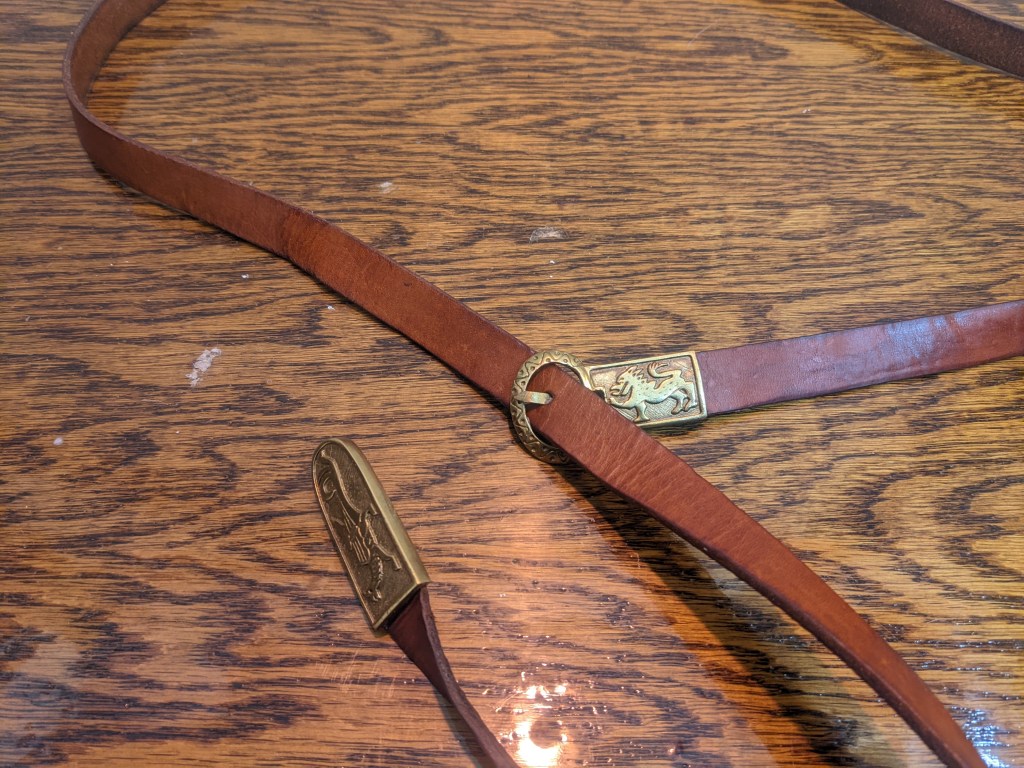
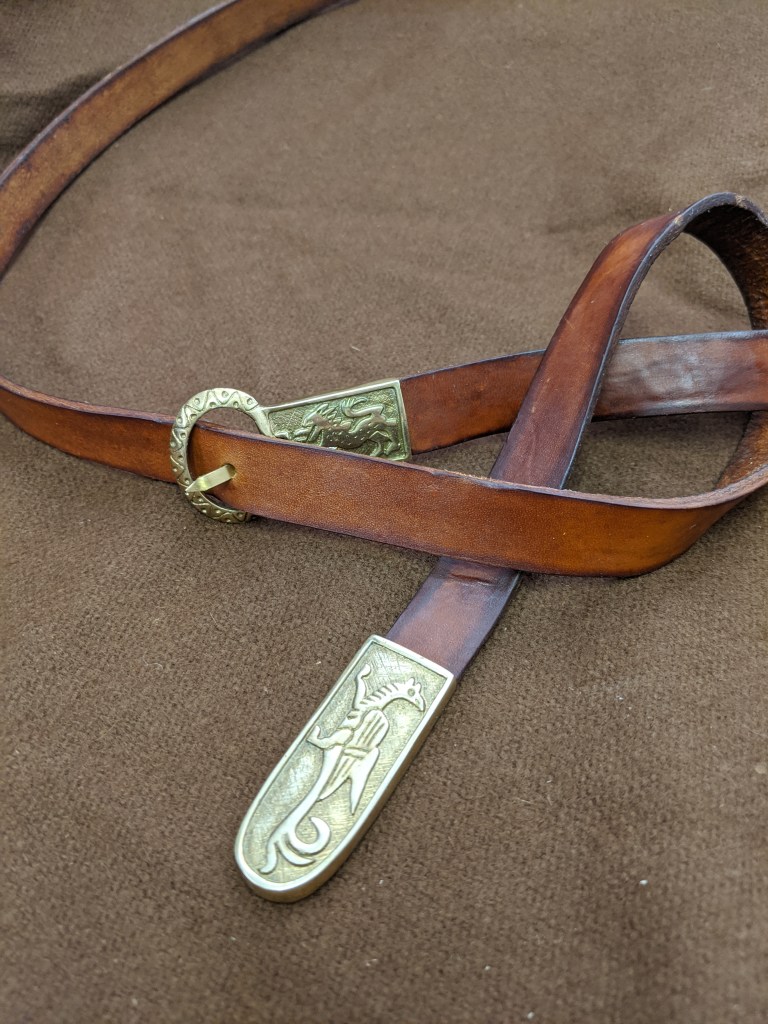
Narrow Belt with Reproduction Buckle

TitleNarrow Belt with Reproduction Buckle
Entry #GGC2021.032
Alternate NamesBelt
Year1066 CE
Time range1000-1200CE
EraHigh Medieval
GenderUnisex
regionEurope
Countries/culturesEurope
MakerVincent De Vere,
Difficulty1
ConfidenceExtant Example

Intro:

 Various belts.      

Description:

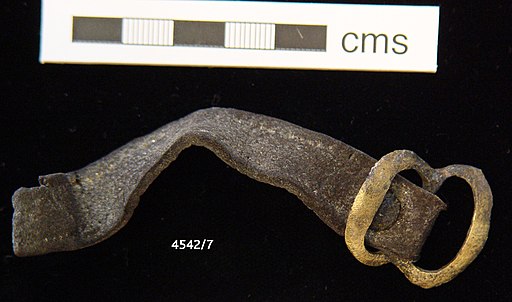
This is a reproduction of an extant example buckle and strap end attached to a strip of leather to form a belt.

This reproduction buckle is based on an extant example and was dated to a time range in the high medieval period. It is available through several reputable vendors. It would be an example of a very inexpensive reproduction piece.

Inspiration Images

Common Materials

  • Fabrics:
    • Leather
  • Ornamentation:

Effective Substitutions

  • Fabrics:
    • Leather
  • Ornamentation:

Ensemble Components

Accessories

Source/Links

The Portable Antiquities Scheme/ The Trustees of the British Museum, CC BY-SA 4.0 <https://creativecommons.org/licenses/by-sa/4.0&gt;, via Wikimedia Commons

https://armourandcastings.com/en_US/products/prjazhka-e14-2

Norman belt set, Britain, 11-12 c. For 20 mm wide belt.

Version1
date1/2/2022
Source of Period PicBritish Museum
Model 
PhotographerVincent De Vere
  
Component Entry, Unisex

Shoe, bag shoe

TitleShoe, bag shoe
Entry #GGC2022.017
Alternate Names
Year1000 CE
Time range3000 BCE – 1200 CE
Eraall
Genderunisex
regionEurope
Countries/cultures
MakerVincent De Vere,
Difficulty1
ConfidenceExtant Examples

Intro:

Simple slip on shoes.

Description:

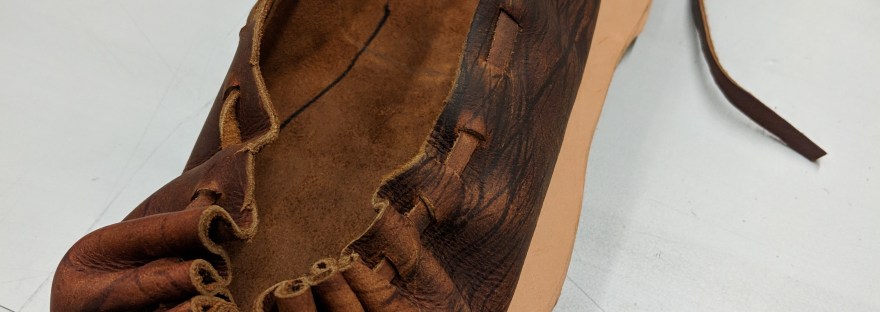
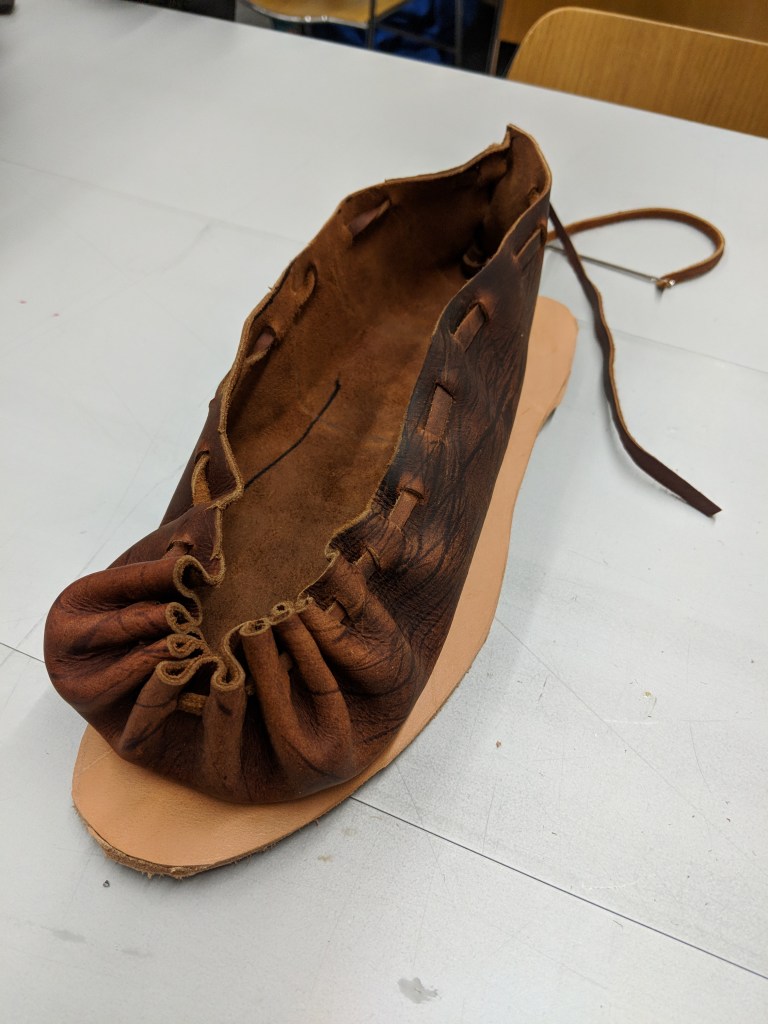
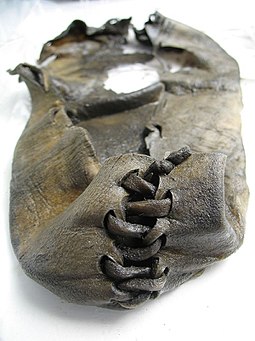
Low slip on shoes that are constructed from a single piece of leather and a leather thong.  Evidence of shoes much like this have been found to our knowledge, from sites ranging from 3000 BCE to 1200 CE or later.  Basic shoes of this style have also been found in the archeological record across Europe. 

This recreation shoe later had a stiffing sole and tread glued to the bottom to prevent the wearer from slipping at events.  Although this modification is not historically correct, modifications done for personal safety and comfort are common in the SCA.

Inspiration Images

Common Materials

  • Fabrics:
    • Leather
  • Ornamentation:

Effective Substitutions

  • Fabrics:
    • chrome tanned leather, but oak tan/veg tan leather will work far better

Ensemble Components

Accessories

Source/Links

The Jotunheimen shoe. Vegard Vike/Kulturhistorisk museum, CC BY-SA 4.0 <https://creativecommons.org/licenses/by-sa/4.0&gt;, via Wikimedia Commons

Stepping Through Time: Archaeological Footwear from Prehistoric Times until 1800, By Olaf Goubitz.  ISBN  9089320040 ISBN-13 ‏ : ‎ 978-9089320049

Version1
date1/9/2022
Source of Period PicThe Jotunheimen shoe. Vegard Vike/Kulturhistorisk museum, CC BY-SA 4.0 <https://creativecommons.org/licenses/by-sa/4.0&gt;, via Wikimedia Commons
Model 
PhotographerVincent De Vere
  

Female, Full Entry

1150 CE Female Bliaut Inspired Fantasy Dress 3

Title: 1150 CE Female Bliaut Inspired Fantasy Dress 3
Entry #: GGB2021.035
Alternate Names: Buttercup’s Dress from Princess Bride 
Year: 1150 CE
Time range: 1150-1250’s CE
Era: High medieval
Gender: Female
region: Europe
Countries/cultures: Europe, france, england
Maker: Vincent De Vere
Difficulty: 2
Confidence: Fantasy based on historic garment

Intro:

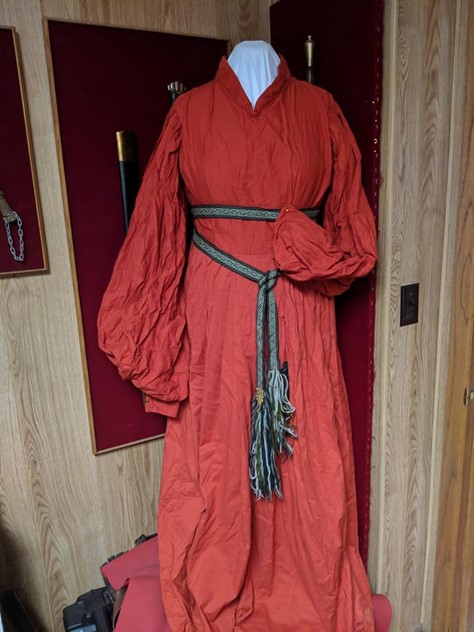
Buttercup’s riding Dress from the first part of the Princess Bride.  This movie costume is very similar to a Bliaut.

Women’s or men’s over-garment characterized by the tunic like construction with side closures resulting in a more fitted silhouette.  The attached skirts were full and floor length for women and shorter for men and the sleeves were commonly fitted above the elbow and trumpet shaped or widened out below the elbow.

Description:

Although similar to the basic t tunic dress the differences in the sleeves and the under-bust to waist area distinguish them.  The sleeves vary in style, but predominantly are characterized by the fitted upper sleeve and the widened lower sleeve.  The lower sleeve by be in the form of a trumpet sleeve or as extreme as examples that drag the floor.  A lined sleeve that could be turned back to expose an expensive inner liner would also be seen. 

The other major distinguishing feature is the under-bust puckering of the fabric.  There remains multiple ways to achieve this look, but many have had success by elongating the under-bust to waist dress length by some number of inches and by adding lacing on the side of the dress to achieve the fitted look. Most evidence of the dress is found in areas of French fashion influence.

An Attempt of Buttercup’s dress.  Much like a Bliaut but the sleeve had cuffs that were an adaptation for the movie.

Inspiration Images

Common Materials

  • Fabrics:
    • Some think images of fine pleats to represent silks
    • fine wools
    • rich fabrics
    • perhaps linen
  • Ornamentation:

Effective Substitutions

  • Fabrics:
    • cottons
    • linen blends
    • wool blends
    • muslin for undergarments
  • Ornamentation:

Ensemble Components

  • Underdress
  • Bliaut overdress

  • various head coverings

Accessories

  • a belt wrapped around the body
  • pouch or purse
  • wimple or veiled head covering

Source/Links

https://www.eg.bucknell.edu/~lwittie/sca/garb/bliaut.html

http://danikaulakisart.com/bliaut.pdf

https://adamselindisdress.blog/2014/04/28/12th-century-dress-the-bliaut/

Version: 3
date: 3/6/2021
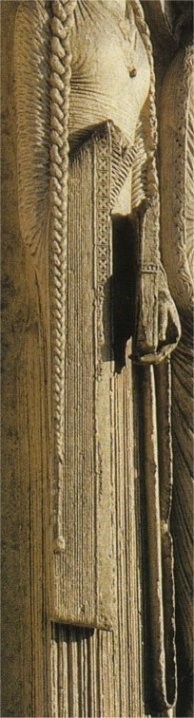
Source of Period Pic: Chartres cathedral ,Angers cathedral, France, sculpture at West Portal (detail of existing Commons image :Image:Angers Cathedral sculpture at west door TTaylor.jpg
Model:
Photographer: Vincent De Vere
  

Female, Full Entry

1150 CE Female Bliaut 4

Title: 1150 CE Female Bliaut 4
Entry #: GGB2021.036
Alternate Names:  
Year: 1150 CE
Time range: 1150-1250’s CE
Era: High medieval
Gender: Female
region: Europe
Countries/cultures: Europe, france, england
Maker: Vincent De Vere
Difficulty: 2
Confidence: Image Examples

Intro:

Women’s or men’s over-garment characterized by the tunic like construction with side closures resulting in a more fitted silhouette.  The attached skirts were full and floor length for women and shorter for men and the sleeves were commonly fitted above the elbow and trumpet shaped or widened out below the elbow.

Description:

Although similar to the basic t tunic dress the differences in the sleeves and the under-bust to waist area distinguish them.  The sleeves vary in style, but predominantly are characterized by the fitted upper sleeve and the widened lower sleeve.  The lower sleeve by be in the form of a trumpet sleeve or as extreme as examples that drag the floor.  A lined sleeve that could be turned back to expose an expensive inner liner would also be seen. 

The other major distinguishing feature is the under-bust puckering of the fabric.  There remains multiple ways to achieve this look, but many have had success by elongating the under-bust to waist dress length by some number of inches and by adding lacing on the side of the dress to achieve the fitted look. Most evidence of the dress is found in areas of French fashion influence.

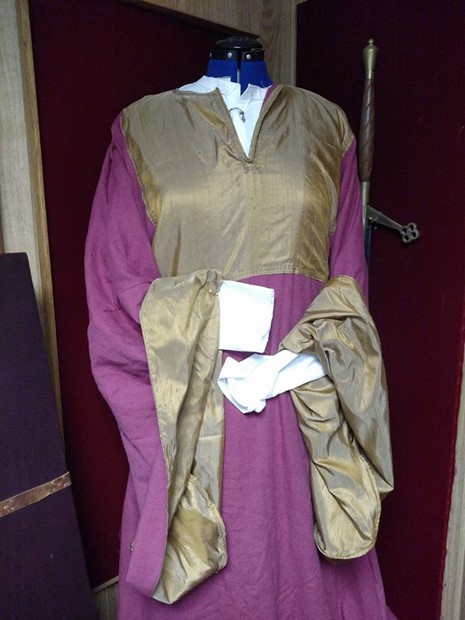
This bliaut is purple linen with gold silk around the collar as well as lining the sleeves. 

Inspiration Images

Common Materials

  • Fabrics:
    • Some think images of fine pleats to represent silks
    • fine wools
    • rich fabrics
    • perhaps linen
  • Ornamentation:

Effective Substitutions

  • Fabrics:
    • cottons
    • linen blends
    • wool blends
    • muslin for undergarments
  • Ornamentation:

Ensemble Components

  • Underdress
  • Bliaut overdress

  • various head coverings

Accessories

  • a belt wrapped around the body
  • pouch or purse
  • wimple or veiled head covering

Source/Links

https://www.eg.bucknell.edu/~lwittie/sca/garb/bliaut.html

http://danikaulakisart.com/bliaut.pdf

https://adamselindisdress.blog/2014/04/28/12th-century-dress-the-bliaut/

Version: 3
date: 3/6/2021
Source of Period Pic: Chartres cathedral ,Angers cathedral, France, sculpture at West Portal , Sculptures on the exterior of the Cathedral of Notre-Dame de Chartres
Model:
Photographer: Vincent De Vere