Female, Full Entry

1000 CE Female Norman Gown 2

Title: 1000 CE Female Norman Gown 2
Entry #: GGB2021.018
Alternate Names: Gown, Cotte, tunic dress 
Year: 1100 CE
Time range: 900-1150CE
Era: High Medieval
Gender: Female
region: Western Europe
Countries/cultures: Norman, Anglo Saxon, England, france
Maker: Christine Misterka
Difficulty: 1
Confidence: Image Examples

Intro:

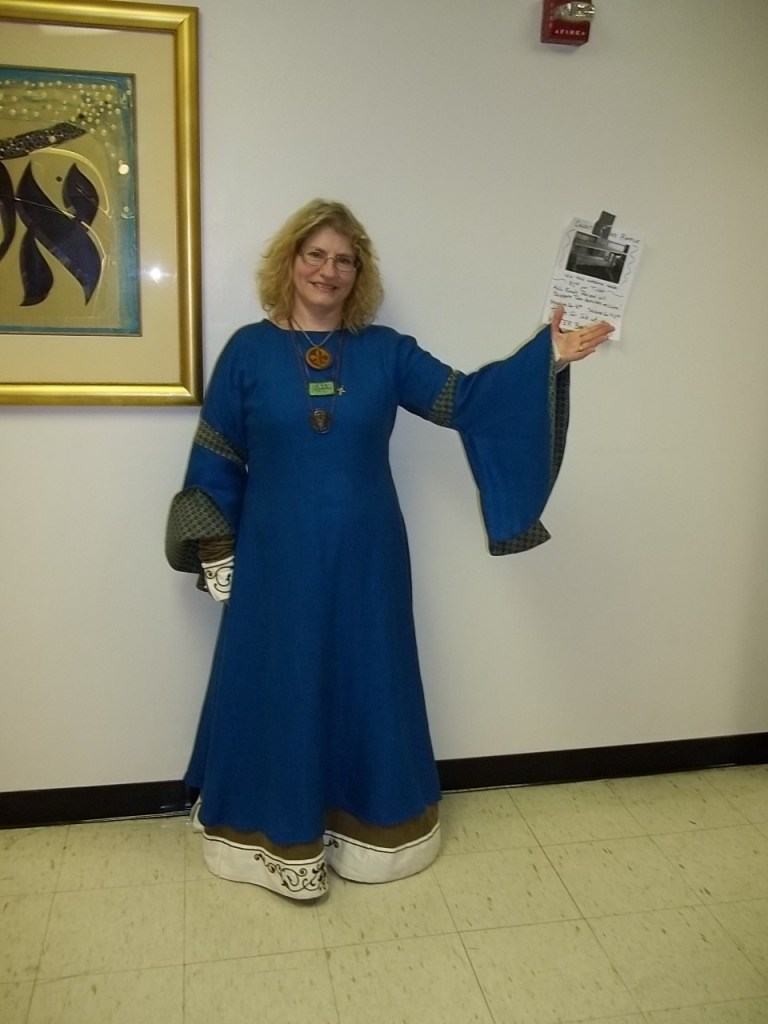
A common tunic dress style garment prevalent both in England as well as central Europe for the time leading up to and after the Norman invasion of 1066 CE

Description:

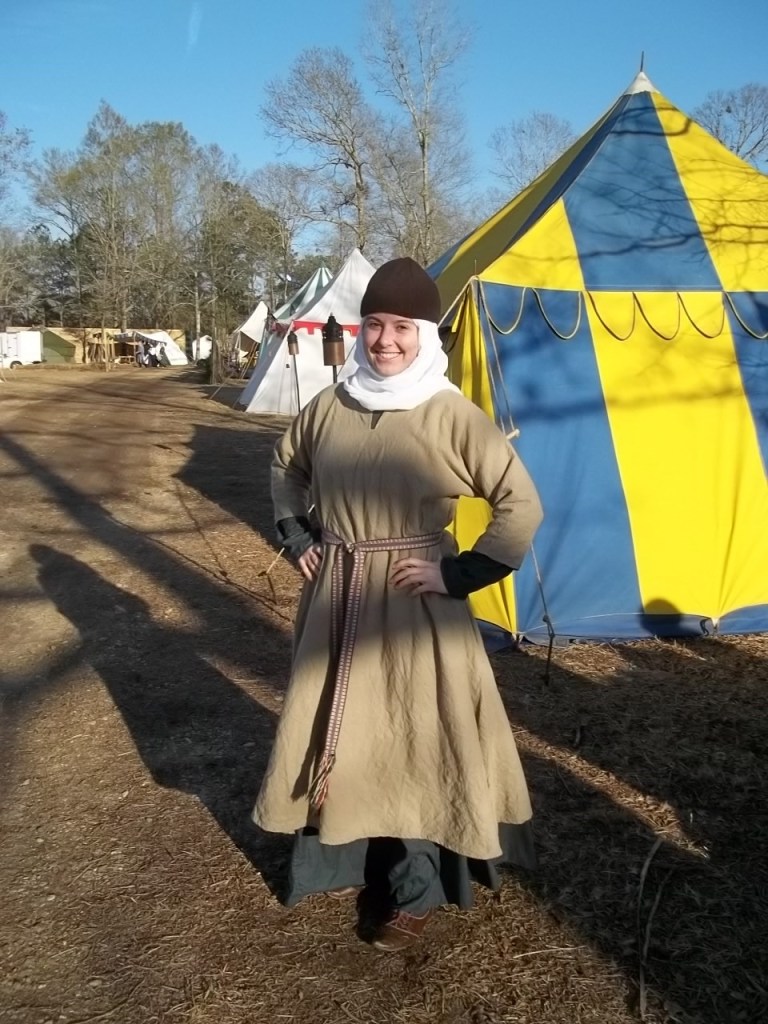
A common style worn by women in pre and post Norman invasion in England as well as France consisted of a tunic style underdress and over dress.

The underdress called a chemise, chainse or smock would commonly be made of linen. 

The over tunic or cotte would be longer for higher status women or shorter for working class. Sleeves are shown in some painting both tight to the wrist as well as bell or trumpet sleeves. Commonly made out of wool and perhaps decorated with embroidery or the applique of contrasting fabrics.

Commonly work with this would be simple turn or bag shoes, and a head covering such as a wimple and veil. 

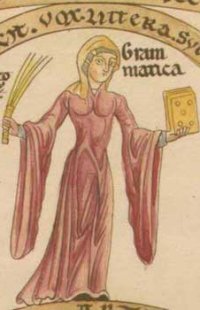
This dress is constructed as a tunic style dress,  A blue bell-sleeved over dress, or gown, worn over a green and white underdress, with a chemise under that.

Inspiration Images
Common Materials

  • Fabrics:
    • Underdress – Linen, including non-flax linens
    • Overdress – Wool
    • Wimple/veil – Linen or silk for high status women
  • Ornamentation:

Effective Substitutions

  • Fabrics:
    • Underdress – linen, linen blends, cottons
    • Overdresses – Wool blends, linens, linen blends, some heaver cottons
    • Wimple/Veil – linen, silk, poly (watch out for candles!)
  • Ornamentation:

Ensemble Components

  • Underdress – below the knee, long sleeved, white or off white light fabrics
  • Overdress

  • Headwear
  • Shoes

Accessories

  • Belt
  • Pouch
  • Bag

Source/Links

Version: 2
date: 3/5/2021
Source of Period Pic: Figure of Grammatica, from the Hortus Deliciarum – 12th century
Model: Christine Misterka
Photographer: Vincent De Vere
  

Female, Full Entry

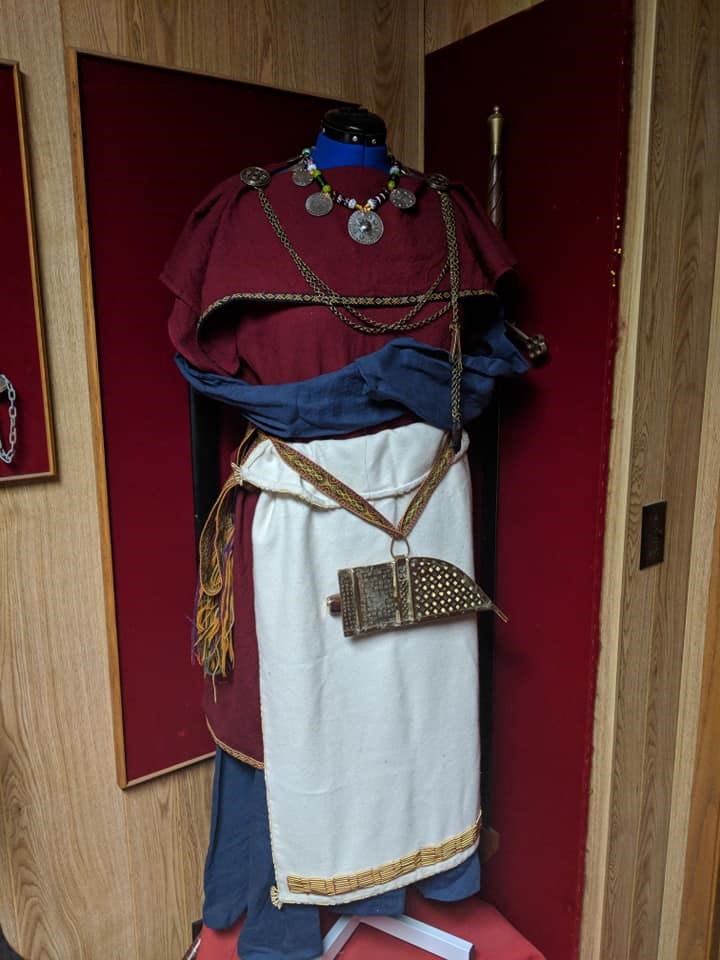
1000 CE Finnish “Eura” Dress 1

Title: 1000 CE Finnish “Eura” Dress 1
Entry #: GGB2021.021
Alternate Names: Luistari in Eura – Grave #56 
Year: 1000 CE
Time range:
Era: Early Medieval
Gender: Female
region: Eastern Baltic
Countries/cultures: Baltic Tribes – Finland
Maker: Vincent De Vere, Zaneta Baseggio, Kristine Nic Tallieur
Difficulty: 4
Confidence: Remains of Extant example

Intro:

A fragmentary grave find of a Finnish dress.  Style consists of an under tunic, an over dress of two rectangles of fabric and an apron.  The layers are decorated with tablet weaving and metal coils.  The grave find also was rich in metal artifacts

Description:

The complexity of this garment is in the decoration and accessories.  The basic garment layers are exceedingly simple.

Under tunic:  the base layer under tunic would most likely have been flax or nettle linen.  It consists of 6 pieces, front and back panels, under arm gores extending into the sleeves and the sleeves that extend from hand to neckline.

Overdress:  the over dress is related to other Norse dresses as well as stylistically similar to a peplos.  It is two rectangles that are folded over at the top, pinned at the shoulders and stitched or pinned at the sides. This layer is likely wool in a tabby weave and decorated by tablet weaving.

Apron: The apron is folded over a belt and was likely wool.  The notable thing about the aprons are their decorations made from coils of wire attached at the edges and along the bottom in a variety of styles and decorations. 

Accessories:

Metal coiled arm bracelets (a very close approximation was sold as costume jewelry recently and can still be found)

Necklace made from coins and lampwork beads

Knife sheath and “puco” knife

Eura is a region in south west Finland.  Many graves have been excavated in Luistari in the 1960’s and 70’s.  Fabric reminants were preserved due to oxides from the metal finds. Grave 56 was a focus of attention because the metal preserved enough of the fabric in key points to allow for a reconstruction with some certainty

Inspiration Images

Common Materials

  • Fabrics:
    • Under dress: linen
    • over dress: wool
    • apron: wool
  • Ornamentation:
    • tablet woven trim
    • brass and bronze alloy coils
    • glass beads

Effective Substitutions

  • Fabrics:
    • Cottons and linen blends for the under dress
    • wool blends or linens and linen blends for the over dress in summer
    • wool blends or linen and linen blends for the apron
    • Some analysis of the actual colors of the grave finds has been done.  SCA recreations commonly use colors that are available through natural dyes and are therefore plausible.
  • Ornamentation:

Ensemble Components

  • Underdress
  • Overdress
  • Apron
  • Belt

  • Optional Mantle (shawl)
  • Simple leather Shoes in the style of “bag shoes”
  • Metal and glass accessories

Accessories

  • Pair of brooch pins holding the overdress together at the shoulders
  • Rings
  • Knife and knife sheath

  • chains between the brooches
  • bracelets including the spiral bracelet
  • necklace made from coins and glass beads

Source/Links

http://www.katajahovi.org/en/costumes.html

http://www.vikinganswerlady.com/FTP_Files/Ancient_Finnish_Costumes.PDF

Version: 2
date: 2/26/2021
Source of Period Pic:
Model:
Photographer: Vincent de Vere
  

Female, Full Entry

1000 CE Female Norman Gown 1

Title: 1000 CE Female Norman Gown 1
Entry #: GGB2021.017
Alternate Names: Gown, Cotte, tunic dress 
Year: 1100 CE
Time range: 900-1150CE
Era: High Medieval
Gender: Female
region: Western Europe
Countries/cultures: Norman, Anglo Saxon, England, france
Maker: Hanne Abendschein
Difficulty: 2
Confidence: Image Examples

Intro:

A common tunic dress style garment prevalent both in England as well as central Europe for the time leading up to and after the Norman invasion of 1066 CE

Description:

A common style worn by women in pre and post Norman invasion in England as well as France consisted of a tunic style underdress and over dress.

The underdress called a chemise, chainse or smock would commonly be made of linen. 

The over tunic or cotte would be longer for higher status women or shorter for working class. Sleeves are shown in some painting both tight to the wrist as well as bell or trumpet sleeves. Commonly made out of wool and perhaps decorated with embroidery or the applique of contrasting fabrics.

Commonly work with this would be simple turn or bag shoes, and a head covering such as a wimple and veil. 

This dress is constructed as a tunic style dress,  A blue bell-sleeved over dress, or gown, worn over a green and white underdress, with a chemise under that.

Inspiration Images

Common Materials

  • Fabrics:
    • Underdress – Linen, including non-flax linens
    • Overdress – Wool
    • Wimple/veil – Linen or silk for high status women
  • Ornamentation:

Effective Substitutions

  • Fabrics:
    • Underdress – linen, linen blends, cottons
    • Overdresses – Wool blends, linens, linen blends, some heaver cottons
    • Wimple/Veil – linen, silk, poly (watch out for candles!)
  • Ornamentation:

Ensemble Components

  • Underdress – below the knee, long sleeved, white or off white light fabrics
  • Overdress

  • Headwear
  • Shoes

Accessories

  • Belt
  • Pouch
  • Bag

Source/Links

Version: 2
date: 3/5/2021
Source of Period Pic: Figure of Grammatica, from the Hortus Deliciarum – 12th century
Model: Hanne Abendschein
Photographer: Vincent De Vere
  

Basic Entry, Female

1000 CE Female Turkish

Title: 1000 CE Female Turkish
Entry #: GGB2021.020
Alternate Names:  
Year: 1000 CE
Time range:
Era: Early Medieval
Gender: Female
region: Middle East
Countries/cultures: Turkey
Maker: Judor
Difficulty: 2
Confidence: No Information Provided

Intro:

Description:

Inspiration Images

Common Materials

  • Fabrics:
  • Ornamentation:

Effective Substitutions

  • Fabrics:
  • Ornamentation:

Ensemble Components

Accessories

Source/Links

Version: 2
date: 3/6/2021
Source of Period Pic:
Model: Judur 020213-20
Photographer: Vincent De Vere
  

Component Entry, Female, Male, Unisex

Narrow Belt with Reproduction Buckle

TitleNarrow Belt with Reproduction Buckle
Entry #GGC2021.032
Alternate NamesBelt
Year1066 CE
Time range1000-1200CE
EraHigh Medieval
GenderUnisex
regionEurope
Countries/culturesEurope
MakerVincent De Vere,
Difficulty1
ConfidenceExtant Example

Intro:

 Various belts.      

Description:

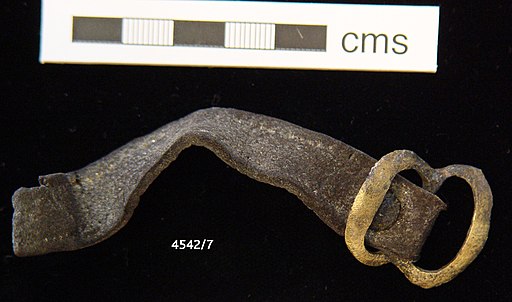
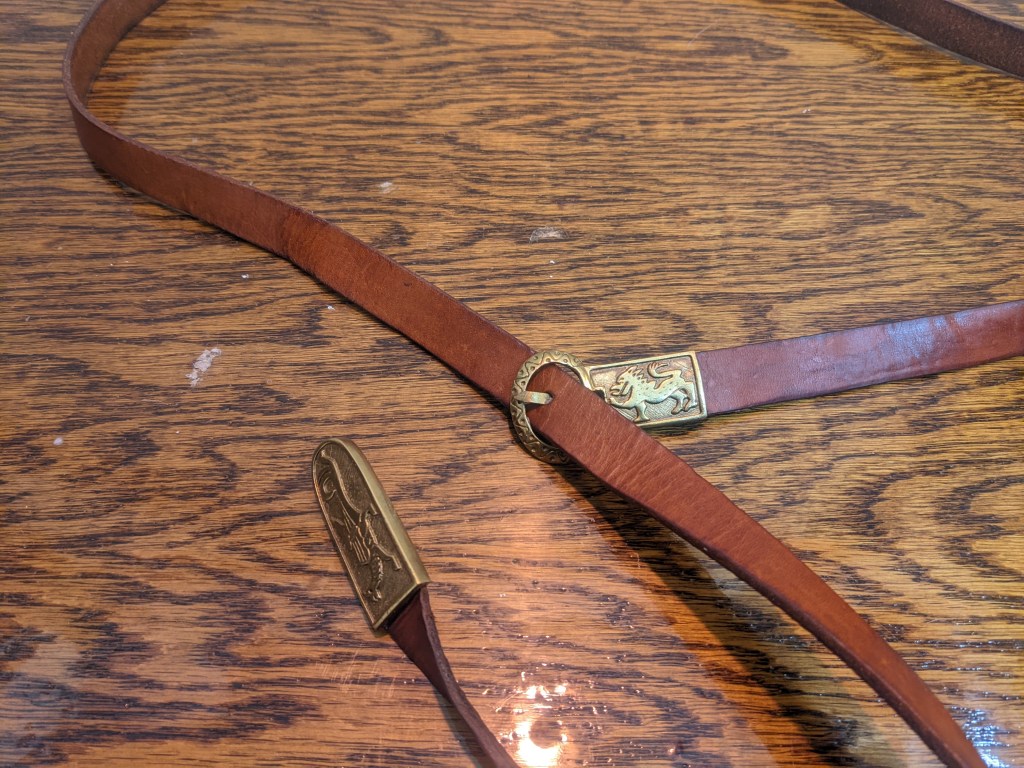
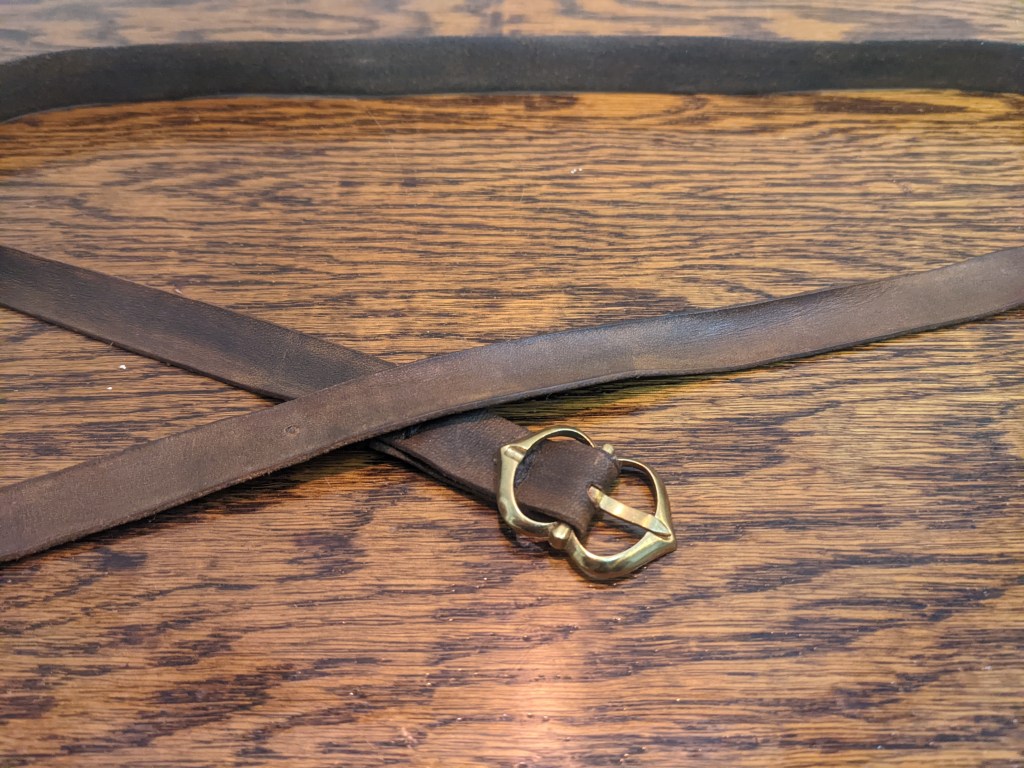
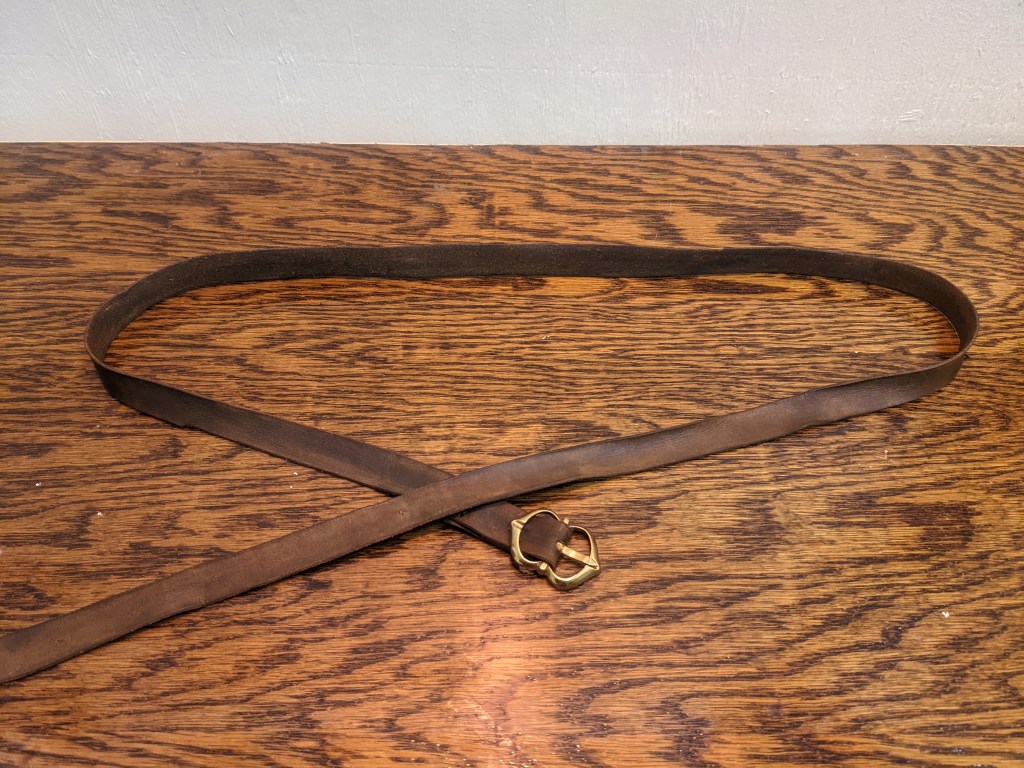
This is a reproduction of an extant example buckle and strap end attached to a strip of leather to form a belt.

This reproduction buckle is based on an extant example and was dated to a time range in the high medieval period. It is available through several reputable vendors. It would be an example of a very inexpensive reproduction piece.

Inspiration Images

Common Materials

  • Fabrics:
    • Leather
  • Ornamentation:

Effective Substitutions

  • Fabrics:
    • Leather
  • Ornamentation:

Ensemble Components

Accessories

Source/Links

The Portable Antiquities Scheme/ The Trustees of the British Museum, CC BY-SA 4.0 <https://creativecommons.org/licenses/by-sa/4.0&gt;, via Wikimedia Commons

https://armourandcastings.com/en_US/products/prjazhka-e14-2

Norman belt set, Britain, 11-12 c. For 20 mm wide belt.

Version1
date1/2/2022
Source of Period PicBritish Museum
Model 
PhotographerVincent De Vere
  
Component Entry, Unisex

Shoe, bag shoe

TitleShoe, bag shoe
Entry #GGC2022.017
Alternate Names
Year1000 CE
Time range3000 BCE – 1200 CE
Eraall
Genderunisex
regionEurope
Countries/cultures
MakerVincent De Vere,
Difficulty1
ConfidenceExtant Examples

Intro:

Simple slip on shoes.

Description:

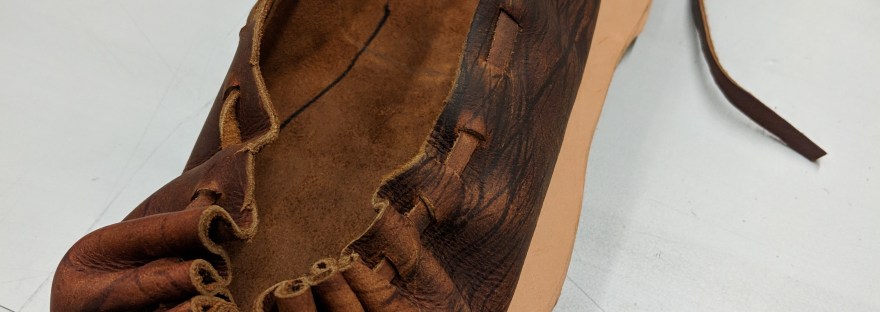
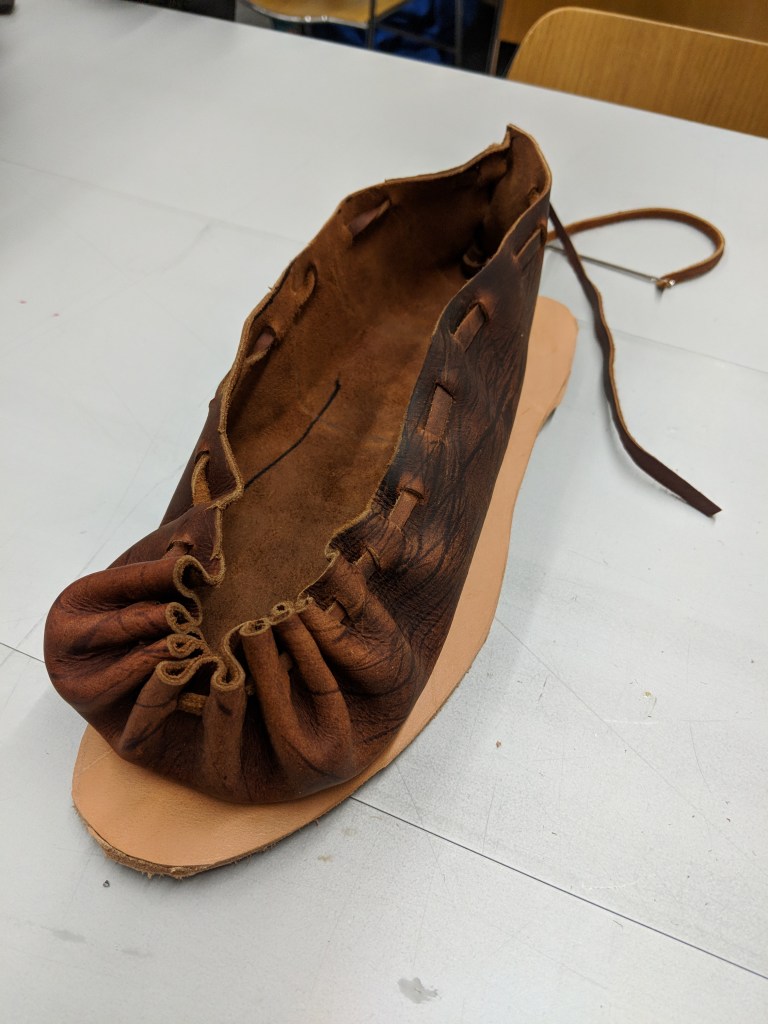
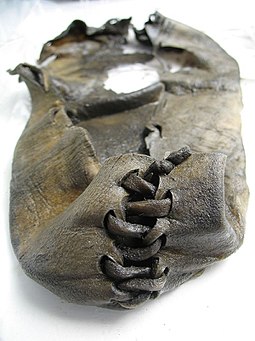
Low slip on shoes that are constructed from a single piece of leather and a leather thong.  Evidence of shoes much like this have been found to our knowledge, from sites ranging from 3000 BCE to 1200 CE or later.  Basic shoes of this style have also been found in the archeological record across Europe. 

This recreation shoe later had a stiffing sole and tread glued to the bottom to prevent the wearer from slipping at events.  Although this modification is not historically correct, modifications done for personal safety and comfort are common in the SCA.

Inspiration Images

Common Materials

  • Fabrics:
    • Leather
  • Ornamentation:

Effective Substitutions

  • Fabrics:
    • chrome tanned leather, but oak tan/veg tan leather will work far better

Ensemble Components

Accessories

Source/Links

The Jotunheimen shoe. Vegard Vike/Kulturhistorisk museum, CC BY-SA 4.0 <https://creativecommons.org/licenses/by-sa/4.0&gt;, via Wikimedia Commons

Stepping Through Time: Archaeological Footwear from Prehistoric Times until 1800, By Olaf Goubitz.  ISBN  9089320040 ISBN-13 ‏ : ‎ 978-9089320049

Version1
date1/9/2022
Source of Period PicThe Jotunheimen shoe. Vegard Vike/Kulturhistorisk museum, CC BY-SA 4.0 <https://creativecommons.org/licenses/by-sa/4.0&gt;, via Wikimedia Commons
Model 
PhotographerVincent De Vere
  

Female, Full Entry

1100 CE Female Norman Gown 4

Title: 1100 CE Female Norman Gown 4
Entry #: GGB2021.030
Alternate Names: Gown, Cotte, 
Year: 1100 CE
Time range: 1000-1200 CE
Era: High Medieval
Gender: Female
region: Western Europe
Countries/cultures: Norman, Anglo Saxon, England, france
Maker: Elspeth Stonehaven
Difficulty: 1
Confidence: Image Examples

Intro:

A common tunic dress style garment prevalent both in England as well as central Europe for the time leading up to and after the Norman invasion of 1066 CE

Description:

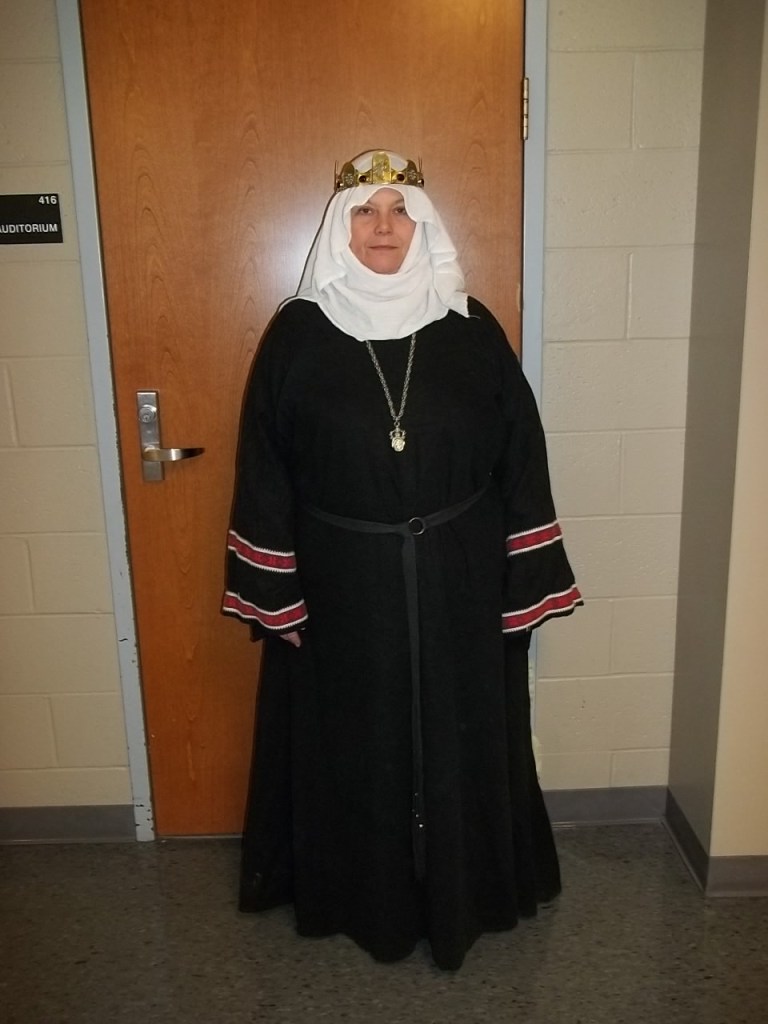
A common style worn by women in pre and post Norman invasion in England as well as France consisted of a tunic style underdress and over dress.

The underdress called a chemise, chainse or smock would commonly be made of linen. 

The over tunic or cotte would be longer for higher status women or shorter for working class. Sleeves are shown in some painting both tight to the wrist as well as bell or trumpet sleeves. Commonly made out of wool and perhaps decorated with embroidery or the applique of contrasting fabrics.

Commonly work with this would be simple turn or bag shoes, and a head covering such as a wimple and veil. 

This dress is constructed as a tunic style dress,  A blue bell-sleeved over dress, or gown, worn over a green and white underdress, with a chemise under that.

Inspiration Images

Common Materials

  • Fabrics:
    • Underdress – Linen, including non-flax linens
    • Overdress – Wool
    • Wimple/veil – Linen or silk for high status women
  • Ornamentation:

Effective Substitutions

  • Fabrics:
    • Underdress – linen, linen blends, cottons
    • Overdresses – Wool blends, linens, linen blends, some heaver cottons
    • Wimple/Veil – linen, silk, poly (watch out for candles!)
  • Ornamentation:

Ensemble Components

  • Underdress – below the knee, long sleeved, white or off white light fabrics
  • Overdress

  • Headwear
  • Shoes

Accessories

  • Belt
  • Pouch
  • Bag

Source/Links

Version: 2
date: 3/5/2021
Source of Period Pic: Figure of Grammatica, from the Hortus Deliciarum – 12th century
Model: Elspeth Stonehaven
Photographer: Vincent De Vere
  

Component Entry, Female, Male, Unisex

Simple Narrow Belt with Reproduction Buckle

TitleSimple Narrow Belt with Reproduction Buckle
Entry #GGC2021.031
Alternate NamesBelt
Year1350
Time rangeAntiquity to end of period
EraAntiquity to end of period
GenderUnisex
regionEurope
Countries/culturesEurope
MakerVincent De Vere,
Difficulty1
ConfidenceExtant Example

Intro:

 Various belts.      

Description:

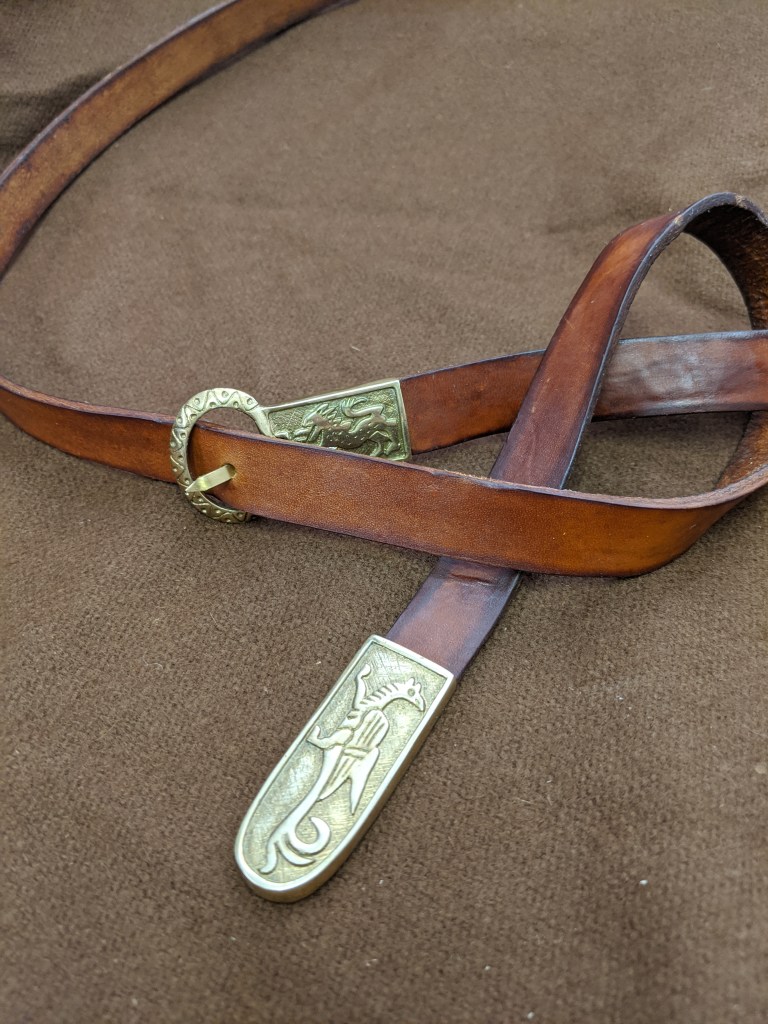
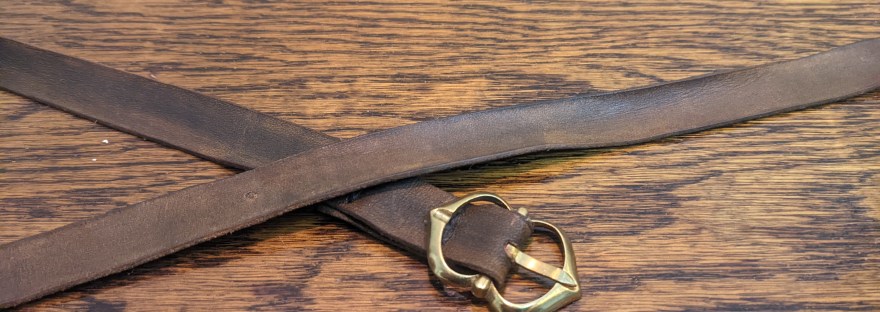
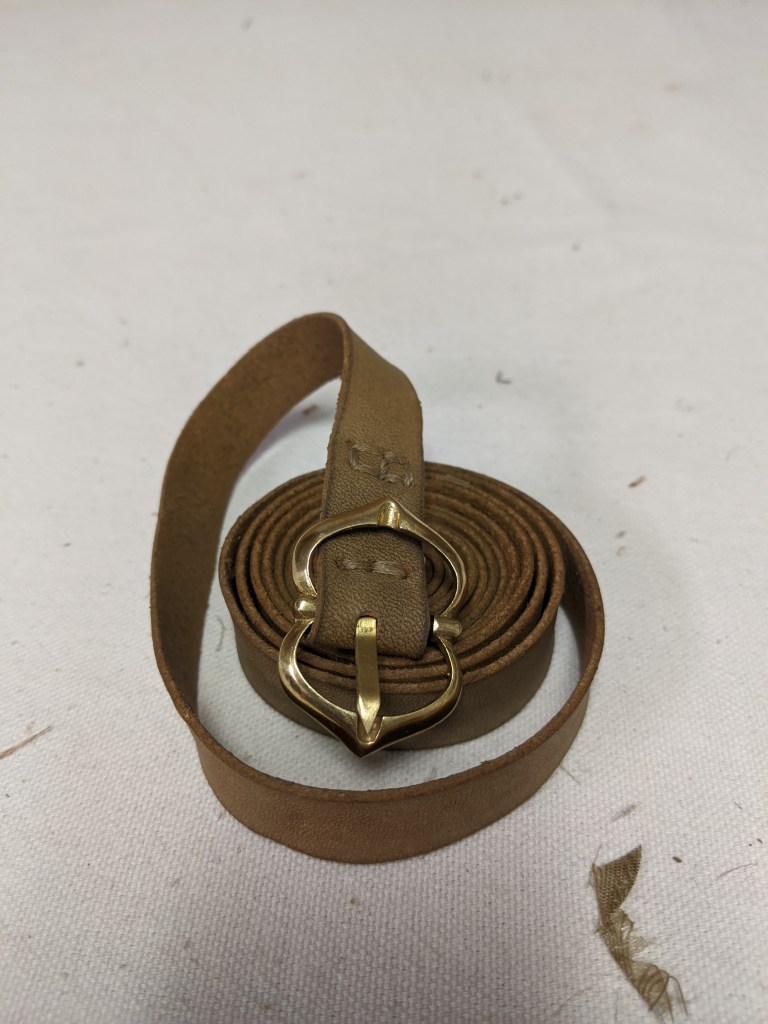
This is a modern buckle taken from a worn out belt and attached to a strip of leather to form a belt. This easily made belt works very well for people new to the SCA.

This reproduction buckle is based an extant example dated to arround 1350 CE, but is very similar to many others from different time periods. It is available through several reputable vendors. It would be an example of a very inexpensive reproduction piece.

Inspiration Images

Common Materials

  • Fabrics:
    • Leather
  • Ornamentation:

Effective Substitutions

  • Fabrics:
    • Leather
  • Ornamentation:

Ensemble Components

Accessories

Source/Links

The Portable Antiquities Scheme/ The Trustees of the British Museum, CC BY-SA 4.0 <https://creativecommons.org/licenses/by-sa/4.0&gt;, via Wikimedia Commons

Version1
date1/2/2022
Source of Period PicBritish Museum
Model 
PhotographerVincent De Vere
  
Component Entry, Female

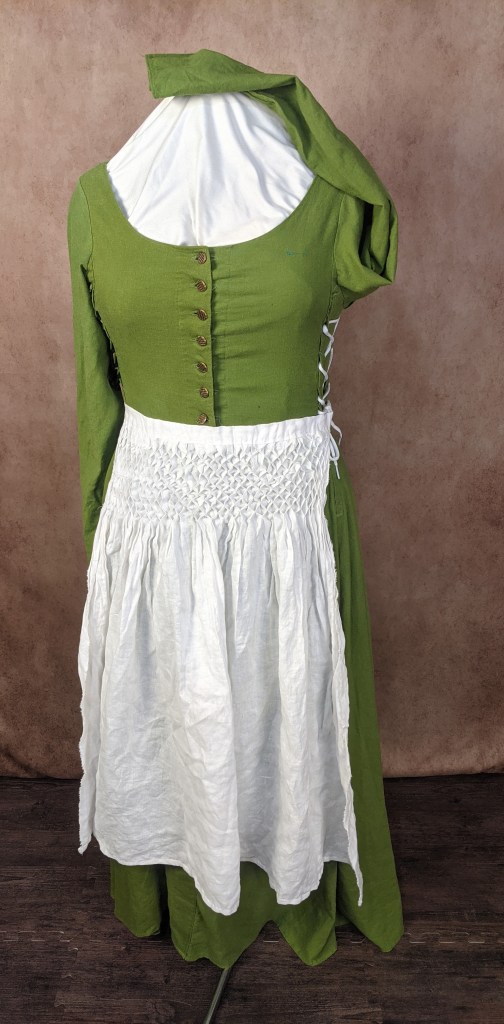
Apron, pleated

TitleApron, gathered
Entry #GGC2021.017
Alternate NamesApron
Year1000-1600 CE
Time range1000-1600 CE
Erahigh Medieval, Late Medieval
Genderwomen
regionEuropean
Countries/culturesWestern European, Central European
MakerVincent De Vere,
Difficulty2
ConfidenceImage Example

Intro:

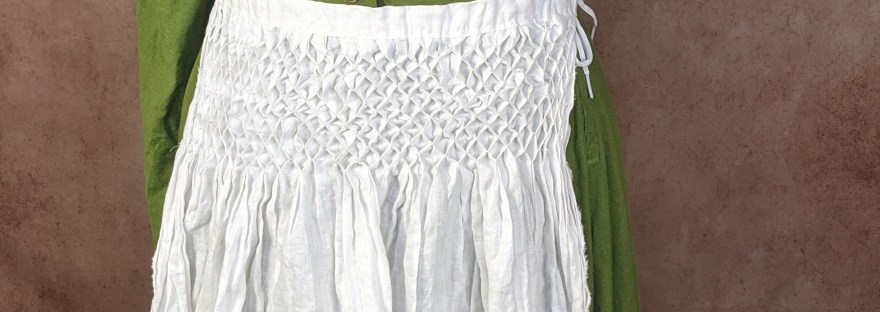
Apron made from one yard of linen fabric featuring honeycomb pleating decoration.                                    

Description:

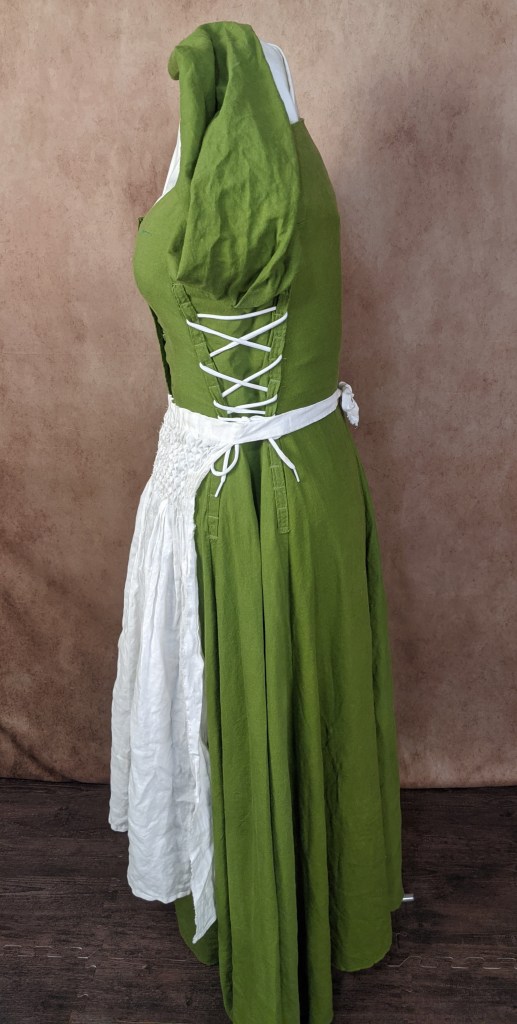
This apron is made from three pieces with two long narrow strips sewn into the waistband and one large rectangle decorated with honeycomb pleating.

Aprons are easily constructed accessories that are also functional accessories to use with your SCA clothing.  They can easily be made in a few minutes by machine or just a couple hours by hand.  They add to the completeness of an ensemble by adding another layer to the look.  They are also very functional in protecting the clothing beneath it.

The honeycomb pleating makes this apron appear much more complex but the decoration can be done in a few hours of work and makes a much more decorative accessory.  

Inspiration Images

Common Materials

  • Fabrics:
    • Linen  

Effective Substitutions

  • Fabrics:
    • linen blends
    • Linen
    • cotton
    • cotton blends

Ensemble Components

  •  

Accessories

Source/Links

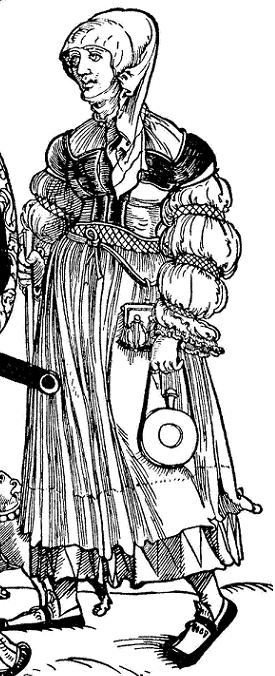
woodcut Tailor and Seamstress by Erhard Schon, 1525-1530

These are images from the The German single-leaf woodcut, 1500-1550, Max Geisberg ; rev. and edited by Walter L. Strauss, New York : Hacker Art Books, 1974.

Version1
date12/30/2021
Source of Period PicThe German single-leaf woodcut,
Model Vincent de Vere
PhotographerVincent De Vere