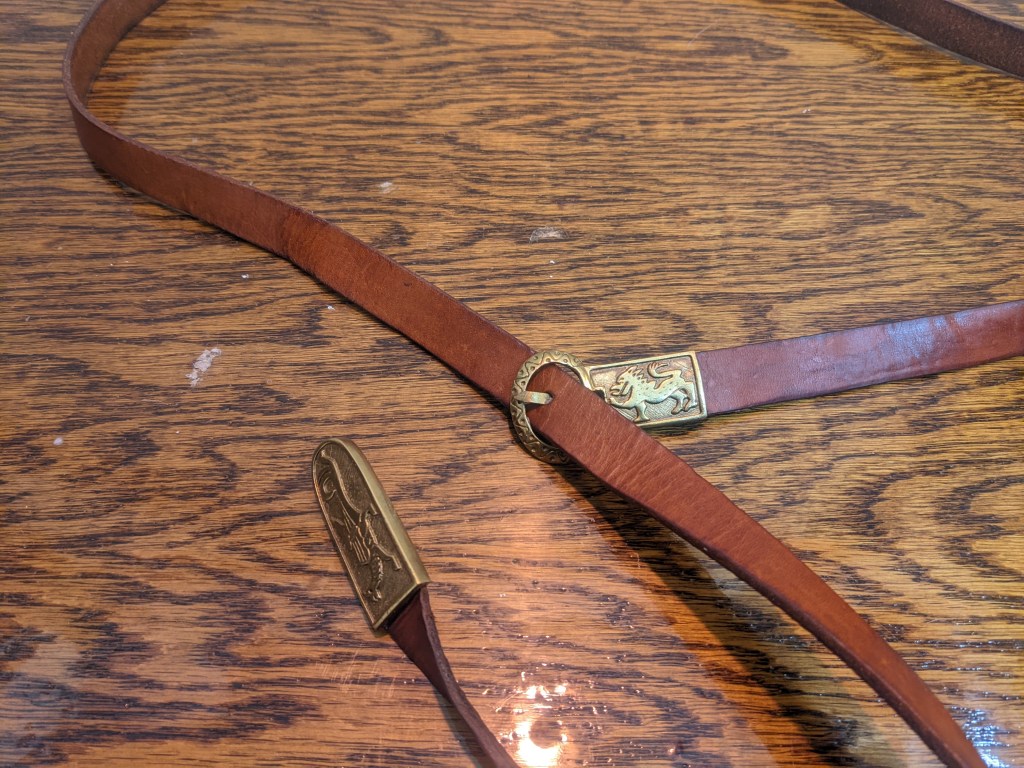
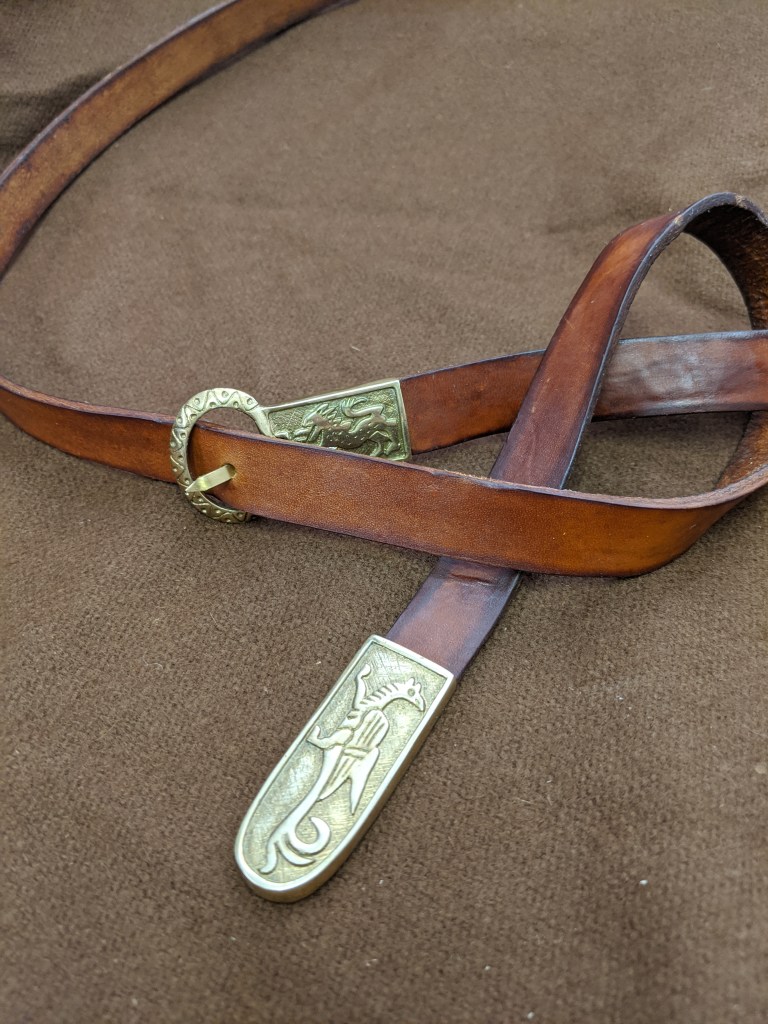
This is a reproduction of an extant example buckle and strap end attached to a strip of leather to form a belt.
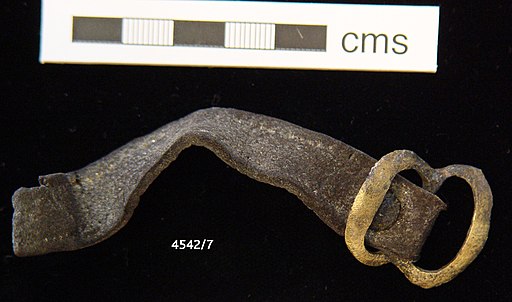
This reproduction buckle is based on an extant example and was dated to a time range in the high medieval period. It is available through several reputable vendors. It would be an example of a very inexpensive reproduction piece.
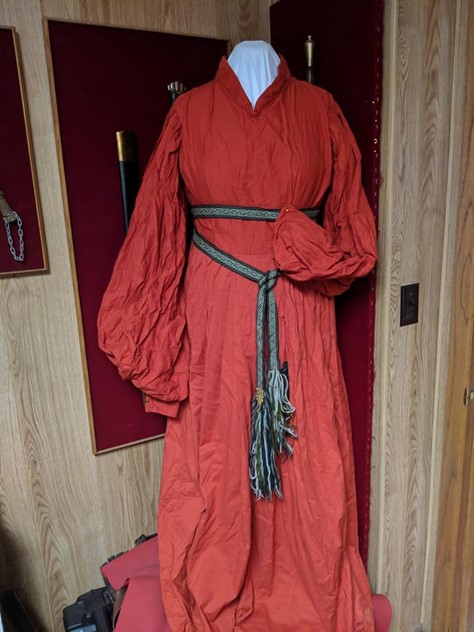
Buttercup’s riding Dress from the first part of the Princess Bride. This movie costume is very similar to a Bliaut.
Women’s or men’s over-garment characterized by the tunic like construction with side closures resulting in a more fitted silhouette. The attached skirts were full and floor length for women and shorter for men and the sleeves were commonly fitted above the elbow and trumpet shaped or widened out below the elbow.
Description:
Although similar to the basic t tunic dress the differences in the sleeves and the under-bust to waist area distinguish them. The sleeves vary in style, but predominantly are characterized by the fitted upper sleeve and the widened lower sleeve. The lower sleeve by be in the form of a trumpet sleeve or as extreme as examples that drag the floor. A lined sleeve that could be turned back to expose an expensive inner liner would also be seen.
The other major distinguishing feature is the under-bust puckering of the fabric. There remains multiple ways to achieve this look, but many have had success by elongating the under-bust to waist dress length by some number of inches and by adding lacing on the side of the dress to achieve the fitted look. Most evidence of the dress is found in areas of French fashion influence.
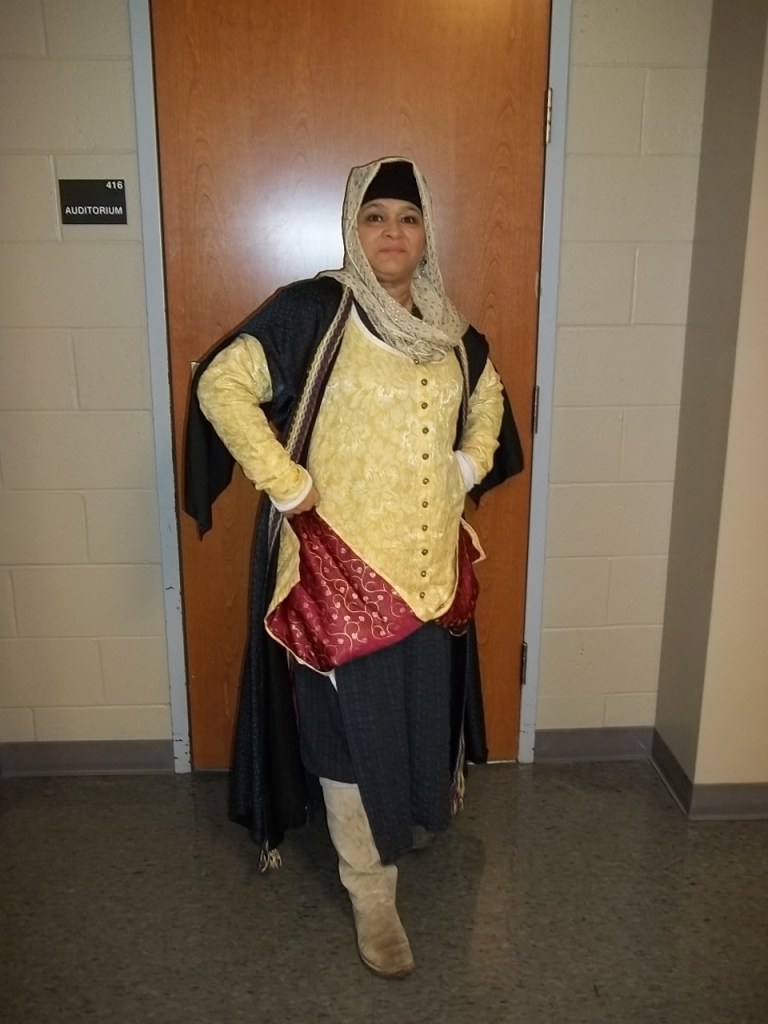
An Attempt of Buttercup’s dress. Much like a Bliaut but the sleeve had cuffs that were an adaptation for the movie.
Inspiration Images
Common Materials
Fabrics:
Some think images of fine pleats to represent silks
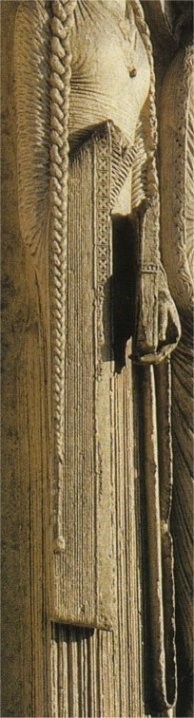
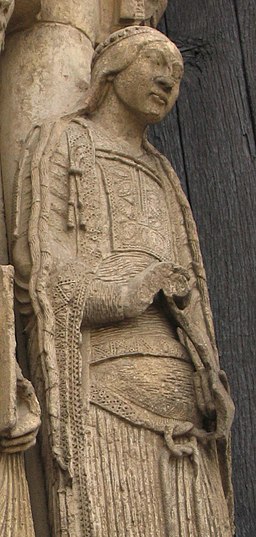
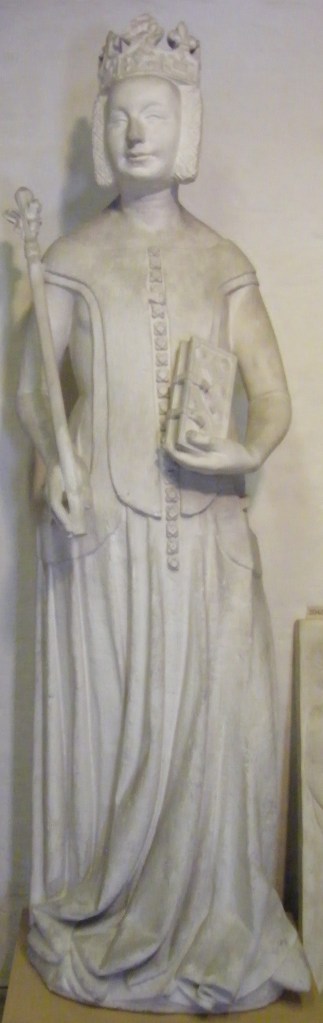
Source of Period Pic: Chartres cathedral ,Angers cathedral, France, sculpture at West Portal (detail of existing Commons image :Image:Angers Cathedral sculpture at west door TTaylor.jpg
Women’s or men’s over-garment characterized by the tunic like construction with side closures resulting in a more fitted silhouette. The attached skirts were full and floor length for women and shorter for men and the sleeves were commonly fitted above the elbow and trumpet shaped or widened out below the elbow.
Description:
Although similar to the basic t tunic dress the differences in the sleeves and the under-bust to waist area distinguish them. The sleeves vary in style, but predominantly are characterized by the fitted upper sleeve and the widened lower sleeve. The lower sleeve by be in the form of a trumpet sleeve or as extreme as examples that drag the floor. A lined sleeve that could be turned back to expose an expensive inner liner would also be seen.
The other major distinguishing feature is the under-bust puckering of the fabric. There remains multiple ways to achieve this look, but many have had success by elongating the under-bust to waist dress length by some number of inches and by adding lacing on the side of the dress to achieve the fitted look. Most evidence of the dress is found in areas of French fashion influence.
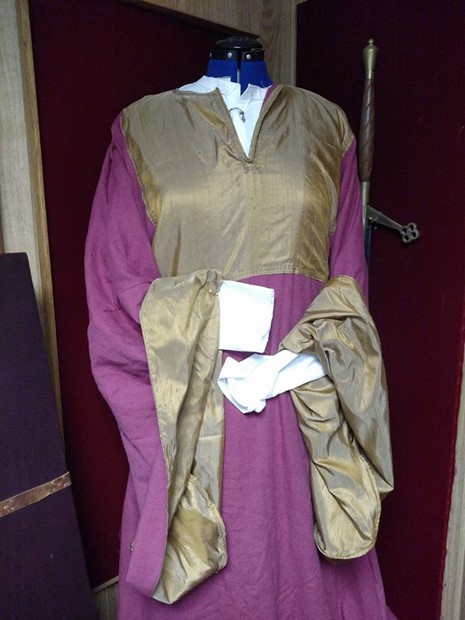
This bliaut is purple linen with gold silk around the collar as well as lining the sleeves.
Inspiration Images
Common Materials
Fabrics:
Some think images of fine pleats to represent silks
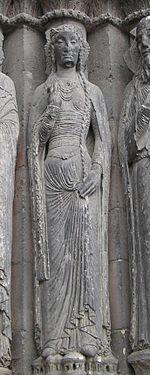
Source of Period Pic: Chartres cathedral ,Angers cathedral, France, sculpture at West Portal , Sculptures on the exterior of the Cathedral of Notre-Dame de Chartres
Women’s or men’s over-garment characterized by the tunic like construction with side closures resulting in a more fitted silhouette. The attached skirts were full and floor length for women and shorter for men and the sleeves were commonly fitted above the elbow and trumpet shaped or widened out below the elbow.
Description:
Although similar to the basic t tunic dress the differences in the sleeves and the under-bust to waist area distinguish them. The sleeves vary in style, but predominantly are characterized by the fitted upper sleeve and the widened lower sleeve. The lower sleeve by be in the form of a trumpet sleeve or as extreme as examples that drag the floor. A lined sleeve that could be turned back to expose an expensive inner liner would also be seen.
The other major distinguishing feature is the under-bust puckering of the fabric. There remains multiple ways to achieve this look, but many have had success by elongating the under-bust to waist dress length by some number of inches and by adding lacing on the side of the dress to achieve the fitted look. Most evidence of the dress is found in areas of French fashion influence.
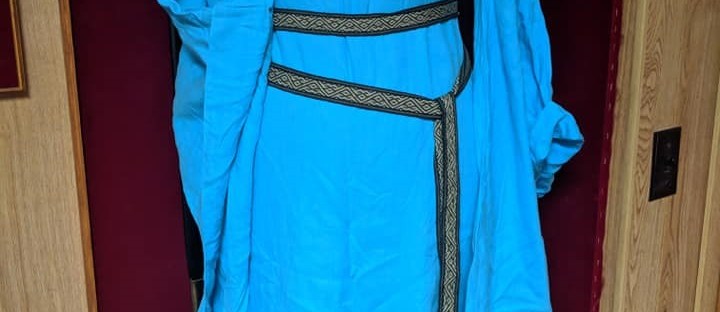
This is a simplified bliaut made from blue linen blend fabric constructed in a simplified way. It lacks decoration or lining but is a very simple to construct garment
Inspiration Images
Common Materials
Fabrics:
Some think images of fine pleats to represent silks
Source of Period Pic: Chartres cathedral ,Angers cathedral, France, sculpture at West Portal , Sculptures on the exterior of the Cathedral of Notre-Dame de Chartres
Women’s or men’s over-garment characterized by the tunic like construction with side closures resulting in a more fitted silhouette. The attached skirts were full and floor length for women and shorter for men and the sleeves were commonly fitted above the elbow and trumpet shaped or widened out below the elbow.
Description:
Although similar to the basic t tunic dress the differences in the sleeves and the under-bust to waist area distinguish them. The sleeves vary in style, but predominantly are characterized by the fitted upper sleeve and the widened lower sleeve. The lower sleeve by be in the form of a trumpet sleeve or as extreme as examples that drag the floor. A lined sleeve that could be turned back to expose an expensive inner liner would also be seen.
The other major distinguishing feature is the under-bust puckering of the fabric. There remains multiple ways to achieve this look, but many have had success by elongating the under-bust to waist dress length by some number of inches and by adding lacing on the side of the dress to achieve the fitted look. Most evidence of the dress is found in areas of French fashion influence.
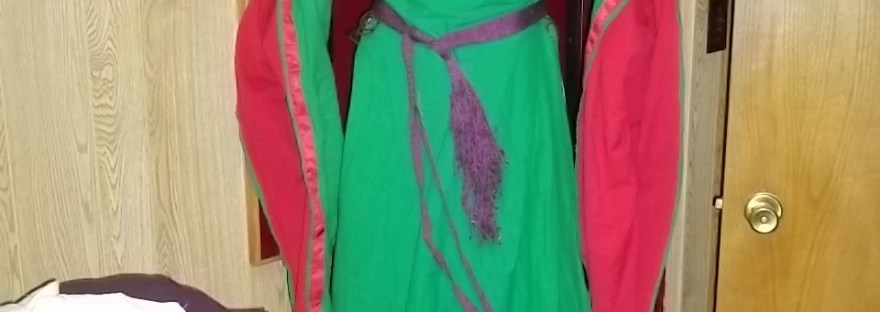
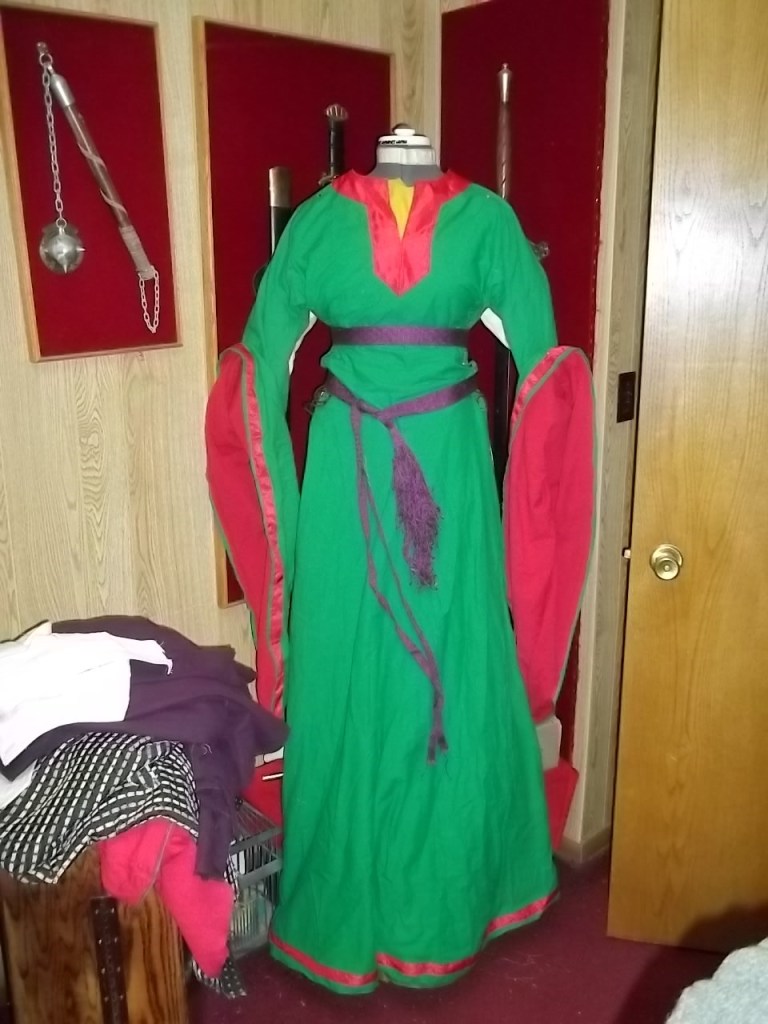
This bliaut is green linen blend decorated with silk around the neck, sleeves and hem. The sleeves are lined in a bright contrasting red linen blend.
Inspiration Images
Common Materials
Fabrics:
Some think images of fine pleats to represent silks
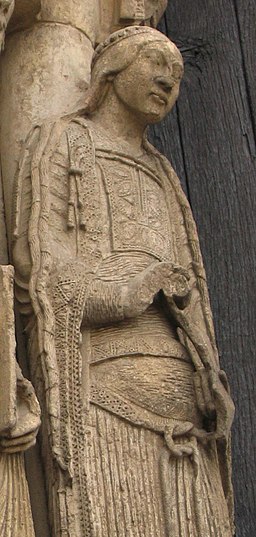
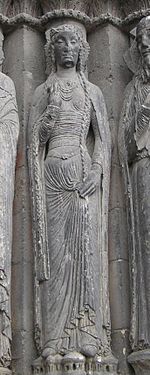
Source of Period Pic: Chartres cathedral ,Angers cathedral, France, sculpture at West Portal , Sculptures on the exterior of the Cathedral of Notre-Dame de Chartres
A common tunic dress style garment prevalent both in England as well as central Europe for the time leading up to and after the Norman invasion of 1066 CE
Description:
A common style worn by women in pre and post Norman invasion in England as well as France consisted of a tunic style underdress and over dress.
The underdress called a chemise, chainse or smock would commonly be made of linen.
The over tunic or cotte would be longer for higher status women or shorter for working class. Sleeves are shown in some painting both tight to the wrist as well as bell or trumpet sleeves. Commonly made out of wool and perhaps decorated with embroidery or the applique of contrasting fabrics.
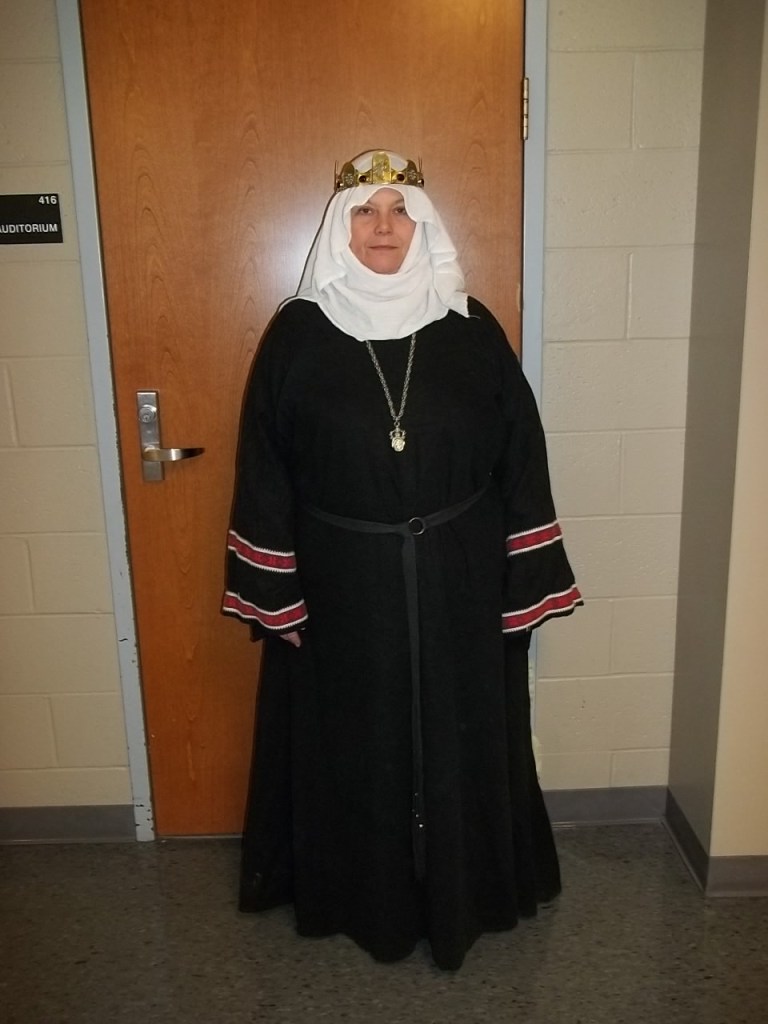
Commonly work with this would be simple turn or bag shoes, and a head covering such as a wimple and veil.
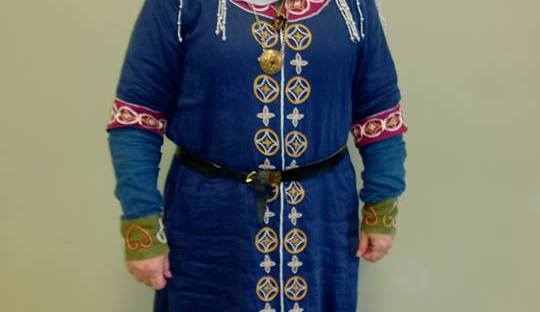
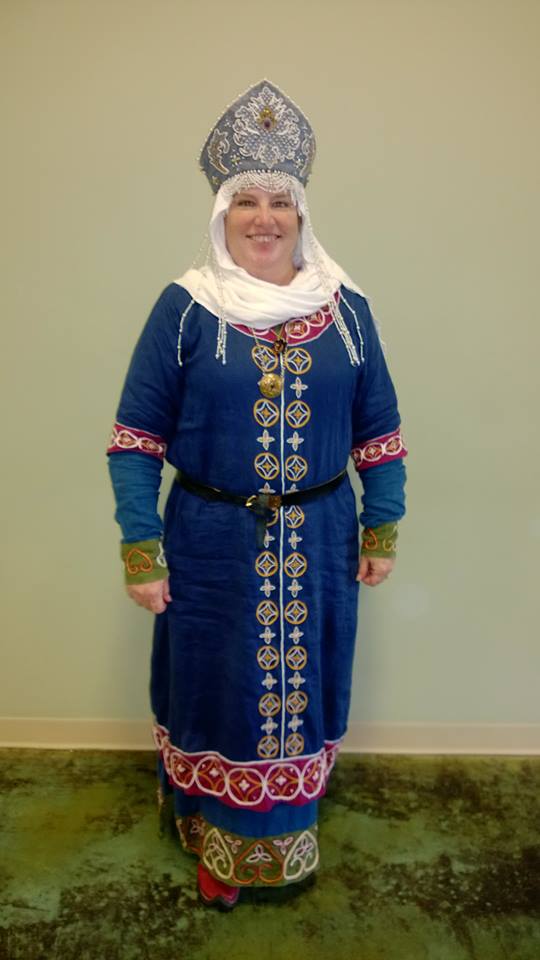
This dress is constructed as a tunic style dress, A blue bell-sleeved over dress, or gown, worn over a green and white underdress, with a chemise under that.
Inspiration Images
Common Materials
Fabrics:
Underdress – Linen, including non-flax linens
Overdress – Wool
Wimple/veil – Linen or silk for high status women
Ornamentation:
Effective Substitutions
Fabrics:
Underdress – linen, linen blends, cottons
Overdresses – Wool blends, linens, linen blends, some heaver cottons
Wimple/Veil – linen, silk, poly (watch out for candles!)
Ornamentation:
Ensemble Components
Underdress – below the knee, long sleeved, white or off white light fabrics
Overdress
Headwear
Shoes
Accessories
Belt
Pouch
Bag
Source/Links
Version: 2
date: 3/5/2021
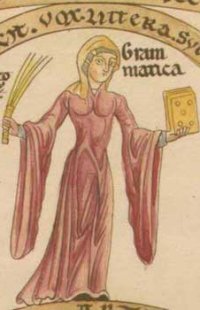
Source of Period Pic: Figure of Grammatica, from the Hortus Deliciarum – 12th century
Outer layer garment with deeply cut arm holes worn with often form fitted undergarments that came in many variations and with examples for all sexes.
Description:
Sideless Surcotes are easily spotted by the deeply cut arm holes. They commonly expose a more fitted garment beneath such as kirtles or fitted cotes.
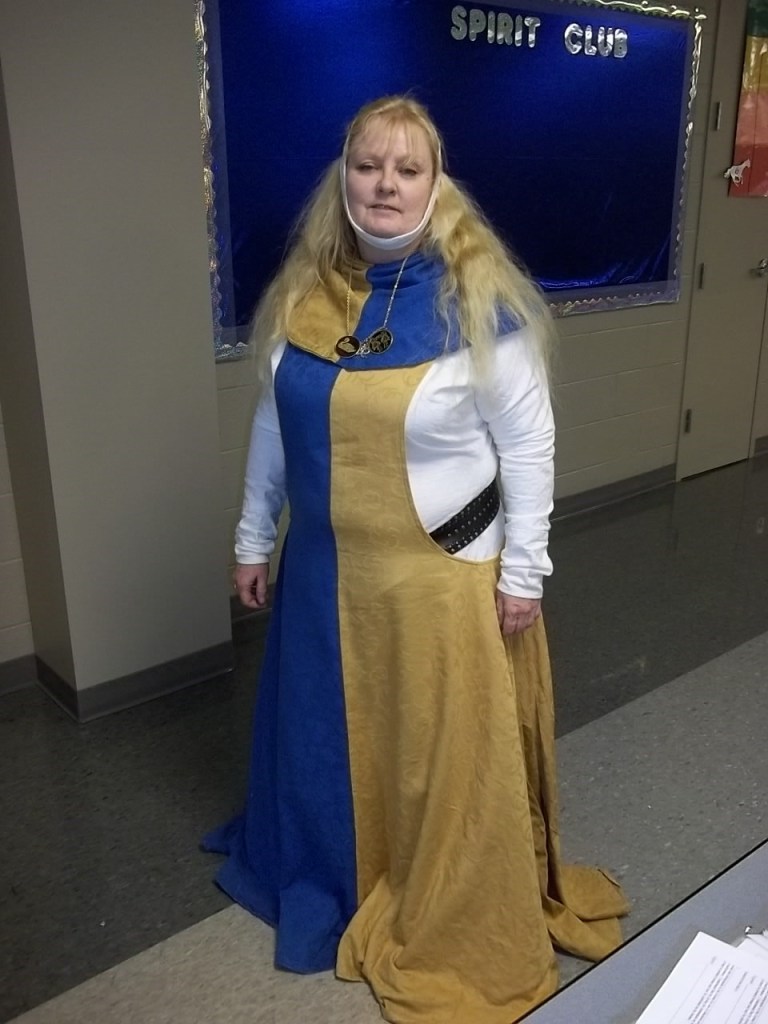
Parti-colored sideless surcote worn with a mantled hood.
These over dresses could vary from heraldic lesser modified cotes to heavily modified overdresses with narrow vertical front bands. Easily sewn and open for many variations and modifications. Used in many parts of Europe during the first part of the high middle ages
Variations can include constructed materials, fur trim, heraldic displays, variations of depth of armhole, width of plastron (front and back bands,) width of hem, style of fitted under dress.
Inspiration Images
Medieval Combat Society
Common Materials
Fabrics:
Salk
celvets
brocades
fine wools
extant examples found constructed from silk damasks and jacquard
Ornamentation:
Effective Substitutions
Fabrics:
Silks
velvets
brocades
fine to medium coarse wools
wool blends
linen and linen blends
substituting poly velvets for silk velvets, or cotton velveteen – Not stretch velvets or crushed velvets.
Ornamentation:
High quality fake furs for trimming and lining.
Ensemble Components
Sideless Surcote
Kirtle or cote
Underdress/undergarments
knee length hose
turn shoes or slippers
mantled hood
Accessories
belt
(worn under the surcote and over the fitted garment)
coif/hat/veil – works well with a barbette and fillet











 SCA Iowa Garb Guide