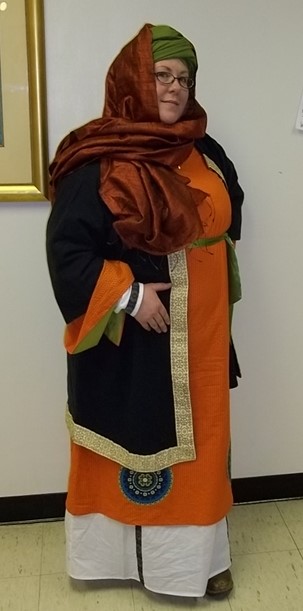
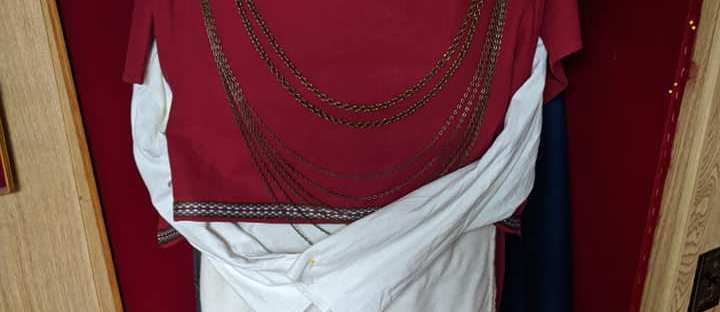
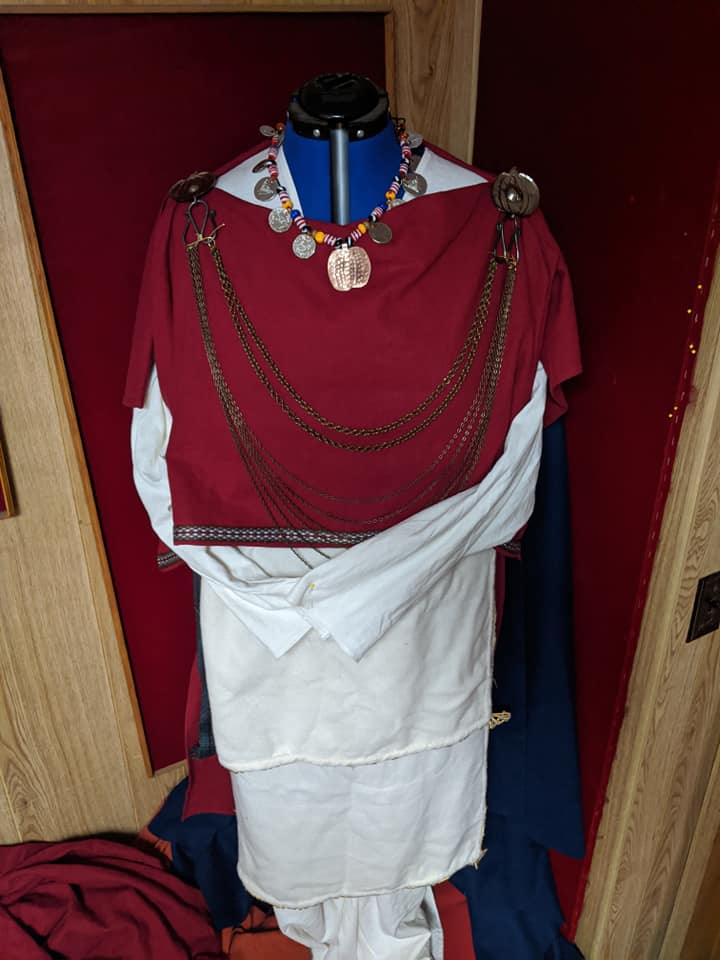
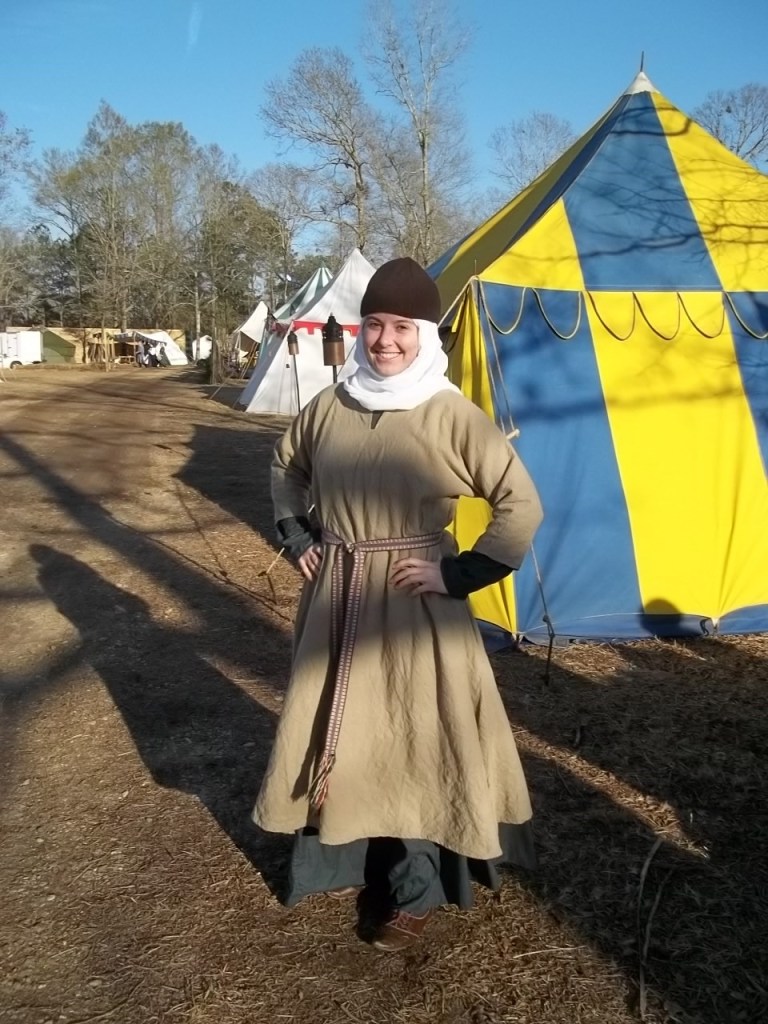
A tunic dress style outfit with accessories common to many early or pre medieval cultures. Under dress in the tunic style, and a decorated over dress.
Description:
Few representations survive of early garments and many fewer extant examples, however what does survive would support much of what is shown here.
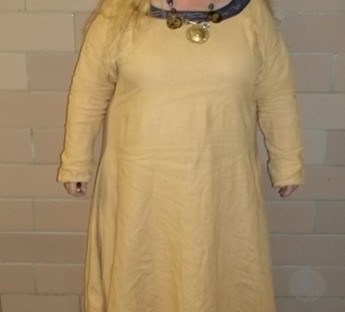
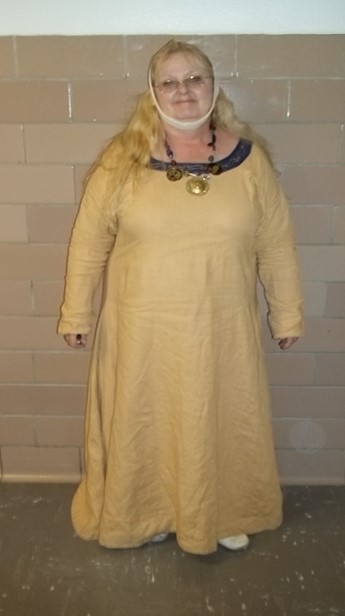
The basic tunic style dress consisting of a linen under dress and a wool over dress featuring embroidered decoration around the neck. Worn with a wimple minus the veil (not pictured) on the head.
Inspiration Images
Common Materials
Fabrics:
Linen for Under Layers
Wool for outer Layer
Linen or silk for the wimple and veil
Ornamentation:
Effective Substitutions
Fabrics:
Some cottons
cotton/linen blends
linen/rayon blends
some wool blends
Ornamentation:
Ensemble Components
Under Dress
Over Tunic
Wimple and Veil
Accessories
Source/Links
Version
2
date
3/5/2021
Source of Period Pic
The National Portrait Gallery History of the Kings and Queens of England by David Williamson, ISBN 1855142287.
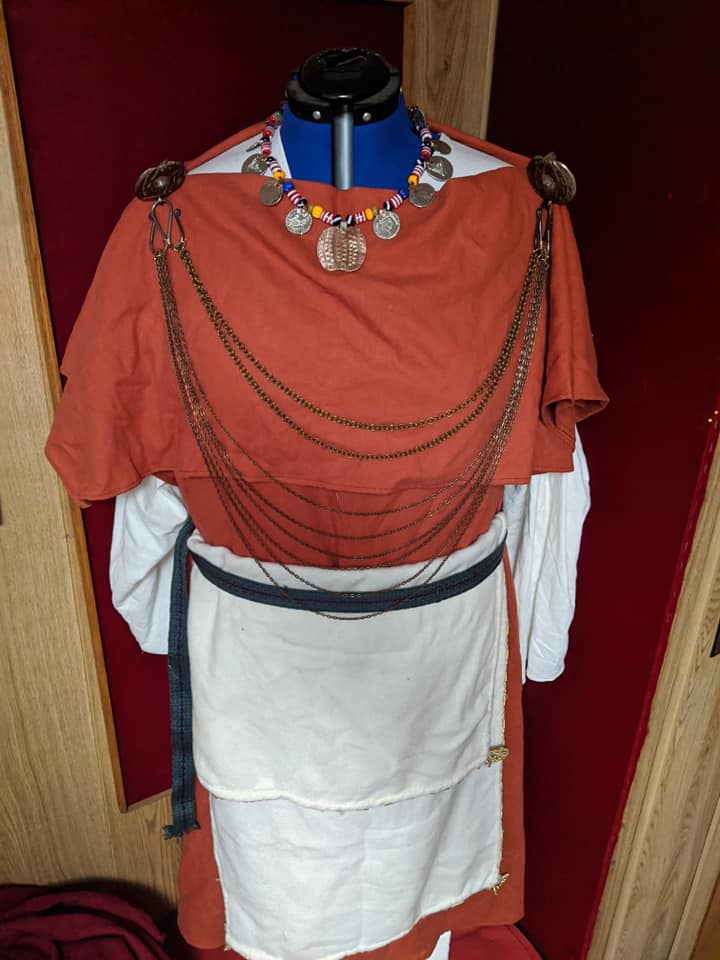
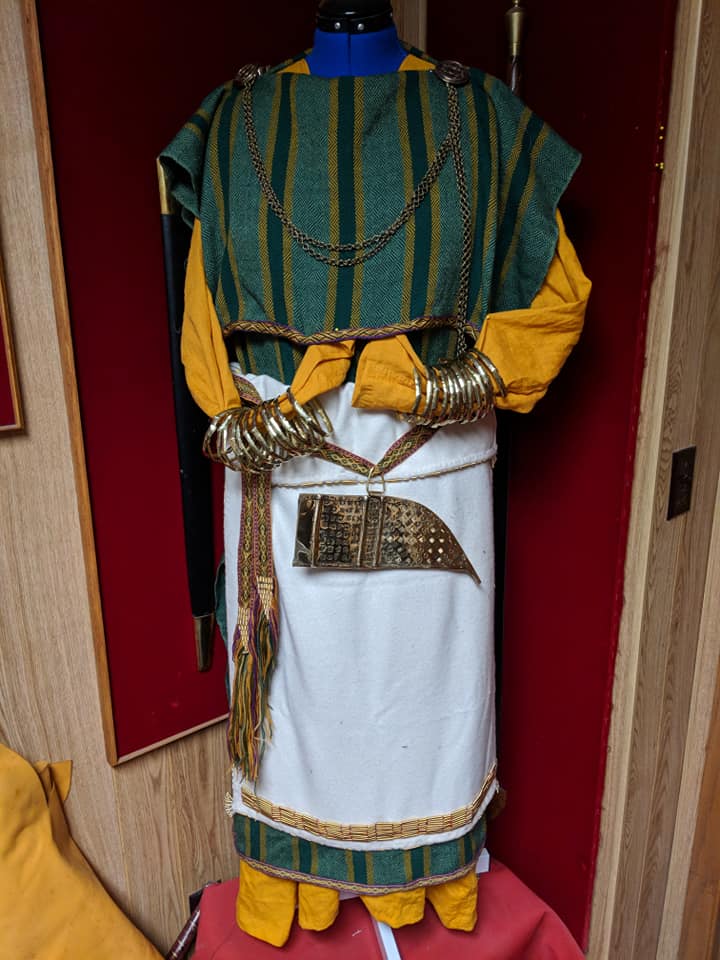
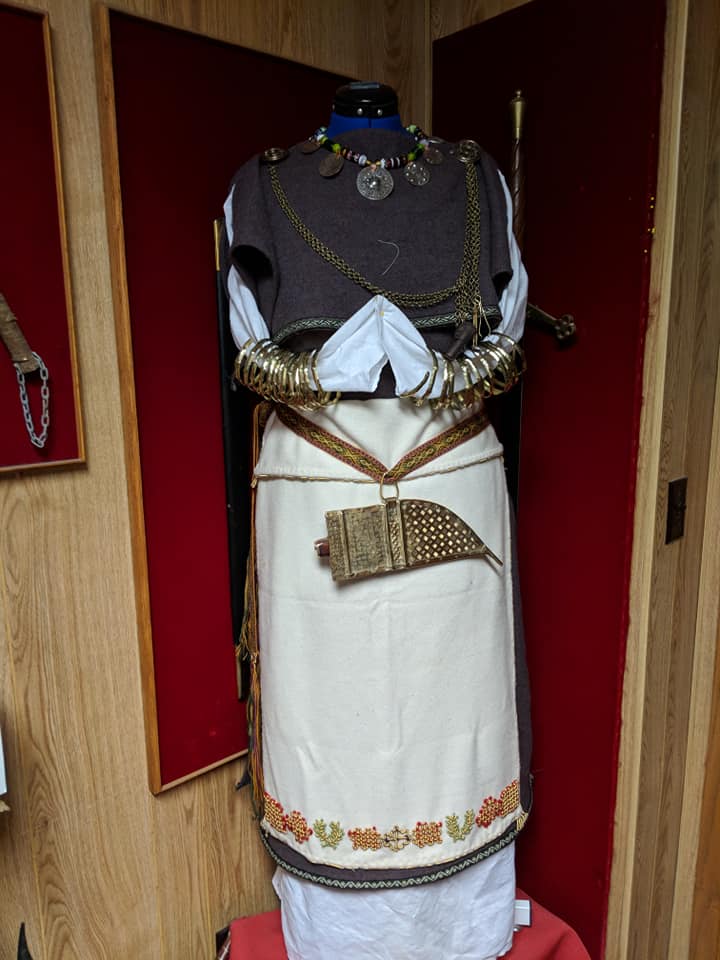
A fragmentary grave find of a Finnish dress. Style consists of an under tunic, an over dress of two rectangles of fabric and an apron. The layers are decorated with tablet weaving and metal coils. The grave find also was rich in metal artifacts
Description:
The complexity of this garment is in the decoration and accessories. The basic garment layers are exceedingly simple.
Under tunic: the base layer under tunic would most likely have been flax or nettle linen. It consists of 6 pieces, front and back panels, under arm gores extending into the sleeves and the sleeves that extend from hand to neckline.
Overdress: the over dress is related to other Norse dresses as well as stylistically similar to a peplos. It is two rectangles that are folded over at the top, pinned at the shoulders and stitched or pinned at the sides. This layer is likely wool in a tabby weave and decorated by tablet weaving.
Apron: The apron is folded over a belt and was likely wool. The notable thing about the aprons are their decorations made from coils of wire attached at the edges and along the bottom in a variety of styles and decorations.
Accessories:
Metal coiled arm bracelets (a very close approximation was sold as costume jewelry recently and can still be found)
Necklace made from coins and lampwork beads
Knife sheath and “puco” knife
Eura is a region in south west Finland. Many graves have been excavated in Luistari in the 1960’s and 70’s. Fabric reminants were preserved due to oxides from the metal finds. Grave 56 was a focus of attention because the metal preserved enough of the fabric in key points to allow for a reconstruction with some certainty
Inspiration Images
Common Materials
Fabrics:
Under dress: linen
over dress: wool
apron: wool
Ornamentation:
tablet woven trim
brass and bronze alloy coils
glass beads
Effective Substitutions
Fabrics:
Cottons and linen blends for the under dress
wool blends or linens and linen blends for the over dress in summer
wool blends or linen and linen blends for the apron
Some analysis of the actual colors of the grave finds has been done. SCA recreations commonly use colors that are available through natural dyes and are therefore plausible.
Ornamentation:
Ensemble Components
Underdress
Overdress
Apron
Belt
Optional Mantle (shawl)
Simple leather Shoes in the style of “bag shoes”
Metal and glass accessories
Accessories
Pair of brooch pins holding the overdress together at the shoulders
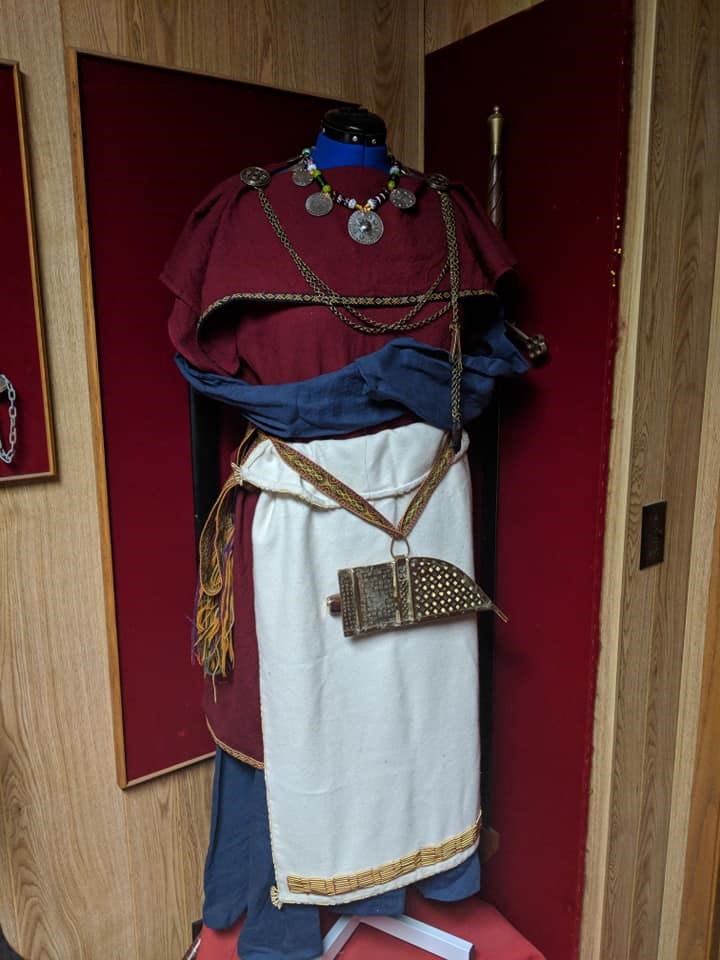
A fragmentary grave find of a Finnish dress. Style consists of an under tunic, an over dress of two rectangles of fabric and an apron. The layers are decorated with tablet weaving and metal coils. The grave find also was rich in metal artifacts
Description:
The complexity of this garment is in the decoration and accessories. The basic garment layers are exceedingly simple.
Under tunic: the base layer under tunic would most likely have been flax or nettle linen. It consists of 6 pieces, front and back panels, under arm gores extending into the sleeves and the sleeves that extend from hand to neckline.
Overdress: the over dress is related to other Norse dresses as well as stylistically similar to a peplos. It is two rectangles that are folded over at the top, pinned at the shoulders and stitched or pinned at the sides. This layer is likely wool in a tabby weave and decorated by tablet weaving.
Apron: The apron is folded over a belt and was likely wool. The notable thing about the aprons are their decorations made from coils of wire attached at the edges and along the bottom in a variety of styles and decorations.
Accessories:
Metal coiled arm bracelets (a very close approximation was sold as costume jewelry recently and can still be found)
Necklace made from coins and lampwork beads
Knife sheath and “puco” knife
Eura is a region in south west Finland. Many graves have been excavated in Luistari in the 1960’s and 70’s. Fabric reminants were preserved due to oxides from the metal finds. Grave 56 was a focus of attention because the metal preserved enough of the fabric in key points to allow for a reconstruction with some certainty
Inspiration Images
Common Materials
Fabrics:
Under dress: linen
over dress: wool
apron: wool
Ornamentation:
tablet woven trim
brass and bronze alloy coils
glass beads
Effective Substitutions
Fabrics:
Cottons and linen blends for the under dress
wool blends or linens and linen blends for the over dress in summer
wool blends or linen and linen blends for the apron
Some analysis of the actual colors of the grave finds has been done. SCA recreations commonly use colors that are available through natural dyes and are therefore plausible.
Ornamentation:
Ensemble Components
Underdress
Overdress
Apron
Belt
Optional Mantle (shawl)
Simple leather Shoes in the style of “bag shoes”
Metal and glass accessories
Accessories
Pair of brooch pins holding the overdress together at the shoulders
A fragmentary grave find of a Finnish dress. Style consists of an under tunic, an over dress of two rectangles of fabric and an apron. The layers are decorated with tablet weaving and metal coils. The grave find also was rich in metal artifacts
Description:
The complexity of this garment is in the decoration and accessories. The basic garment layers are exceedingly simple.
Under tunic: the base layer under tunic would most likely have been flax or nettle linen. It consists of 6 pieces, front and back panels, under arm gores extending into the sleeves and the sleeves that extend from hand to neckline.
Overdress: the over dress is related to other Norse dresses as well as stylistically similar to a peplos. It is two rectangles that are folded over at the top, pinned at the shoulders and stitched or pinned at the sides. This layer is likely wool in a tabby weave and decorated by tablet weaving.
Apron: The apron is folded over a belt and was likely wool. The notable thing about the aprons are their decorations made from coils of wire attached at the edges and along the bottom in a variety of styles and decorations.
Accessories:
Metal coiled arm bracelets (a very close approximation was sold as costume jewelry recently and can still be found)
Necklace made from coins and lampwork beads
Knife sheath and “puco” knife
Eura is a region in south west Finland. Many graves have been excavated in Luistari in the 1960’s and 70’s. Fabric reminants were preserved due to oxides from the metal finds. Grave 56 was a focus of attention because the metal preserved enough of the fabric in key points to allow for a reconstruction with some certainty
Inspiration Images
Common Materials
Fabrics:
Under dress: linen
over dress: wool
apron: wool
Ornamentation:
tablet woven trim
brass and bronze alloy coils
glass beads
Effective Substitutions
Fabrics:
Cottons and linen blends for the under dress
wool blends or linens and linen blends for the over dress in summer
wool blends or linen and linen blends for the apron
Some analysis of the actual colors of the grave finds has been done. SCA recreations commonly use colors that are available through natural dyes and are therefore plausible.
Ornamentation:
Ensemble Components
Underdress
Overdress
Apron
Belt
Optional Mantle (shawl)
Simple leather Shoes in the style of “bag shoes”
Metal and glass accessories
Accessories
Pair of brooch pins holding the overdress together at the shoulders
A common tunic dress style garment prevalent both in England as well as central Europe for the time leading up to and after the Norman invasion of 1066 CE
Description:
A common style worn by women in pre and post Norman invasion in England as well as France consisted of a tunic style underdress and over dress.
The underdress called a chemise, chainse or smock would commonly be made of linen.
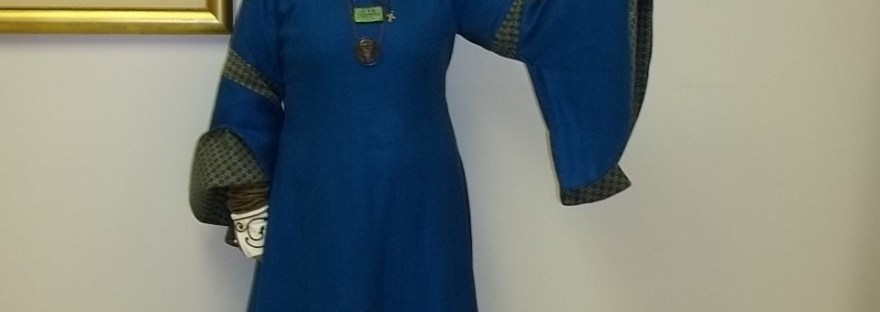
The over tunic or cotte would be longer for higher status women or shorter for working class. Sleeves are shown in some painting both tight to the wrist as well as bell or trumpet sleeves. Commonly made out of wool and perhaps decorated with embroidery or the applique of contrasting fabrics.
Commonly work with this would be simple turn or bag shoes, and a head covering such as a wimple and veil.
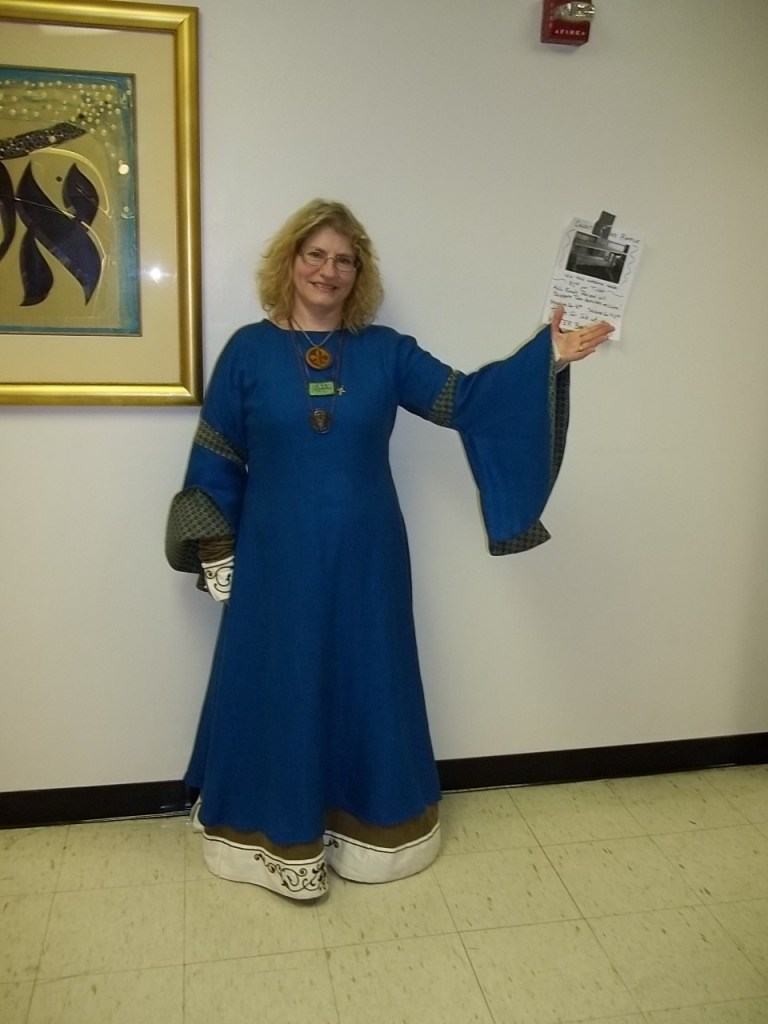
This dress is constructed as a tunic style dress, A blue bell-sleeved over dress, or gown, worn over a green and white underdress, with a chemise under that.
Inspiration Images
Common Materials
Fabrics:
Underdress – Linen, including non-flax linens
Overdress – Wool
Wimple/veil – Linen or silk for high status women
Ornamentation:
Effective Substitutions
Fabrics:
Underdress – linen, linen blends, cottons
Overdresses – Wool blends, linens, linen blends, some heaver cottons
Wimple/Veil – linen, silk, poly (watch out for candles!)
Ornamentation:
Ensemble Components
Underdress – below the knee, long sleeved, white or off white light fabrics
Overdress
Headwear
Shoes
Accessories
Belt
Pouch
Bag
Source/Links
Version: 2
date: 3/5/2021
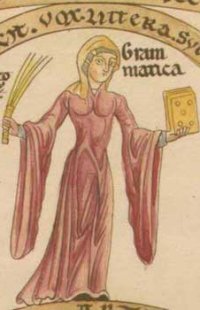
Source of Period Pic: Figure of Grammatica, from the Hortus Deliciarum – 12th century
A fragmentary grave find of a Finnish dress. Style consists of an under tunic, an over dress of two rectangles of fabric and an apron. The layers are decorated with tablet weaving and metal coils. The grave find also was rich in metal artifacts
Description:
The complexity of this garment is in the decoration and accessories. The basic garment layers are exceedingly simple.
Under tunic: the base layer under tunic would most likely have been flax or nettle linen. It consists of 6 pieces, front and back panels, under arm gores extending into the sleeves and the sleeves that extend from hand to neckline.
Overdress: the over dress is related to other Norse dresses as well as stylistically similar to a peplos. It is two rectangles that are folded over at the top, pinned at the shoulders and stitched or pinned at the sides. This layer is likely wool in a tabby weave and decorated by tablet weaving.
Apron: The apron is folded over a belt and was likely wool. The notable thing about the aprons are their decorations made from coils of wire attached at the edges and along the bottom in a variety of styles and decorations.
Accessories:
Metal coiled arm bracelets (a very close approximation was sold as costume jewelry recently and can still be found)
Necklace made from coins and lampwork beads
Knife sheath and “puco” knife
Eura is a region in south west Finland. Many graves have been excavated in Luistari in the 1960’s and 70’s. Fabric reminants were preserved due to oxides from the metal finds. Grave 56 was a focus of attention because the metal preserved enough of the fabric in key points to allow for a reconstruction with some certainty
Inspiration Images
Common Materials
Fabrics:
Under dress: linen
over dress: wool
apron: wool
Ornamentation:
tablet woven trim
brass and bronze alloy coils
glass beads
Effective Substitutions
Fabrics:
Cottons and linen blends for the under dress
wool blends or linens and linen blends for the over dress in summer
wool blends or linen and linen blends for the apron
Some analysis of the actual colors of the grave finds has been done. SCA recreations commonly use colors that are available through natural dyes and are therefore plausible.
Ornamentation:
Ensemble Components
Underdress
Overdress
Apron
Belt
Optional Mantle (shawl)
Simple leather Shoes in the style of “bag shoes”
Metal and glass accessories
Accessories
Pair of brooch pins holding the overdress together at the shoulders
A common tunic dress style garment prevalent both in England as well as central Europe for the time leading up to and after the Norman invasion of 1066 CE
Description:
A common style worn by women in pre and post Norman invasion in England as well as France consisted of a tunic style underdress and over dress.
The underdress called a chemise, chainse or smock would commonly be made of linen.
The over tunic or cotte would be longer for higher status women or shorter for working class. Sleeves are shown in some painting both tight to the wrist as well as bell or trumpet sleeves. Commonly made out of wool and perhaps decorated with embroidery or the applique of contrasting fabrics.
Commonly work with this would be simple turn or bag shoes, and a head covering such as a wimple and veil.
This dress is constructed as a tunic style dress, A blue bell-sleeved over dress, or gown, worn over a green and white underdress, with a chemise under that.
Inspiration Images
Common Materials
Fabrics:
Underdress – Linen, including non-flax linens
Overdress – Wool
Wimple/veil – Linen or silk for high status women
Ornamentation:
Effective Substitutions
Fabrics:
Underdress – linen, linen blends, cottons
Overdresses – Wool blends, linens, linen blends, some heaver cottons
Wimple/Veil – linen, silk, poly (watch out for candles!)
Ornamentation:
Ensemble Components
Underdress – below the knee, long sleeved, white or off white light fabrics
Overdress
Headwear
Shoes
Accessories
Belt
Pouch
Bag
Source/Links
Version: 2
date: 3/5/2021
Source of Period Pic: Figure of Grammatica, from the Hortus Deliciarum – 12th century
A fragmentary grave find of a Finnish dress. Style consists of an under tunic, an over dress of two rectangles of fabric and an apron. The layers are decorated with tablet weaving and metal coils. The grave find also was rich in metal artifacts
Description:
The complexity of this garment is in the decoration and accessories. The basic garment layers are exceedingly simple.
Under tunic: the base layer under tunic would most likely have been flax or nettle linen. It consists of 6 pieces, front and back panels, under arm gores extending into the sleeves and the sleeves that extend from hand to neckline.
Overdress: the over dress is related to other Norse dresses as well as stylistically similar to a peplos. It is two rectangles that are folded over at the top, pinned at the shoulders and stitched or pinned at the sides. This layer is likely wool in a tabby weave and decorated by tablet weaving.
Apron: The apron is folded over a belt and was likely wool. The notable thing about the aprons are their decorations made from coils of wire attached at the edges and along the bottom in a variety of styles and decorations.
Accessories:
Metal coiled arm bracelets (a very close approximation was sold as costume jewelry recently and can still be found)
Necklace made from coins and lampwork beads
Knife sheath and “puco” knife
Eura is a region in south west Finland. Many graves have been excavated in Luistari in the 1960’s and 70’s. Fabric reminants were preserved due to oxides from the metal finds. Grave 56 was a focus of attention because the metal preserved enough of the fabric in key points to allow for a reconstruction with some certainty
Inspiration Images
Common Materials
Fabrics:
Under dress: linen
over dress: wool
apron: wool
Ornamentation:
tablet woven trim
brass and bronze alloy coils
glass beads
Effective Substitutions
Fabrics:
Cottons and linen blends for the under dress
wool blends or linens and linen blends for the over dress in summer
wool blends or linen and linen blends for the apron
Some analysis of the actual colors of the grave finds has been done. SCA recreations commonly use colors that are available through natural dyes and are therefore plausible.
Ornamentation:
Ensemble Components
Underdress
Overdress
Apron
Belt
Optional Mantle (shawl)
Simple leather Shoes in the style of “bag shoes”
Metal and glass accessories
Accessories
Pair of brooch pins holding the overdress together at the shoulders
A common tunic dress style garment prevalent both in England as well as central Europe for the time leading up to and after the Norman invasion of 1066 CE
Description:
A common style worn by women in pre and post Norman invasion in England as well as France consisted of a tunic style underdress and over dress.
The underdress called a chemise, chainse or smock would commonly be made of linen.
The over tunic or cotte would be longer for higher status women or shorter for working class. Sleeves are shown in some painting both tight to the wrist as well as bell or trumpet sleeves. Commonly made out of wool and perhaps decorated with embroidery or the applique of contrasting fabrics.
Commonly work with this would be simple turn or bag shoes, and a head covering such as a wimple and veil.
This dress is constructed as a tunic style dress, A blue bell-sleeved over dress, or gown, worn over a green and white underdress, with a chemise under that.
Inspiration Images
Common Materials
Fabrics:
Underdress – Linen, including non-flax linens
Overdress – Wool
Wimple/veil – Linen or silk for high status women
Ornamentation:
Effective Substitutions
Fabrics:
Underdress – linen, linen blends, cottons
Overdresses – Wool blends, linens, linen blends, some heaver cottons
Wimple/Veil – linen, silk, poly (watch out for candles!)
Ornamentation:
Ensemble Components
Underdress – below the knee, long sleeved, white or off white light fabrics
Overdress
Headwear
Shoes
Accessories
Belt
Pouch
Bag
Source/Links
Version: 2
date: 3/5/2021
Source of Period Pic: Figure of Grammatica, from the Hortus Deliciarum – 12th century












 SCA Iowa Garb Guide