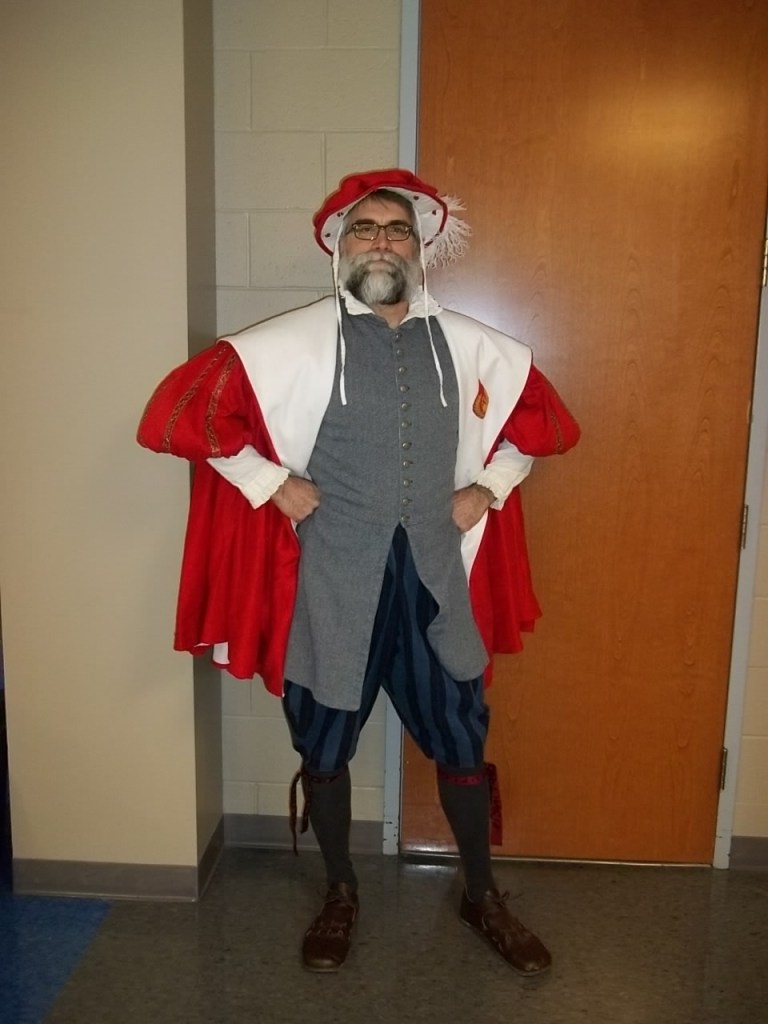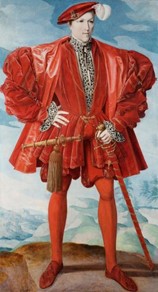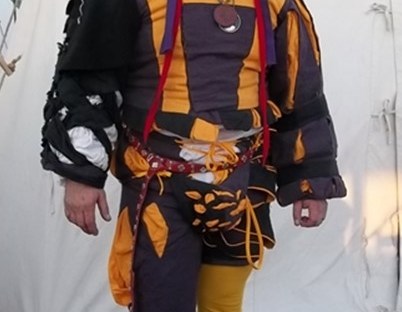
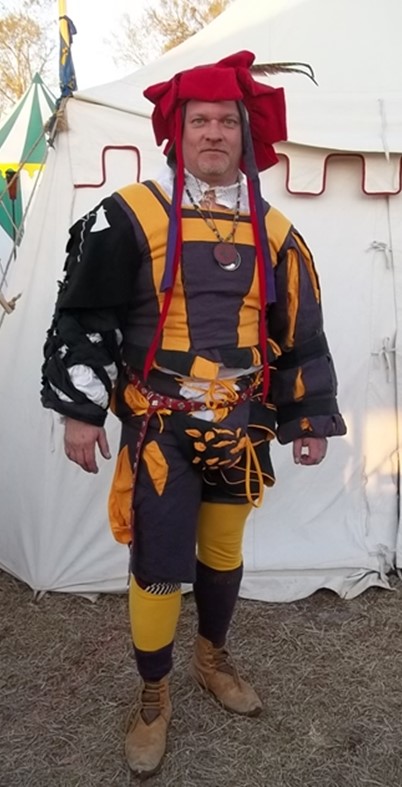
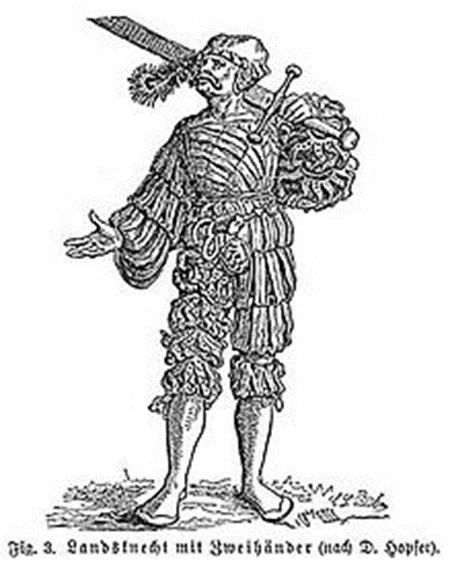
Highly ornamented “war coats” worn by military forces out of areas around Germany and Switzerland. Closely associated with (and evolving into) the more flamboyant Landsknecht mercenaries
Description:
Bright clashing colors, bold stripes mismatched parts. Sleeves and legs with decorative slashes. Wool over garments worn by mercenaries and often scavenged from the best parts found on the battlefield. The top buttons closed and the garment is worn over at least an undershirt, and breeches. Usually seen with long stockings and sometimes with the wide ‘cow mouth’ shoes. The sleeves and skirt portions have a lot of fabric pleated in.
Related terms:
Waffenrock: war coat
Reitrock: riding coat, split for riding
Waffenkleid: war tunic
Inspiration Images
Common Materials
Fabrics:
Wool main garments in bright colors, or color combinations.
linen undergarments
Ornamentation:
Knitted stockings
Effective Substitutions
Fabrics:
Some poly/cotton brocades to simulate the rich fabrics. Wool blends are easier to find.
Linen blends and cottons for undergarments.
Very hard to make these look right without investing in the right materials.
Ornamentation:
Ensemble Components
Coat – wool overlayer with attached skirt
Undershirt – linen shirt
Breeches – wool pants to the knee
Stockings
Accessories
Retailers catering to reenactors sell the cow mouth shoes and striped stockings in vibrant colors.
The Elizabethan Gown is a decorated bodice and skirt worn over a chemise, corset and farthingale
Description:
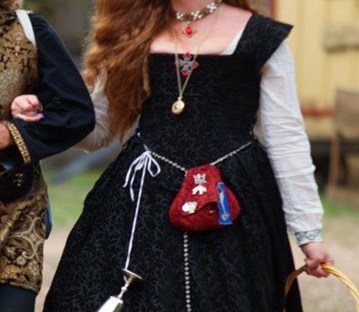
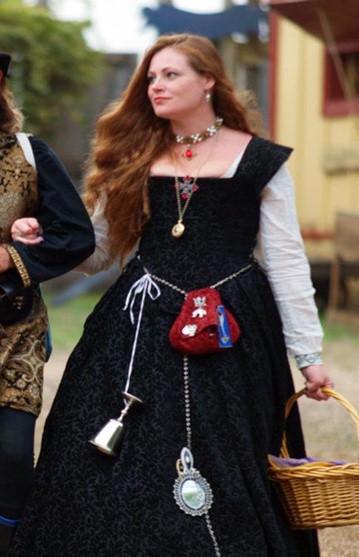
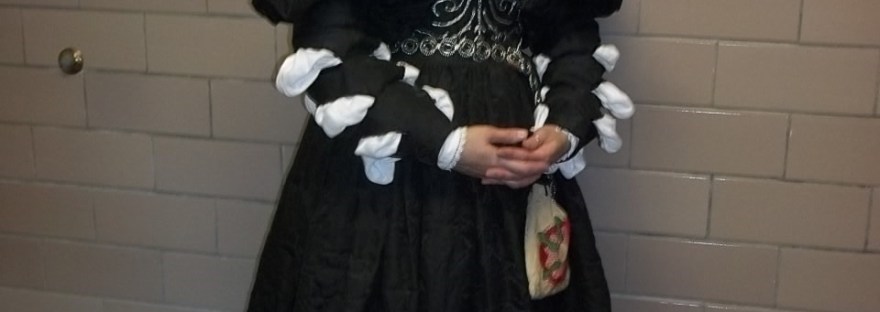
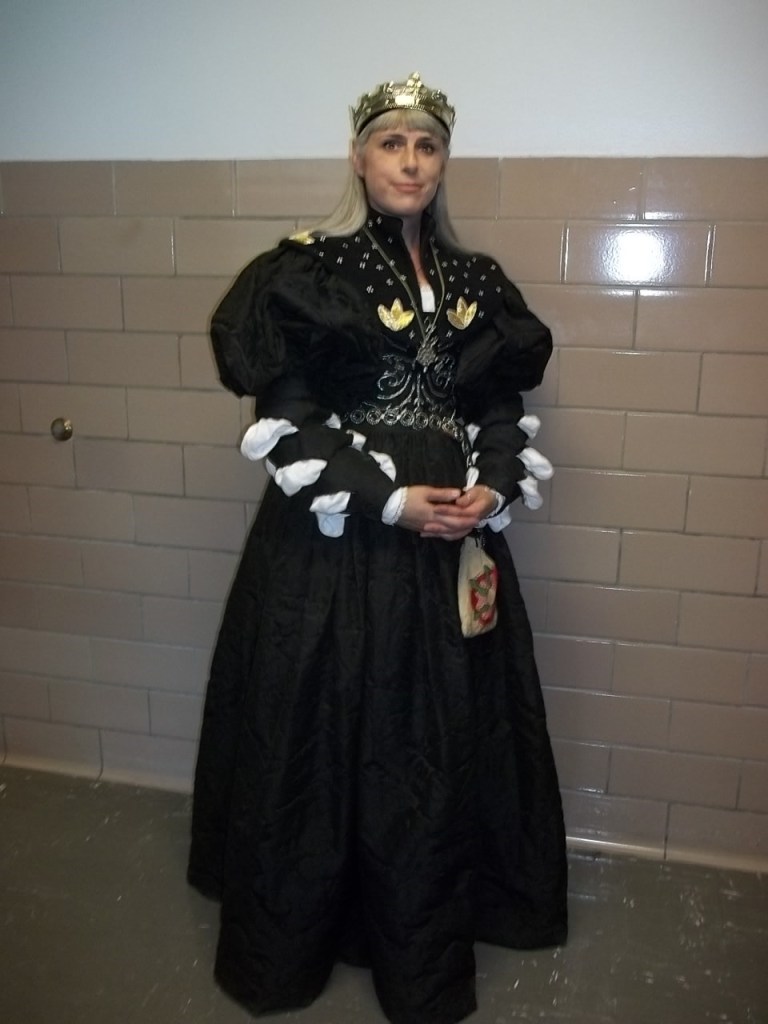
This gown was inspired by Steven Van Der Meulen of Elizabeth the First in The Hampden Portrait painted in 1563 and by a portrait of Mary Queen of Scots by an unknown artist in 1565 during her brief rule in Scotland. The bodice is steel boned and laced on the sides. The lacing should be angling from the armpit to the middle of the back hip. I did not incorporate that into this pattern though.
The skirt is an 8 paneled box pleated skirt with a button closure. To be accurate though the skirt should be cartridge pleated or knife pleated and hooked in the bodice.
Inspiration Images
Common Materials
Fabrics:
Silk, Satin, Velvet, taffeta
Ornamentation:
Bobbin Lace
Jewels
Embroidery
Effective Substitutions
Fabrics:
Heavy brocades, like upholstery fabrics, work very well to give a rich look.
Fancy bedspreads also work well for inserts.
Ornamentation:
Buttons work well as jewels.
Lace curtains sometimes look enough like bobbin lace to use.
Ensemble Components
Chemise (high necked or low necked)
stockings
corset
underskirt
outer skirt
bodice
shoes
Accessories
snood
hat
strings of pearls or other jewels around the neck
choker necklace
rings
ear rings
gloves
girdle belt
mirror hanging from the belt
decorative pouch hanging from the belt
Source/Links
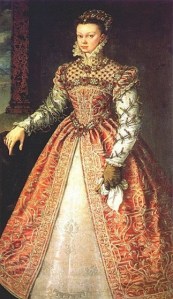
Elizabeth of Valios by Alonso Sanchez Coello 1564
Elizabeth’s Wardrobe Unlocked by Janet Arnold
1560 Elisabeth De Valois by Alonso Sanchez Coello…Grand Ladies
Version
2
date
3/7/2021
Source of Period Pic
1560 Elisabeth De Valois by Alonso Sanchez Coello…
The Elizabethan Gown is a decorated bodice and skirt worn over a chemise, corset and farthingale
Description:
This gown was inspired by Steven Van Der Meulen of Elizabeth the First in The Hampden Portrait painted in 1563 and by a portrait of Mary Queen of Scots by an unknown artist in 1565 during her brief rule in Scotland. The bodice is steel boned and laced on the sides. The lacing should be angling from the armpit to the middle of the back hip. I did not incorporate that into this pattern though.
The skirt is an 8 paneled box pleated skirt with a button closure. To be accurate though the skirt should be cartridge pleated or knife pleated and hooked in the bodice.
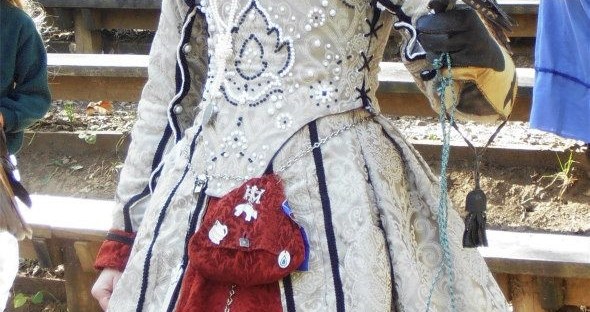
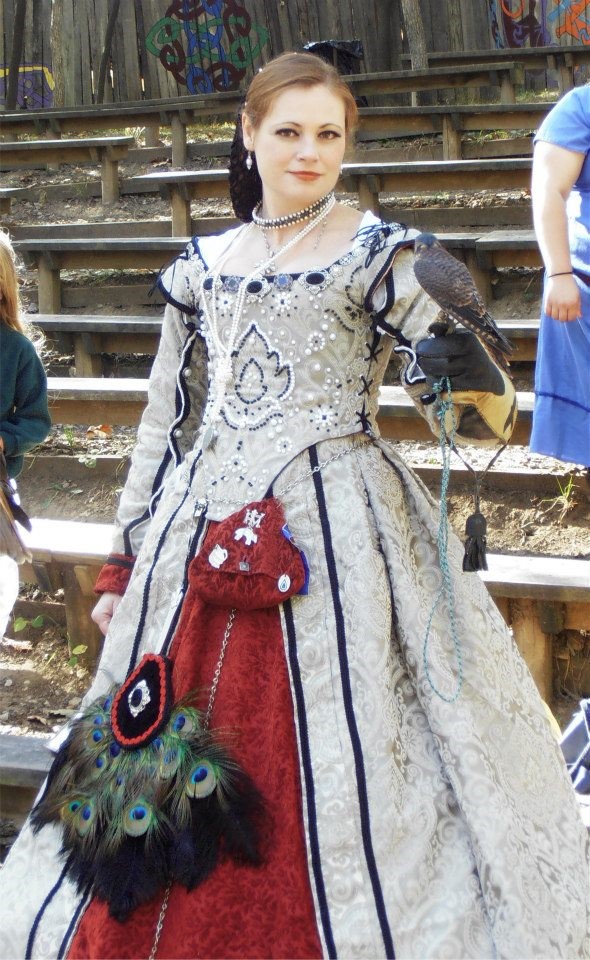
This dress features many attached pearls and beads stitched to the fabric of the bodice.
Inspiration Images
Common Materials
Fabrics:
Silk, Satin, Velvet, taffeta
Ornamentation:
Bobbin Lace
Jewels
Embroidery
Effective Substitutions
Fabrics:
Heavy brocades, like upholstery fabrics, work very well to give a rich look.
Fancy bedspreads also work well for inserts.
Ornamentation:
Buttons work well as jewels.
Lace curtains sometimes look enough like bobbin lace to use.
Ensemble Components
Chemise (high necked or low necked)
stockings
corset
underskirt
outer skirt
bodice
shoes
Accessories
snood
hat
strings of pearls or other jewels around the neck
choker necklace
rings
ear rings
gloves
girdle belt
mirror hanging from the belt
decorative pouch hanging from the belt
Source/Links
Elizabeth of Valios by Alonso Sanchez Coello 1564
Elizabeth’s Wardrobe Unlocked by Janet Arnold
1560 Elisabeth De Valois by Alonso Sanchez Coello…Grand Ladies
Version
3
date
3/7/2021
Source of Period Pic
1560 Elisabeth De Valois by Alonso Sanchez Coello…
The Elizabethan Gown is a decorated bodice and skirt worn over a chemise, corset and farthingale
Description:
This gown was inspired by Steven Van Der Meulen of Elizabeth the First in The Hampden Portrait painted in 1563 and by a portrait of Mary Queen of Scots by an unknown artist in 1565 during her brief rule in Scotland. The bodice is steel boned and laced on the sides. The lacing should be angling from the armpit to the middle of the back hip. I did not incorporate that into this pattern though.
The skirt is an 8 paneled box pleated skirt with a button closure. To be accurate though the skirt should be cartridge pleated or knife pleated and hooked in the bodice.
Inspiration Images
Common Materials
Fabrics:
Silk, Satin, Velvet, taffeta
Ornamentation:
Bobbin Lace
Jewels
Embroidery
Effective Substitutions
Fabrics:
Heavy brocades, like upholstery fabrics, work very well to give a rich look.
Fancy bedspreads also work well for inserts.
Ornamentation:
Buttons work well as jewels.
Lace curtains sometimes look enough like bobbin lace to use.
Ensemble Components
Chemise (high necked or low necked)
stockings
corset
underskirt
outer skirt
bodice
shoes
Accessories
snood
hat
strings of pearls or other jewels around the neck
choker necklace
rings
ear rings
gloves
girdle belt
mirror hanging from the belt
decorative pouch hanging from the belt
Source/Links
Elizabeth of Valios by Alonso Sanchez Coello 1564
Elizabeth’s Wardrobe Unlocked by Janet Arnold
1560 Elisabeth De Valois by Alonso Sanchez Coello…Grand Ladies
Version
2
date
3/7/2021
Source of Period Pic
1560 Elisabeth De Valois by Alonso Sanchez Coello…
The Elizabethan Gown is a decorated bodice and skirt worn over a chemise, corset and farthingale
Description:
This gown was inspired by Steven Van Der Meulen of Elizabeth the First in The Hampden Portrait painted in 1563 and by a portrait of Mary Queen of Scots by an unknown artist in 1565 during her brief rule in Scotland. The bodice is steel boned and laced on the sides. The lacing should be angling from the armpit to the middle of the back hip. I did not incorporate that into this pattern though.
The skirt is an 8 paneled box pleated skirt with a button closure. To be accurate though the skirt should be cartridge pleated or knife pleated and hooked in the bodice.
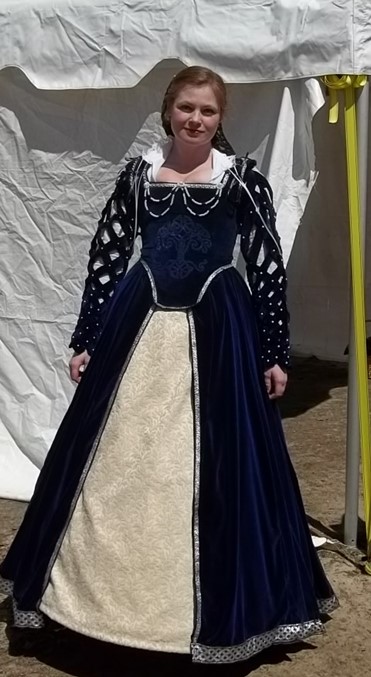
This example features a basket weave sleeve.
Inspiration Images
Common Materials
Fabrics:
Silk, Satin, Velvet, taffeta
Ornamentation:
Bobbin Lace
Jewels
Embroidery
Effective Substitutions
Fabrics:
Heavy brocades, like upholstery fabrics, work very well to give a rich look.
Fancy bedspreads also work well for inserts.
Ornamentation:
Buttons work well as jewels.
Lace curtains sometimes look enough like bobbin lace to use.
Ensemble Components
Chemise (high necked or low necked)
stockings
corset
underskirt
outer skirt
bodice
shoes
Accessories
snood
hat
strings of pearls or other jewels around the neck
choker necklace
rings
ear rings
gloves
girdle belt
mirror hanging from the belt
decorative pouch hanging from the belt
Source/Links
Elizabeth of Valios by Alonso Sanchez Coello 1564
Elizabeth’s Wardrobe Unlocked by Janet Arnold
1560 Elisabeth De Valois by Alonso Sanchez Coello…Grand Ladies
Version
3
date
3/7/2021
Source of Period Pic
1560 Elisabeth De Valois by Alonso Sanchez Coello…
Hourglass Shaped Gown with Large Sleeves & Detachable Under Sleeves
Description:
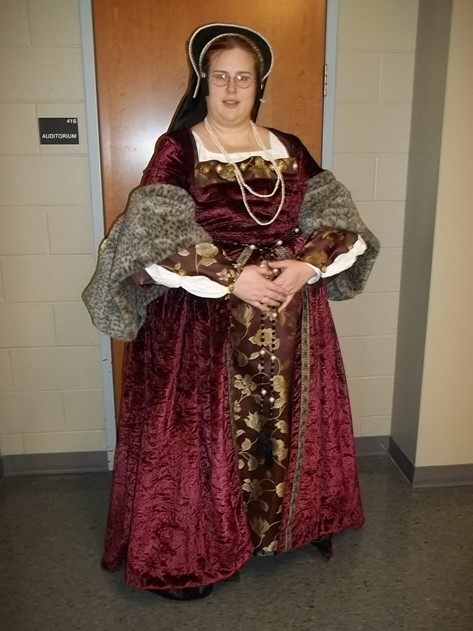
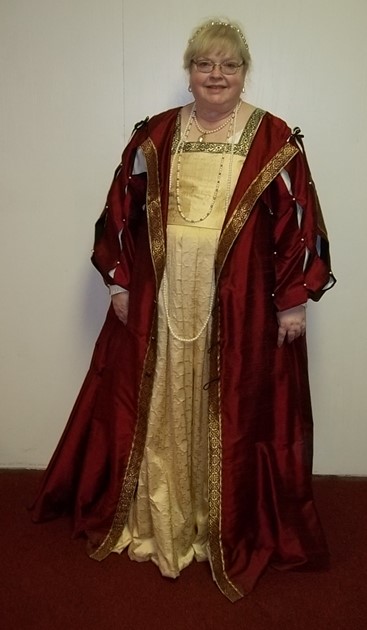
This style of dress is an evolutionary phase within the 16th century that is influenced by Spanish and German styles. The silhouette has an hourglass shape: the bodice narrowed to a small waistline and the skirt gradually expanding into an inverted cone shape. Many of these dresses were floor length and without a train.
To achieve the cone shaped appearance required a supportive layer called the Spanish farthingale which was worn over the chemise. A pair of bodies was worn with the farthingale and over the chemise. The front of the overdress would have an inverted V opening and the neckline was square with highly decorative jewels or trim on the edging. The sleeves were narrowed at the shoulder and expanded outward (normally a wide square cuff) that was turned back on itself. This cuff could be made of fur or brocade. A detachable, false sleeve was worn underneath and was decorated with panes and slashes through which the chemise could be seen or pulled through.
Inspiration Images
Common Materials
Fabrics:
Linen, Cotton, Wool, Silk, Brocade, Jacquard, Satin, and Taffeta*
*Some of the materials refer to weave structure and would have been made from natural fibers.
Additional:
Whalebone, cane, or steel for farthingale. Leather for shoes.
Effective Substitutions
Fabrics:
Some Polyester/cotton blended brocade, jacquard, satin, and taffeta.
linen blends and cottons for under layers
Ornamentation:
Plastic, zip ties, and metal for boning.
Ensemble Components
Chemise: undermost garment that is cut full and gathered into a round or square neckline; with full, gathered sleeves and ruffled cuff.
Spanish Farthingale: a skirt separate or sewn to petticoat with hoops that gradient in size from the waist to floor. Constructed with whalebone, cane, or steel hoops.
Pair of Bodies: corset or under bodice that has stays (boning) laced together at the front, back, or both.
Petticoat: an underskirt that is made with elaborate fabric which can be seen in the front opening of overdress.
Overdress/Bodice: narrowed, stiff, and flat with an elongated V that dips at the natural waist.
Overdress/Skirt: combined with the bodice; very full and gathered made of similar fabric to overdress bodice.
Head wear: Coif, French Hood, Square Hood
Shoes: Fabric or leather square-toe.
Accessories
Needlepoint/bobbin lace
Embroidery/Blackwork
jewels/trim
jeweled belt
brooches
purses suspended from belt
squared or feather fans.
Source/Links
Tortora, P. (2010). Survey of Historic Costume. New York: Fairchild Books.