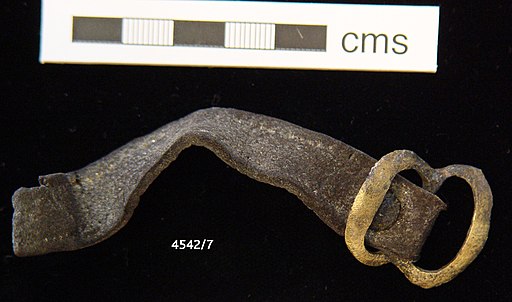
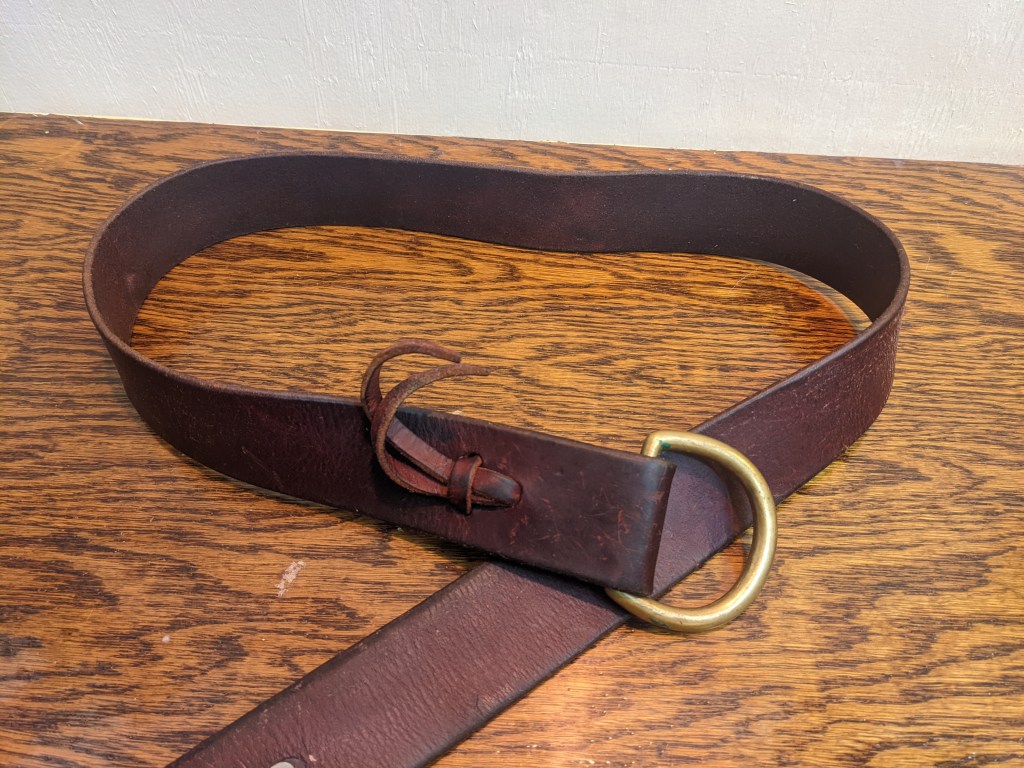
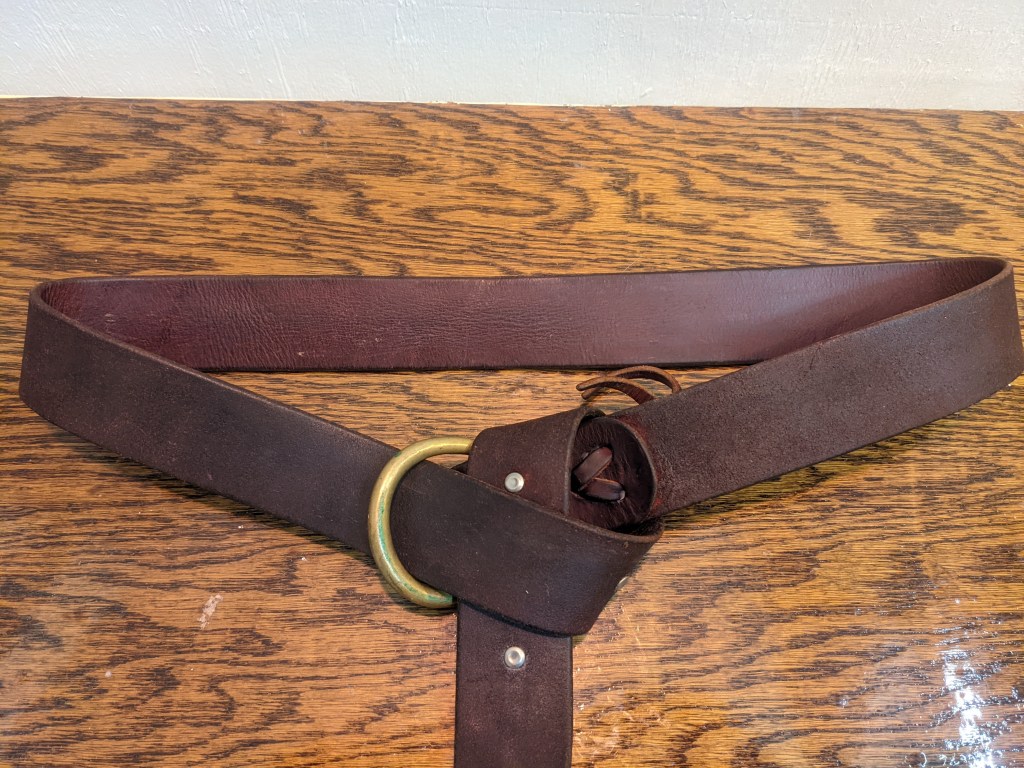
Ring belts are popular at ren fairs and for newer members but may not be supported with much historical evidence. Many surviving buckles with tongues can be found from different time periods. A number of vendors cater to reenactors with different reproductions available online.
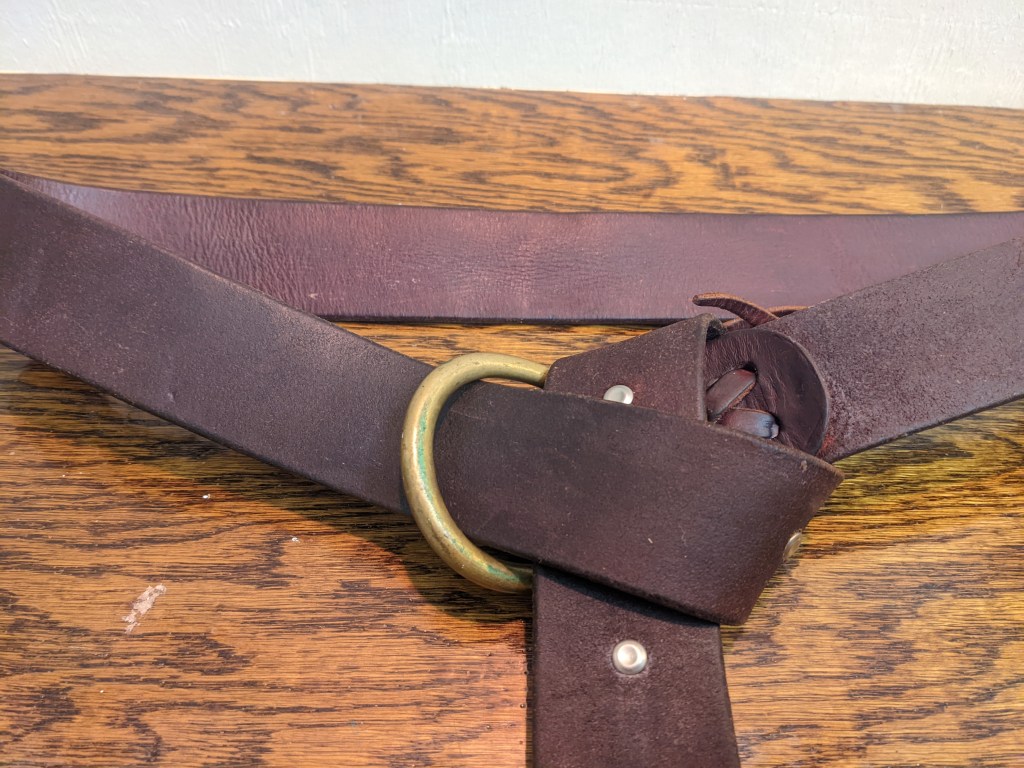
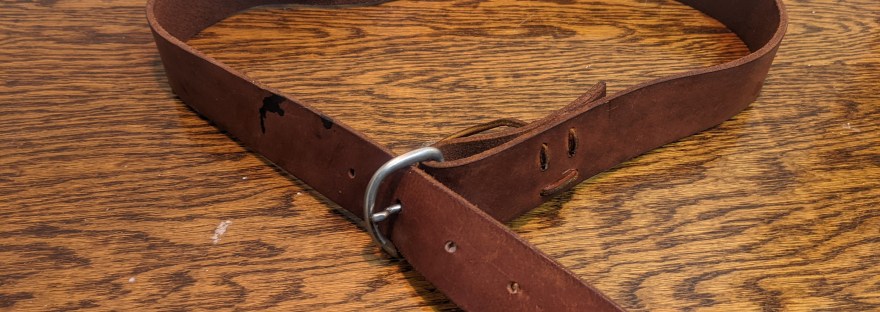
This is a modern buckle taken from a worn out belt and attached to a strip of leather to form a belt. This easily made belt works very well for people new to the SCA.
There are a number of resources that we have seen that state that many of the belts used in period were more narrow (less than 1 inch in width) so this belt is less representative.
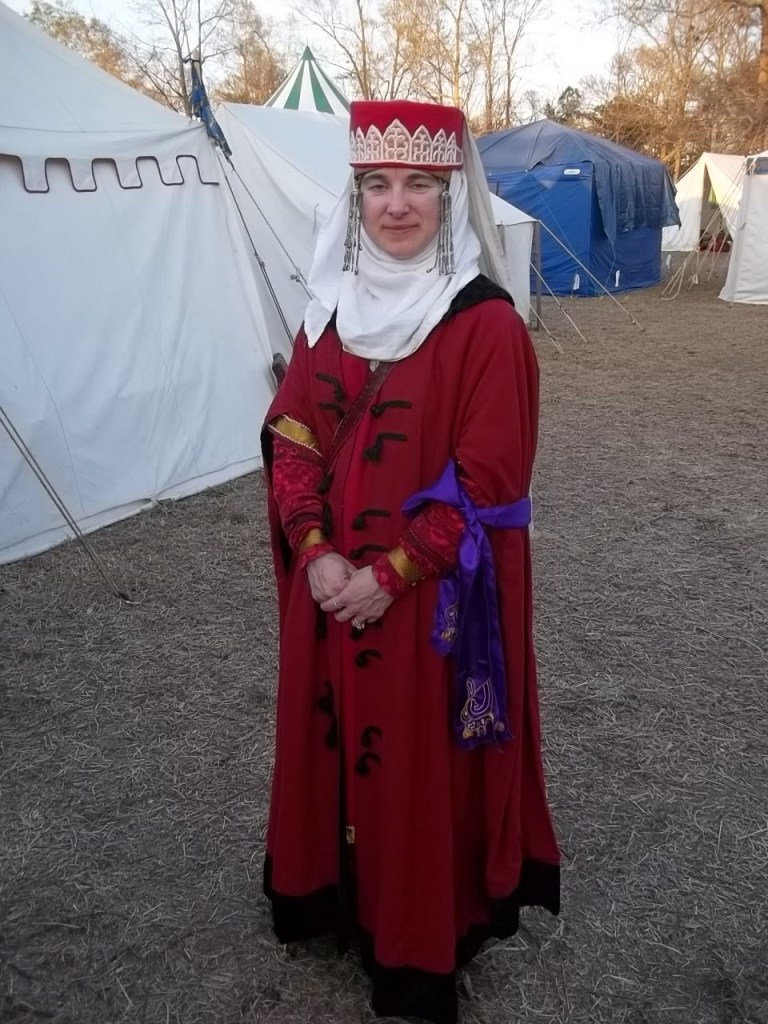
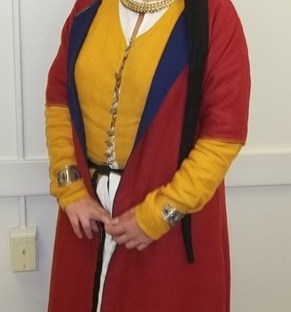
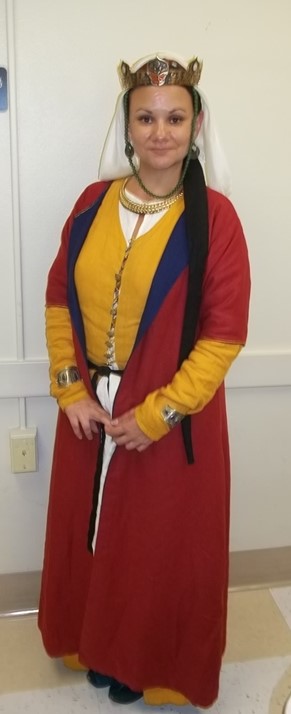
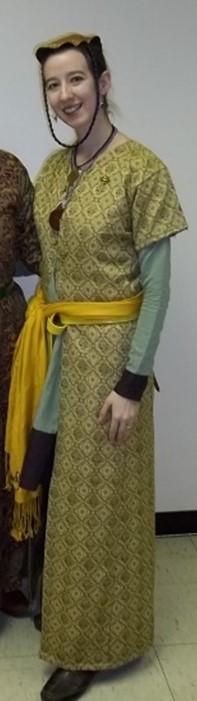
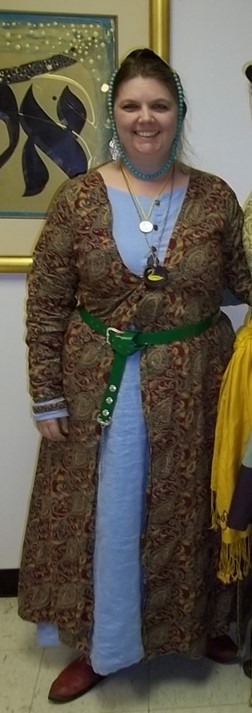
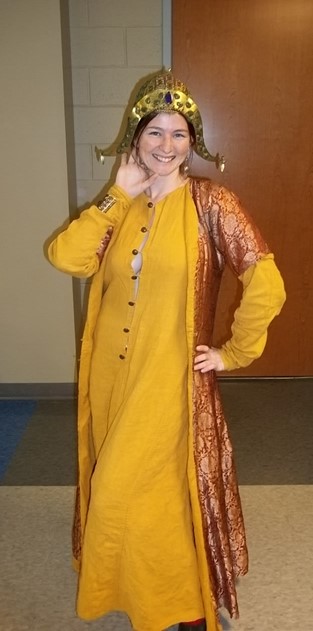
A tunic and an outer layer coat associated with Norse cultures. The front panels cross over each Simplified version of pants worn in many cultures and times periods from antiquity to the end of the SCA period
Description:
Wool coat lined with linen decorated with a tablet woven band. The coat is shown over a
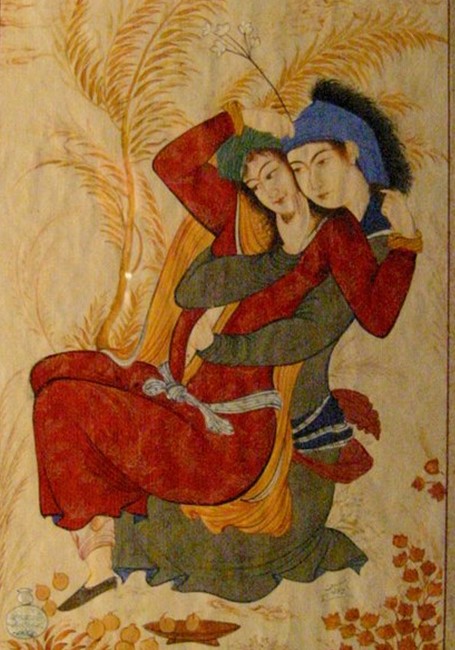
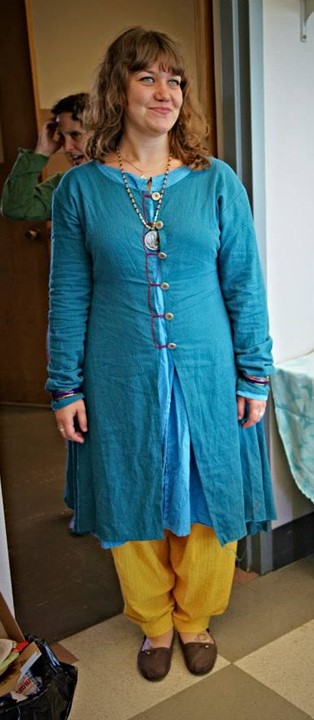
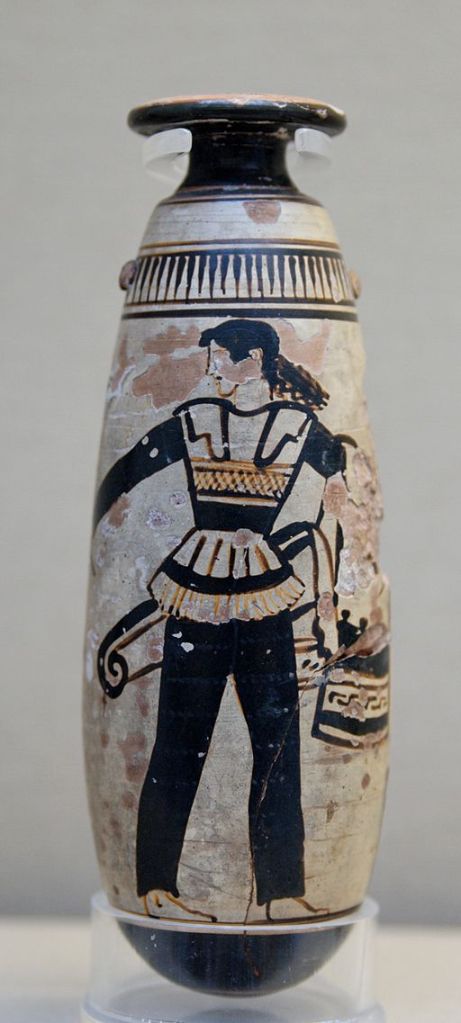
One of the many variations of the pants seen in imagery from antiquity through to the end of the SCA period. There are many works of art that do represent people in a variety of pants. The garments can be documented and construction can be inferred in a variety of forms. Many examples of surviving extant fragments were of wool.
Variations in pants include how baggy the garments are, how long they are, how wide the waistline is and how the waist is cinched closed.
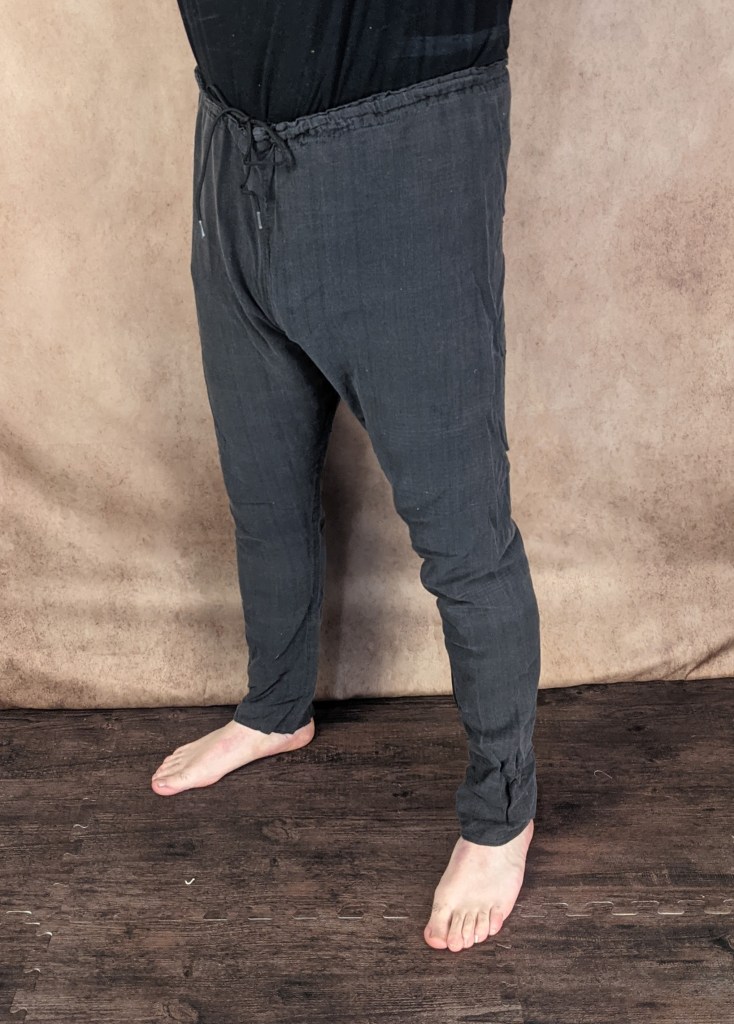
This example is for a basic SCA ‘pajama pant’ constructed from a medium cotton material with a drawstring closure for the waist. The pants are made in 2 parts with the seams sewn up the inside of either leg and then the legs are sewn together with one crotch seam. The top of the pants are folded over to form the channel for the drawstring. This version may be slightly tighter than how some people construct them.
Patterns are easily generated by laying an example of a normal pajama pants that fit the person on a folded pieces of paper.












 SCA Iowa Garb Guide