Female, Full Entry

1450 CE Female Burgundian Gown 2

Title1450 CE Female Burgundian Gown 2
Entry #GGB2021.068
Alternate Names V neck gown, gown
Year1450
Time range1450-1500
EraLate Medieval
GenderFemale
regionNorthern Europe
Countries/culturesFrance
MakerVincent de Vere
Difficulty3
ConfidenceImage Examples

Intro:

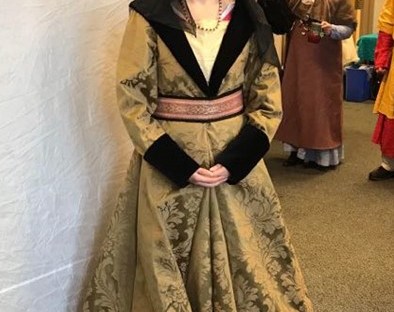
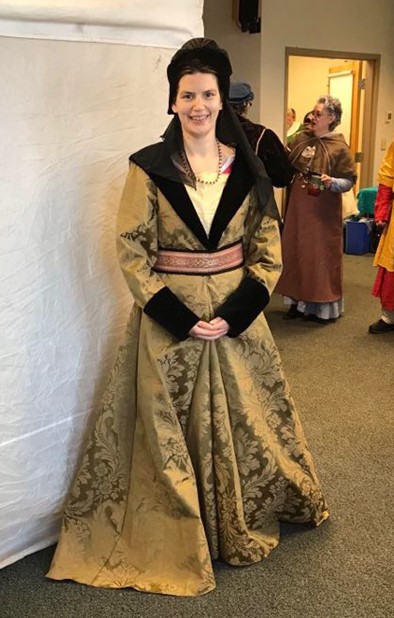
“A” shaped dress with “V” shaped neckline, fitted in the torso and spreading widely, often with train from the waist.  Wide belt at waist.  Worn over fitted kirtle.

Additional Images of the completed garment:
Description:

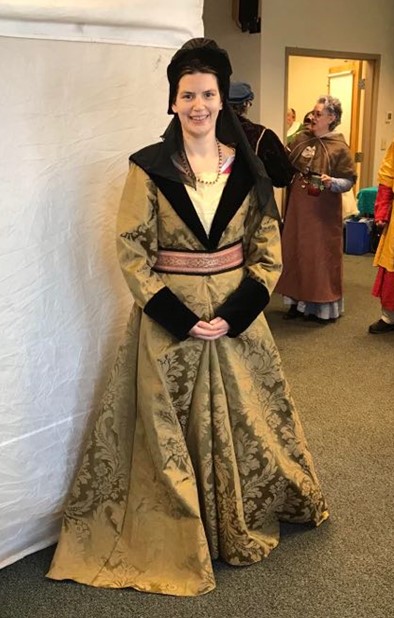
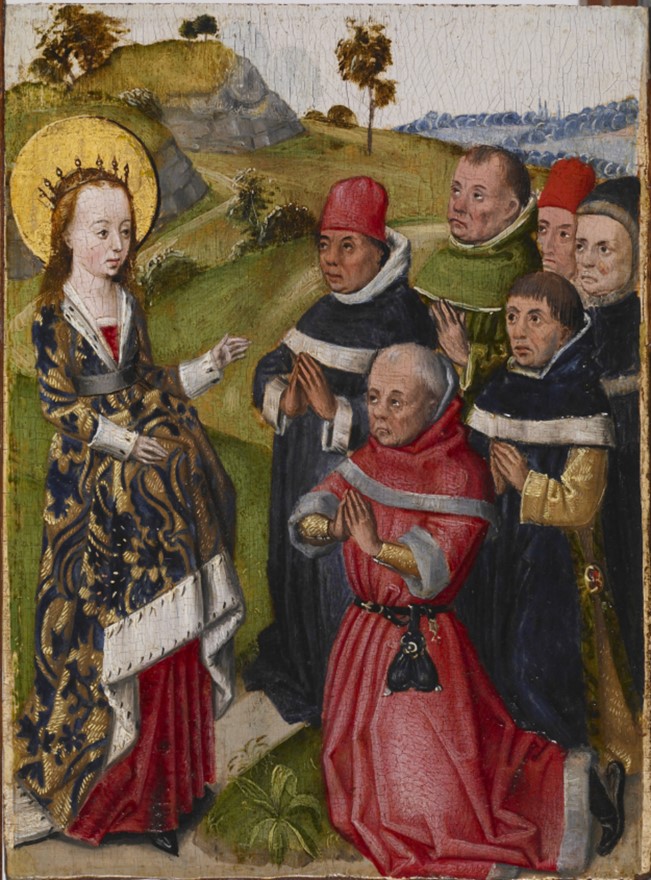
One of the garments that there are many image examples for as this is a time of many surviving artworks.  A style of dress seen in many Flemish paintings that show a common set of features including fitted torso with deeply plunging neckline and collar with contrasting fabric or fur lining. The deep neckline displayed an under placket or partlet or kirtle, some displayed without.  Sleeves often shown with lined cuffs that are rolled back on the sleeve.  Most show no seam at waist or a wide belt covering any such seam.  More examples of images showing the waist seam appear closer to 1500CE. Many are displayed as being lined

Under layers would commonly include a shift, slip or some form of underdress, covered by a fitted kirtle and then covered by the gown. 

Key accessories include the wide belt often made from fabrics as well as many examples of different styles of hats, many becoming elaborate. 

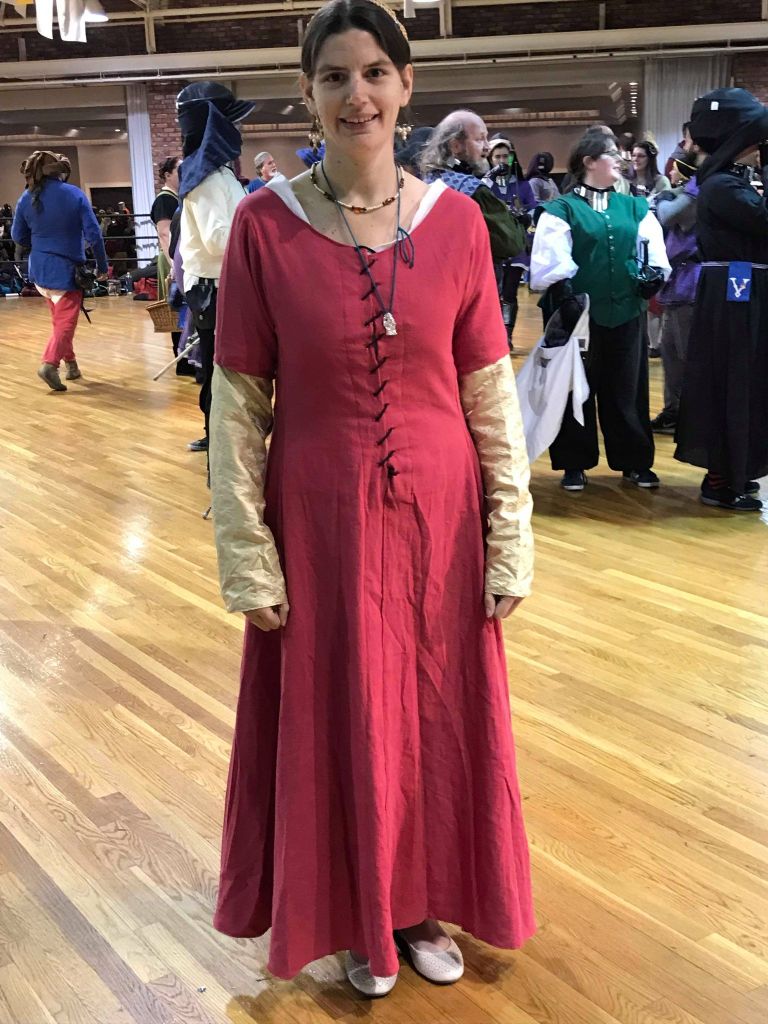
This dress is poly cotton blend brocade with cotton velvet collar and cuffs, red linen kirtle, white linen shift. A yellow silk placket covers most of the red kirtle at the plunging neckline

Inspiration Images
Common Materials

  • Fabrics:
    • Gown –
      • wools,
      • finely woven wools,
      • brocaded or patterned cloths.  Rich textiles,
      • collars featuring velvets and furs. 
      • Fur trim
    • Kirtle –
      • wool
      • linen
    • Underclothes
      • linen
  • Ornamentation:

Effective Substitutions

  • Fabrics:
    • Gown
      • Some cottons
      • linens
      • Linen blends wool blends
      • brocades
      • some poly/cotton upholstery fabrics to achieve the woven in patterns. 
    • Kirtle
      • Linen and linen blends
      • some cottons to lighten the under layers
    • Underclothes
      • Linen
      • Linen blends
      • cottons
  • Ornamentation:

Ensemble Components

  • Under layers – shift/slip or some form of underdress
  • gown. 

  • fitted kirtle

Accessories

  • Key accessories include the wide belt often made from fabrics as well as many examples of different styles of hats, many becoming elaborate. 
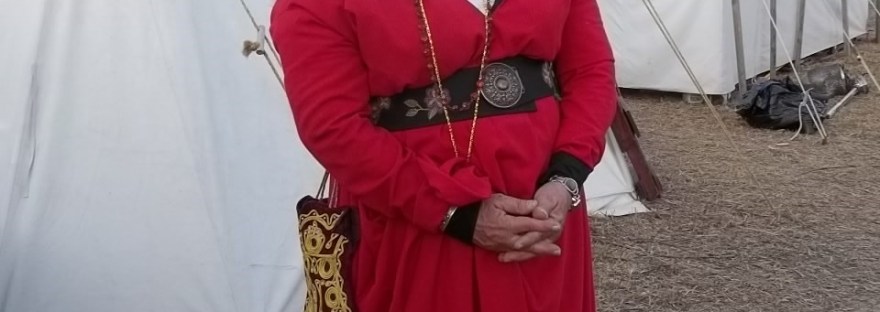
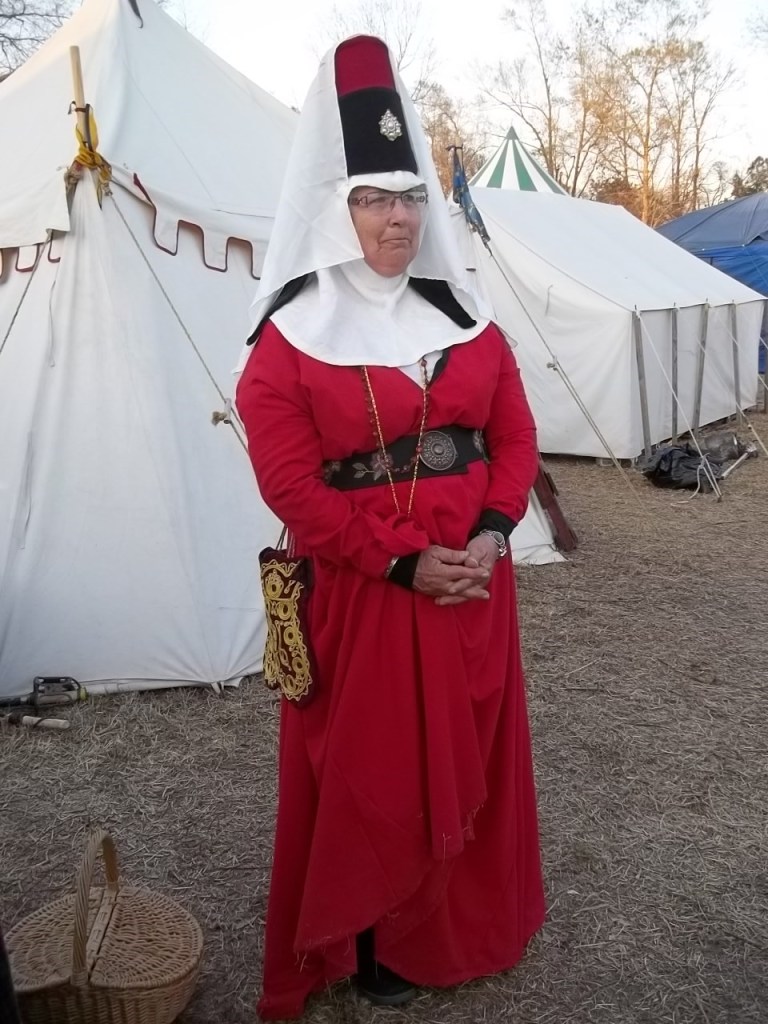
  • This is the time of the Henin hat that becomes the stereotypical ‘princess’ hat, various low shoes or slippers, pouches or purses.

Source/Links

http://cadieux.mediumaevum.com/burgundian-gown.html

https://adamselindisdress.blog/2014/06/02/how-to-make-a-kirtle-and-a-burgundian-gown/

https://dawnsdressdiary.wordpress.com/2018/01/25/burgundian-v-neck-gown-research/

Version2
date3/2/2021
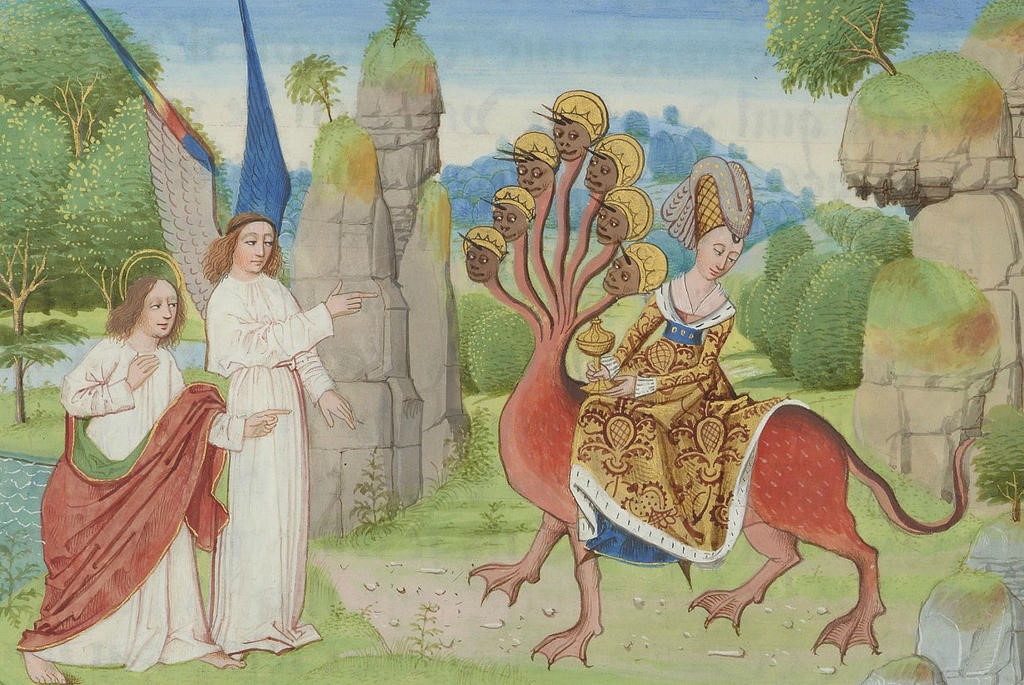
Source of Period PicThe Whore of Babylon. 1470. Pierpont Morgan MS M.68. Saint Catherine converting the Scholars. Walters Art Museum 37.2487.
ModelKristen Wereszynski
PhotographerVincent De Vere
  

Basic Entry, Female

1450 CE Female Burgundian Gown 3

Title1450 CE Female Burgundian Gown 3
Entry #GGB2021.069
Alternate Names V neck gown, gown
Year1450
Time range1450-1500
EraLate Medieval
GenderFemale
regionNorthern Europe
Countries/culturesFrance
Maker
Difficulty3
ConfidenceImage Examples

Intro:

“A” shaped dress with “V” shaped neckline, fitted in the torso and spreading widely, often with train from the waist.  Wide belt at waist.  Worn over fitted kirtle.

Description:

One of the garments that there are many image examples for as this is a time of many surviving artworks.  A style of dress seen in many Flemish paintings that show a common set of features including fitted torso with deeply plunging neckline and collar with contrasting fabric or fur lining. The deep neckline displayed an under placket or partlet or kirtle, some displayed without.  Sleeves often shown with lined cuffs that are rolled back on the sleeve.  Most show no seam at waist or a wide belt covering any such seam.  More examples of images showing the waist seam appear closer to 1500CE. Many are displayed as being lined

Under layers would commonly include a shift, slip or some form of underdress, covered by a fitted kirtle and then covered by the gown. 

Key accessories include the wide belt often made from fabrics as well as many examples of different styles of hats, many becoming elaborate. 

This dress is poly cotton blend brocade with cotton velvet collar and cuffs, red linen kirtle, white linen shift. A yellow silk placket covers most of the red kirtle at the plunging neckline

Inspiration Images
Common Materials

  • Fabrics:
    • Gown –
      • wools,
      • finely woven wools,
      • brocaded or patterned cloths.  Rich textiles,
      • collars featuring velvets and furs. 
      • Fur trim
    • Kirtle –
      • wool
      • linen
    • Underclothes
      • linen
  • Ornamentation:

Effective Substitutions

  • Fabrics:
    • Gown
      • Some cottons
      • linens
      • Linen blends wool blends
      • brocades
      • some poly/cotton upholstery fabrics to achieve the woven in patterns. 
    • Kirtle
      • Linen and linen blends
      • some cottons to lighten the under layers
    • Underclothes
      • Linen
      • Linen blends
      • cottons
  • Ornamentation:

Ensemble Components

  • Under layers – shift/slip or some form of underdress
  • gown. 

  • fitted kirtle

Accessories

  • Key accessories include the wide belt often made from fabrics as well as many examples of different styles of hats, many becoming elaborate. 
  • This is the time of the Henin hat that becomes the stereotypical ‘princess’ hat, various low shoes or slippers, pouches or purses.

Source/Links

http://cadieux.mediumaevum.com/burgundian-gown.html

https://adamselindisdress.blog/2014/06/02/how-to-make-a-kirtle-and-a-burgundian-gown/

https://dawnsdressdiary.wordpress.com/2018/01/25/burgundian-v-neck-gown-research/

Version2
date3/2/2021
Source of Period PicThe Whore of Babylon. 1470. Pierpont Morgan MS M.68. Saint Catherine converting the Scholars. Walters Art Museum 37.2487.
ModelKristen Wereszynski
PhotographerVincent De Vere
  

Component Entry, Female

Apron, pleated

TitleApron, gathered
Entry #GGC2021.017
Alternate NamesApron
Year1000-1600 CE
Time range1000-1600 CE
Erahigh Medieval, Late Medieval
Genderwomen
regionEuropean
Countries/culturesWestern European, Central European
MakerVincent De Vere,
Difficulty2
ConfidenceImage Example

Intro:

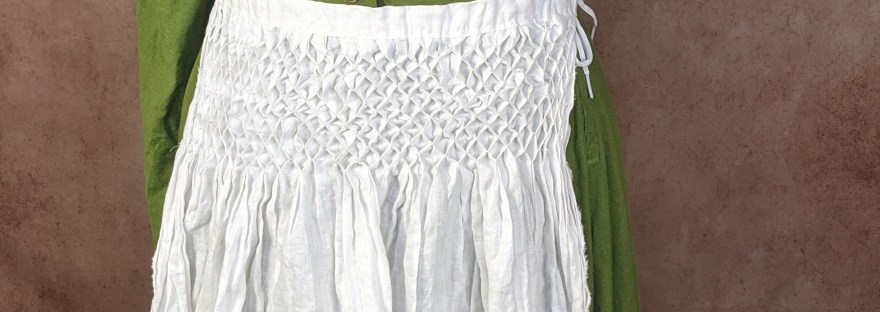
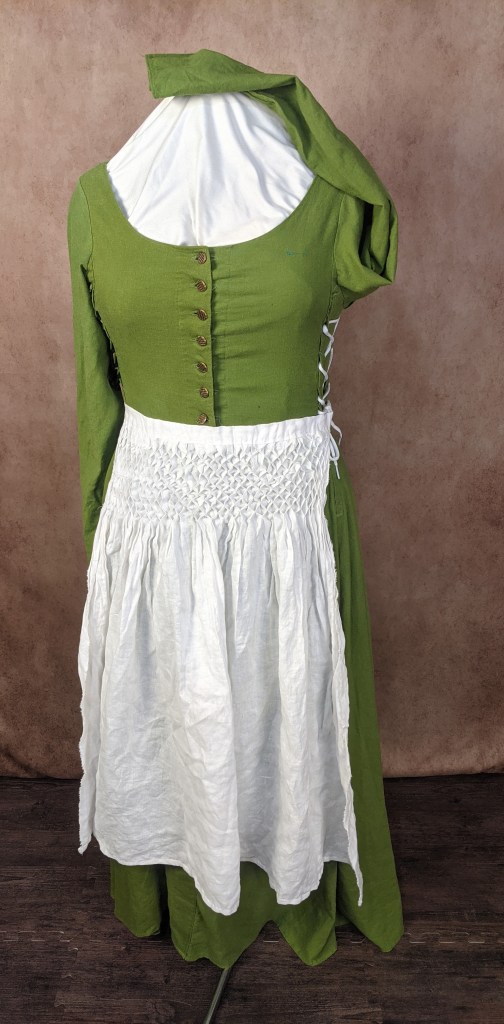
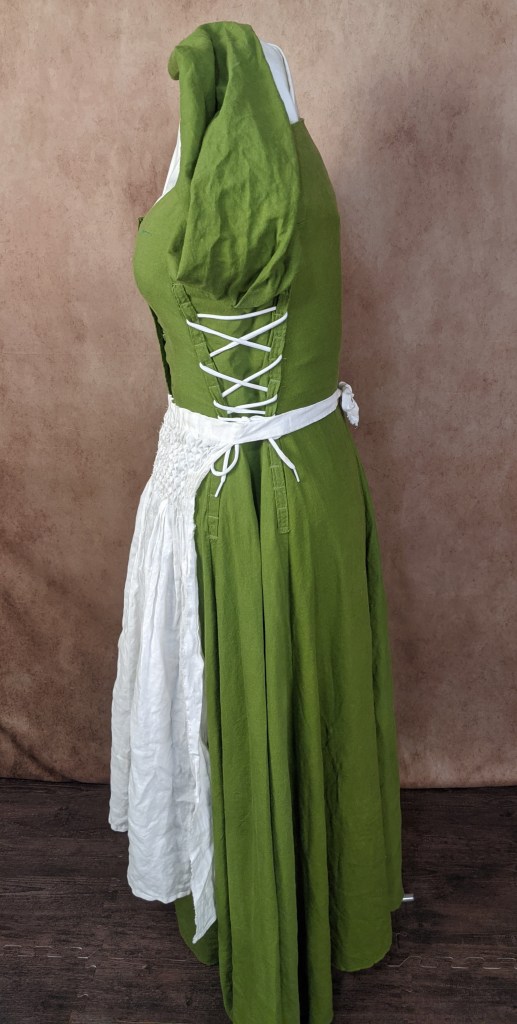
Apron made from one yard of linen fabric featuring honeycomb pleating decoration.                                    

Description:

This apron is made from three pieces with two long narrow strips sewn into the waistband and one large rectangle decorated with honeycomb pleating.

Aprons are easily constructed accessories that are also functional accessories to use with your SCA clothing.  They can easily be made in a few minutes by machine or just a couple hours by hand.  They add to the completeness of an ensemble by adding another layer to the look.  They are also very functional in protecting the clothing beneath it.

The honeycomb pleating makes this apron appear much more complex but the decoration can be done in a few hours of work and makes a much more decorative accessory.  

Inspiration Images

Common Materials

  • Fabrics:
    • Linen  

Effective Substitutions

  • Fabrics:
    • linen blends
    • Linen
    • cotton
    • cotton blends

Ensemble Components

  •  

Accessories

Source/Links

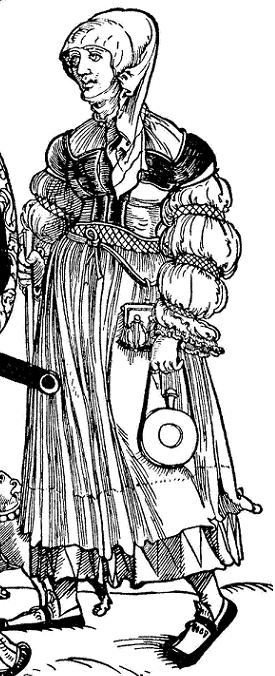
woodcut Tailor and Seamstress by Erhard Schon, 1525-1530

These are images from the The German single-leaf woodcut, 1500-1550, Max Geisberg ; rev. and edited by Walter L. Strauss, New York : Hacker Art Books, 1974.

Version1
date12/30/2021
Source of Period PicThe German single-leaf woodcut,
Model Vincent de Vere
PhotographerVincent De Vere
  
Basic Entry, Male

1500 CE Male Irish Inonar and Leine

Title1500 CE Male Irish Inonar and Leine
Entry #GGB2021.087
Alternate Names 
Year1500
Time range
EraLate medieval
GenderMale
regionNorthern europe
Countries/culturesIreland
MakerConel O’Carroll
Difficulty2
ConfidenceNo information provided

Intro:

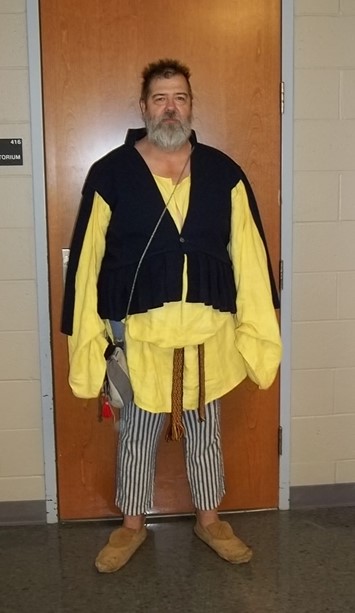
A short vest like coat and baggy shirt

Description:

Leine, generally meaning shirt.  The Inonar jacket

Inspiration Images

No Information Provided

Common Materials

  • No Information Provided

Effective Substitutions

  • No Information Provided

Ensemble Components

  • No Information Provided

Accessories

  • No Information Provided

Source/Links

https://reconstructinghistory.com/an-leine-crioch-the-irish-leine-in-the-16th-century/

Version2
date3/5/2021
Source of Period Pic 
ModelConel O’Carroll
PhotographerVincent De Vere