Full Entry, Male

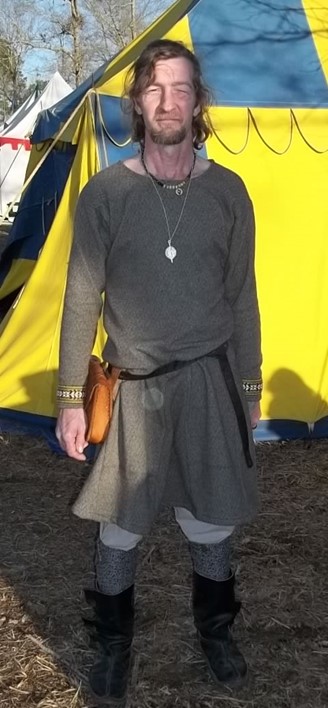
800 CE Male Anglo Saxon Tunic

Title800 CE Male Anglo Saxon Tunic
Entry #GGB2021.0007
Alternate Names tunic, over tunic
Year800 CE
Time range500-900 CE
EraEarly Medieval
GenderMale
regionWestern Europe
Countries/culturesEngland
MakerRichard of Wolfwood
Difficulty1
ConfidenceImage Example

Intro:

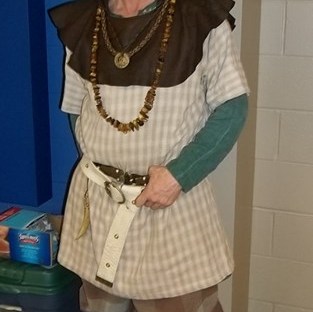
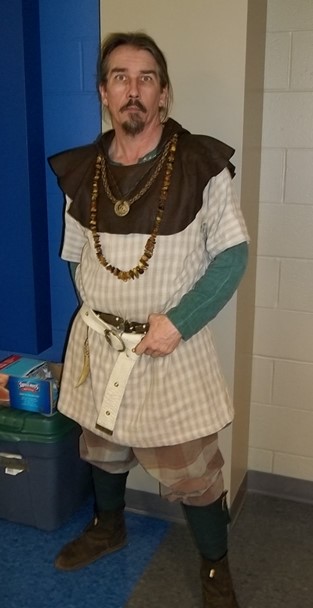
A tunic style outfit with accessories common to many early or pre medieval cultures. Under tunic, over tunic, pants with leg wraps, turn shoes and a mantled hood

Description:

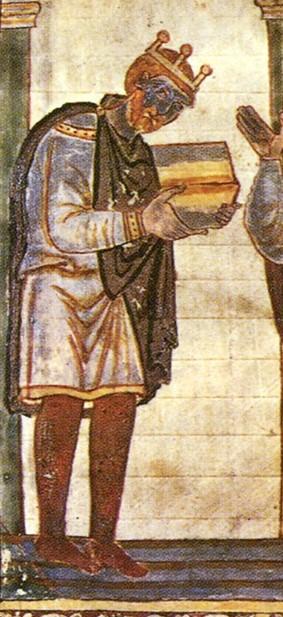
Few representations survive of early garments and many fewer extant examples, however what does survive would support much of what is shown here. 

The fabric shows woven in patterns that existed across Western Europe in the centuries before 1000 CE.  The basic style of layers of tunics and pants continued from before the centuries of the Roman influence to the age of Norman England. 

A base layer of a linen under tunic may have been worn below the long sleeved wool tunic and the wool outer tunic.  This example was made from Linen for use during warm summer events. 

The pants made from striped linen cloth would have been wool in period.  The leg wraps are made from strips of wool fabric but are often woven as narrow bands.  These are also know and winingas. The shoes are an early style of turn shoe.

The hood has a wide mantle and is made from light wool.  The amber would have been a common item traded from Eastern Europe.

Inspiration Images
Common Materials

  • Fabrics:
    • linen
    • wool
  • Ornamentation:
    • Embroidery
    • Tablet woven bands

Effective Substitutions

  • Fabrics:
    • cotton
    • cotton-linen
    • linen-rayon
    • wool blends
  • Ornamentation:

Ensemble Components

  • Under tunic
  • Over Tunic

  • Pants
  • Hood

Accessories

  • Belt
  • Leg Wraps
  • Pouch
  • Turn Shoes

Source/Links

https://www.cs.vassar.edu/~capriest/viktunic.html

Version2
date3/5/2021
Source of Period PicOriginally from MS 183, f.1v at Corpus Christi College, Cambridge
ModelRichard Jones 020213-19
PhotographerVincent De Vere
  

Female, Full Entry

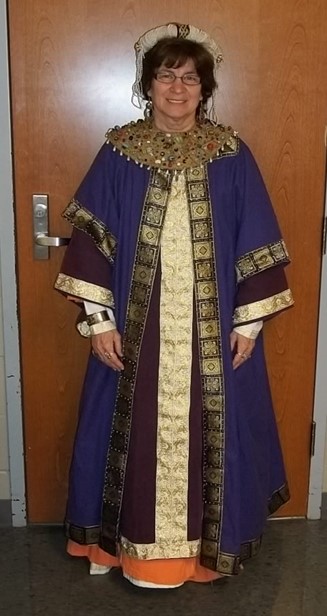
800 CE Female Byzantine Delmatikion

Title800 CE Female Byzantine Delmatikion
Entry #GGB2021.0006
Alternate Names Female byzantine court dress
Year800 CE
Time range700-1083 CE
EraEarly medieval
GenderFemale
regionEastern Europe, middle east
Countries/culturesByzantine
MakerDiana Tantini
Difficulty2
ConfidenceImage Examples

Intro:

Court garb, multi layered and richly decorated garment consisting of layers of dresses and robes as well as a decorated collar.

Description:

Essentially wide sleeved tunics and robes, made from rich fabrics and decorated with embroidered embellishments.

Multiple layers of rich garments would show the wealth of the individual.  Fabrics were lighter and finer in weave, assuming to be linens and silks.  

Inspiration Images

Common Materials

  • Fabrics:
    • Fine fabrics
    • linens
    • silks
    • solid colors embellished with embroidered decorations or appliqued shames rather than designs that were woven in
  • Ornamentation:

Effective Substitutions

  • Fabrics:
    • cottons
    • linen blends
    • some fine poly’s for silk effects, but the poly blends have many drawbacks,
  • Ornamentation:

Ensemble Components

  • outer wide sleeved robe
  • under tunics of various colors

  • shoes or slippers

Accessories

  • worn with roman inspired cloak called a chlamys
  • various hats

Source/Links

Version2
date3/6/2021
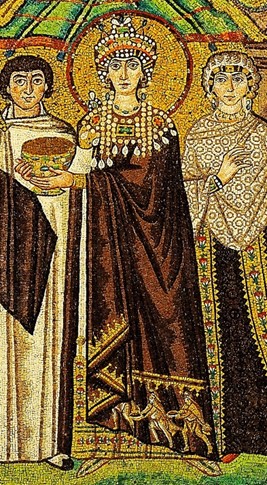
Source of Period PicPetar Milošević photo of Theodora (San Vitale) Ravenna, Italy
ModelDiane Wilson 020213-21
PhotographerVincent De Vere
  

Full Entry, Male

900 CE Male Norse Tunic

Title900 CE Male Norse Tunic
Entry #GGB2021.0009
Alternate NamesT Tunic, Lendbreen tunic
Year900 CE
Time range600-1000 CE
EraEarly Medieval
GenderMale
regionNorthern Europe
Countries/cultures Northern Europe
Maker
Difficulty1
ConfidenceExtant Example

Intro:

Tunic, pants, leg wraps used in many northern European areas for a wide time frame in the early medieval era

Description:

Linen under tunic Wool tunic with woven trim at wrists, pants tied with a drawstring at the waist,  wool leg wraps, Norse style boots, belt and pouch.

Many of the male garments from across northern Europe through the early middles ages share many similarities.

Inspiration Images

Common Materials

  • Fabrics:
    • linen
    • wool
  • Ornamentation:

Effective Substitutions

  • Fabrics:
    • cotton
    • cotton-linen
    • linen-rayon
    • wool blends
    • Scrub pants can be used for pants.  Strips of cloth can be used for leg wraps.  Various boots and shoes can be used if they do not stand out too much.
  • Ornamentation:

Ensemble Components

  • Under tunic
  • Over Tunic

  • Pants
  • Hood

Accessories

  • Belt
  • Leg Wraps
  • jewelry
  • Pouch
  • Turn Shoes
  • knife

Source/Links

https://www.cs.vassar.edu/~capriest/viktunic.html

https://www.medievalists.net/2014/11/early-medieval-tunic-recreated-norway/

Version2
date3/5/2021
Source of Period Pichttps://www.medievalists.net/2014/11/early-medieval-tunic-recreated-norway/
ModelBjarki Vikarason 031513-02
PhotographerVincent De Vere
  

Full Entry, Male

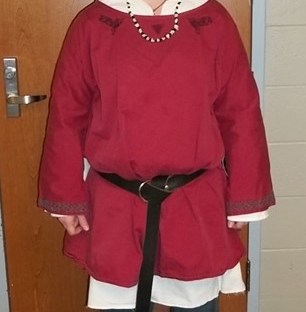
900 CE Anglo Saxon Tunic

Title900 CE Anglo Saxon Tunic
Entry #GGB2021.0008
Alternate Names tunic, over tunic
Year900 CE
Time range500-900 CE
EraEarly Medieval
GenderMale
regionWestern Europe, Northern Europe
Countries/culturesEngland
MakerElspeth of Stonehaven
Difficulty1
ConfidenceImage Example

Intro:

A tunic style outfit with accessories common to many early or pre medieval cultures. Under tunic, over tunic, pants with leg wraps, turn shoes and a mantled hood

Description:

Few representations survive of early garments and many fewer extant examples, however what does survive would support much of what is shown here. 

The fabric shows woven in patterns that existed across Western Europe in the centuries before 1000 CE.  The basic style of layers of tunics and pants continued from before the centuries of the Roman influence to the age of Norman England. 

A base layer of a linen under tunic may have been worn below the long sleeved wool tunic and the wool outer tunic.  This example was made from Linen for use during warm summer events. 

The pants made heavy cotton cloth would have been wool in period. 

The over tunic is decorated with embroidery

Inspiration Images

Common Materials

  • Fabrics:
    • linen
    • wool
  • Ornamentation:
    • Embroidery
    • Tablet woven bands

Effective Substitutions

  • Fabrics:
    • cotton
    • cotton-linen
    • linen-rayon
    • wool blends
  • Ornamentation:

Ensemble Components

  • Under tunic
  • Over Tunic

  • Pants
  • Hood

Accessories

  • Belt
  • Leg Wraps
  • Pouch
  • Turn Shoes

Source/Links

Version2
date3/5/2021
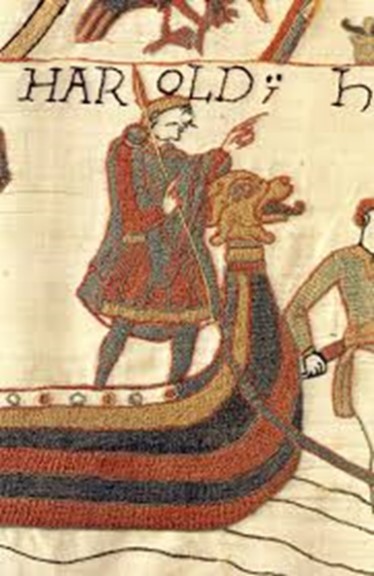
Source of Period PicBayeux tapestry
ModelTola Rufusdóhtor 020213-24
PhotographerVincent De Vere
  

Full Entry, Male

1000 CE Male Byzantine Tunic 1

Title: 1000 CE Male Byzantine Tunic 1
Entry #: GGB2021.026
Alternate Names:  
Year: 1000 CE
Time range: 700-1083 CE
Era: Early Medieval
Gender: Male
region: Eastern Europe/Middle East
Countries/cultures: Byzantine
Maker:
Difficulty: 1
Confidence: Image examples

Intro:

Clothing from the outskirts of the Byzantine empire, multi layered and richly decorated tunic garments consisting of layers of dresses and robes

Description:

Inspired by the founding Roman cultures, Byzantine garments tended to be layers of tunics made from finely woven and often rich fabrics decorated with embroidery or appliques.  Often worn with a cloak called a Chlamys

Multiple layers of rich garments would show the wealth of the individual.  Fabrics were lighter and finer in weave, assuming to be linens and silks.  

No additional information provided

Inspiration Images

Common Materials

  • Fabrics:
    • Fine Fabrics
    • Linens
    • Silks
    • Solid colors embellished with embroidered decorations or appliqued shames rather than designs that were woven in
  • Ornamentation:

Effective Substitutions

  • Fabrics:
    • cottons
    • linen blends
    • some fine polyester/blends for silk effects, but the poly blends have many drawbacks
  • Ornamentation:

Ensemble Components

  • outer wide sleeved robe
  • under tunics of various colors

  • hats of various styles
  • shoes or slippers

Accessories

  • worn with roman inspired cloak called a chlamys and various hats

Source/Links

Version: 3
date: 3/6/2021
Source of Period Pic: Meister der Kahriye-Cami-Kirche in Istanbul
 Mosaiken der Kirche Kahrié-Djami in Istanbul, Szene: Märtyrer
Model: Donald MacDonald 020213-08
Photographer: Vincent De Vere
  

Component Entry, Unisex

Shoe, bag shoe

TitleShoe, bag shoe
Entry #GGC2022.017
Alternate Names
Year1000 CE
Time range3000 BCE – 1200 CE
Eraall
Genderunisex
regionEurope
Countries/cultures
MakerVincent De Vere,
Difficulty1
ConfidenceExtant Examples

Intro:

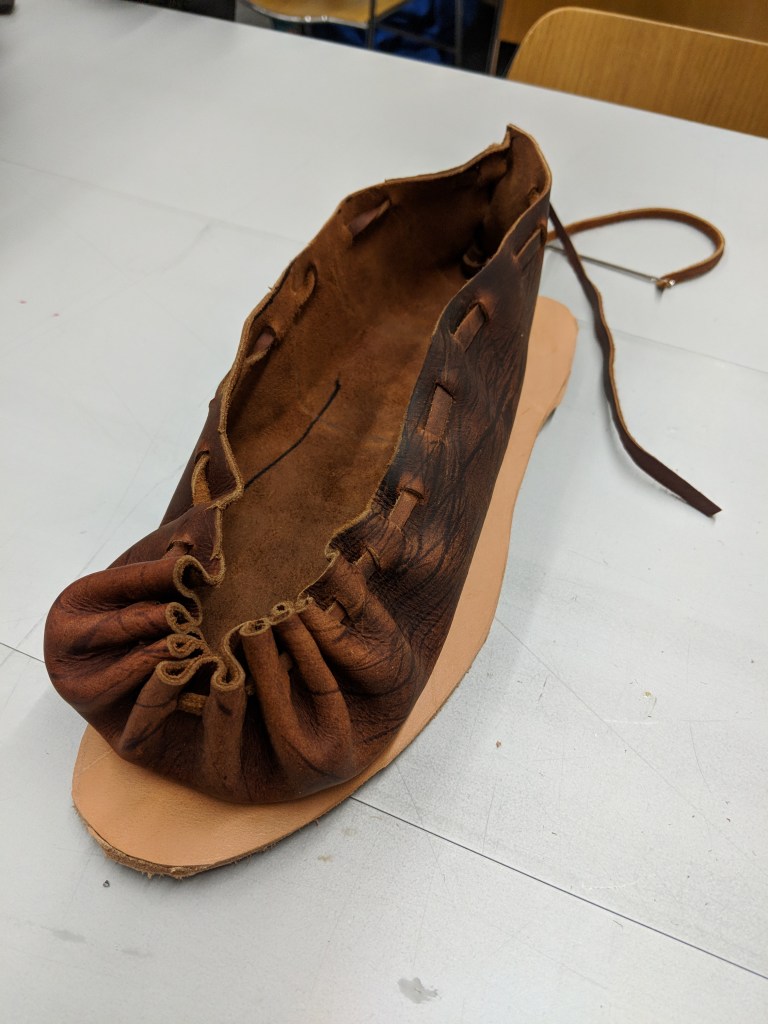
Simple slip on shoes.

Description:

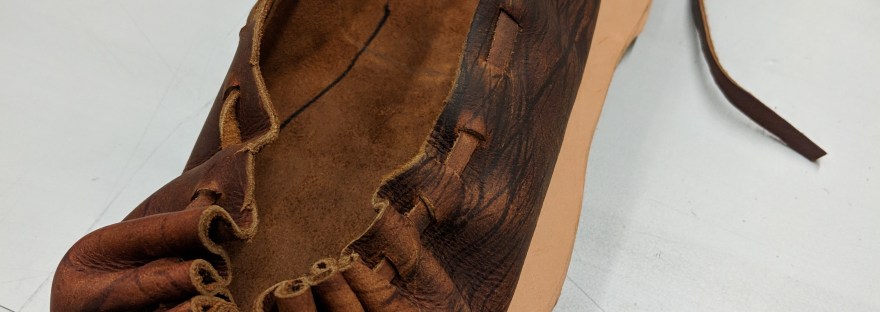
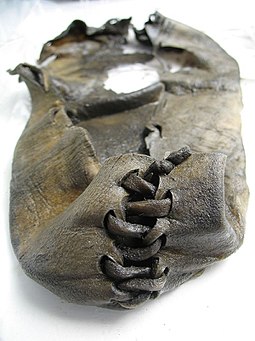
Low slip on shoes that are constructed from a single piece of leather and a leather thong.  Evidence of shoes much like this have been found to our knowledge, from sites ranging from 3000 BCE to 1200 CE or later.  Basic shoes of this style have also been found in the archeological record across Europe. 

This recreation shoe later had a stiffing sole and tread glued to the bottom to prevent the wearer from slipping at events.  Although this modification is not historically correct, modifications done for personal safety and comfort are common in the SCA.

Inspiration Images

Common Materials

  • Fabrics:
    • Leather
  • Ornamentation:

Effective Substitutions

  • Fabrics:
    • chrome tanned leather, but oak tan/veg tan leather will work far better

Ensemble Components

Accessories

Source/Links

The Jotunheimen shoe. Vegard Vike/Kulturhistorisk museum, CC BY-SA 4.0 <https://creativecommons.org/licenses/by-sa/4.0&gt;, via Wikimedia Commons

Stepping Through Time: Archaeological Footwear from Prehistoric Times until 1800, By Olaf Goubitz.  ISBN  9089320040 ISBN-13 ‏ : ‎ 978-9089320049

Version1
date1/9/2022
Source of Period PicThe Jotunheimen shoe. Vegard Vike/Kulturhistorisk museum, CC BY-SA 4.0 <https://creativecommons.org/licenses/by-sa/4.0&gt;, via Wikimedia Commons
Model 
PhotographerVincent De Vere
  

Component Entry, Female, Male, Unisex

Simple Narrow Belt with Reproduction Buckle

TitleSimple Narrow Belt with Reproduction Buckle
Entry #GGC2021.031
Alternate NamesBelt
Year1350
Time rangeAntiquity to end of period
EraAntiquity to end of period
GenderUnisex
regionEurope
Countries/culturesEurope
MakerVincent De Vere,
Difficulty1
ConfidenceExtant Example

Intro:

 Various belts.      

Description:

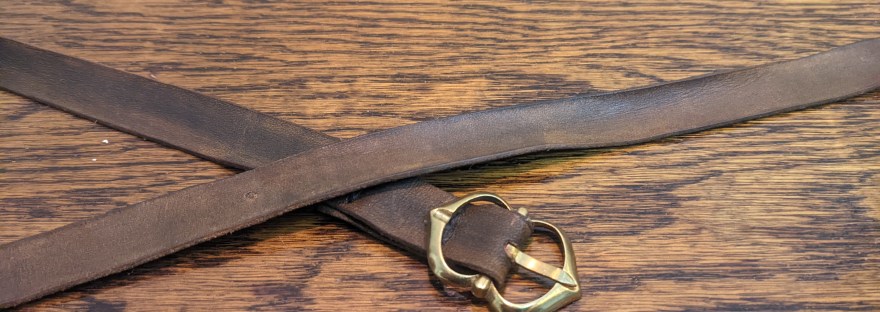
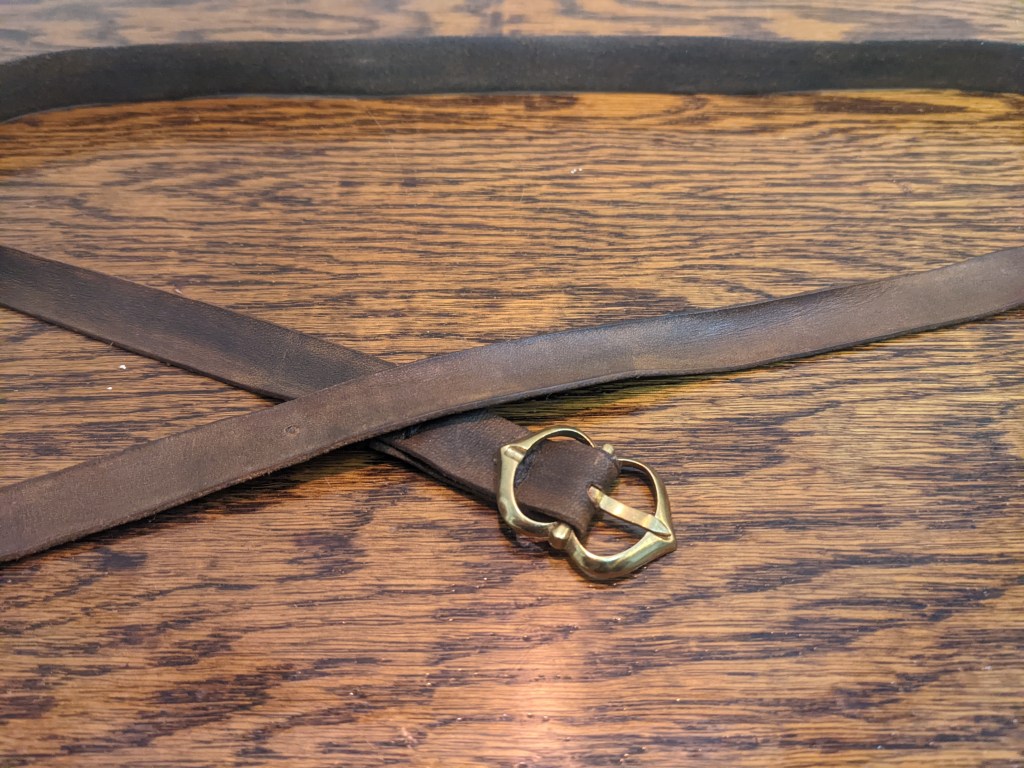
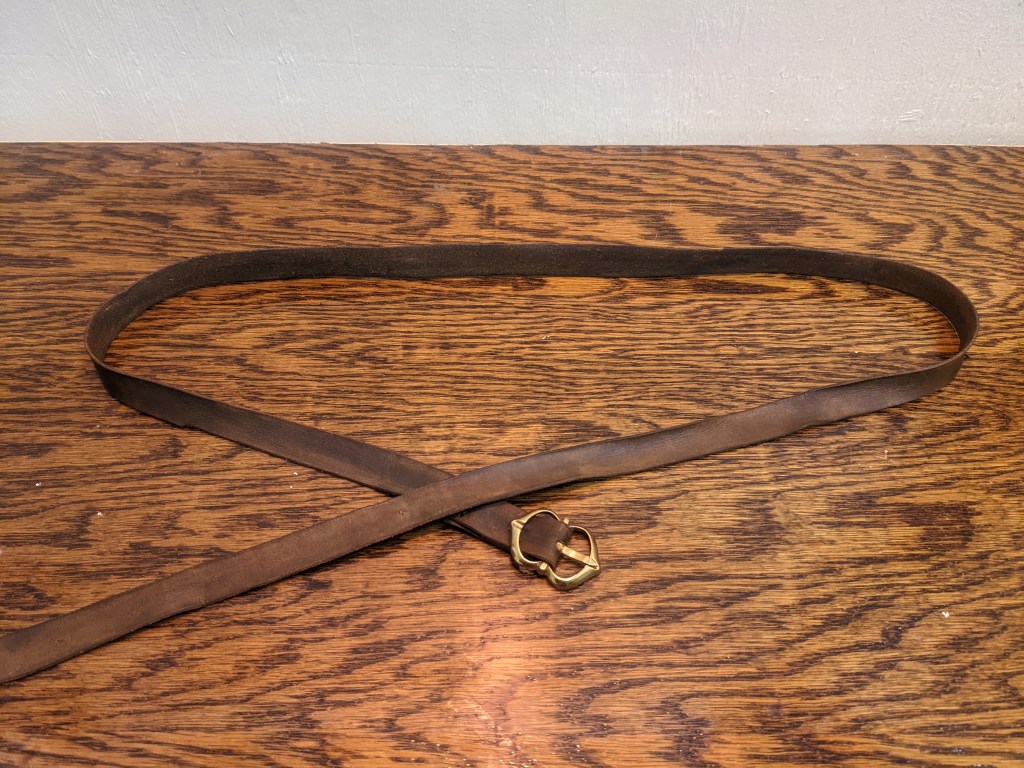
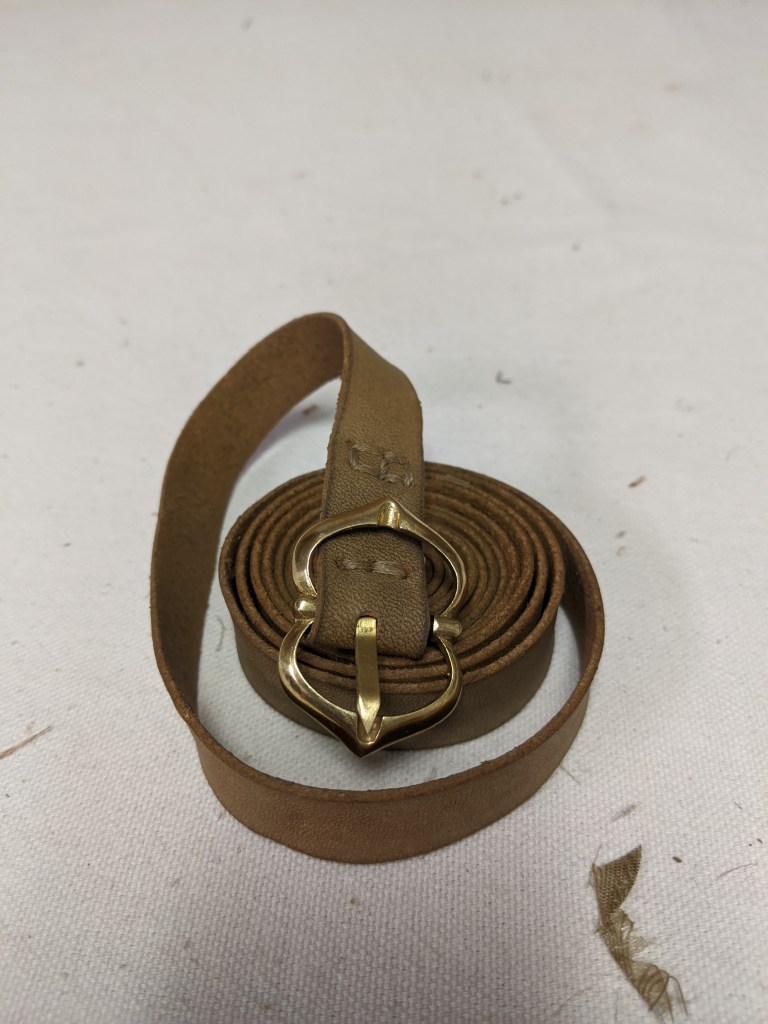
This is a modern buckle taken from a worn out belt and attached to a strip of leather to form a belt. This easily made belt works very well for people new to the SCA.

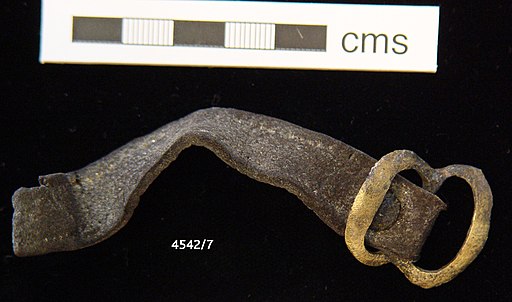
This reproduction buckle is based an extant example dated to arround 1350 CE, but is very similar to many others from different time periods. It is available through several reputable vendors. It would be an example of a very inexpensive reproduction piece.

Inspiration Images

Common Materials

  • Fabrics:
    • Leather
  • Ornamentation:

Effective Substitutions

  • Fabrics:
    • Leather
  • Ornamentation:

Ensemble Components

Accessories

Source/Links

The Portable Antiquities Scheme/ The Trustees of the British Museum, CC BY-SA 4.0 <https://creativecommons.org/licenses/by-sa/4.0&gt;, via Wikimedia Commons

Version1
date1/2/2022
Source of Period PicBritish Museum
Model 
PhotographerVincent De Vere