Basic Entry, Male

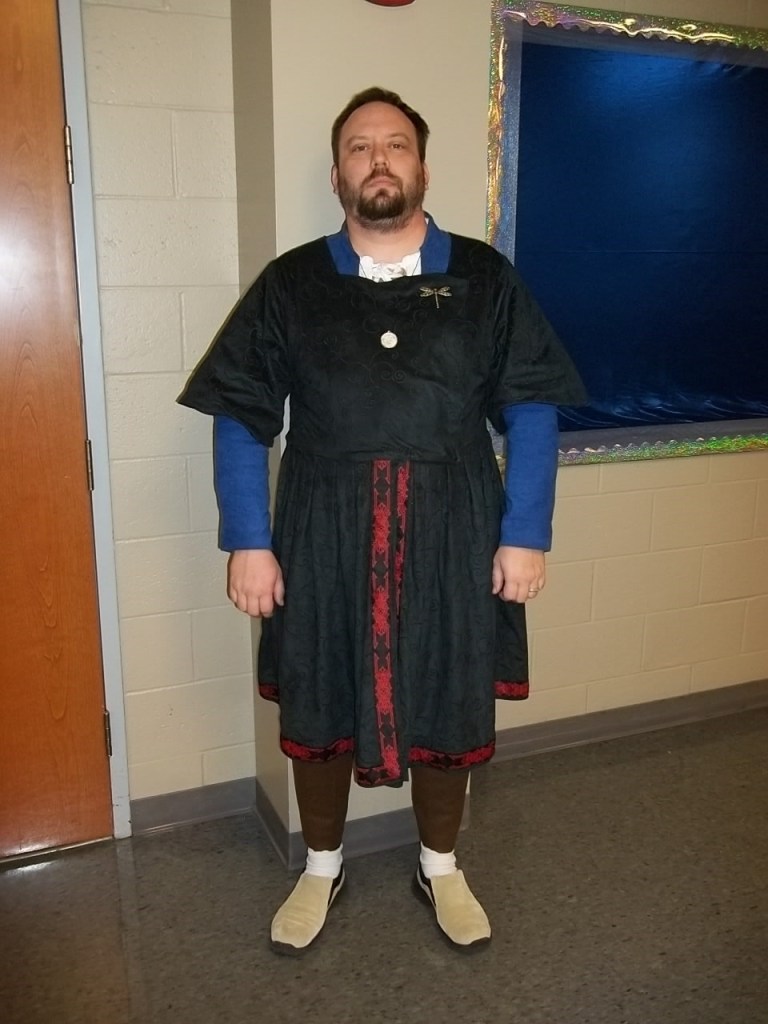
1530 Male Henrician Henchman’s Coat

Title1530 Male Henrician Henchman’s Coat
Entry #GGB2021.090
Alternate Names surcote
Year1530
Time range1530-1575 CE
EraHenrician
GenderMale
regionWestern Europe
Countries/culturesEnglish
MakerJayme Jones
Difficulty3
ConfidenceImage Examples

Intro:

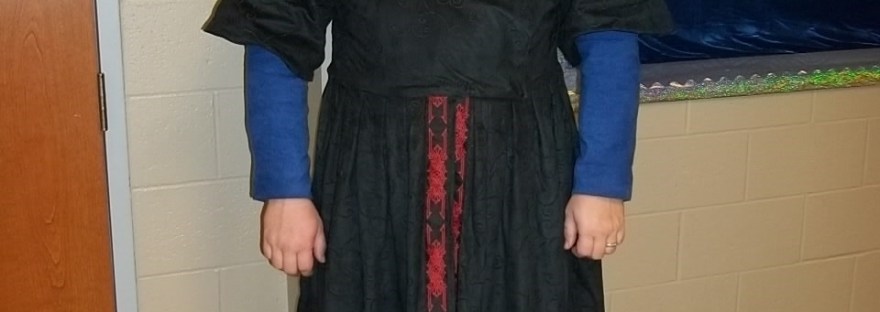
Coat worn by the Henchmen (servant) of Henry the 8th court.  Coat with pleated skirt worn over a doublet and pants

Description:

Coat much like earlier surcotes making the individual as a servant in a household, Commonly seen with some indication of which household they belong to such as a color combination.  Worn over a doublet and pants or breeches with hose and an under layer and braies next to the skin

This example was made out of very light fabric and doesn’t display the same drape of the other examples.

Inspiration Images

Common Materials

  • Fabrics:
    • Wools, wool blends, silks, brocaded fabrics richly decorated with woven in patterns
    • Doublet made out of wool lined in linen
    • Under layers made out of linen
  • Additional:

Effective Substitutions

  • Fabrics:
    • Upholstery fabrics, brocades and patterned cloth, cottons or blends
    • The outer layer needs to be of a heavy enough fabric to achieve the right drape of the examples
    • Doublet and breeches made out of lighter wool blends, linen, linen blends
    • Under tunic made out of linen, linen blends or cottons
  • Ornamentation:

Ensemble Components

  • Under shirt
  • doublet
  • over coat

  • pants
  • shoes
  • hat

Accessories

  • Belt
  • pouch/purse
  • shoes
  • dagger

Source/Links

The King’s Servants: Men’s Dress at the Accession of Henry VIII – Caroline Johnson

Version2
date3/2/2021
Source of Period PicWestminster tournament scroll 1511
ModelKonrad von Roth 020213-07
PhotographerVincent De Vere
  

Basic Entry, Female, Full Entry

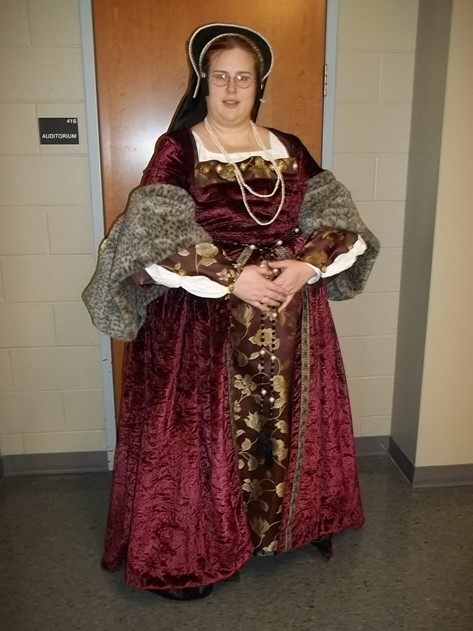
1550 CE English Female Henrician Gown 2

Title1550 CE English Female Henrician Gown 2
Entry #GGB2021.094
Alternate Names 
Year1550
Time range1530-1575 CE
EraHenrician
GenderFemale
regionWestern Europe
Countries/culturesEnglish
MakerJayme Jones
Difficulty3
ConfidenceImage Examples

Intro:

Hourglass Shaped Gown with Large Sleeves & Detachable Under Sleeves

Description:

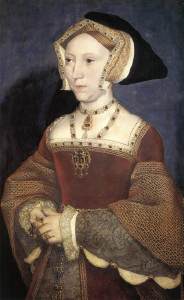
This style of dress is an evolutionary phase within the 16th century that is influenced by Spanish and German styles.  The silhouette has an hourglass shape: the bodice narrowed to a small waistline and the skirt gradually expanding into an inverted cone shape. Many of these dresses were floor length and without a train. 

To achieve the cone shaped appearance required a supportive layer called the Spanish farthingale which was worn over the chemise. A pair of bodies was worn with the farthingale and over the chemise.  The front of the overdress would have an inverted V opening and the neckline was square with highly decorative jewels or trim on the edging.  The sleeves were narrowed at the shoulder and expanded outward (normally a wide square cuff) that was turned back on itself.  This cuff could be made of fur or brocade.  A detachable, false sleeve was worn underneath and was decorated with panes and slashes through which the chemise could be seen or pulled through.

Inspiration Images

Common Materials

  • Fabrics:
    • Linen, Cotton, Wool, Silk, Brocade, Jacquard, Satin, and Taffeta*
    • *Some of the materials refer to weave structure and would have been made from natural fibers.
  • Additional:
    • Whalebone, cane, or steel for farthingale. Leather for shoes.

Effective Substitutions

  • Fabrics:
    • Some Polyester/cotton blended brocade, jacquard, satin, and taffeta.
    • linen blends and cottons for under layers
  • Ornamentation:
    • Plastic, zip ties, and metal for boning.

Ensemble Components

  • Chemise: undermost garment that is cut full and gathered into a round or square neckline; with full, gathered sleeves and ruffled cuff.
  • Spanish Farthingale: a skirt separate or sewn to petticoat with hoops that gradient in size from the waist to floor.  Constructed with whalebone, cane, or steel hoops.
  • Pair of Bodies: corset or under bodice that has stays (boning) laced together at the front, back, or both.
  • Petticoat: an underskirt that is made with elaborate fabric which can be seen in the front opening of overdress.
  • Overdress/Bodice: narrowed, stiff, and flat with an elongated V that dips at the natural waist.
  • Overdress/Skirt: combined with the bodice; very full and gathered made of similar fabric to overdress bodice.
  • Head wear: Coif, French Hood, Square Hood
  • Shoes:  Fabric or leather square-toe.

Accessories

  • Needlepoint/bobbin lace
  • Embroidery/Blackwork
  • jewels/trim
  • jeweled belt
  • brooches
  • purses suspended from belt
  • squared or feather fans.

Source/Links

Tortora, P. (2010). Survey of Historic Costume. New York: Fairchild Books.

https://adamselindisdress.blog/tag/henrician-dress/

Version2
date3/2/2021
Source of Period Pichttps://www.wga.hu/html_m/h/holbein/hans_y/1535h/02seymou.html
ModelJayme Jones 020213-06
PhotographerVincent De Vere