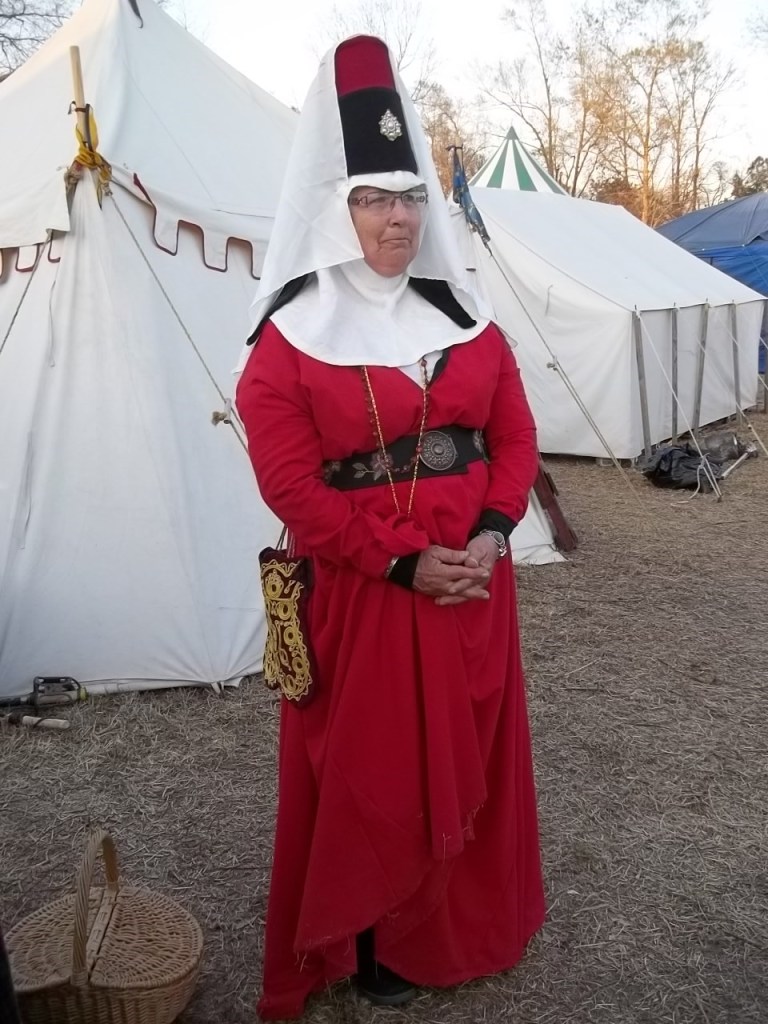
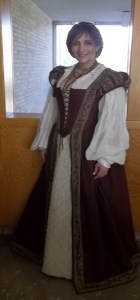
“A” shaped dress with “V” shaped neckline, fitted in the torso and spreading widely, often with train from the waist. Wide belt at waist. Worn over fitted kirtle.
Description:
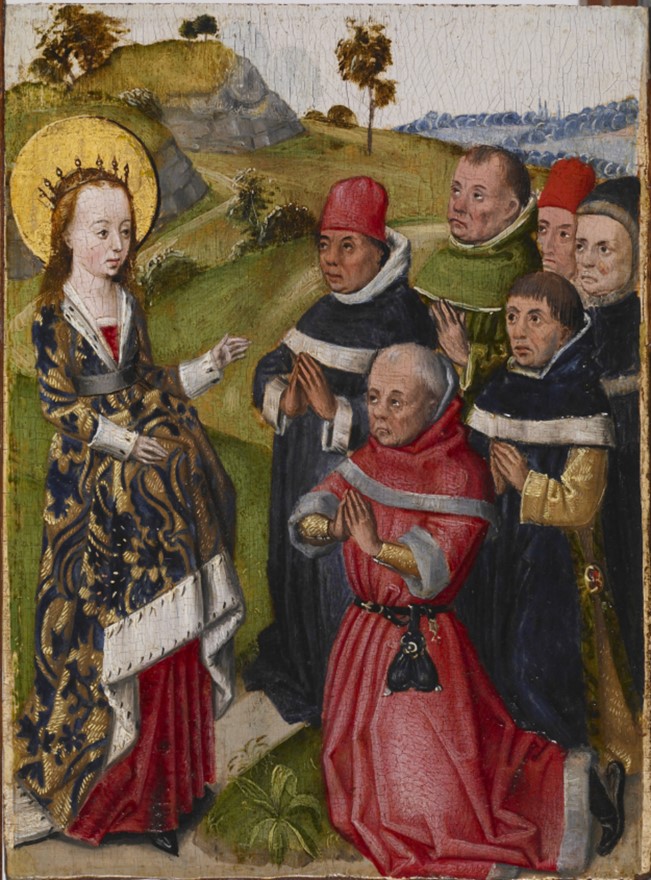
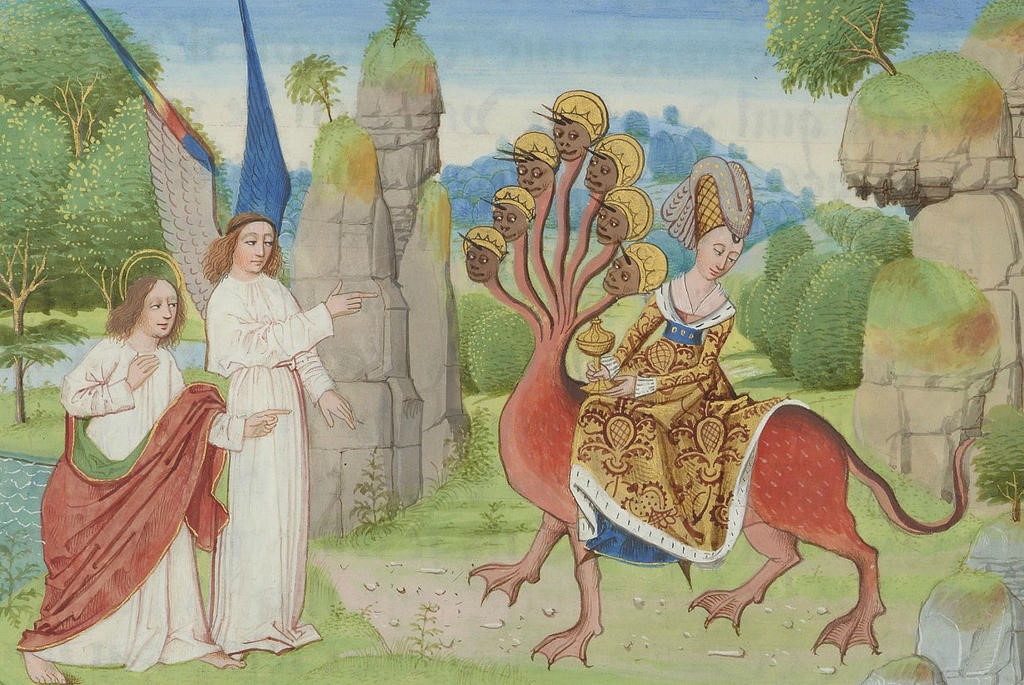
One of the garments that there are many image examples for as this is a time of many surviving artworks. A style of dress seen in many Flemish paintings that show a common set of features including fitted torso with deeply plunging neckline and collar with contrasting fabric or fur lining. The deep neckline displayed an under placket or partlet or kirtle, some displayed without. Sleeves often shown with lined cuffs that are rolled back on the sleeve. Most show no seam at waist or a wide belt covering any such seam. More examples of images showing the waist seam appear closer to 1500CE. Many are displayed as being lined
Under layers would commonly include a shift, slip or some form of underdress, covered by a fitted kirtle and then covered by the gown.
Key accessories include the wide belt often made from fabrics as well as many examples of different styles of hats, many becoming elaborate.
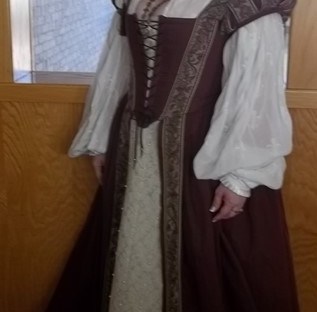
This dress is poly cotton blend brocade with cotton velvet collar and cuffs, red linen kirtle, white linen shift. A yellow silk placket covers most of the red kirtle at the plunging neckline
Inspiration Images
Common Materials
Fabrics:
Gown –
wools,
finely woven wools,
brocaded or patterned cloths. Rich textiles,
collars featuring velvets and furs.
Fur trim
Kirtle –
wool
linen
Underclothes
linen
Ornamentation:
Effective Substitutions
Fabrics:
Gown
Some cottons
linens
Linen blends wool blends
brocades
some poly/cotton upholstery fabrics to achieve the woven in patterns.
Kirtle
Linen and linen blends
some cottons to lighten the under layers
Underclothes
Linen
Linen blends
cottons
Ornamentation:
Ensemble Components
Under layers – shift/slip or some form of underdress
gown.
fitted kirtle
Accessories
Key accessories include the wide belt often made from fabrics as well as many examples of different styles of hats, many becoming elaborate.
This is the time of the Henin hat that becomes the stereotypical ‘princess’ hat, various low shoes or slippers, pouches or purses.
The Elizabethan Gown is a decorated bodice and skirt worn over a chemise, corset and farthingale
Description:
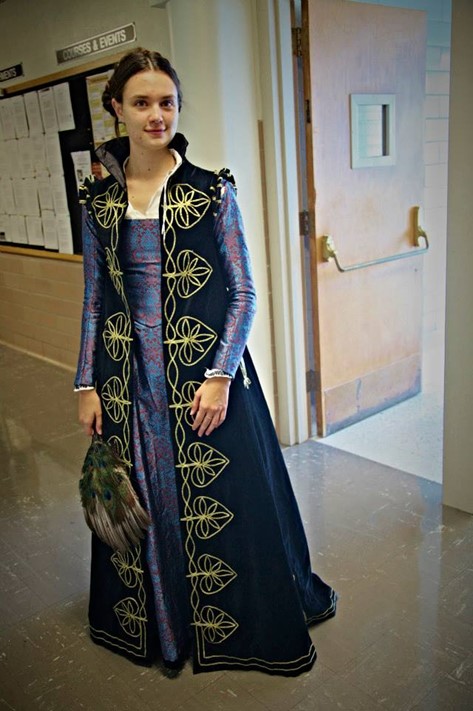
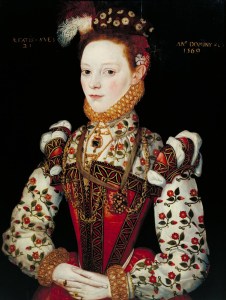
This gown was inspired by Steven Van Der Meulen of Elizabeth the First in The Hampden Portrait painted in 1563 and by a portrait of Mary Queen of Scots by an unknown artist in 1565 during her brief rule in Scotland. The bodice is steel boned and laced on the sides. The lacing should be angling from the armpit to the middle of the back hip. I did not incorporate that into this pattern though.
The skirt is an 8 paneled box pleated skirt with a button closure. To be accurate though the skirt should be cartridge pleated or knife pleated and hooked in the bodice.
Inspiration Images
Common Materials
Fabrics:
Silk, Satin, Velvet, taffeta
Ornamentation:
Bobbin Lace
Jewels
Embroidery
Effective Substitutions
Fabrics:
Heavy brocades, like upholstery fabrics, work very well to give a rich look.
Fancy bedspreads also work well for inserts.
Ornamentation:
Buttons work well as jewels.
Lace curtains sometimes look enough like bobbin lace to use.
Ensemble Components
Chemise (high necked or low necked)
stockings
corset
underskirt
outer skirt
bodice
shoes
Accessories
snood
hat
strings of pearls or other jewels around the neck
choker necklace
rings
ear rings
gloves
girdle belt
mirror hanging from the belt
decorative pouch hanging from the belt
Source/Links
Elizabeth of Valios by Alonso Sanchez Coello 1564
Elizabeth’s Wardrobe Unlocked by Janet Arnold
Elizabeth’s Wardrobe Unlocked by Janet Arnold
1560 Elisabeth De Valois by Alonso Sanchez Coello…Grand Ladies
Version
2
date
3/7/2021
Source of Period Pic
1560 Elisabeth De Valois by Alonso Sanchez Coello…
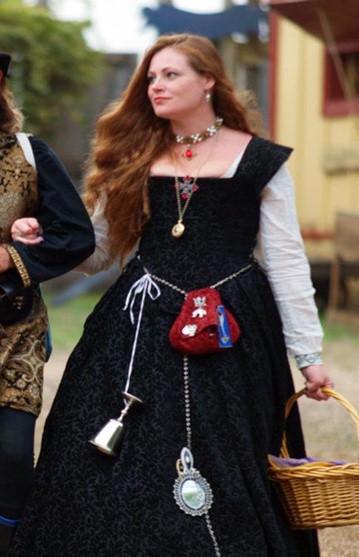
The Elizabethan Gown is a decorated bodice and skirt worn over a chemise, corset and farthingale
Description:
This gown was inspired by Steven Van Der Meulen of Elizabeth the First in The Hampden Portrait painted in 1563 and by a portrait of Mary Queen of Scots by an unknown artist in 1565 during her brief rule in Scotland. The bodice is steel boned and laced on the sides. The lacing should be angling from the armpit to the middle of the back hip. I did not incorporate that into this pattern though.
The skirt is an 8 paneled box pleated skirt with a button closure. To be accurate though the skirt should be cartridge pleated or knife pleated and hooked in the bodice.
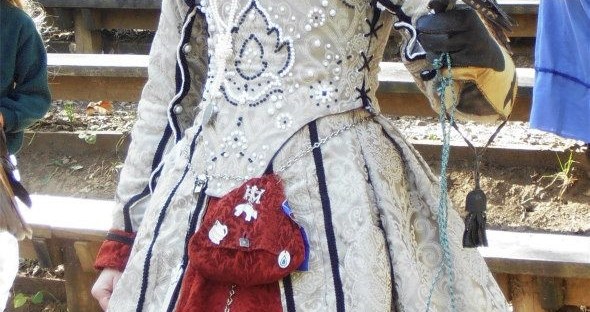
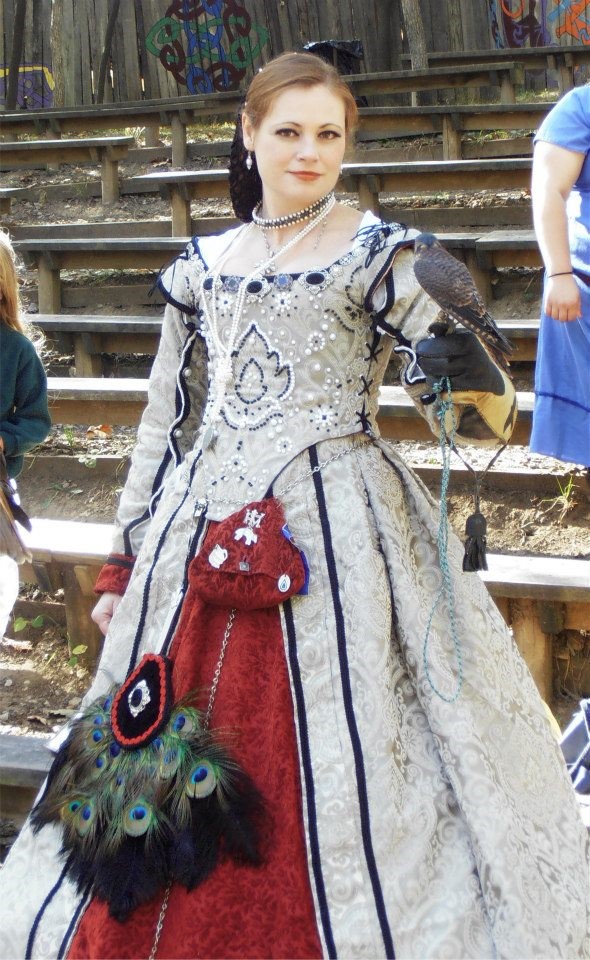
This dress features many attached pearls and beads stitched to the fabric of the bodice.
Inspiration Images
Common Materials
Fabrics:
Silk, Satin, Velvet, taffeta
Ornamentation:
Bobbin Lace
Jewels
Embroidery
Effective Substitutions
Fabrics:
Heavy brocades, like upholstery fabrics, work very well to give a rich look.
Fancy bedspreads also work well for inserts.
Ornamentation:
Buttons work well as jewels.
Lace curtains sometimes look enough like bobbin lace to use.
Ensemble Components
Chemise (high necked or low necked)
stockings
corset
underskirt
outer skirt
bodice
shoes
Accessories
snood
hat
strings of pearls or other jewels around the neck
choker necklace
rings
ear rings
gloves
girdle belt
mirror hanging from the belt
decorative pouch hanging from the belt
Source/Links
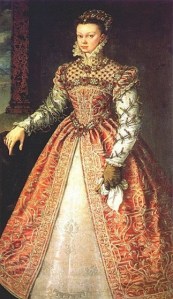
Elizabeth of Valios by Alonso Sanchez Coello 1564
Elizabeth’s Wardrobe Unlocked by Janet Arnold
Elizabeth’s Wardrobe Unlocked by Janet Arnold
1560 Elisabeth De Valois by Alonso Sanchez Coello…Grand Ladies
Version
3
date
3/7/2021
Source of Period Pic
1560 Elisabeth De Valois by Alonso Sanchez Coello…








 SCA Iowa Garb Guide